Facebook, Instagram, TikTok… what on earth comes next? Is there any way the next craze won't be an even shorter, even more distracting, more addictive and more meaningless network that eats our time and “breaks” the conversation?
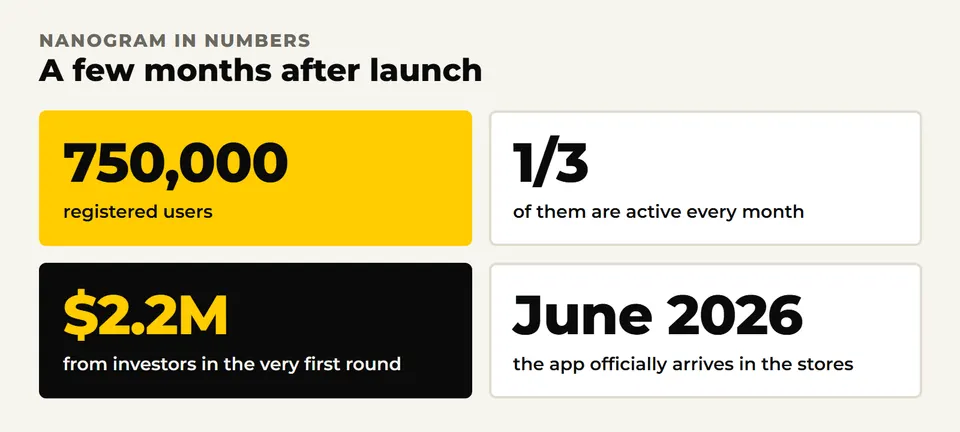
There is at least one optimistic possible answer. It is called nanogram, and in just a few months it has drawn 750,000 users. The idea started in Bulgaria and has already won serious international recognition, which so far also takes the form of $2.2 million of investor trust.
A social network where you don't just share and hate, but create. You use your imagination to make something, then share it with friends, play it and build on it together. Before you know it, you become a community held together by what you have made, not by the latest hot topic on which everyone MUST HAVE AN OPINION.
In the lines that follow, two of nanogram's creators, Ognyan Trayanov and Boris Radulov, tell us about it. You will see that these young people have plenty of other important stories for us, too. About what it means to come back to Bulgaria and build something you deeply believe in. About the contagious drive with which they chase their dreams, sweeping others along with them…

This piece is based on the conversation we had with Ognyan Trayanov and Boris Radulov on the DEV.BG Job Board Talks podcast.
A Programmer Bird
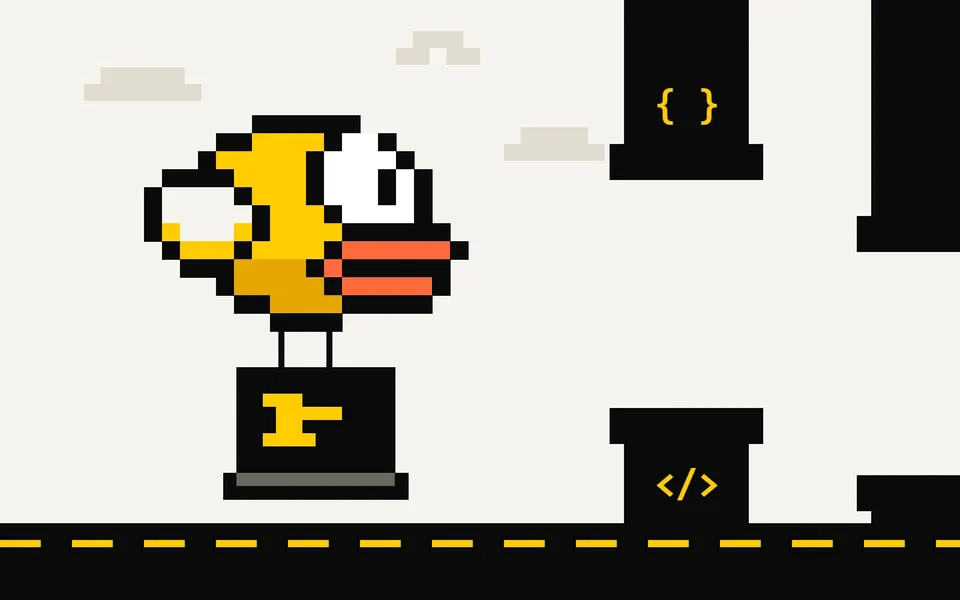
Remember Flappy Bird? A blocky, pixelated bird flapping between green pipes while you try to keep it alive by tapping the screen… and invariably fail. The game by Vietnamese programmer Dong Nguyen conquered the world in early 2014 and, by his own account, earned him $50,000 a day from ads. Then he pulled it from the stores himself, because he decided it had become too addictive.
Now imagine you like the game but want it to be a bit more… yours. Say the bird carries a laptop, and instead of flying between the pipes it has to write a line or two of code. Or poetry.
“I see some really interesting game, let's say Flappy Bird, but I want to make something connected to my everyday life. I add a laptop, and the bird has to program something,” Ognyan explains with gusto.
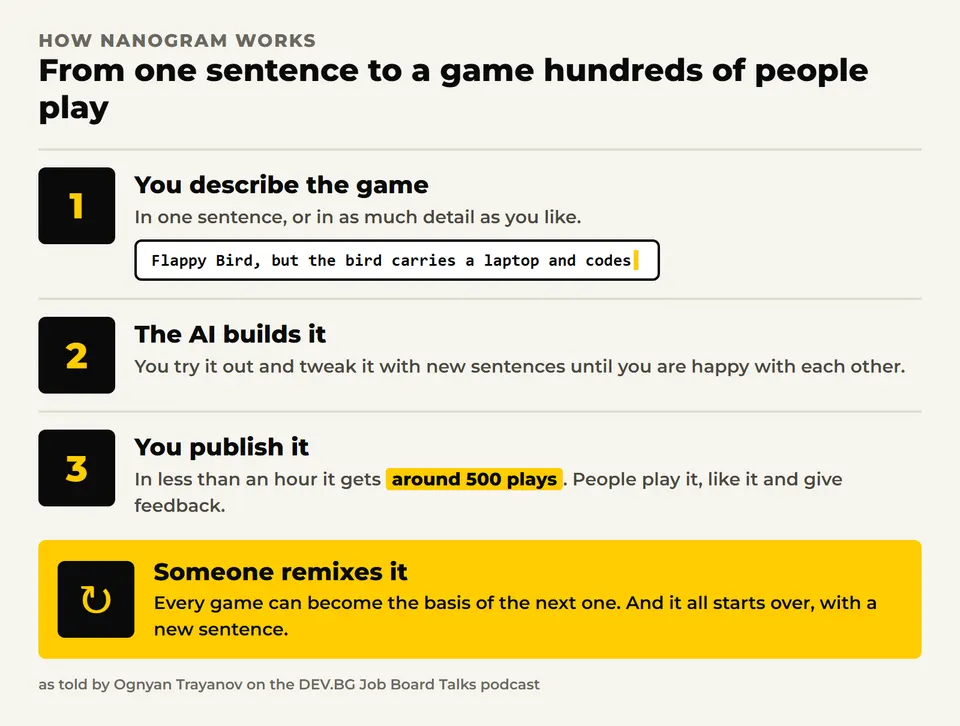
That is exactly what nanogram is. In one sentence (or in as much detail as you like) you describe the game you feel like playing, the artificial intelligence builds it, and when the two of you are happy with each other, you publish it. “In less than an hour it will have about 500 plays. That is, it will reach 500 people, they'll play it, then give feedback and be able to remix it,” says Ognyan.
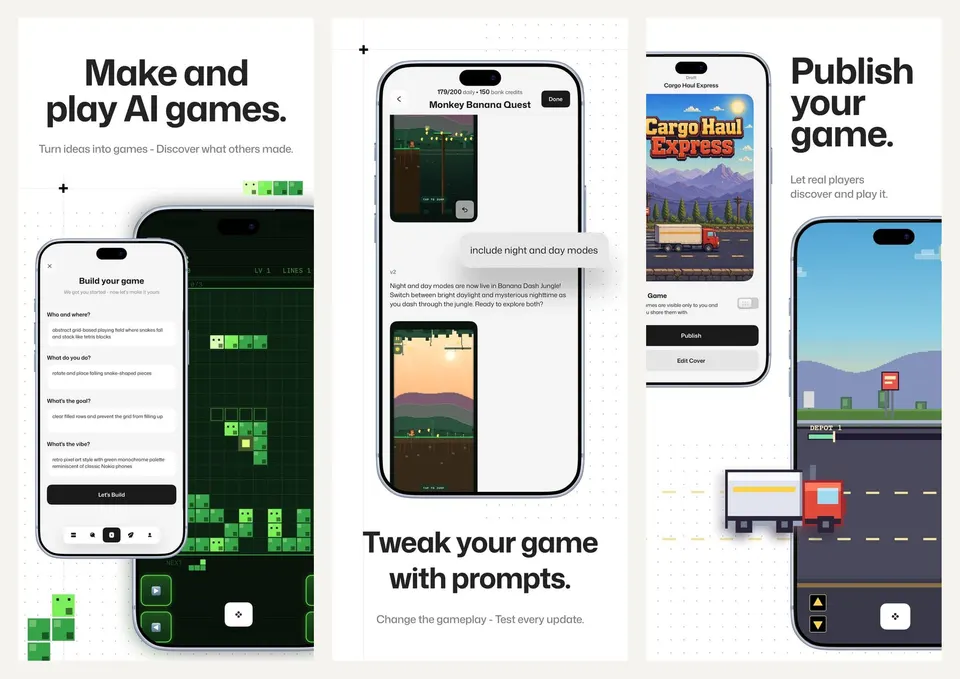
The remix is the heart of the idea: every game can become the basis for the next one. Someone came up with the bird. You taught it to program. Tomorrow someone else will teach it to… sing?
But how does the fledgling of this idea hatch from the nest?
The Birds
Both Ognyan and Boris set off toward programming as children with the same dream: to make video games. The nest where they meet is the American College of Sofia. They are already working together on various projects as students.
The first is for the National Olympiad in Information Technology, and the inspiration comes from… an engineering textbook. It has 3D visualizations with augmented reality: you point your phone at the page and a three-dimensional model pops up above the paper. The two decide to bring the idea to their own textbooks—geography, biology, mathematics. The year is 2018.
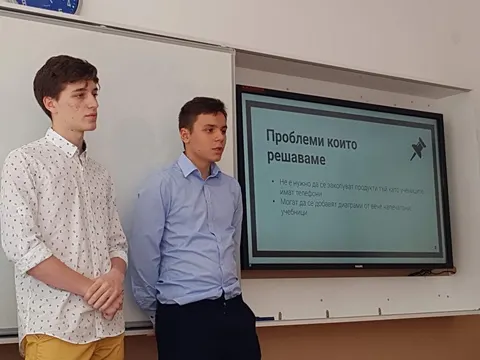
After the college, their paths split. Boris goes to study in England, Ognyan in the United States.
So how come we are having this conversation today in a studio in central Sofia?
The split exists only on the map; the two keep working on joint projects. At first these are tiny things—helping some business or shop find customers through a website. Then the orders grow. They register a company and work together the whole time, “even though we were in such different time zones,” says Boris.
We often say that entrepreneurship needs to be developed, nurtured in young people while they study. How do two students of tech subjects turn into entrepreneurs?
Songbirds Fly South
For them it somehow happens naturally from the very start. They divide responsibilities almost without thinking. “He works more on the backend, I work more on the frontend, the design, building components. What the user sees,” Ognyan says. Over time the roles take shape in the business, too: Boris takes on the paperwork and making sure the company is well run, with polished business processes, while Ognyan handles communication.
After graduating, the two decide quickly, and somehow naturally, to return to Bulgaria, because it is precisely here that they see good opportunities to turn their dreams into reality. “On the whole, I didn't like life in England,” says Boris.
“The opportunities I had to build a career didn't seem interesting to me. There's also the fact that however modern-minded the English are, you always remain a foreigner. Besides, we feel a kind of responsibility for the things we do to grow in Bulgaria. If we're going to create jobs, let's create them in Bulgaria. If we're going to build some cool product, let people know it's Bulgarian. You don't need to go abroad to have a good job or a successful startup. I have a strong sense of patriotism toward Bulgaria.”
Their big dream is to have a software product of their own. “Something that helps a cause or is genuinely useful to the people who use it,” Ognyan adds. It turns out their decision to stay at home pays off here too, because they come across exceptionally skilled programmers with whom this dream also becomes reality.
The Chick
But how exactly do they arrive at the idea of a social network for games you make yourself? Most startup books advise you to start with a hundred ideas and sift through them until only one is left. For Ognyan and Boris it happens quite naturally—the story of nanogram begins precisely with an idea… that doesn't work.
Before the startup, the two run a consulting business. One of their clients—Albert Brotherton, today their partner and nanogram's CEO—commissions an app for students. A sort of ticketing platform where they can see what events and clubs their university has, find a party, meet their fellow students.
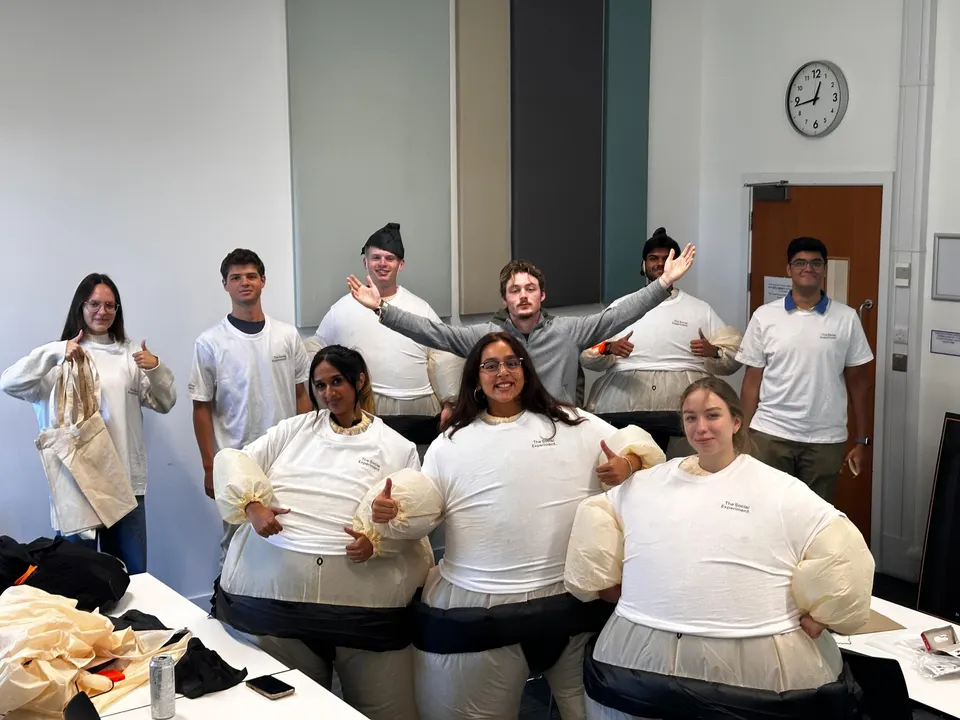
Except the product has one rather nasty problem. Students open the app once, buy their ticket and stop using it. With those 5 minutes a day the project can't possibly turn a profit, so the team sits down and starts looking for a new approach. It is their partner Albert who comes up with a seemingly strange idea: put a feed in the app like on typical social networks, only… with video games.
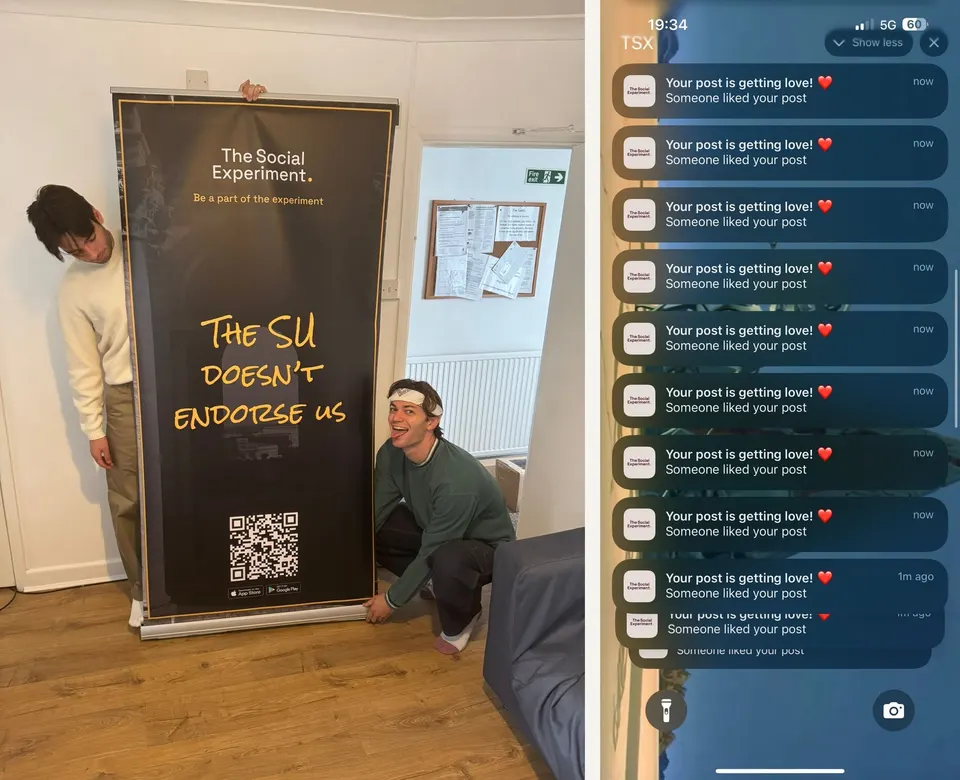
“Back then our attitude was: okay, marketing and business have come up with some nonsense again,” Ognyan smiles. “We go over, open the app and tell them: dude, look, this has nothing to do with the app, it's completely stupid… And we realize that by the time we've said it, we've played 10 games. Once you start using it, you don't put your phone down. Even while we were telling them it wasn't a good idea, we saw that it wasn't true, we realized it works. That's how nanogram came about.”
Silver Flocks
According to the two, the main factor behind nanogram's success today is the progress of artificial intelligence. Just 2–3 years ago the models were too primitive for a user to generate a game that would then interest others too. Then suddenly it turns out to be possible, and that is exactly when our heroes' idea appears.
“At first we started with the idea that nanogram is TikTok for video games,” Ognyan explains. “But that's too simple a description of the product, and none of us particularly likes TikTok.”
On the platform the game gets made, but the magic lies in what comes next: you publish it, it reaches hundreds of people, they play it, rate it and remix it. You can send it to friends and then make new version after new version.
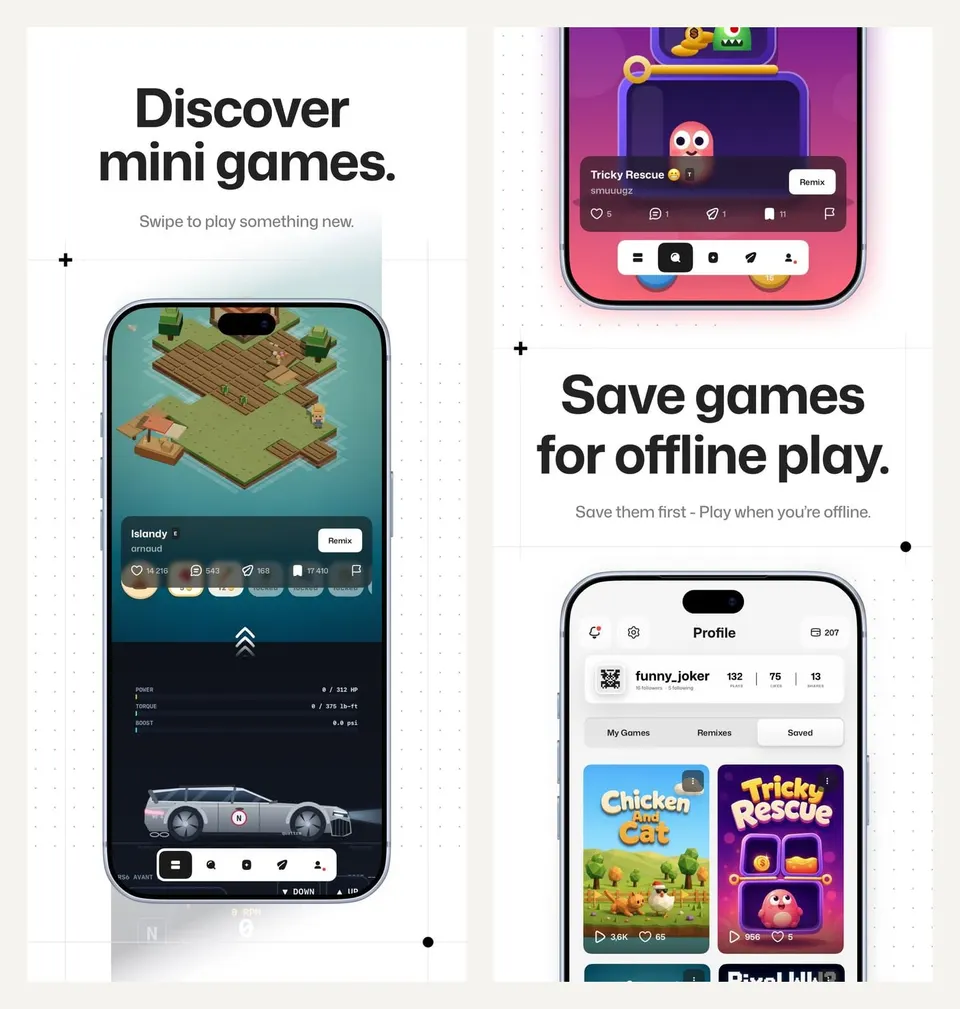
And here comes the surprise. “The behavior we see most often in our users is that they take on the role of a studio,” Ognyan says. “You release your game, and when you see it's getting popular, racking up thousands of plays and lots of likes, you want to improve it. You release a second version or do some update with more features.”
The team's goal is ambitious. “We're turning the social network from a platform where you passively consume different kinds of content into proactively creating that content,” says Ognyan. “We want to let our users build a social profile that's directly tied to their imagination and their desire to make video games, not just consume them.”
Don't Count Your Chickens Before They Hatch
Do people really do it, or do most just drop in to play? The answer is encouraging: users who create games stick around longer in the app. In the long run, the two want nanogram not to be limited to games but to become a place for all kinds of interactive content. “That will make it possible to reach a different scale, where we generally want people to change the way they use social networks, why they do it and in what form.”
Needless to say how good I find this idea—this site has often discussed how social networks stopped being here to help us chat with friends a long time ago. On the contrary, they turn us into content consumers and make us quarrel and argue in a crude and shallow way, instead of actually creating something.
So I ran an experiment of my own. I started, of course, with quizzes—that's my thing. And very quickly I managed to build a game that works really well and asks quite well-chosen questions.
A flock of creators, not a herd of spectators. Sounds good, doesn't it?
High, High, High
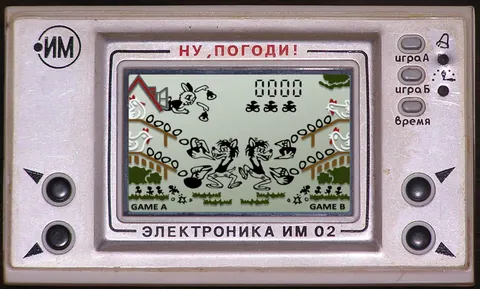
What is the most complex game you can make in nanogram? Oh, it can get really intricate. Recently the two came across a 2D version of the popular GTA V that apparently worked extremely well. It turns out artificial intelligence is now capable of creating games with 2–3 hours of content. From the bird in Flappy Bird and the wolf catching eggs in the old Soviet handheld game Nu, Pogodi! to an entire city with cars and shootouts.
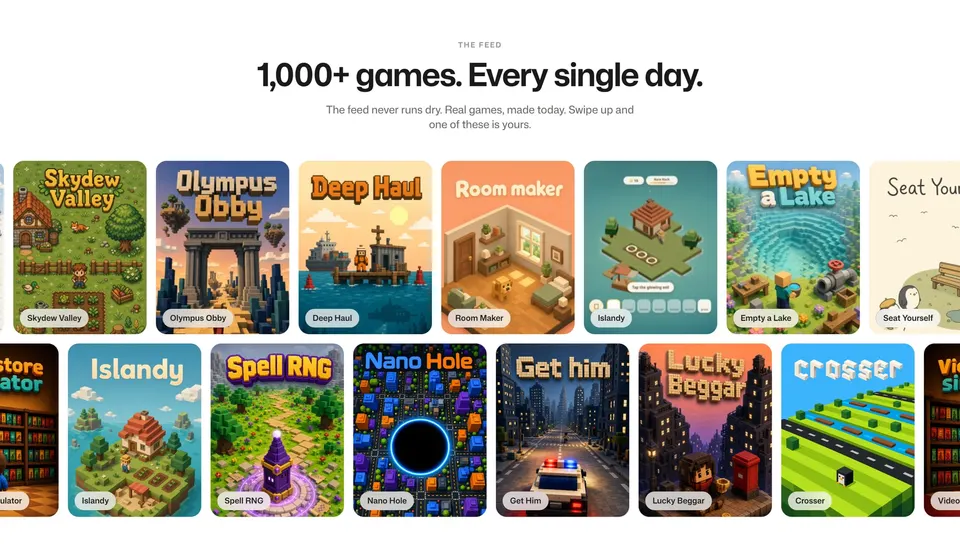
Genres of games that nobody had imagined before are even starting to appear. Ognyan's favorite is a game about a wizard player who can draw different kinds of spells to defeat enemies. “What struck me was that there's no game like this anywhere. For the first time someone sat down and came up with this kind of gameplay. Someone with a rich imagination thought up this idea, and nanogram gave them the chance to create it, build it and share it with their friends.”
It comes as a surprise to the creators themselves. “Our original plan was never in this direction. We always thought the games would be fairly disposable. You make something, the average user plays it for 1–2 minutes and then moves on to the next one.”
It turns out the users fall into two streams. Some create games with a social element that grab your attention for a moment before you move on to the next. “And the others go deep, pushing the capabilities of our artificial intelligence to heights we didn't expect were achievable.”
Today there are around 750,000 registered users, a third of them active monthly. And we are talking about a product that officially and fully appeared in the app stores only in June this year.
The Goose That Lays the Golden Eggs
It is rare for a Bulgarian startup to attract such funding—in its very first round nanogram raised $2.2 million. How did that happen? “Surprisingly!” Boris replies.
The story sounds like a joke. When they decide to switch from the ticketing app to nanogram, the two are still running their consulting business. “We told our partner Albert: we'd work on nanogram full time, but we have to earn a living somehow. So at this stage we can work half days. To which he said: fine, I'll find you funding and you'll work full time. And we answered: sure, good luck! And… he did it, and very quickly at that.”
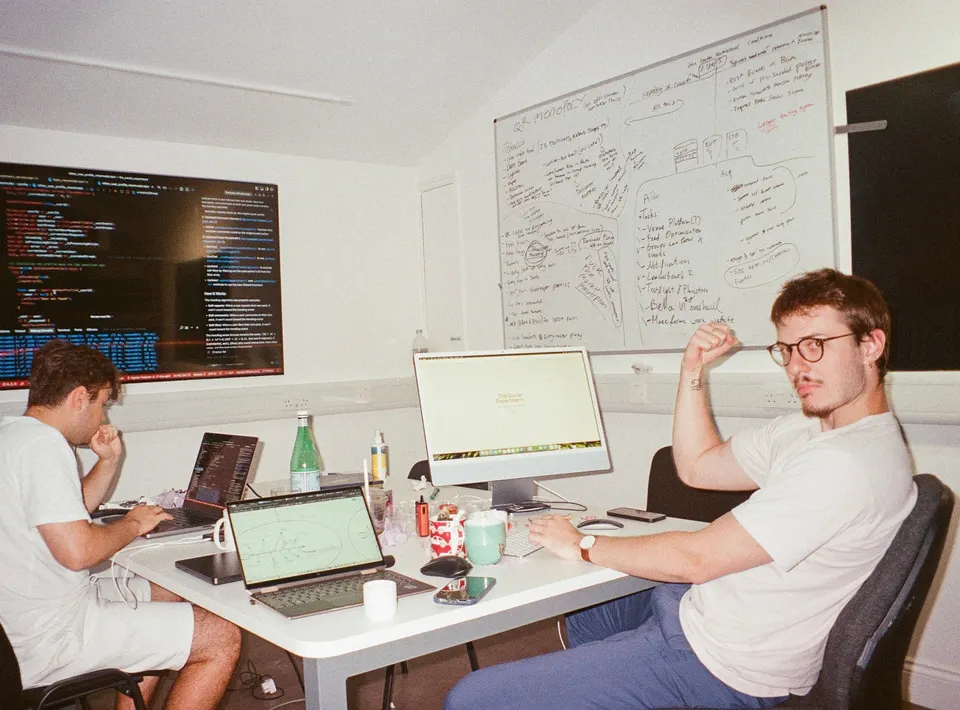
After the funding comes building the team—today their office in Sofia is full of people. They also substantially improve the technology they use, and nanogram turns into a fast, modern app.
And, by all appearances, the best is yet to come.
Not Everything That Flies Is Edible
So far all social networks have ended up in a place where, unpleasant as it sounds, their product is… their own users (ask Jaron Lanier!), and the money comes from ads. Our two guests are firmly against this idea. But then how will nanogram make money?
“We really want to avoid that,” says Boris. Initial research shows that the most dedicated users would pay for “smarter” models and for the ability to create more games a day. First they will monetize the efforts of their most dedicated users, the creators, by letting them pay for a better experience with more options. Only after that will it be the players' turn—for example, with purchases of cosmetic upgrades.
Further down the line, the data they accumulate will also be useful. “Instagram knows how long you watched a clip, whether you read the comments meanwhile, whether you liked it. With us, because the content is interactive, we can know whether you got frustrated and started pressing random buttons, how many times you replayed the game, what your highest score was,” Boris explains. That way they can build a much better model of what a user likes, what they don't, and what irritates them. “Which I hope will let us create an algorithm that serves exactly the games people would want to play.”
A Bird's-Eye View
Yes, if it comes to that, at some point they will look at ads too. Still, their idea is entirely different from the one that created the big problems of social networks.
“A platform like Instagram already faces so many lawsuits, both in America and here in the European Union,” says Boris. “If you sit down and read the court transcripts, the people at Meta say to each other that they know their product creates negative emotions in people, and they take advantage of it. Because, at least in their product, negative emotions keep the user around longer and let them show more ads. I want us to get away from that model and create a positive experience for people!”
When will Ognyan and Boris say they have made it? “For me, perhaps the most important metric of success is how many people create games in nanogram,” says Ognyan. “I want my app to have given as many people as possible the chance to express their imagination.”
Boris's dream is similar: he wants to see people use the product as a way to communicate. “That will show we've really managed to turn social networks into interactive content rather than pure consumption,” he says.
I wish them success with all my heart. In the age of advanced artificial intelligence we have so many opportunities to create better, more useful, more unexpected apps. I hope this Digital Story reminds you of that. Now is the time for imagination and good ideas on the wings of technology. Have an inspired flight!