Never before have we been able to talk online about the things that matter, to hear what the smartest people think, to debate them, and yet… we spend our time wondering what to quarrel about next.
For and against the government, Trump, the scandalous contestant on the Bulgarian edition of The Bachelor (because apparently only non-scandalous ones are supposed to be chosen). Machine voting, vaccines, judicial reform. The latest chalga hit—chalga being Bulgaria's brash pop-folk—the latest half-baked change to the law, and who knows what else.
We know we live in social bubbles, that content platforms stopped being a place to meet friends long ago and turned into giant TV sets that will do anything to swallow our attention, but… so what?
Can we change anything? Is it worth it? Here is a small experiment, garnished with eight things to think about.
We will go back to the subject of covid and the way we made sense of it. We will follow the path of one journalistic piece so we can reflect on it together. On the place we have ended up.
A Kind of Covid
We ought to talk much more about the way we get our information today, and the way we will get it tomorrow. These days, information hygiene matters no less than physical hygiene if we want to stay healthy.
Yes, even though the idea that you are what you eat reigns supreme, a person is much more what they read—or so I believe. Sooner or later a new kind of media will return to the field, one that picks out what is worth it from the ocean of information, tells it professionally and makes sense of it (more on the subject here).
And yet… what do we do today? We chat about how the algorithms of the online giants lock us in and set us against one another, how they might turn out to decide the next elections. Here are eight ideas about the ocean of information we are drowning in…
1. One- and Two-Day Wonders
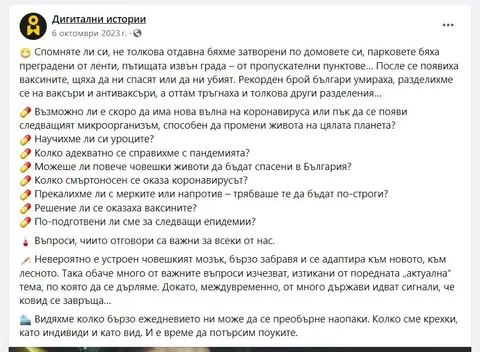
“Covid four years later: why didn't we learn our lesson?” That was the title of the piece I published on the Digital Stories site for the anniversary of the pandemic's declaration.
The human brain is a curious thing—how quickly we forgot the times when all of our lives changed from top to bottom. Even the parks were cordoned off with tape and guarded by police. Then came the big subject of vaccines, which created an unprecedented divide.
Well, plenty of time has passed. Wouldn't it be good to take stock, to think—where did we go wrong in the fight against the virus? Did we overestimate it, or the opposite? Might there even be some truth in a few of the countless conspiracy theories, now that we can analyze things soberly, carefully, impartially? After all, we remain an ordinary earthly species that can always come face to face with the next dangerous biological enemy. Wouldn't it be good to be ready?
Those were exactly the questions I tried to answer, and I think the piece arrived at some rather important conclusions. Others, no less important, came afterward, though…
The topics on the agenda change at astonishing speed, so that much of the news dominating public space today is forgotten and irrelevant tomorrow.

2. Yesterday's Paper
Whatever the generational differences, it is clear that if you want to understand what is going on, to find something meaningful to read or the news, today you will most likely do it online. Every generation has its platform, every country its quirks. If in the United States the public dialogue “flows” on X, in Bulgaria this kind of information clearly happens on Facebook.
In short: if we once opened the newspaper or switched on the news to find out what was happening in the world, what awaited us tomorrow or what to be outraged about, today social platforms do that job. Each with its own quirks, but each with the algorithm that decides what to show each of its users. An algorithm built to satisfy the visitor as well as possible so that they spend more time on the platform, which in practice lives, one way or another, off precisely that time spent. Yes, its purpose is not to educate or to inform. It is not even to entertain, but to hold attention. Over the years the platforms pile up more and more data about every user's actions so they can get better at choosing content.
Of course, more or less all of us realize that this is exactly how social networks work, but bit by bit messaging apps are adopting the same approach to distributing content—with news channels—and so are apps like Google Discover, which “picks” the news for every user with an Android phone.
It is easier than ever to create content today, but the way to reach other people runs through social platforms. Since Digital Stories is a site that is not part of any platform, they treat its posts as “external links”—if users like them and click, they leave the platform… which, naturally, gets in the way of its goal. That is why such links are doomed to be hidden by the algorithm.
So to reach people at all, even entirely noncommercial sites like Digital Stories have no option but to pay for advertising.
Social platforms, which started out as social networks, are now a primary distributor of information. But they include far too wide a range of sources, with content of varying quality.
3. Do You Respect Me?
I do it with minimal sums for each post; otherwise the work of preparing them would go to waste. (Let me take the opportunity to remind you—if you find the stories on Digital Stories interesting, the only sure way not to miss them is the monthly email newsletter!)
And so, when the piece in which I tried to gather the important lessons of covid appeared on the most popular social network… a completely unexpected avalanche suddenly broke loose.

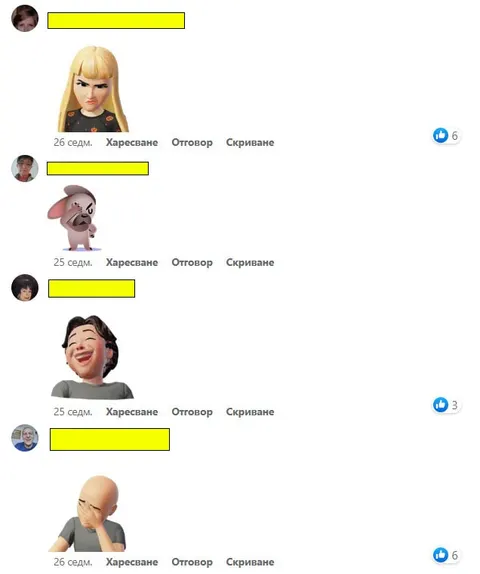
A week goes by, and there are more than 700 little emojis underneath. Nothing so special, a normal count for an interesting topic; since this is a sponsored post, numbers like that are by no means exceptional. But… more than 450 of the emojis are laughing faces or the “angry face.”
What is there to laugh at, or to get angry about?
The age of social networks has also brought a serious crisis of authority. And of trust in the democratic process and its ability to cope with the challenges of our time. Social media give birth to an alternative truth that is often underestimated.
4. Headlines Only
You know, the little “like,” the chance to “like” something—simply to approve of a shared post—was among the things that set Facebook apart in its early years. Then the other little faces appeared, yet another dopamine trigger: you post something and lie in wait to see exactly how many people, and who, will mark it with an “emotion.”
In quotation marks, of course—an emoji is just another worthless thing to keep us in the feed.
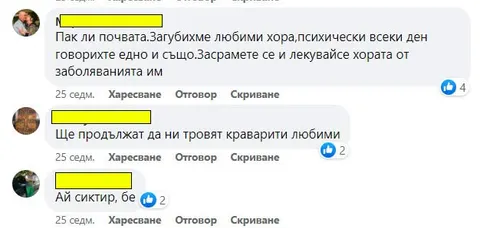
The irony goes so far that the laughing face is the one used most often, yet almost never to smile or to show you are pleased about something, but the opposite: to mock it, to show disagreement. That turned out to be the case with the covid piece too, as the comments made clear.
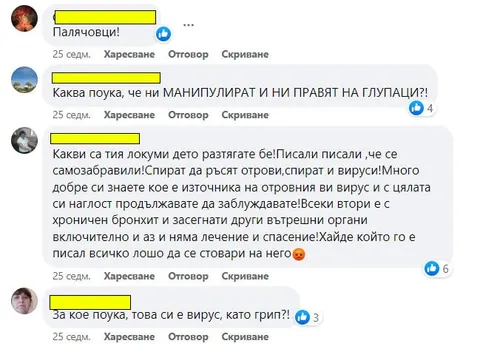
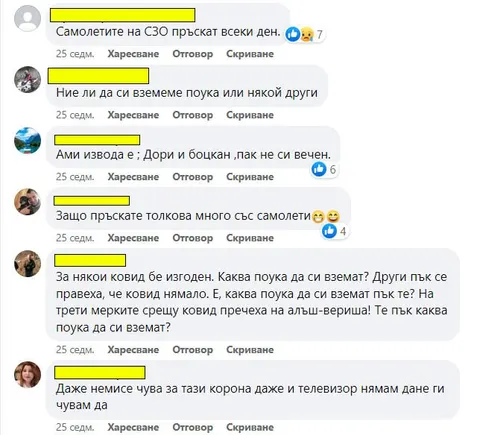
265 comments! And not a single one of them had anything whatsoever to do with what the text actually said. All of them general, many simply more emojis expressing the reader's contempt for the subject.
In an age of speeded-up content consumption, much of the audience takes in only the headline. Nuance and long texts are pushed further and further to the margins of the way we get our information.
5. Hey, You!
Something outrages you, so you leave a rude comment? You mark the irony with a laughing face, with the “angry face”? You supposedly don't like it, it supposedly makes you angry, and yet in doing so you are essentially… helping it reach more people, aren't you?
We help precisely the thing… we don't like.
And then the algorithm's avalanche starts rolling. Sensing that a post is provocative, extreme, that it has “touched a nerve” that will keep the conversation going, stir things up and draw more and more curses, it starts showing that post precisely to the people who will be outraged.
If in this case those are mainly people for whom the pandemic was a conspiracy, a way to control the masses, a manipulation… how could they ever hear the other point of view? How would the other side's arguments ever reach them…
…or the other way around? Who can be sure that everything in the arguments of the hardline skeptics is wrong? Does anyone know everything?
Yes, and this is also where the best side of communication on social platforms lies—it is unvarnished. Provided, of course, that you have a few things in common with a rhinoceros… a thick enough skin, for instance, not to be fazed by the hate.
Yes, His Majesty the Hate. We have talked about him quite a lot with the guests of Digital Stories (some of the most interesting points of view here). It is so convenient, sitting behind a keyboard, to declare yourself the final authority on some subject. But it is even more convenient to take it out on whoever happens to cross your path and disagrees with you.
Nothing more normal… Except that, of course, it also shapes the environment of communication. And the cruder points of view are much harder to withstand, especially if you slip into explaining mode. That is why my personal decision is not to comment on anything under my posts—whatever I have to say, I have said in them.
In the toxic environment of social media communication, emotional, extreme points of view dominate.
6. It's Raining
“Sometimes it seems to me that the world has gone mad,” Lex Fridman wrote recently. “I want to explore new ideas, look for different perspectives, historical context, all of it with a calm, intelligent approach. And people online just want me to ‘pick a side’ and be outraged.”
A very precise description of communication on social platforms, I think.
In fact, this whole mechanism of “algorithmic amplification of extreme content” has a well-known explanation. Indiana University's Observatory on Social Media puts it this way:
– We are influenced by what we read.
– We read what our friends share.
– If a post matches our views, we share it.
– And if a friend is too different, we unfriend them.
You can see how it happens here. (The Bulgarian translation and summary are by Nikola Tulechki.) The researchers have built a model we can tweak to watch how users interact.
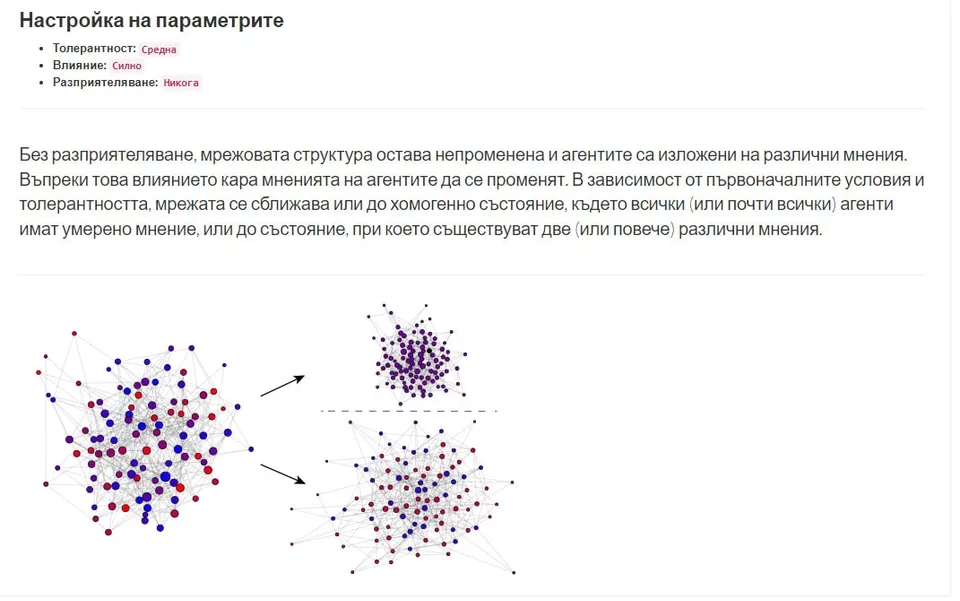
At the start we have a network; people are the dots that come together and exchange information. And… nothing prevents the network from staying that way, with the conversations flowing, as long as the topics are interesting and the discussion meaningful—that is often how things went in the forums of old.
Things change when various parameters start getting “tweaked.” For example, if the network gives you no way to cut your connection to another user—by unfollowing, blocking, unfriending—the basic structure holds. There are different points of view, but they exist side by side, and the nuances are there too.
Not once the filter appears. And not only the ability to stop following someone, but in this case the algorithm's ability to choose content for you. Then you can clearly see how users gradually start clustering into groups, breaking away, becoming radicalized. Starting to look like rabid football ultras… The lower the tolerance between groups, the more separate “bubbles” form.
What is the remedy for too much information online, for the eroding authority of sources?! A healthy dose of skepticism.
7. Hey, Our Balkans
Do you know what “balkanization” has meant in Western social science in recent years? No, it has nothing to do with the work of Mile Kitić, the Serbian folk singer. For centuries our peninsula was the powder keg of Europe, which, fortunately, has calmed down somewhat today (let's hope!).
The definition reads: “the division of a country or region into separate political units or ethnic communities that are aggressively hostile to one another.” It is enough to mention the fate of Yugoslavia in the 1990s.
Is it really that hard? Aren't there more things that unite us in the Balkans than divide us?
Well, it's the same online.
Some time ago I wondered whether any of the great events in our history could have happened in the age of social networks. And I am still wondering.
The further segmentation and polarization of people communicating online can drag ever-deepening social problems behind it.
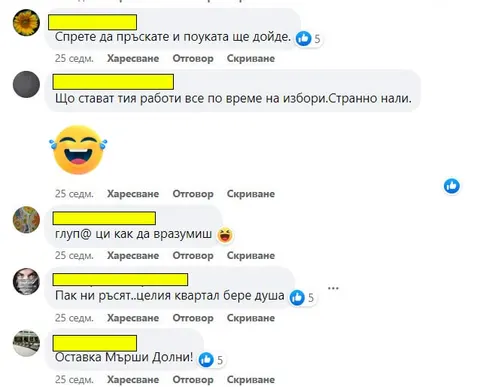
8. Letter Hunt
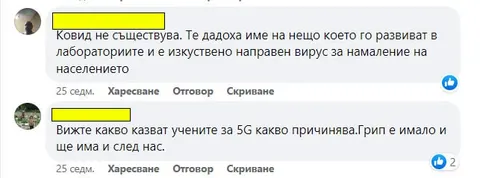
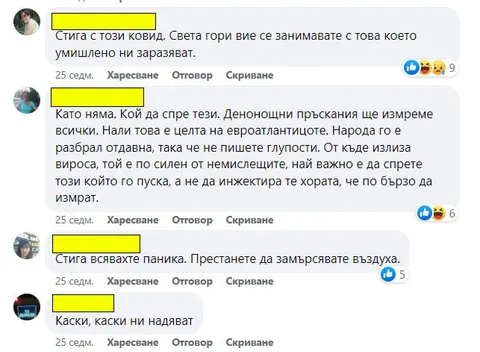
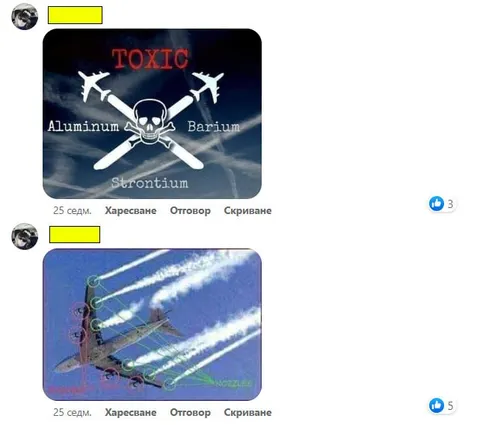
Among the comments on the covid piece, I read:
- Before covid there was flu ,they killed it , covid was a dress rehearsal for what came next. CONTROL ,POWER, WAR,MONEY loooots of money!
- Covid doesnt exist. They gave a name to something they develop in the labs and its an artificially made virus to reduce the population.
- What LESSONS,man????🤣😂😅Some HUMANOIDS mutated by power and money are playing god by manipulating the masses with the aim of reducing them!!Everything else is set dressing for the naive and sadly there are quite a few of them!!!
- The WHO planes spray every day.
- Lesson from what?That it was all about 💸💵💰 and panic?
- Ooh, how heartbreaking!! Tears are streaming down my face from the grief gushing out of your words… Has little Ursula von der Leyen run out of money, is that why youre wailing about this again?! How about you mention how many people died from the so-called vaccines?
- Dont even imagine youll be able to lock us up again and force us to get vaccinated! Whoever wants to can do it, leave healthy people alone!
- Ohh,stop it with this made-up nonsense.Only the most naive believed it and ran like headless chickens to get vaccinated and it often proved fatal.Thousands crippled and dead.I had contact with people supposedly sick with the made-up covid and I didnt even cough,and they buried them in a closed coffin.
- Digital Stories, why dont you say how many people got si ck or died from these,, vaccines“go to hell murderers!„
Who, and by what right, can say that someone has no right to opinions like these? Or to a (healthy or not) dose of skepticism, especially against the backdrop of the fragmented, unreliable way information reaches us…
How can we not feel manipulated, how can we not entertain all sorts of possibilities, when the reference points are gone—for truth, and for authority? And for freedom…?
Could the conflict come from the fact that we have mixed up being informed with communicating? And can we still separate the two?
One of the remedies is surely more communication. Stepping out of our bubbles more often, meeting people online or offline, looking for the nuances. For what lies behind the firm conviction of the person we disagree with.
There will always be many opinions, but they only make sense when they meet and complement one another.
Hasn't the time come for platforms and forms of online communication that encourage dialogue, different points of view, nuance, stories?