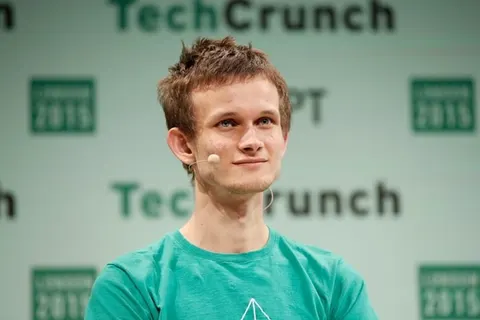
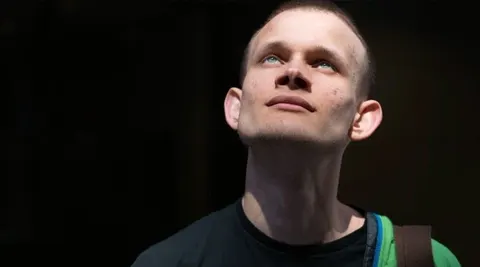
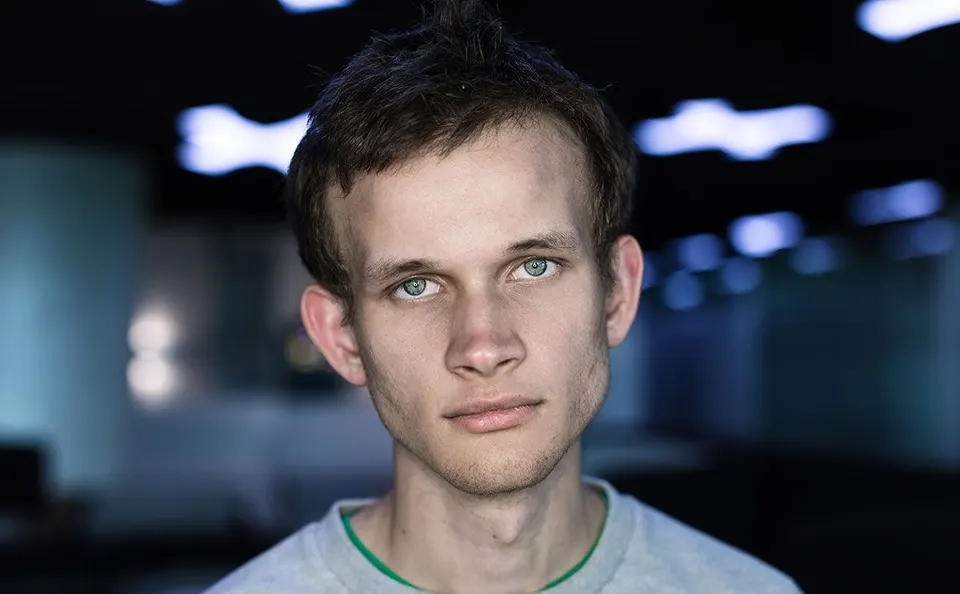
He is criminally young, skinny and absorbed in his own thoughts. He looks nothing like the most eligible lads at the disco, and yet he is a billionaire. More important, Vitalik Buterin made a promising technological revolution possible.
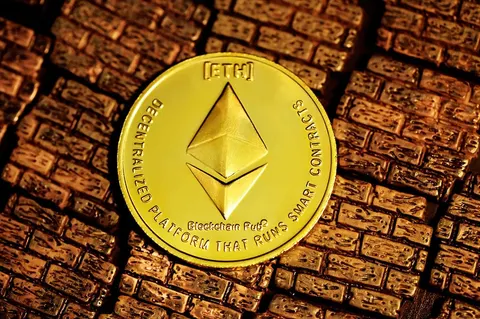
Blockchain is a field with a future, and it is far from exhausted by the bitcoins that have been ringing in our ears. Well, the young man you see here made it possible for smart contracts, through blockchain, to give us a real chance to change many areas of our lives in the years ahead. He created Ethereum, the network of ether—the second most popular and far more stable cryptocurrency after bitcoin.
He also turned down $6.5 billion in cryptocurrency, simply because he did not like what exactly it was doing.
Not Everything Is Bitcoin, My Friend
Ethereum is not just a cryptocurrency; these days it is the largest blockchain platform. It was also the first mass-market solution that made it possible for the blockchain to hold not merely records of transactions but entire little programs known as “smart contracts.” Once they enter the network's database, they stay there forever and can be verified, traced and guaranteed. (For more on the main possibilities blockchain offers, read here.)
Ethereum created a whole new ecosystem that showed what blockchain as a concept is truly capable of.
“Even before our project, anyone could create their own blockchain,” Buterin explains. “But for every new application developers dreamed up, the original protocol had to be changed. Imagine if, say, the makers of a mobile app had to launch an entire new operating system from scratch every time they decided to build a new product.”
Small, but Already in the Know…
In other words, thanks to Buterin's project, the possibilities of blockchain are more accessible than ever before and are limited only by programmers' imagination. This platform also made possible the birth of NFT technology, with all its big prospects and its dubious sides.
The first version of Ethereum started working in 2013, when our hero and the chief creator of the new blockchain was 19. In May 2021, at the venerable age of 27, Buterin was officially declared a billionaire by Forbes—the youngest on the list—with a fortune of $1.4 billion. Well, he then briefly dropped off it, because yet another shift in the indices cut his wealth by 40% to “only” $850 million.
Still, with $1.4 billion or with “only” $850 million, Vitalik remains an eligible bachelor.

A Vital Kid
His real name is Vitaly, but everyone knows him by the affectionate diminutive, which is rather odd—it's as if your name were Petar and you became famous around the world as “Pesho.” As the name suggests, he is Russian, but he grew up in Canada, where he arrived at just 6.
He was born on January 31, 1994, in Kolomna, near Moscow.
What does blockchain bring together today? Economics and technology. That is exactly what Buterin's parents were studying when he was born. His mother, Natalia, was training as an economic analyst, and his father, Dmitry, graduated in computer science and went to work for an American computer company with an office in Moscow. In time he decided to put his profession to use and move the family to Canada.
Dmitry decided to show his son the world of technology when the boy was barely 4. He gave him a computer, which naturally became his favorite pastime. But not, as with most children, for games, films and chatting—rather, for learning how computers work and burrowing into all kinds of programs. They say that as a kid he was the greatest master of the subtle, lesser-known features of Excel.
By 7 he was doing so well that he created his own virtual fairy-tale world inhabited by bunnies. By 10 he had a pretty good command of the tough programming language C++ and was working on amateur but quite polished computer games.

Work, Son, So You Don't Have to Study
Over the following years Buterin became deeply interested in mathematics, programming and economics, and his parents had enough money to give him a good education. He ended up at a modern high school with an alternative way of organizing things, which, according to Vitalik, taught him to think and to strive to grow.
Then he got into one of Canada's most prestigious universities to study computer science.
Having decided early on that blockchain had the power to change the world, at 17 Buterin was already co-founder and editor of Bitcoin Magazine. In fact, he took on the venture with the idea of earning some money to buy bitcoins with.
It got so interesting that there was no time left for studying. He dropped out of university and, thanks to that… got support. You have hardly heard of the Thiel Fellowship, and you have hardly imagined that something like it could exist, even in our strange technological times. The charity is funded by PayPal's co-founder Peter Thiel to give financial support to young people who leave university to pursue their own projects.
Yes, it's a pity there is nothing like it for students here in Bulgaria. Quite a few people would focus on their own projects, and the universities need support anyway.
Lemonade and Ether
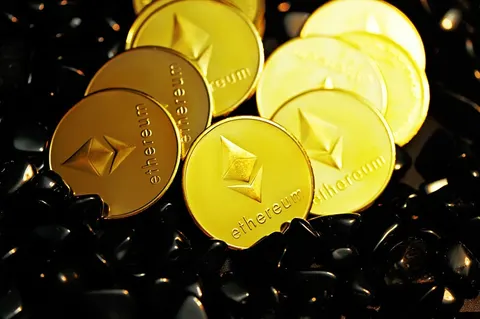
That is how Ethereum was born, whose cryptocurrency, ether, is the second most valuable, with a market capitalization of over $400 billion.
The platform Buterin created allows for countless applications, whereas bitcoin, by design and execution, has a single purpose: to serve as a payment system.
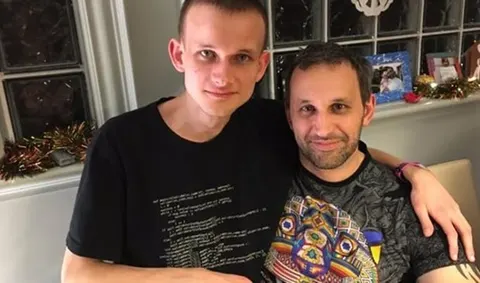
Vitalik spent the next six months traveling the world, researching and discussing various projects with their creators, all working in the blockchain field. The idea of smart contracts came to him in Tel Aviv, where he met the author of a similar platform, albeit one with a specific purpose. Buterin realized that a universal protocol could be created to do that job in any situation.
Before long he published a white paper—the core document on which the technical implementation of the Ethereum blockchain would later be based. In it he described the concept of “smart contracts” and pinned down many of the technical parameters.
He discussed the project with leading specialists, their impressions were good, and that gave him the optimism to carry on. The project proper began with a crowdfunding campaign. In just two weeks it raised $18 million, enough for the first steps. A serious team of specialists joined the development.
The crypto platform made a splash in 2015, quickly won fans and rose to second place in popularity in the blockchain world.
Money to Burn
May 2021 was quite an interesting month for the young man. Besides appearing for the first time on the most authoritative billionaires list there is, he threw another… $6.5 billion in the trash.
Yes, the world of blockchain technology is rather amusing. Sometimes it looks like the Wild West during the Gold Rush, and at other moments it is more surreal than Salvador Dalí wandering into Fakulteta, Sofia's sprawling Roma quarter.
The developers of the cryptocurrency Shiba Inu decided to give Buterin, as thanks for his contribution to the technology as a whole, 505 trillion coins, whose market capitalization was the sum above—about 10 percent of Bulgaria's GDP.
He thanked them officially for the gift, but… then forwarded it to a nonexistent address. The money simply vanished into thin air.
Officially, Buterin says the reason was his concern for security and the wish to avoid speculation in subsequent transactions. Others say it was simply a PR stunt to attract attention.
In the Crypt
Speaking of attention, though, the young crypto prince's relationship with it is rather contradictory.
He is known to donate serious sums to scientific research in the fight against various grave diseases. And also to research into drastically extending human life—a subject that genuinely excites him.
Very little is known about his private life; no one has heard of or seen him with a girlfriend. Buterin loves to talk to the media for hours about blockchain, smart contracts and other technologies, but steer him toward personal matters and the conversation ends quickly. He is absent from Instagram, on Twitter he doesn't even have a photo and writes only about tech. His personal website has no photo either, but he does publish quite a few reflections there, including on philosophy.
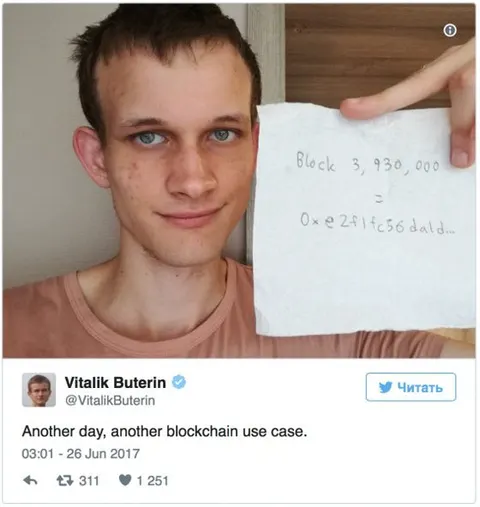
Partly because of this lack of information, he is a favorite target of lurid tabloid news—from stories that he suffers from a fatal illness to claims that he is autistic and that this is why he is peculiar in his dealings with the media. In 2017 someone even spread a rumor that he had died, which sent the price of ether crashing for a few hours.
Dr. Robot
Some journalists say his intonation is reminiscent of the virtual assistants Siri and Alexa. It's a fact that he is no king of oratory: his gaze darts off somewhere, and he speaks quickly and a little unintelligibly. Perhaps that is also why, for now at least, he isn't as popular in the West as many of his “colleagues.”
Apparently it isn't like that everywhere, though. “When Buterin talks about blockchain, Stanford professors pull out their notebooks and start taking notes,” says the well-known Russian politician and banker Herman Gref.
In the end, the young man has his important subjects and priorities, he clearly loves them, and he isn't all that close to life's usual vanities. You can tell by his clothes too—they are the last thing on his mind; he shows up casually, in a T-shirt, even at the world's most prestigious forums. He often wears mismatched socks.
Having left Russia as a small child, Buterin went back briefly only 15 years later, in 2016, and a year after that, at an international scientific forum, he met Vladimir Putin.
He loves to travel and often changes where he lives. Lately you are most likely to run into him if your path takes you to Singapore.
Before Us Gleam Fields of Blockchain
“The revolution the internet made can be repeated. Human relationships can be turned upside down by removing the middleman not just from money transfers, as bitcoin allowed, but from every other sphere of life,” runs, in short, the creed of today's hero.
“Security, reliability and transparency”—these are the three core qualities that sooner or later will allow blockchain to bring about its revolution, Buterin says. (More on the subject—read here.)
The young man talks for hours about the possibilities that Ethereum and blockchain in general offer. But, as he himself says, the most interesting ones will turn out to be precisely the applications we haven't thought of yet.
After the years in which Ethereum was created, the enthusiasm around blockchain cooled somewhat. Then came the period that specialists have dubbed the “crypto winter.” By all signs, though, it is drawing to a close, and the tech community is ready to give blockchain a new, more mature and more thoughtful chance.
I don't know, but listening to this kid's interviews, it definitely seems to me that there is both logic and conviction in his words. It's worth watching what he does from here on, because, by all appearances, the most interesting part of the blockchain world is yet to come. And one of the names we will hear often in that connection is Vitalik Buterin.