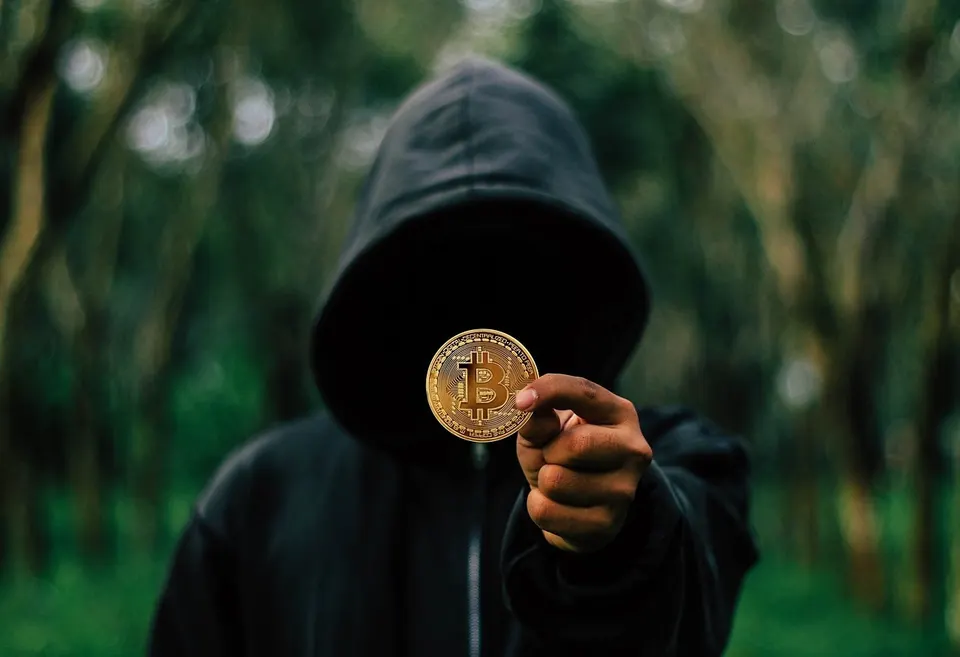
In Budapest, close to the bank of the Danube, there is a new statue—slightly kitschy, but interesting as an idea. It is a bust of a man “dressed” in a bronze hoodie. His face is polished so finely that when you step closer, you see… yourself.
The statue, as you may have heard, is of Satoshi Nakamoto, the mythical creator of bitcoin. Is every one of us Satoshi?
He may well be the greatest legend born of the digital age. But who really is the person who created the first blockchain network? Why did he hide from fame and from the billions that today would make him one of the richest people on the planet?
The story is so powerful, so intriguing and so thought-provoking that it deserves to be gathered in one place. And if the real creator of bitcoin is reading this… maybe he'll be moved and write to me. His fate, and everything that happened after he withdrew, is so bizarre that nothing would surprise me.
Let me hurry on—Netflix is surely already preparing a series on the subject.
Satoshi in Galoshes
This is one of the great stories of our time. Mentioned countless times, supposedly familiar, yet in truth full of nuance and promising to remain a mystery forever…
Satoshi Nakamoto and Banksy are the two hidden pop heroes of the digital age. Whoever unmasks them will make a fair amount of money… and will kill what little romance is left to stir the collective imagination.
Still, let's try. Let's approach it the way classic crime stories do. Let's step into the shoes of Sherlock Holmes (or his modern equivalent, Prosecutor Geshev—Ivan Geshev, Bulgaria's famously controversial chief prosecutor). We'll start with the incident itself and lay out all the circumstances. Then we'll look at the clues that Satoshi's admirers and the media around the world have gathered in recent years. Finally, we'll line up the suspects.
The Name of the Rose
It's 2009, and yet another alternative new platform appears online, promising that payments, banking and the financial world as a whole will never be the same. A certain Satoshi Nakamoto sends his colleague Hal Finney a little virtual money, which arrives where it should…
The first blockchain is up and running, and the first cryptocurrency—still the strongest today—is born: bitcoin. The system springs into motion, and a whole new technological world is born, the world of decentralized applications. In the years ahead, the price of the first cryptocurrency will erupt like nothing before it, bringing incredible returns to smart investors and speculators.
In fact, the story starts earlier. Work on the project officially began in 2007. A year later, the name we mention so often appeared online for the first time. In August, someone using the handle Satoshi Nakamoto created the website bitcoin.org through the service anonymousspeech.com, which allows the owner of a site to stay anonymous.
So here is our first clue. From the very beginning, whoever uses the pseudonym is determined to remain anonymous. In other words, the name itself was most likely chosen to carry symbolism (more on that in a moment); it isn't real, and the person using it has no wish whatsoever to step into the spotlight.
Digging In
In October 2008, a password-protected document went out under the same pseudonym to a select list of people. It briefly described what bitcoin would be, why the venture mattered, and how the architecture of what would become the first and hugely successful blockchain was built. Even back then, quite a few people were surprised that they were evidently being written to by a Japanese man with impeccable English. Online, across forums and various early ventures, something like a community had already formed, all looking in the same direction.
It was just waiting for the fuse that would light the bomb, and its name was… you know what.
On January 3, 2009, the first, genesis block of data was generated, laid at the foundation of the blockchain like the cornerstone of a house. With it came the first 50 bitcoins. Today that would be a good deal of money, but the very architecture of the system dooms them to stay in that first block forever, with no one able to buy or sell them.
At the heart of the project lie 30,000 lines of code, which over the following years will generate 21 million bitcoins. They are distributed through “mining,” and about 18.5 million of them have been “released” so far.
A Pizza Worth Billions
Just six days later, the first version of the core software was released, available for anyone to download and use. On January 12, 2009, the first transaction we mentioned took place: Satoshi sent bitcoins to his fellow enthusiast, the American programmer Hal Finney.
In February, the first exchange appeared. Back then it all looked like a game; even the greatest enthusiasts didn't truly believe that imaginary money locked inside some closed network would one day be worth real dollars.
The last important step was taken on May 22, 2010. A programmer from Florida offered 10,000 bitcoins to buy two pizzas, and a fellow programmer agreed to take the money and make the purchase. For the first time, bitcoin was used for a real payment. And the man who bought the pizzas paid for them with cryptocurrency that today would be worth about $700 million.
Let's hope the pizzas were tasty enough to be worth the price.
Over the following months, Satoshi wrote quite often in the forum of the core developers of the bitcoin blockchain. He discussed technical details, gave his opinion, worked on the software.
On April 23, Satoshi Nakamoto posted a reply to a question on the bitcoin forum bitcointalk.org, where he regularly discussed whatever issues came up. This time the topic was fairly routine: the risk of DDoS attacks on the network.
Then… he simply vanished. It soon became clear that he had entrusted the project to one of his close colleagues, Gavin Andresen, and to the rest of the like-minded crew.
Ten Little Bitcoins
It's time to look at the clues that have given generations of seekers of this mythical figure no peace.
In 2010, transactions multiplied and real money started flowing into the blockchain. Enthusiasm arrived. As someone aptly put it on one of the forums, a cult grew around the alchemist who, using the C++ language, had created the philosopher's stone, ready to turn computer code into gold.
You know what happens after every revolution: usually the first casualties are the idealists.
Some believe that fame and success came too suddenly for the person behind the pseudonym. The fact is that very soon after the blockchain's early triumphs, discontent began to pile up on the forums against this Satoshi, who was supposedly building a decentralized platform open to all, yet was himself the final authority on what happened to it.
At one point the situation was heading toward open revolt, with more and more malcontents ready to split off into their own subprojects, branches (or “forks”) of the main blockchain.
And, you see, Satoshi was a gentle soul who broke before the flaws of democracy—or so goes one of the explanations for his departure.
Bitcoin, Stay a While!
Well, if programmers were poets, that might sound plausible. Except that the messages of our hero with the Japanese name never stop radiating a sober attitude, an engineer's, technologist's view. And detachment.
A few more nuances are worth adding. The aforementioned Andresen claims that three days after the last post, on April 26, he received a letter from Satoshi handing over technical responsibility to him. Satoshi wrote: “I wish you'd stop talking about me as some mysterious shadowy figure; the press just turns bitcoin into some kind of pirate currency. Maybe instead it's worth talking about the open source project and giving credit to all the contributors, which would also motivate them.” He ended by saying it was time for him to move on to other things.
Soon a separate email arrived with all the important passwords needed to run the main site.
In June 2011, the same Gavin Andresen went to be questioned by the CIA, which he later admitted himself. Some believe he went to confess to a murder, to boast that he had completed his mission…
C-I-A-A-A!
All right, but if the CIA had foreseen what bitcoin would become at that stage, it hardly would have acted so “delicately.”
Let's move on with the clues.
In Japanese, the name is neither especially common nor borne by just one person. That's exactly the smartest approach if you're picking a pseudonym—you'd hardly settle for the Bulgarian John Smith, Ivan Ivanov, or for something as outlandish as Trandafor Genadiev.
According to the characters it is written with, “satoshi” means “clear thinking, wisdom,” “naka” is “inside,” but also “relationship,” and “moto” is “foundation, origin.”
Another “translation” holds that the name comes from Samsung-Toshiba Nakamichi-Motorola. Just don't ask me who Nakamichi are.
A Handsome, Perfectly Plump Man in His Prime
Yes, it sounds completely random, especially coming from a programmer who works on cryptography, doesn't it?
Incidentally, that's quite a big hint. Every analysis of bitcoin's core code shows that we really are dealing with a software engineer of great precision, with an almost paranoid avoidance of even the tiniest bug.
At the time he said he was 37, which means today he's pushing 50.
His English really is too good; he uses quite a few typically British expressions (such as “bloody hard” and “flat” for an apartment), but here and there he slips in American slang.
A very interesting detail: examining all of Satoshi's posts, a Swiss programmer noticed that not one of them was published between 5 a.m. and 11 a.m. GMT.
And one more charming hint. Just before he left, he deleted his name from the bitcoin software documentation, leaving a message that it was a shared creation and shared property.
The Billion-Dollar Boy
“If you don't believe me or don't get it, I don't have time to try to convince you, sorry,” Satoshi once wrote on the bitcoin forum.
Following the classic system of crime novels, let's say a little more about motives.
Why does it still matter today who hides behind the mythical pseudonym, even beyond the pop culture image that has formed slowly but irreversibly?
First of all, whoever he is, the person behind the pseudonym should be sitting on quite a lot of money. Estimates vary: some believe his bitcoin fortune is about $1 billion. Others put it at $55 billion.
Still others claim that he owns 5 percent of all the bitcoins that will ever be created. As you already know, most of them already exist, and the fewer remain, the higher, logically, their price will climb. So nothing prevents a Satoshi from appearing one day and turning out to be the richest person on the planet, and by a wide margin.
Or not appearing and still being exactly that—what do you say?
In an ironic twist of fate, his fellow developers decided to name “satoshi”… the smallest, tiniest, most minuscule copper penny in the currency's hierarchy that anyone can own. One satoshi is worth 0.00000001 bitcoin. A bit harsh, isn't it?
And so, it's not as if we haven't asked this already, but… who is Satoshi Nakamoto?
Hello, Finney!
Interestingly, it was only last November that the number one suspect turned out to be a man we've already mentioned: Hal Finney, the programmer who received the first bitcoin transaction. That was when information from correspondence between the two came to light.
Hal is a truly special figure for the blockchain movement. In bitcoin's early years, he did everything in his power to refine the platform, fix its flaws and popularize the enormous possibilities this technology offers.
Hal remained in the blockchain forever; he passed away in 2014.
So how come, just a few months ago, the media suddenly remembered that maybe he was good old Satoshi?
The answer is difficult.
A Finney View of the World
Shortly before his death, a Forbes journalist asked Hal Finney point-blank whether he was Satoshi Nakamoto. Hal flatly denied it. He even added: “I thought I was dealing with a young man of Japanese ancestry who was very, very smart and sharp. I've been lucky enough to know some amazing people in my life, and I recognized the signs right away.”
Hal certainly fits the profile we've sketched from the clues beautifully, which is why his name leads the speculation today. As early as 2003, he wrote that he had an idea for a decentralized online currency; he had the necessary knowledge and a broad vision. What's more, it would have been much easier for him to stage the first bitcoin transfer between two of his own crypto wallets himself at a time when things were technologically quite tense…
Finney died at just 58, of amyotrophic lateral sclerosis, Stephen Hawking's disease. If he was Satoshi… let's hope he took good care of the billions he truly earned.
Luckily, we can still ask the suspect himself for the truth. Yes, Hal Finney is no longer with us, but he had a peculiar attitude toward death and believed it could be defeated. The bitcoin pioneer was an advocate of cryonics and paid to have his body deep-frozen, so that one day, when technology improves, he could be thawed and revived. There—our problem is solved; we just have to wait until it gets that far and then ask him again…
Forgive the dark humor. I just think it's a bit impolite, years after his death, to suddenly pin it all on Hal, without enough new arguments and without him being able to take the floor and say what he thinks.

Confession Only
Meanwhile, there is one rather popular candidate who claims the “role” for himself. The Australian businessman Craig Steven Wright has long been saying that he is the famous figure, and he launches noisy lawsuits against anyone who disputes it. Yes, he “admits” he took on the role of bitcoin's creator together with another colleague, who is no longer among the living…
Then it turned out there were plenty of inconsistencies, and Craig earned the nickname Faketoshi, or “fake Satoshi.” In the meantime he tried to patent the core documents related to bitcoin, to which the court replied that there was no way to verify a person's connection to an online pseudonym.
Oh, by the way, I skipped something. Just when bitcoin became insanely popular and everyone who had heard of it was biting their nails for not buying when the time was right… Satoshi Nakamoto was actually found!
Wow, how simple—so all I had to do was get you to read this far, and the mystery has been solved all along? Almost.
The Picture of Dorian… Nakamoto
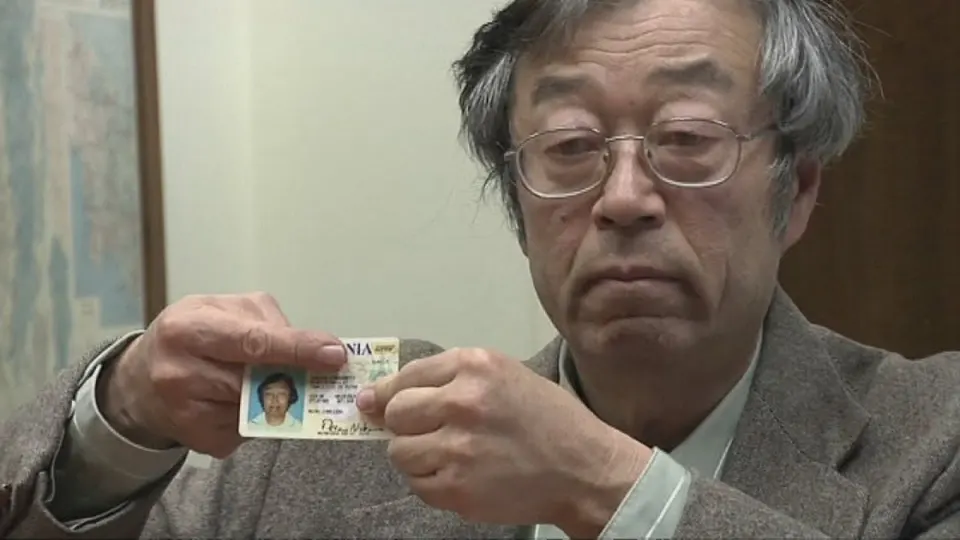
In 2014, journalists from the American magazine Newsweek dropped the bombshell that they had found him! What's more, his name was… Satoshi Nakamoto, and he himself had admitted to creating bitcoin!
Back home in Bulgaria we'd have headlined it “Shock! Bommb!” in the finest tabloid spelling.
It turned out that a physicist named Dorian Satoshi Nakamoto, who had spent his whole life working at classified military facilities, was living quietly in the United States. They called him and asked whether he might be behind the same name in the bitcoin project, and he… confirmed it. Well, why not?
Afterward, both he and his family repeated many times that the namesake had nothing to do with the creator of bitcoin; it was just a combination of a coincidence of names and a misunderstanding in communication.
Well, if you insist on liking this version, let me help you with the words of Dorian's brother, Arthur Nakamoto, who called him “a brilliant physicist who is also very good at lying. He worked on many classified projects, and nobody knows what he did during that time. He would deny everything; he would never admit that he created bitcoin.”
Yes, and the secretive scientist would choose his own name as a pseudonym, so that no one would guess.
The Musk in the Iron Mask
To finish off this line, the more apocryphal versions often feature the CIA and the Japanese mafia, the Yakuza—either as Satoshi's creators or as his killers.
That more or less exhausts the serious part of our list of suspects. Let's add a few curious options, because in crime novels the culprits are often precisely those who stay juuust a little off to the side.
For example, modest, secretive people like… Elon Musk. Half seriously, half in jest, in recent years he has often been mentioned in the role of the mysterious man behind the pseudonym. Musk often talks about bitcoin, and controversially, he's a programmer himself with serious ventures to his name… He even once added the hashtag #bitcoin to his Twitter bio, and the virtual currency's price rose by a few percent.
I don't know if you've noticed, but he does love to show off. Enough about Musk.
Satoshis from the Classifieds
We round out the “and others” list with Adam Back, another of Satoshi's fellow travelers from the project's first months and the creator of Hashcash. He denies it.
Nick Szabo, creator of the now-forgotten cryptocurrency bit gold, also with serious contributions to the blockchain movement. He was the first to describe the idea of smart contracts, back in 1997. A linguistic analysis points to him unambiguously as the prime suspect. He denies it.
We also have a Bulgarian candidate. As a joke—though plenty of things so far sound like a joke, and you never know where luck is hiding. Satoshi Nakamoto has the same initials as… Svetlin Nakov, one of Bulgaria's best-known programmers and educators! For a short while there was a very funny website that, with a genuine sense of humor, revealed the “truth” in great detail. Unfortunately, I can't leave you a link to it.
But at our next interview, I promise, I'll finally press Nakov to confess!
All for One
This brings us to the popular idea that Satoshi isn't one person but a team. John McAfee, for instance, the creator of the popular antivirus software, was convinced he knew the truth: that exactly 11 people, banded together, stood behind the pseudonym. Still, let's keep in mind that in Silicon Valley McAfee had a reputation as something like the local Yolo Denev, the legendary teller of tall tales from Bulgarian folklore.
The fact is that there are far more serious analyses too. They conclude that either a true genius hides behind the pseudonym, or a group of people using it as a collective name.
But even though in our part of the world, as the saying goes, two people make a rebel band and three make a rebel band with a traitor, I don't believe such a conspiracy could succeed, especially when communicating online.
And still, who is Satoshi?
Satoshi, Good and Bad
Most likely we'll never find out. Honestly, I'm not worried that the man will never collect his money; in my view he has done so one way or another—he's clearly smart and calculating enough. And he deserves it.
It's just that the fact that we don't know the real person behind bitcoin… somehow completes the whole idea of the blockchain movement very beautifully and precisely. And in my view, that fact is neither accidental nor a loophole left open through which the mystery might be solved.
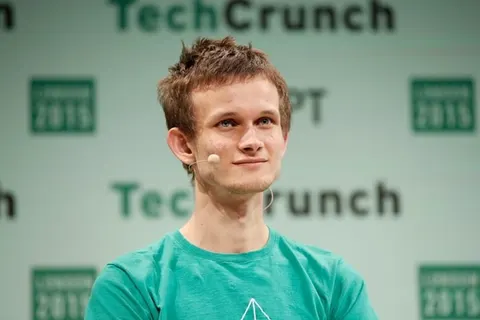
Blockchain simply came as an answer to many of the flaws of the advanced online world. It solved problems that had long remained open. And all of them come together quite precisely in the pop art image that Satoshi Nakamoto has become. So that the next ones can follow, such as the creator of Ethereum, Vitalik Buterin.
The figure in the Budapest statue is rather unsightly as a work of art, yet beautiful as a symbol. It isn't even only about bitcoin, or about blockchain. One should never stop fighting. One should embrace causes that sound utopian, embrace them and carry them forward. Freedom never stops being a value, but only for those who desire it. Thank you, Satoshi! I hope you're enjoying life somewhere and truly preparing the next big ideas. The world needs to be shaken more and more by ideas, and less and less by conflicts…