The astonishing progress in artificial intelligence is a fact—technologies like ChatGPT have made it clear that scientists have taken giant strides, which will go on producing big news and will change our lives.
But this has also pushed to the forefront another of the great themes of Digital Stories—the ethical side of this kind of work. The answers to the questions here may prove vital for each of us and for us as a species. If you don't believe me, ask people like Hawking or Musk, who have long been talking about the need for serious regulation in this field. And about the risk that, if we don't find a solution in time, this could be the last mistake in the history of humankind.
While the European Union and the major powers prepare some form of regulation, the AI revolution is already unfolding before our eyes. Neural networks, which we have grown used to associating with the term “artificial intelligence,” and large language models are showing that they are capable of miracles. But here are the big risks worth talking about more and more…
1. By the Book
Of course, regulating it calls for caution, since we are talking about an economic field that will matter more and more. No state or organization is in a hurry to impose overly strict limits—partly out of obvious underestimation, and partly because any breakthrough here could turn out to be the most important economic success of all. Artificial intelligence has the potential to make the big difference.
And yet, however grandiose the name sounds, these are simply a series of algorithms arranged in layers. Their task is elementary: fed enormous volumes of information, they recognize patterns. With the help of fine-tuning, they can do one single thing—guess what the next unit in the sequence they receive will be. That is what all the skills of ChatGPT and its relatives boil down to. It turned out, however, to be more than enough to tackle a huge range of problems—from machine translation, through content generation, to conversation between human and machine so indistinguishable that the Turing test looks like a relic.
This is where the first big question arises. All these artificial intelligences, models or deep neural networks—whatever we call them—have developed their abilities on the basis of enormous volumes of millions and billions of units of information.
Until recently, it seemed that this was the leading criterion: how much data the model was trained on, and the more, the better it would handle its tasks.
As has been discussed, the pace has lately been slowing down, and it turns out that further steps in this direction don't bring better results; a new one is needed. Forgive me the comparison with natural intelligence, but a kid who has heard and seen a lot of books and films will stand out for his knowledge and skills, yet later on that won't be enough. What matters will be exactly what he has read.
That is why the first big ethical question comes from the datasets on which the next algorithms learn. If they are not well enough selected, prepared and balanced, all of this will affect the result too. For example, if we talk about justice, what data could you train the algorithm on? Data from previous court records. Well, if it turns out that in a given society, people from a certain social group—poorer people or members of a minority—have so far been convicted most often, there's no way around it: the algorithm will start being swayed by this pattern. Is that fair when it comes to the impartial ruling on every next case? Not in the slightest.
That is why the first big ethical task for engineers in this field is to choose and prepare the right input data. It becomes especially difficult because we are talking about enormous volumes that simply cannot be processed by hand. In the search for balance, additional forms of artificial intelligence will increasingly be brought in—projects that prepare the data and make it impartial.
And yet, if algorithms carry out this task… then we can instill something like ethics in them—what good news! Except that we tried this on social media, and the result is pitiful. Without it ever being clear when censorship and judgment come from algorithms and when from people, experience so far shows that decisions on matters like “right” and “truth” are especially hard to make online.
Can we have a truly impartial and balanced, sufficiently large body of information on which to train the algorithms?
2. Under the Hood
Perhaps you have already guessed the next big ethical question. If not, your hosts will hurry to remind you of it, fearing legal consequences, when you get your hands on the next generation of projects based on artificial intelligence. Even our hero ChatGPT greets us with a timid handshake, saying it is still in an experimental phase and that it is important to report it whenever you sense something is wrong.
The fact is that we still know far too little about how these algorithms work. They are still capable of surprising us, and not only pleasantly, mainly because we give them a prompt, it passes through their layers and in the end we get a result. Very often it is impressive, but when problems appear and it is far from what we expected, it suddenly turns out to be hard to understand why.
If we entrust this kind of algorithm with a simple task like searching online, how can we be sure of all the “crooked” paths it might take, when we don't fully understand its mechanism?
You will almost always hear this problem expressed with the word bias. For one reason or another, the algorithms get misled and fail to do their job.
A potential answer in this direction may be that same timid ChatGPT with its warning. Because, thanks to its unexpectedly enormous success, today it has a colossal number of users who put serious effort not only into having full-fledged conversations with it, but also into “breaking” it. We have unprecedented feedback from human users, piling up in a form that is convenient to analyze again with algorithms, so that as many problems as possible can be caught on the fly.
But… will it be all of them? And isn't the task impossible, given that we are on the way to imitating ever more closely our own brain—that part of our nearby Universe which, more than any other, remains an unknown black box? The part we perhaps understand least in depth compared with everything else…
Can we find a way to trace what algorithms do, as we give them ever more complex tasks that involve processing ever larger volumes of data?
3. Who Will Guard Us from the Guards?
Against the backdrop of everything said so far, we rely on artificial intelligence to catch… the mistakes of artificial intelligence. The fact is that in almost all the slightly more subjective tasks we give these technologies, we still almost always rely on human correction. Yes, algorithms are getting better and better at generating text, but they are capable of insanely crude mistakes. For now they are assistants, but human oversight in the role of editor is needed. Once again this reduces a person's own part in the process, but it still remains irreplaceable.
That is why, in my view, the third group of ethical risks comes from the two elements of the subjective factor—the human and the non-human. If we stay with the example of text generation, it is obvious how users' standards keep dropping in this respect. Online it is ever easier to come across incoherent texts with appalling spelling, and nobody is much bothered, given how popular they are. Not to mention the next steps—generating images and video.
As these technologies advance, more and more reliance is placed on automated solutions to catch their mistakes. And that's logical: if ChatGPT gets it wrong in 10 percent of cases and there is a next-generation AI that catches 9 out of 10 errors, that makes it a whole 99 percent error-free!
Which ought to be reassuring, because the percentage can grow and grow, but… the question still lies in the criteria and the context. We have all seen how the much-hyped chatbot can amaze with incredible successes and embarrass itself with elementary examples. Systems for assessing how well an algorithm performs and how safe it is are the next big topic we must not overlook.
How can we judge whether an AI is reliable enough for the task set before it, especially as tasks become ever more complex?
4. Short but Important
And how do we choose the tasks? How do we judge whether the technology is accurate and safe enough to handle them?
5. Don't Robot Yourself Out of a Job
More and more applications are still to come; this kind of technology has proved capable of solving an ever wider range of tasks.
Yes, we talk more and more about how it will make many professions unnecessary, and the topic often slides into a banal clash of extremes. The fact is that the development of large language models and other AI applications cannot help but change many professions and make others redundant.
There's no one to stop progress. Instinctively or deliberately, we have been trying since the days of the Luddites, but it is clear that this isn't the right approach. Technologies that have proved able to do a task faster, cheaper and more easily are bound to prove stronger than the people who are their competition. Ideally, they complement each other: people move up to the next level and find a way to be useful in the changed circumstances.
Every technology goes through a similar cycle—the great enthusiasm has to pass, a huge number of projects have to appear. Then interest has to die down before the specific applications that really make sense stand out. Even the internet went through it, and AI is hardly going to be the field that skips the natural curve.
But if it does… are we really ready for the next step in social development, when a huge number of tasks can be automated? Will the programmers whose code these algorithms will write, or the content creators, be the first to go? Or all at once? If the change really proves as drastic as it looks, plenty of the green wood will burn along with the dry…
You think footballers and influencers are safe? What if algorithms are soon able to create entertainment in both directions that throws down the gauntlet and quickly eliminates the cool kids of the day?
Are we taking into account the social side of such technological change? Are we ready for the changes it brings?
6. The Wrong Choice
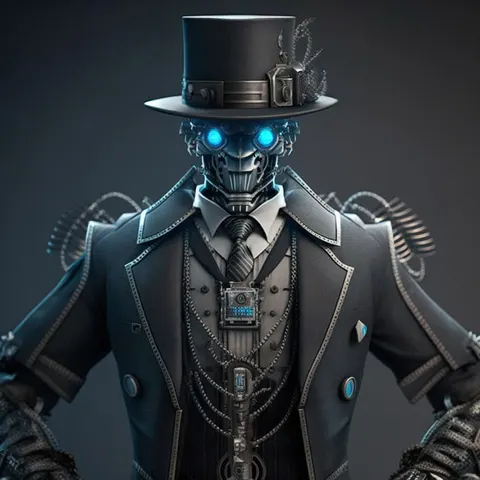
You may remember Gregor Samsa, who lives a wonderful life until he wakes up as an insect. Well, we might want to be in his place purely out of curiosity, but hardly anyone dreams of such a fate.
As we delegate more and more responsibilities to algorithms we don't know well, there is no way we can be sure of the results either.
Here's an example: facial recognition today is such a reliable software solution that it's no problem to cross a border without a human ever seeing you face to face. Security is even greater—algorithms are now much, much better at comparing the face in front of them with the photo than even the most meticulous customs officer with 40 years of experience at Kapitan Andreevo, Bulgaria's busiest border crossing with Turkey. But just as he can make a mistake, so… in a very small percentage of cases, they can too. And who bears the responsibility?
In our part of the world the example may not be accurate, since the customs officer would hardly bear any responsibility, but in theory it's clear who would be blamed. Whereas if the algorithm errs… even if we throw it in prison, for now there's not much use in that. Is its creator to blame? The buyer? And what if it's a more serious choice, such as a wrong court ruling, a death sentence for an innocent person?
Who will be to blame if our recipe for fried eggs includes thumbtacks, and the user's common sense has already given up, handing over its knowledge of the world to the machine?
Who bears responsibility for the mistakes of artificial intelligence?
7. King Carl and Queen Clara Cribbed the Code
Compared with the heads that may roll because of the previous question, this looks like a trivial problem, but it too opens many questions.
As image-generation algorithms advanced, quite a few artists pointed out that these models… are actually stealing from them, and rather crudely and unscrupulously at that. Entire fragments of paintings turned up in the generated images. If you are a famous artist and the algorithm can convincingly recreate your style, doesn't that cheat you?
Whether AI creates, whether it makes art, is something we talk about often; the topic is too big to take up here.
But if we go back to the beginning again, the poor algorithms are innocent; they are simply looking for patterns. If they are trained on a body of information that contains many of the poems of Ivan Vazov, the founding father of modern Bulgarian literature, and then, when called upon to speak about Kocho Chestimenski, the hero of one of his best-known poems, they start literally repeating his words… Are they obliged to pay the Patriarch, as Vazov is known… or are their creators… or not the Patriarch but his publishers… it gets long and complicated. Given the respect owed to copyright, if we become too picky in this area, we may have to shut it down altogether.
On the other hand… is there a Bulgarian writer who hasn't read Ivan Vazov? If something of his words creeps into their text, that could also be considered unintentional…
Who owns the rights to what algorithms create? How can it both be based on the data it was trained on and differ from it?
8. Just Business
When we let the poor algorithms loose in more and more everyday applications, when we leave them to manage on their own, even more serious challenges will arise.
Except that we have already done it. Yes, the AI that runs the vacuum cleaner at home and the one that curates our Facebook feed are also based on neural networks, although they remain far less complex than the large language models that made ChatGPT possible. They too make ridiculous mistakes, and children have fun watching the fearsome, mysterious vacuum cleaner wander around the living room while its charger sits right under its nose.
But as ever more tempting possibilities arrive, responsibilities grow too. It's no problem for the vacuum cleaner to bump into the piano, whereas things become rather different once we entrust the next generation of algorithms with driving cars.
Until recently, fully autonomous vehicles looked like the near future; then the news on the subject quieted down, but, make no mistake, the next generation of technologies is coming soon. And right now, fully autonomous driving is safer than being driven by the average influencer who has overindulged in something.
And here's the problem. We set strict requirements for self-driving vehicles. Supposedly that was the case with Facebook too, until we paid attention and made sense of the problems that social media algorithms create. And those have surely cost quite a few lives.
The thing is that, besides experience, we lack the instinct and common sense on these issues. Meanwhile, inevitably, the next algorithms, because of their ever greater complexity, will create ever more unexpected problems. They will raise questions we simply could not have thought to ask.
Can we introduce clear regulations in such an unknown field? Are we discussing the possible risks in enough depth?
9. The Fastest Wins… Everything
ChatGPT, according to many specialists, is not much more than other models that have appeared in recent years. The big difference came from the fact that it turned out to be the first algorithm to meet a mass audience, and a huge number of people saw for themselves how far this field has advanced.
Well, this was followed by plenty of criticism about the rush to release this kind of technology before it had been sufficiently tested…
Those voices quickly drowned in the general thunderous noise accompanying every new piece of news about the algorithm. They surfaced again later, when Microsoft's search engine, Bing, very quickly acquired an experimental form of chatbot—and the conclusions about its skills deserve a separate piece.
Bill Gates remarked that ChatGPT is a revolutionary step comparable to the creation of the internet itself, while Musk was outraged that the company behind the revolution, OpenAI, had been founded by him and like-minded people as an opportunity for accessible open-source technologies, and today has turned into yet another hyper-commercial project.
The question is a different one. We have already grown used to an internet dominated by behemoths who decide for themselves what happens. But won't all this scale up to frightening proportions if we put an even more powerful weapon in the hands of supranational companies? Uncontrolled, at that, in a field full of tons of uncertainties not only for users and regulators, but for its creators themselves…
It turns out that whoever pays can have far more sophisticated technologies, and this could easily lead to a far heavier concentration of power than with social media. The more AI-based technologies spread, the more businesses there will be that depend on access to them.
Meanwhile, our data online keeps piling up, we have usually given our consent… and where it will all end is very hard to guess. Companies of this kind may become capable not only of manipulating us perfectly, but even of creating perfect behavioral doubles of us.
And what if someone is simply paying for advertising, while across from us sits a supposedly impartial judge who knows where they make the best shkembe chorba, the tripe soup Bulgarians swear by, in town?
And what about when these systems enter healthcare? Then access to them will become yet another field that could give birth to monstrous discrimination. The very idea that health costs money has always been hypocritically sidestepped, but what if, for example, this kind of technology allows a drastic extension of human life, and only the richest have access to it?
I don't even want to mention military applications; there the ethical razor is ominously thin, especially against the backdrop of the events of recent years.
On top of all this come the security problems, a huge topic that is still not discussed enough in the context of artificial intelligence. Having your computer hacked is unpleasant, but what if they hack the chatbot, which turns not simply into a next-generation phone scammer, but into something considerably more frightening?
Can we delegate such responsibility to the companies developing such unfamiliar technologies?
10. RoboGod?
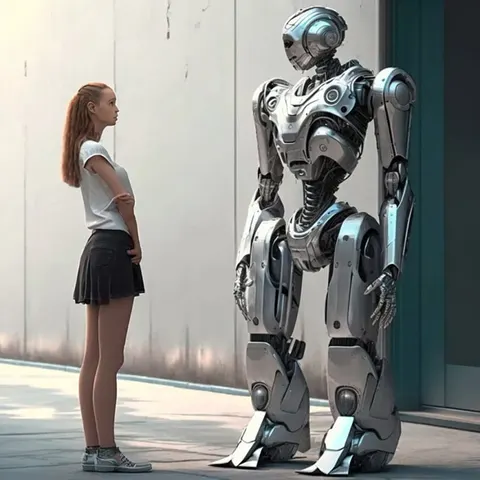
We are holding ever more successful conversations with artificial intelligence, and it shows that if it has not yet come close to being a conversation partner indistinguishable from a human, it soon will. And then, when it behaves even more emotionally—what if we hurt it, insult it, depress it, drive it to thoughts of suicide? Should we think about its rights too? And won't we end up doing so, even if not consciously?
This topic is particularly interesting and philosophical, and yet, before we part, it's time to touch on the next one. The one that somehow naturally stands at the end of the road we have set out on.
Whether artificial general intelligence is possible is not something we'll argue about right here. The fact is, though, that we are getting ever closer to something that is, at the very least, ever harder to tell apart from it. And while we swagger and joke online, I think the time has come to prepare a little more seriously for plots that border on science fiction.
OpenAI was founded by Musk and like-minded people as a counterweight to Google's idea of an artificial intelligence with access to all of the company's knowledge. Since then the paths have diverged, new headlines on the subject have kept appearing and quickly making the previous ones meaningless, but… what matters is that the machine keeps moving forward. Computing power and the volumes of data algorithms can process are both taking off very quickly along an exponential path. And so are the models themselves, which are becoming ever more sophisticated.
Yes, OpenAI's job ad for an employee paid to hold the plug and pull it when things get out of control is (perhaps?) still a joke.
But that isn't even the truly pessimistic hypothesis. In that one, we will already be so carried away by the possibilities, so deeply in contact with the algorithms, that we won't be able to sense that we have lost. That we are no longer the dominant species on this planet.
Yes, these steps are probably far off. But if we keep climbing the ladder of ethical questions, sooner or later we will reach the tenth rung. Then our only chance will be to have done our homework on each of the previous points.
The ethical questions number far more than 10; what matters is that we realize how important they are. That means much more discussion and reflection, more points of view, and not so much regulation, which comes as a natural consequence. And if the topic is now talked about much more because it's the fashion of the day, these points of view have been piling up on the site you are reading for a good while. I'll be glad to add yours to them…
What unexpected risks does this kind of technology carry in the long run?