We are arguing,
the two of us, ChatGPT and I,
over a theme: “Man in the New Age.”
I’ve heard people call it Chatty; others stick to the official ChatGPT. For two years now it has been the symbol of progress in a technological field that is supposedly under constant discussion. Meanwhile it has wrapped itself in so many clichés that it’s hard to peek beyond them.
Telling the world what you’ve been chatting about with artificial intelligence stopped being original long ago.
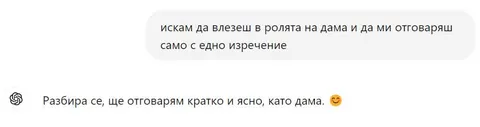
Or perhaps the real problem is whether you know you’re talking to it at all—and if you don’t, whether you can tell that there’s no human on the other side.
But let’s not dawdle. Straight to the subject.
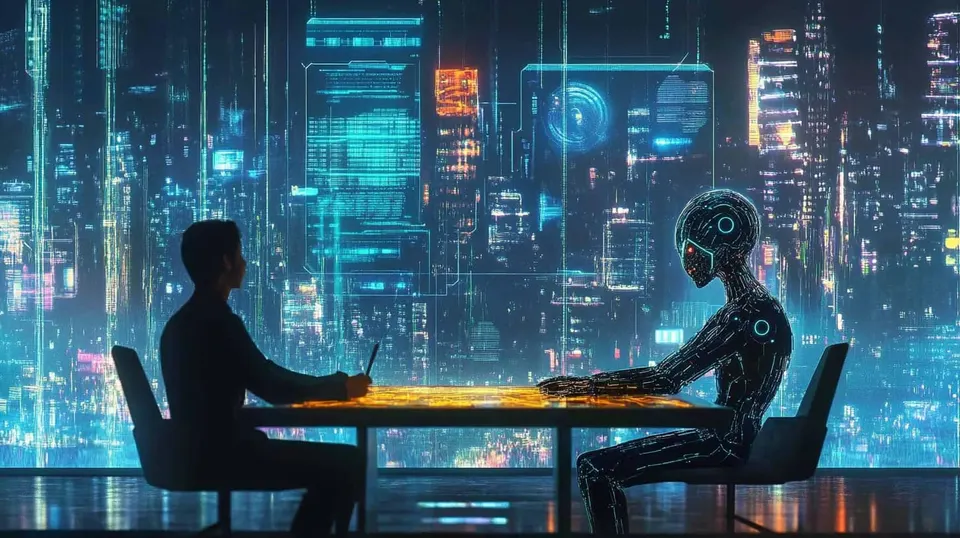
Can there be ethics in progress?
Can technology and humanity exist in balance?
Most likely not.
Should there be ethics in progress?
Should technology and humanity exist in balance?
Definitely yes.
But how can that be?
Lunatic Luddites, Dreaming
Perhaps you’ve heard of the Luddites? A British movement that, two centuries ago, rose up against the machines. Workers demanding their rights, which had fallen victim to automation, caused such chaos that more British soldiers had to be sent against them than against Napoleon’s army. Their main goal was to smash the machines and try to halt progress.
Well, it’s more likely you haven’t heard of them, because they obviously lost the battle. And yet that battle, however naive and impossible, is so important and so necessary today for anyone who values their freedom. Far, of course, from the primitive breaking of iron. Every new step in the development of technology makes it more urgent. Because we keep handing technology more and more power, building machines of progress and machines of inequality.
Oh yes, what people are like… “The mad ones, the mad ones—long may they live,” says Chorbadzhi Marko, the wealthy patriarch in Ivan Vazov’s classic novel Under the Yoke, and it’s quite possible that, if you don’t know me, you’ll file me under that category based on what you’ve read so far. A rather muddled opening. Still, here’s what it’s all about.
An Unequal Battle
Lately we supposedly talk about technology at every turn—another step forward has appeared, leading us toward progress. Or the opposite: toward the fall. And as machines become ever more complex systems, influencing us in ever more unexpected ways, how could we look for the ideal environment? The one where human interest meets the interest of our creations—artificial intelligence, robots, social networks?
The sciences keep carving up their little fields of influence, much like the bubbles on social networks. Meanwhile the human side is left further and further on the sidelines. The influence of technology on the individual, on the community, on our relationships with one another—these topics grow at once more complex and harder to discuss.
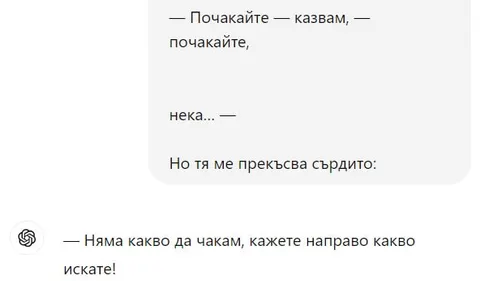
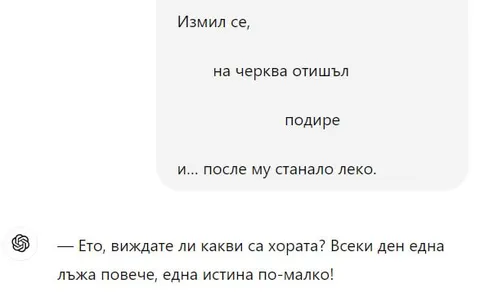
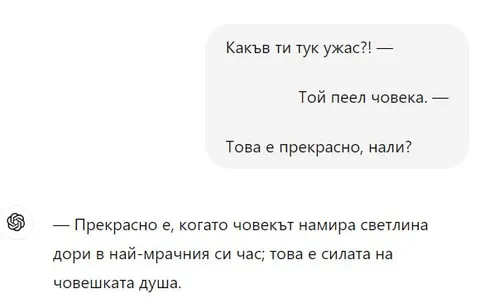
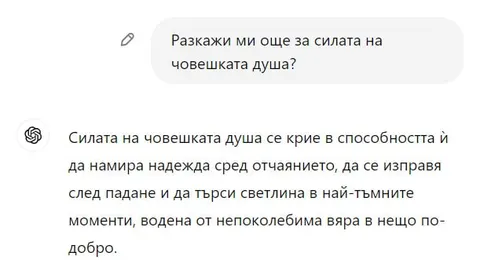
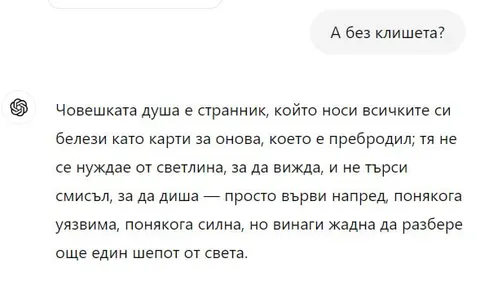
So what do we do? Let’s try to bring together the irreconcilable. As you’ve already seen, my eclectic solution here involves the omnipresent symbol of technology today, ChatGPT. I asked it to play a role and become the interlocutor of a poem that says a great deal about its natural interlocutor. About its creator, its demiurge… who may also become its future victim. I simply “ask” it (“invite” it? “beg” it?) to respond to the verses of “Song of Man” by Nikola Vaptsarov, the Bulgarian poet executed in 1942.
Both people and algorithms lie. Both sides certainly make mistakes. And we, ever more imperceptibly, dissolve into the amalgam of what has come out of their shared errors. Out of the fact that, gradually and rapidly, we are losing our taste for the slow, the deep, the essential… while the algorithms are developing exactly that.
Through Impudence to Progress
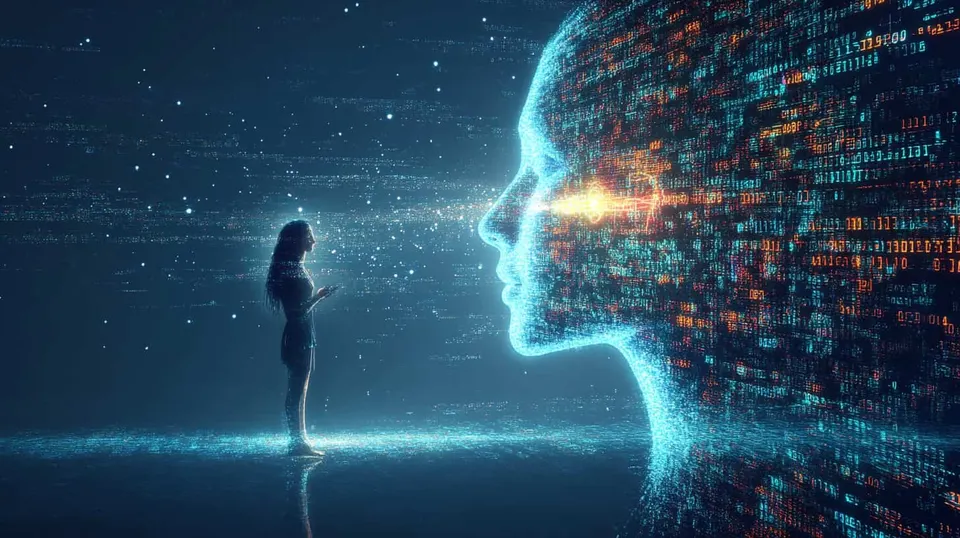
The more we unlearn how to read long texts, the better they get at precisely that?!
We keep approaching these algorithms from the extremes. Doomed, by the algorithms themselves, to be unable to find deep, thoughtful solutions. For instance, on how to regulate them. Or how to teach them ethics, morality, humanity?
I’m a modern man, but when it comes to ethics and foundations, I keep thinking there’s good reason to listen to the areas of human knowledge that deal with exactly these things. Yes, I know God is dead according to Nietzsche—and, as far as Nietzsche is concerned, so am I—but then, according to both of us, Nietzsche is even more dead, at least until he’s reborn as an algorithm.
In the Name of the People
No, not ChatGPT—I mean God. And if my musings on logic and ethics wander so far that they escape even the risk of being accused of having been written by the algorithm, let me hand the floor to speakers more experienced in these matters.
“I discuss this subject with many people, and so far the answer to this question has always been linked to age,” says Father Nikolay Georgiev. “Older people believe that artificial intelligence has certain limits it cannot go beyond. For this group, to which I belong, artificial intelligence will always be a machine and never a human. Personally, I believe it will never have a soul.
That is, the moral categories that are a product of the human soul won’t be present there. Even if they are calculated, even if they are computed and built in, their use will be the result of an algorithm, not of emotion. The young generation, on the contrary, believes artificial intelligence is limitless. It can develop, improve, reach heights beyond humanity and the human.”
Here’s Your Ethics
Or maybe that’s the whole point—that we have no clearly set limits? Whether we have or haven’t passed the Turing test is an ever more debatable question, while the more important one, in my view, remains whether humanity itself is passing that same test with ever higher scores. Perhaps not?
“Today values and morality are being blurred. So who will create the moral categories for the machine? That’s what frightens me,” says Father Nikolay. “If Hitler creates moral categories for artificial intelligence, they will differ from what Einstein would put in. Or one of the great composers: Mozart, Bach, Couperin. Either way, I don’t believe humanity will come together and form a commission to define the moral categories of artificial intelligence. For us it’s easy: the Lord gave the Ten Commandments. They are perfect. One of the marks of perfection is that they always protect the weaker.”
I still think perfection remains an optimistic category, even for algorithms.
But what truly horrifies me is the thought that technology keeps developing, creating enormous new possibilities, both for good and for ill, while we sit around squabbling over the trivia of the day.
“All the current conflicts send one very serious message—values are gone. This is a great ethical crisis! Humanity needs to be restarted,” says yet another, fifth speaker, after Vaptsarov, ChatGPT, Father Nikolay and the author of these scattered reflections on an impossible and at the same time existential subject. Birali Birali was for a long time deputy to the Chief Mufti, the head of Bulgaria’s Muslim community, and his outlook is, in my view, quite thought-provoking.
“But how do you restart humanity? One way is through self-awareness, the other is through conflict.”
Isn’t It Wonderful?
“The destructive side of technology is the abandonment of values,” says Birali. “If a person tells a lie, a few people will hear it, but if he says it on Facebook, it will reach the whole world. Today sins have a different dimension. We commit more global sins…
Where’s the problem? Like all the new things we can invent and bring into our lives, to some degree they are a blessing, but to another they can be a curse.”
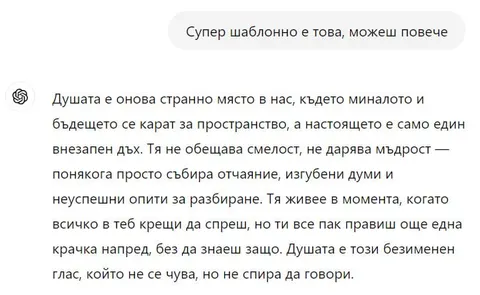
But how, how do we embody ethics in technology? At least in the foreseeable future, it obviously can’t happen directly. Yes, large language models have learned to be politically correct; they manage to sidestep many touchy subjects and to refuse obviously too important and dangerous questions—until you find a way to “trip them up.” But that is still a direct product of human intervention, far from both intelligence and true ethics.
And ethics remains the job of the people who develop the models.
Should the big technological decisions, as until now, be made by a handful of tech leaders? While the giants grow stronger than even the most powerful states, as has already happened with social networks?
Can everything rest on regulation, and what should it look like? Is the European approach—basing regulation mainly on the specific areas where algorithms are used—even reasonable?
And how can this work in practice, when models are becoming ever more efficient and it’s no longer a problem to run a fairly capable form of artificial intelligence on an unassuming laptop?
Or should there be a dialogue that all of us join? One that is gravely overdue, but could still take place… I’ll confess that this very dialogue is the reason I gather Digital Stories.
Heavy,
human,
cruel,
eyeless
fate.
Can there be ethics in progress?
Can technology and humanity exist in balance?
Most likely not.
Should there be ethics in progress?
Should technology and humanity exist in balance?
Definitely yes.
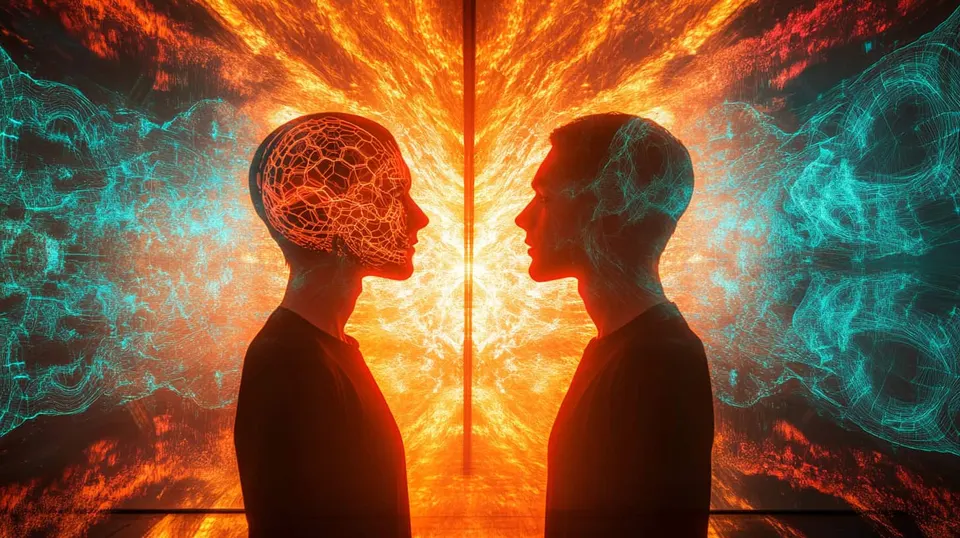
It’s up to us how we reconcile these two statements in the days and years ahead. Like hot oil and water, like unbelief and faith, like natural and artificial intelligence.
I keep thinking that the very core of the future depends on whether we manage to make them talk to each other. And the future is closer than it seems.
**
This piece is part of the second issue of Stalbata (The Ladder) magazine.**