Technology is changing a huge part of our lives. Yet in some areas it stays on the sidelines and never quite catches up. It is clear that when it comes to how we are governed and to democracy, there are problems, and the solutions we know are outdated and inadequate for today. Before long, artificial intelligence will probably enter the paradigm too, as has already been discussed. But in the meantime, shouldn't we try to change things ourselves, as people, with the help of the technologies we already have? For example, through a much-hyped field like blockchain…
It could make electronic voting, such a contentious subject in our part of the world, completely transparent. And on the other hand, it holds the potential for a far more drastic change: blockchain democracy. A way of making the decisions that concern society in a very unexpected, yet logical way.
These days we talk about nothing but artificial intelligence, while another of the big trends is developing in the shadows… Is blockchain the next step in the way we organize society? And what does the idea have to do with the ancient oracles?
Pyramids, Pharaohs
We will have a currency that exists only in some algorithm and in virtual blocks of data. Works of art will be sold in imaginary form, so that one day we may own something that burned long ago and yet is worth billions. Or something that exists only virtually…
A few years ago these sentences would have sounded like science fiction; today they are plain reality. Blockchain technology has posed serious challenges to our common sense and has made good on many of them, turning them into everyday life.
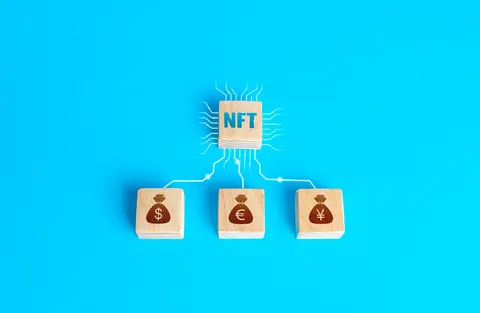
Cryptocurrencies and NFTs are ever larger phenomena. They have proven that they have their uses in the social order and the financial system, and that they have yet to unfold their potential in other directions.
Blockchain technologies hold many more ideas with the potential to one day match their success in finance. Of course, some will succeed and others will turn out to be hollow daydreams. Still, it is worth looking beyond. Is the idea of a democracy based on blockchain too ambitious, too abstract, too impossible?
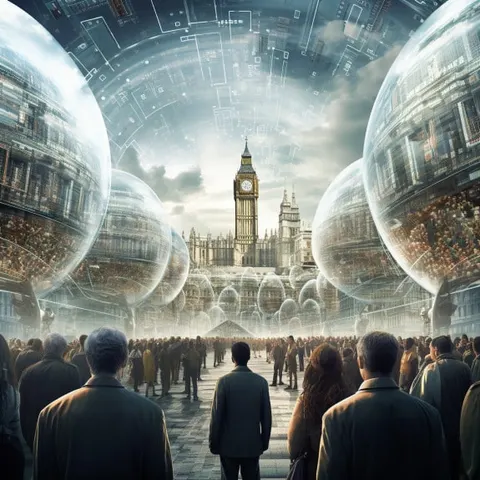
Deus ex Machina
Electronic voting is a painfully familiar topic for idle chatter in our democratic latitudes, and it has recently surfaced yet again. Let us set aside the argument that people are scared of machines and therefore don't go to vote. I don't think anyone today is scared of ATMs.
And yet the question of security and trust will always be there. The god from the machine will look more or less risky to the average voter, and to some degree to people in tech circles as well. A small doubt will always creep in about what happens between entering our vote and the final result.
And this is exactly the first point where it is worth seeking blockchain's help. First of all, what is this technology?
A way of achieving decentralization and traceability. An algorithm through which everyone involved receives information about a transaction and can verify and trace it. It stores, in blocks of data that every participant can access, all the previous information, which can be logically reconstructed beyond dispute.
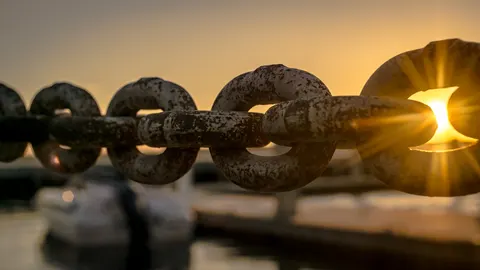
It is no accident that it is called what it is. We are simply talking about a “chain of blocks” of information, to which new ones are added without the previous ones being changed in any way. Each new block becomes the little padlock that locks the one before it.
And if the system works so well for transactions of enormous financial scale… what about the possibility of casting our vote through it? A vote that stays anonymous and yet lets us trace, without error or doubt, how it was counted.
O Muse!
Have you ever thought how absurd it is that, at a time when we can pay with a single click, we wait for days for votes to be tallied from smudged protocols? And on top of that, it happens under the argument that this way is safer. To me it sounds safer to ask some prophet…, but, pun aside, we will get to that idea shortly.
Today blockchain protocols are used even by farmers in China, so that the code on every egg can trace its full history. So that one knows how the hen was raised and when the egg was laid, and that is good for the farmers because it drives up the price.
It is downright strange that the idea of using this kind of traceability in ordinary democratic processes still hasn't broken through. The attempts have been rather timid. Such systems are clearly conservative, and we don't need to resort to the usual conspiracy questions about how perhaps not every politician would welcome such traceability. Assuming that would mean crediting them with too much depth of vision, foresight and insight, which, used to Bulgarian standards as we are, we can hardly attribute to them.

Trojan Horse
Several pilot projects have been carried out in the United States. The first elections involving blockchain were in West Virginia in 2018, followed by Oregon. Small control groups were allowed to vote this way. Subsequent analyses by MIT scientists showed there had been security problems. Nobody claims the technology is perfect, but the more serious experiments in this area in the following years fell victim to the issues of the day.
Yet precisely those issues—Covid and the war—only showed once again that democracy needs its next steps. It needs trust restored.
Speaking of traceability, another sphere where blockchain could certainly be useful from a political point of view is the media. There is no need to mention the flaws in the way we get our information today—it is one of the constant, big themes of Digital Stories, and each of you has experience of it from your daily encounters.

Cassandra
Today manipulation is easier than ever because of the misleadingly enormous volume of information. A news story, for example, can simply vanish; a politician can quickly sweep under the rug a forecast that turned out to be wrong.
In blockchain that never happens; there, manuscripts don't burn. Alas, globally the field of media working with this kind of technology remains surprisingly empty, but in my view, sooner or later an ambitious enough startup will appear and draw attention.
Because in a blockchain-based media outlet nothing can be hidden, and it is always clear who said what and when. And on the basis of all that, anyone can make their own analysis of why they said it and how the words look from the distance of time—whether they have acquired patina or mold.
Swiss Army Knife
With everything listed so far, blockchain makes it possible to take one more big step. And it is not a continuation of or an alternative to democracy, but rather a return a few steps back, to its authentic form.
Today politicians—and here the collective noun can be used boldly—do not believe that the people are the ones who can make decisions. In almost all modern states, regardless of their civilizational differences, representative democracy reigns. Contrary to the birth of the idea among the ancient Athenians, we delegate to members of parliament and ministers the task of deciding for us. Then we punish them with elections or protests if they fail.
In most countries, referendums are just one more weapon politicians use to avoid doing what the majority expects of them. It is enough to mention the Bulgarian experience, where results that were unambiguous in both cases were not implemented even by the very political forces that had initiated and championed them.
Yes, the familiar exception is Switzerland, known for its referendums… Also for its advanced economic development and its neutrality in every kind of conflict. Might these be factors that complement each other in a continuum of cause and effect?
Couldn't technological conveniences allow us to vote more often on important decisions? Wouldn't that make more sense than liking and hating online?
That Ruinous Wrath of Achilles, Son of Peleus
So, I hope you are by now convinced of the many possibilities that even just one of the most modern technologies, blockchain, offers for the way our society is organized. If we add other fields to the paradigm, artificial intelligence for instance, it is downright strange that today there are no particularly popular philosophers, science communicators or scientists proposing a new political paradigm. There is hardly any dispute that we need one, in one way or another.
“Democracy is the worst form of government, except for all those other forms that have been tried,” you know the popular Churchill quote. So what, should we stop trying? Resign ourselves to the conditions staying the same, even though the times change and change us in many directions?
But that is not in human nature, which needs utopias in order to move forward. Could it be that democracy itself is capable of development? That it needs a breath of fresh air?
Thus Spoke Zarathustra
Which leaves us with one futuristic but very interesting idea. Yes, the famous oracles are something rather advanced, but, as we said, in the blockchain world such labels change quickly.
What would happen if elections became not a right or a duty, as they are today, but a source of investment, even of betting? The idea of DAO democracy belongs to the economics professor Robin Hanson and the creator of Ethereum, Vitalik Buterin.
What is a DAO? The next step in the development of blockchain. As you may know, in the East, Dao is the name of the principle of the way that should lead us forward. Here the abbreviation stands for “decentralized autonomous organization,” the kind of systems that blockchain allows and that Ethereum made possible in the fullest sense.
These are companies, organizations or software that embody the principle of decentralization precisely on the basis that information once entered cannot be changed. How does that connect with the idea of democracy? With a little help from… game theory.
Prediction markets are used in gambling, but they are also an important principle of stock exchanges, and something we encounter every day in our lives.
Statistical studies prove that sports betting odds predict the outcome of a given contest more accurately than the opinions of leading experts. Bets on who will become president of the United States are very often more precise than the polls. The simple explanation is that bettors ask around, take an interest, add their own experience and point of view. It is not the kebapche—the grilled minced-meat roll handed out at Bulgarian campaign rallies—nor the star sign or the smile of the candidate, but direct profit that motivates them to decide whom to back.
Could Hector Have Escaped His Death?
An impressive example of “the wisdom of crowds” comes from the following experiment. A jar filled with a huge number of candies is shown to 100 people, who are asked to guess the count. Then the results are averaged: 4,515. Astonishing! There are 4,510 candies, and the estimate is closer than that of any individual participant.
Which brings us to the idea of a prediction market—say, on who will win the next match between Levski and CSKA, Sofia's two great rival football clubs. Bonds are issued at 1 lev (about 55 cents) and sold to each participant, and 2 leva are paid out after the match only to those who guessed right. Very soon the price of the bond will show the real chances of the two teams. And later on: which participants are better at their forecasts.
In recent years, experimental polls like this have been run on questions such as whether the next SpaceX rocket launch will succeed or how the price of ether will change. And the results predict the actual course of events quite accurately.
DAO democracy combines blockchain and decentralization, uses prediction markets and gathers the opinions of citizens.
The majority, of course, tends to underestimate certain risks, which is why it is important to somehow add the opinion of experts as well.
We were supposedly just introducing the topic, and only now have we reached those oracles we started with.
Nostradamus
We return to Ancient Greece, once again to the cradle of democracy, as the popular cliché goes. What exactly the Oracle of Delphi was is still debated, but rulers from all over the known world came to that temple seeking prophecies. And not random ideas, but opinions based on impartiality.
The Athenians did it too, on matters they could not resolve themselves through debate. And on matters where they believed they were too biased.
This is exactly what the idea of prophets in blockchain democracy rests on. They are external sources of information to be included in the system built on the technology. Additional authorities, objective or subjective, that would oversee the processes or at least reinforce them with information.
Oracles can be applied in many different ways. They could even take the form of simple ethical frameworks that block certain decisions. Of course, we arrive once again at the eternal question of who, then, will guard us from the guards.
Kebapchain
So, the simplest version of DAO democracy is to pose the question “With which party in power could incomes rise by 20 percent by the end of its term?” and, once again, pay out the correct bets afterward. And let that replace the elections.
Then buying votes becomes a civic duty. People don't vote out of sympathy; the reasonable approach is rewarded. Even if a candidate looks good to you, you will vote not for them but for the one you think will get the job done.
Another proposal: votes could carry different weight based on various factors such as education… or some people could simply take part with larger sums. Yes, but here we run up against equality and universal suffrage, one of humanity's greatest achievements.
It is also important to choose the questions very carefully. If, for example, it turns out we are asking whether to use nuclear weapons, and the objective indicators say exactly that…
Yes, this topic is complex and deep, and every small change carries big risks. And yet the future is coming, even when we don't want it or aren't ready for it. And we all deserve a future in which we are prouder of our politicians and of the way we are governed…