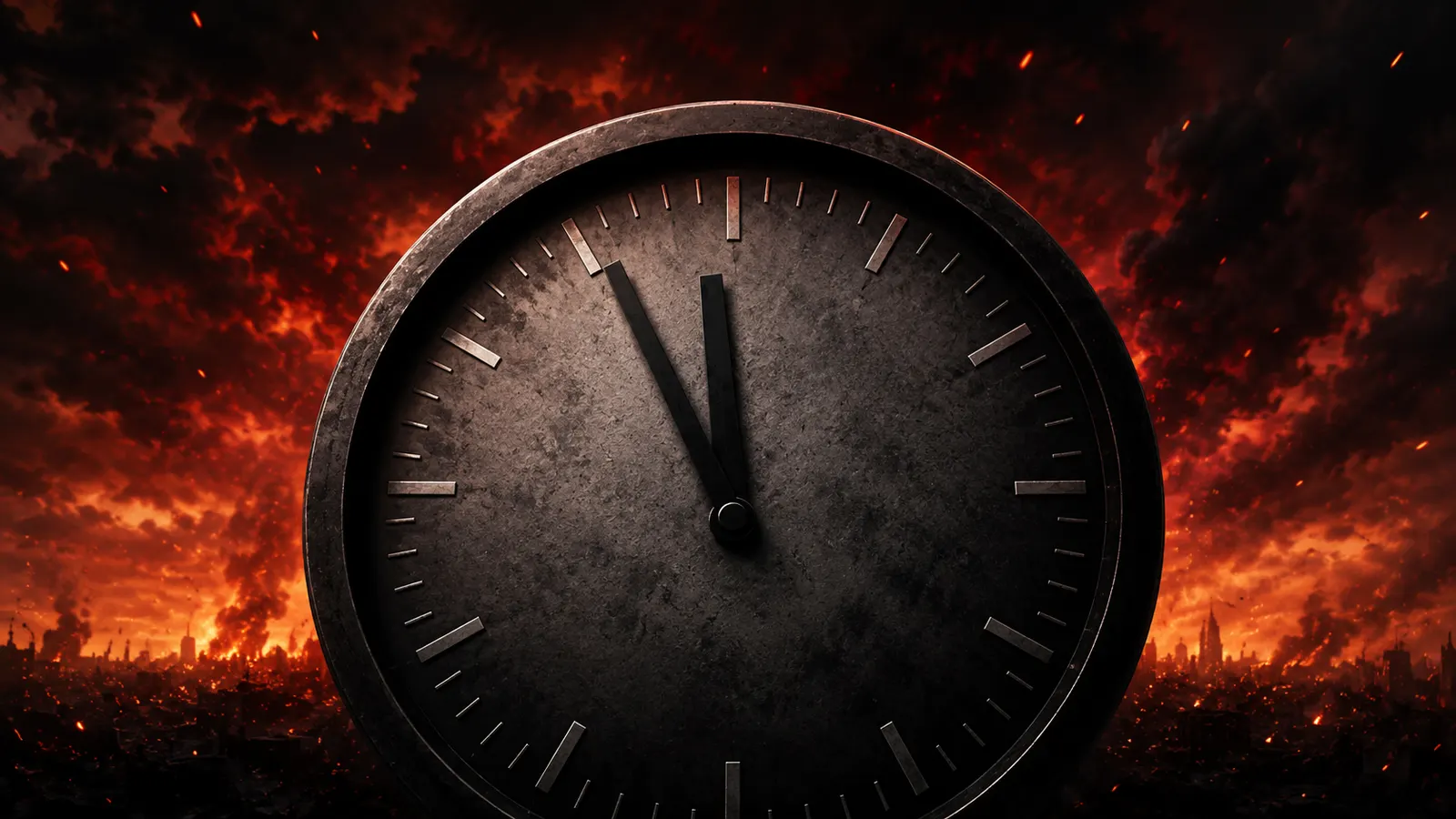
85 seconds. The symbolic clock that shows how close we are to the end of the world pointed to this insanely short time for the first time in 2026.
The generation that not only remembers the last (so far) world war but also witnessed the first (may they also be the last) nuclear explosions is passing away.
It is as if humanity's immunity is running out. Only we have no Mantoux test—the skin test that reveals whether the body still remembers tuberculosis—to remind us, to jolt us, to make us think.
This is the most unpleasant Digital Story of more than 500. But I believe it is important to tell it.
What would happen if one day a nuclear bomb went off somewhere in the world?
The Destroyer of Worlds
Hiroshima and Nagasaki. Two not particularly large or strategically important Japanese towns will remain in history forever, because they showed the silent horror of technology turning against humanity. Eight decades ago, on August 6, 1945, “Little Boy”—the first nuclear weapon in history—killed 70,000 people in an instant. By the end of the year the death toll had risen to 140,000.
Three days later “Fat Man” was detonated over Nagasaki, killing 40,000 people on the spot and almost as many again by the end of the year. The cities were chosen deliberately, so that the terrain and… the effect could be assessed.
Nothing can compare (and may nothing ever manage to) with the primal horror of an atomic blast. A blinding (in the literal sense, too) flash, then a gigantic mushroom, a cloud rising toward the sky. As Mr. Oppenheimer put it, “Now I am become Death, the destroyer of worlds.” These words from the Indian epic the Mahabharata sprang into his head when he saw the effect of “Trinity,” the first successful nuclear test, carried out in the Mojave Desert.
In Cold Blood
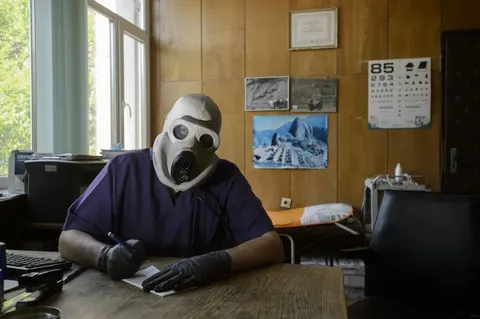
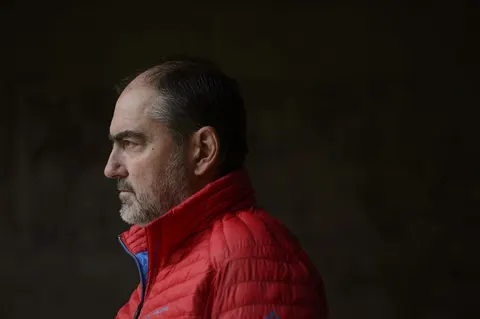
“Otherwise it's very beautiful,” adds Dr. Slavyan Stoilov, an experienced physician and specialist in unexpected, serious, even dramatic challenges.
If there is a way to keep a bad scenario from happening, whichever direction it comes from, it is to talk about it, to discuss it.
And we supposedly do, but in this case, in my view, not enough. We have arrived at a world in which heads of state talk about using nuclear weapons if necessary; in which it isn't even clear which countries possess the technology; in which treaty-based limits are melting away as if under high radiation.
One mistake, followed by another…
As Dr. Stoilov says, a nuclear explosion today would be frighteningly possible. “A matter of a small mistake, and not necessarily a human one.” Not only people—software could make it too. “And at some point AI will get fed up with us as well.”
“A matter of a small mistake,” the doctor repeats. A minor malfunction in an important radar, a misread signal, even a powerful solar storm in the atmosphere—it is enough for something to work incorrectly and the nuclear arsenal could be set in motion. History shows it: more than once we have passed within a hair's breadth of a nuclear clash.
From the movies we picture a red button in someone's briefcase, but reality is more mundane, and therefore more frightening: even a small mistake could prove fatal for us as a species, and I think we must never stop reminding ourselves of that.
Apocalypse. Will It Happen?
Are we ready for such a moment? Dr. Stoilov, in his typical style, is laconic: “Some are.” There are countries with serious civil defense programs—bomb shelters, training programs, stockpiles, medicines. People like Sam Altman and Elon Musk admit they are investing in shelters that could prove lifesaving in such a scenario. Meanwhile, many others—our country included—can boast no such preparedness. According to our guest, Bulgaria once had well-developed systems for protecting the population too, but over the years they have been neglected.
Today, if the sirens wailed, most of us wouldn't know where to go. Even though medicine today knows how to act in a nuclear incident, thanks to experience, and not only from Hiroshima and Nagasaki. Alas, that knowledge may turn out to be useless if there is no organization and preparation.
The destructive power of a nuclear bomb manifests itself instantly through several deadly factors. Dr. Stoilov lists them:
- light effect—blinding light and heat
- shock wave
- penetrating electromagnetic pulse
- ionizing radiation
First comes a brilliance like nothing else—as if a second sun has risen. Within fractions of a second come the fireball and the devastating shock wave, sweeping away buildings and bodies. The electromagnetic pulse fries electronics over a wide radius, while the radioactive emissions invisibly begin to “cook” everything alive. Alas, mammals have no detectors for ionizing radiation.
Roadside Picnic
“Could we mistake it for something else? No way,” Dr. Stoilov says firmly.
The so-called mushroom—the terrifying column of smoke and dust that rises high into the atmosphere—is the unique hallmark of a nuclear explosion.
The effect comes from the enormous energy released in an instant: air heated to millions of degrees shoots upward, dragging debris with it and forming a mushroom-shaped cloud. No conventional weapon to date can fully imitate it.
Military strategies usually call for warheads to detonate a little above the ground (a so-called air burst)—that way the cloud spreads farther and strikes the largest possible area.
What is the scale of the destruction? It depends on the bomb's yield and the terrain, but Dr. Stoilov offers a benchmark: with a 1-megaton nuclear warhead, the lethal radius is about 11 kilometers. At 3 km from such a blast, 98 percent of people would die on the spot. Up to 5 km, instant mortality reaches 50 percent, and almost all the rest would be severely injured. Only beyond the 11th kilometer is there a chance of surviving without serious injuries.
A big city, wiped out in seconds. For many, death is instantaneous, without feeling any pain. But for so many others, hell is only just beginning. If the Hiroshima bomb (18 kilotons of TNT equivalent) went off in the center of Sofia, the zone of destruction would stretch from the Central Sofia Cemetery in the north to the Military Medical Academy in the south, from Konstantin Velichkov Boulevard in the west to the Chavdar Bridge in the east. Calculations show that the explosion would kill about 94,000 people outright and injure about 138,000 more.
Apocalypse. Why?
If a person survives the first seconds, it is vital to know how to act. According to our interlocutor, panic kills almost more than the bomb itself.
There are three classic methods of protection from radiation. “We need time, distance and a barrier—a shield,” Dr. Stoilov explains. In other words, you must minimize the time spent in the zone of high radiation, maximize the distance from the blast or the contaminated area, and put a barrier between yourself and the source of radioactive contamination. It can be made of all sorts of materials—concrete walls, dense earth, lead plates, water, even thick plastics.
If someone sees the brilliant light, it means they have survived the hit itself, but the shock wave arrives seconds later. So they must throw themselves to the ground with their feet toward the bomb and not look at the blast—it will burn the retina. If there is a way, they should hide from the direct impact of the shock wave. Then it is time to find the nearest shelter—a basement, a solid building, a tunnel, any structure that can separate them from the radioactive dust.
They must stay shut in as tightly as possible for at least 8 days, until the level of radioactive iodine drops, or until they receive official word that it is safe outside—this may take hours or days. At such moments, the doctor says, what matters most is knowledge and skill, as with any kind of survival, and also composure.
Metro 2033
Two weeks underground can make the difference between life and death—that is how long it takes for the most intense radiation to subside. The radioactive isotope iodine-131 has a half-life of about 8 days; after two weeks its activity will have fallen drastically. Of course, there remains the danger of other, longer-lived isotopes such as cesium-137 and strontium-90, but the initial lethal radiation background will have decreased.
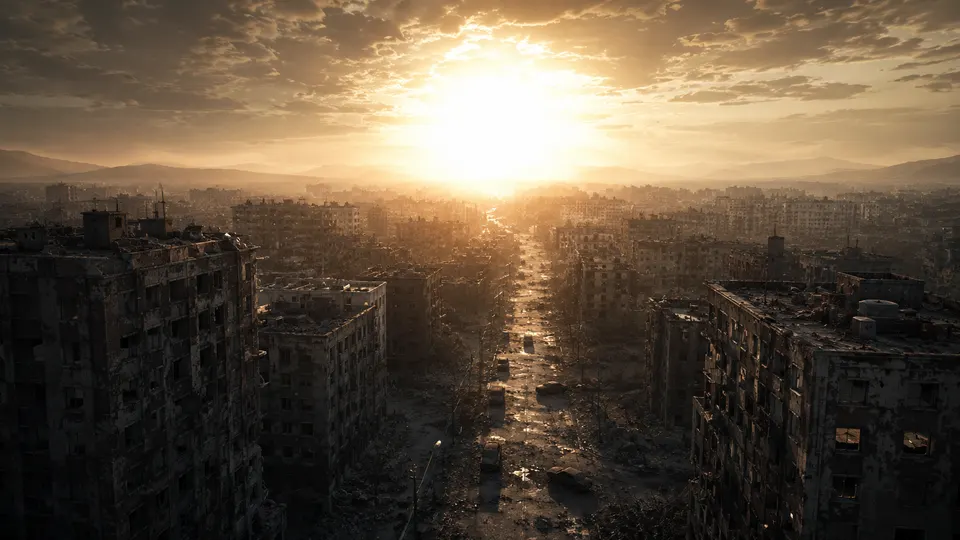
Where could a person hide for so long? “In Sofia the metro is the only suitable place; they ruined the others,” notes Dr. Stoilov. The underground railway, with its deep tunnels and massive structures, is the only large public shelter. The old bomb shelters have long been abandoned, flooded, turned into warehouses…
Surviving 14 days underground is not easy; you need supplies of water, food and medicine, which aren't maintained anywhere either. But even if a person takes Sam Altman's approach, that doesn't necessarily mean salvation. “And then what? He'll live there, alone, until he dies…” says Dr. Stoilov.
No one could survive cut off from the world. In such a scenario it is easy to imagine global devastation following, the doctor adds. Nuclear war leaves no blank spots on the map—the whole world pays the price, and it doesn't matter how rich you are if there is nowhere to buy air, water or food.
There are many myths and misconceptions about what to do (or not) in a nuclear explosion, and some of them are downright dangerous. For example, that we should stare at the blast to “see” what is happening, or even film it. “What must we absolutely not do? Stand there gawking at the spectacle, heroically upright, hand shading our brow like a proud collective farmer surveying his field, and shoot videos on our phones. Yes, otherwise it's very beautiful.”
Another widespread myth concerns iodine tablets. Many believe that if we take iodine in advance, we will be protected from radiation. Yes, potassium iodide helps, but only against the buildup of radioactive iodine in the thyroid gland, and only if taken shortly before or immediately after exposure. Taken too early or without need, it can do serious harm.
Apocalypse. When?
History remembers countless examples of the nuclear danger being underestimated. I have written here about the Radium Girls and how technology can turn into utter horror. Dr. Stoilov, for his part, tells of the first nuclear tests from Oppenheimer's time—soldiers lined up in the open a few kilometers from the blast. “They sit on wooden benches and watch the show—laughing, having fun.”
Today it sounds insane, but the military men of the day didn't grasp the risk. Many of those soldiers paid the price with their health.
In the minutes, hours and days after the explosion comes so-called secondary radioactive contamination. The dust lifted high by the mushroom begins to fall back down, contaminating soil, water and plants. The wind alone decides where exactly this poisonous ash will go, but because of the so-called wind rose—the shifting pattern of winds over a place—sooner or later the problem spreads over a large radius.
Acute radiation sickness strikes people who absorb a large dose of radiation in a short time—they begin vomiting, feel exhausted, and later come hemorrhages, hair loss and a collapse of the immune system. In such a situation medicine is powerless. “Above a certain dose, we just count the days,” says Dr. Stoilov.
The Ninja Turtles
Many people can survive, especially with timely treatment. Our interlocutor gives a striking example from Chernobyl: “Of the several hundred people believed to have received a high dose, only 134 were diagnosed with acute radiation sickness, and of those, 28 died. According to a UN report, the only significant public health harm after the accident was around 4,000 cases of thyroid cancer in children and adolescents, over 99 percent of whom were treated successfully.”
At the same time, the idea of serious mutations is, for now, a myth—neither after Chernobyl nor after the blasts in Japan has a new and different species been born, at least according to science and Dr. Stoilov.
If people are evacuated in time, if the consumption of contaminated food is prevented, many lives can be saved. Knowledge and preparation can make the difference between life and death.
One more horrifying touch: radiation hits rapidly dividing cells hardest—which is why children, with their fast metabolism and growing bodies, are more vulnerable than adults. A child's body absorbs and distributes radiation doses faster, and its DNA is damaged more easily.
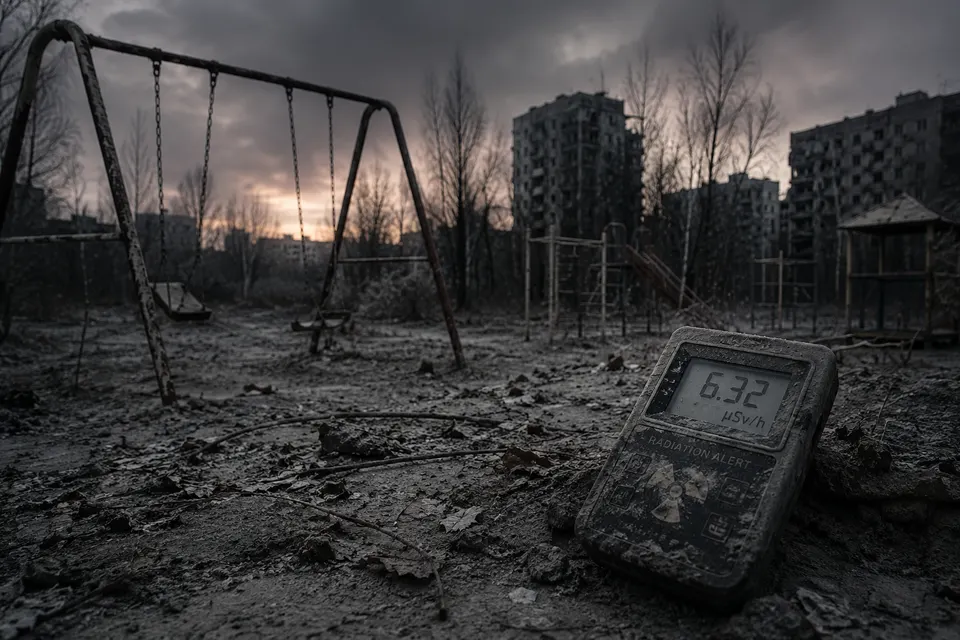
After a nuclear explosion, nature suffers too, long and painfully. Dr. Stoilov reminds us of the “lifespans” of the main radioactive poisons: iodine—8 days, cesium—30 years, strontium—29 years. The last is especially insidious because it accumulates in the bones of living organisms. In humans it is built into the skeleton and keeps irradiating the bone marrow from within—which is why it is considered one of the most dangerous isotopes in nuclear waste. The areas around the epicenter can remain uninhabitable for many years, even if the buildings are cleared of debris.
But where is it safe after such a disaster? In the past, miners used canaries to learn in time if toxic gases appeared—if the bird died, there was a problem.
With radiation, however, that approach doesn't work: “You can't see it, you can't hear it, it has no smell,” says Dr. Stoilov. Today, though, there are compact devices—dosimeters—sold freely online.
The Victors Are Not Judged
But what if there are no victors?
A country decides it can win a nuclear conflict by striking first and hiding from the retaliation. Is that possible? Not in the least, because of the wind rose. Perhaps what has saved us so far is that no nuclear power can deliver a strike whose consequences would leave itself safe. Even if it isn't harmed by the explosion itself, the radioactive clouds will circle the globe. The wind has no political leanings.
Here we arrive at the terrifying concept of nuclear winter—a global climatic cataclysm that would follow a series of nuclear strikes. They would lift millions of tons of soot and dust into the stratosphere; the dark veil would block sunlight and cause a sharp drop in temperature. The world would go through a cold and hungry apocalypse. Dr. Stoilov asks rhetorically: “We'll survive now, but with no future?” What is the point of saving ourselves today if tomorrow there will be no sun, no bread and no hope? Nuclear war promises a world without victors—only victims and the dying.
Why aren't we afraid enough? “Because everyone harmed so far has been far from our street and our neighborhood,” Dr. Stoilov replies. That sentence holds so much of the truth about human nature. The nuclear bomb has been absent from the horrors of our street long enough for our fear to dull. We have grown used to the thought that it is merely a political trump card, part of the grand strategy.
Time of Parting
We keep thinking of nuclear weapons as a deterrent—monstrous, but keeping the enemy at bay. Yet the very fact of their existence is a threat to us all. The specter of nuclear war lurks behind every regional conflict between great powers, behind every technical failure, even behind an artificial intelligence that might one day gain control of the arsenal.
So far it has been a lot of “fun,” but… what would the worst-case scenario look like? Dr. Stoilov's answer is simple: “Nuclear winter and the annihilation of the human race… at the very least.” A full-scale nuclear war could wipe out our entire species, and the other living beings on the planet too. Only the most adaptable would stand a chance of surviving—cockroaches (though according to new research, even they aren't a sure thing), deep-sea fish, some bacteria around the tropics… And maybe a handful of people, scattered and doomed to a slow death in a dead world.
Let's not let it happen, what do you say?