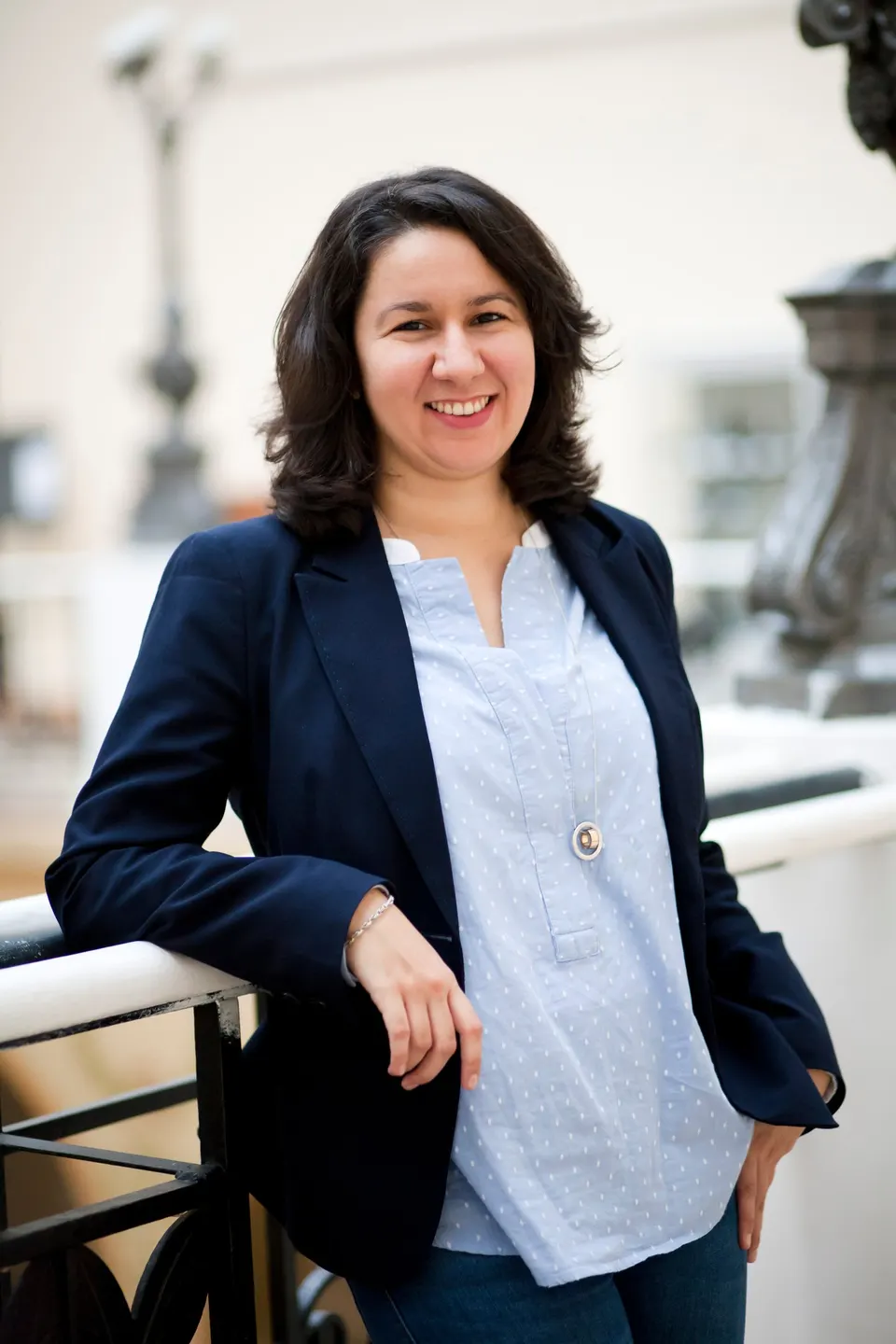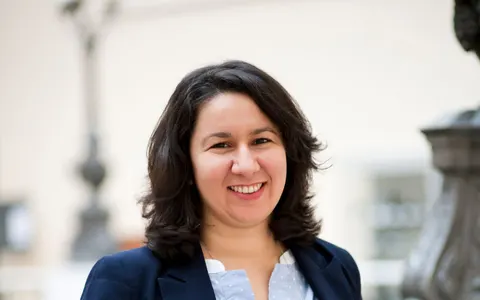
Diana Kulchitskaya shows her students how journalism is changing in the digital age. She teaches at Lomonosov Moscow State University, the largest and most prestigious university in Russia. She is the author of the textbook Novite medii v globalniya svyat (New Media in the Global World, 2021), which tells future journalists about the challenges of digital technology.
Diana also has experience as a journalist. I have known her since the early years of the new millennium, when the two of us were learning the trade in the newsroom of 24 Chasa, one of Bulgaria's largest daily newspapers. She grew up in Bulgaria, where her mother is from, and speaks in the first person about the media in both countries.
What makes people take up journalism? Does it have a future, as seen from the lecturer's desk? And how do the debates about the online future of the media look from the “more northeastern corner” of the globe?
– Today journalism is clearly lagging behind because of the rise of technology. As a lecturer who “teaches” young people journalism, what do you think is the path to its survival?
– I think journalism is lagging behind because we have an abundance of information, which we can get not only from the traditional media, as before, but also from social networks and from bloggers. This makes people think they don't need journalism, which is a great misconception and an illusion. For as long as the world turns, we will need quality, verified information.
Unfortunately, both on social networks and in bloggers' content there is often more PR and advertising than objectivity.
In my view, journalism is lagging behind because the traditional media cannot adapt to the new digital environment.
But that is exactly how it can be resurrected—by finding its own digital path.
By finding a way to exist in the new environment, to use modern formats, and to create analytical work with the help of new technologies, too.
– Is there a new format that is paving that path?
– Digital media have many formats designed to produce more meaningful, more analytical work. Journalists can use them to attract an audience, too. On the one hand, with techniques we already know—analysis, for instance. On the other, with new forms. Podcasts, for example, could become a kind of revival of radio journalism; there is room for very meaningful discussions there.
Another format with a future is the so-called multimedia story, known in the West as “digital longform.” It is one long text with audiovisual elements integrated into it. The first such project, “Snowflow,” was created by The New York Times, and after it many similar ones began to appear, and not only in the West. The analytical part can be done very well there and combined with new visual methods of presentation.
I'm quite optimistic, and I think the digital environment offers journalists a great many opportunities.
Perhaps journalists themselves haven't fully realized it yet.
– How have the new media changed the principles of communication?
– With their arrival, communication has become more horizontal. We used to have one main source of information: the traditional media. If someone wanted to spread a piece of news, they had to turn to them. Now anyone can take part in the process, as long as they have a phone and internet access.
On the one hand, this leads to positive changes: communication becomes more democratic, and different people get the chance to join the conversation. But there are downsides, too—more opportunities for manipulation appear. Not everyone who enters the communication space has good intentions.
Journalists used to have the function of filtering content and letting through only verified information. Of course, that applies to an ideal situation, and in the 20th century we saw all too often how an unverified story made its way into the communication space.
But now that check is gone, and everything ends up in the communication space. Journalists no longer play their role as “gatekeepers” who sift and choose what to pass on. To some extent, the social networks themselves have started doing this, with various fact-checking initiatives. But I don't think it's enough.
Many things are changing; only the journalist's task remains the same as before—to verify the facts. And digital tools offer many new ways to do that.
– Does truth matter to online media?
– If a media outlet wants to be read and to have a good reputation, it will always orient itself toward the truth, and the truth will be its main concern. It doesn't matter whether it's online or traditional—right now everything is very mixed up, and it's hard to separate the old media from the new.
– Can paid content be the salvation of the media?
– Yes, but it's only one of the ways out. Modern media created by journalists, which play the role of traditional ones, essentially do the same thing they always did, only in a digital environment. But now the advertising model doesn't work. It existed for many years, and at the moment advertising is going entirely to giants like Facebook and Google. Clearly, new business models have to be found for the media to survive.
In my opinion, paid content works only for outlets with a smaller, more specialized audience—those focused on business, for example. For outlets with a broader audience, it may make more sense to attract donations. For instance, I like The Guardian because I think they do good journalism, so I'll make a donation to their newsroom. Many well-known media outlets currently exist on this model.
– PR people, advertisers, digital marketing specialists, influencers… As we've already said, the job of these specialists is very often to get around the truth, which is the exact opposite of journalism. And yet many people in the profession move over to them. Why?
– I don't think it has to do with technology. PR and advertising have always been fields where the pay is considerably better than a journalist's. Many people switch to them, and it was like that before digital technology arrived, too.
But I'd also like to defend some of them. Most people think a PR specialist wants to get around the truth. In my view, though, good PR doesn't tell lies; it respects the truth.
Of course, the goals of PR are very different, but that opposition has existed for many years. At some point, many journalists who see no way to grow in the profession move over to PR, since it's still about communication, and that way they can earn a better living. I think it's a very sad trend. And yet there are quite a few people who would like to stay in journalism, even though that path is harder and lower paid—but, in my view, also much more interesting.
– So, in a way, to keep working in this profession you have to give up a lot. You teach future journalists. How do you convince them to stay on this path?
– Our faculty has all kinds of students; some are training to be PR specialists. I try to show the good, inspiring examples of journalists doing something worthwhile. Of journalists showing that this profession matters, that what they write can change the world for the better and solve real problems.
I simply try to do my job and talk about
what a free press can do, if a country has one.
And that it is very important for the development of society. To have free media, and the possibility of voicing different points of view.
– How has the COVID era changed the way we take in information?
– The pandemic rather sharpened problems that already existed. There has been fake news for as long as the world has turned. But the coronavirus is a very particular subject: it's tied to people's health and gives rise to serious fears. During the pandemic we also ran into an “infodemic,” a phenomenon in which a great deal of unverified information about the coronavirus spreads.
The pandemic began in a communication environment where we have an abundance of information, but not enough of it verified. That's exactly why the new media played a bad role, too, but that isn't only about technology. People use it, and how exactly we do so is up to us.
– Yes, but even news and opinions that are verified and reliable still contradict each other drastically on many pandemic-related subjects today. Wasn't that yet another blow to trust in the media?
– That conflicting information was spread by everyone. I wouldn't call it some heavy blow; the traditional media have been in crisis for quite a while.
If anything, the pandemic showed once again that we need quality journalism. The outlets that managed to cope and to present verified information gained even more loyal readers. Unfortunately, a large part of the audience still doesn't value reliability enough…
– But is it the media's job to educate their readers? Will people get used to practicing more information hygiene?
– Unfortunately, it really is true that not everyone wants to check the news or apply critical thinking when reading some piece of data. That's very sad, because only if the audience is well prepared, only if readers and viewers can tell unverified information apart, will this
more aware audience be ready for more interesting formats, more interesting journalism.
But on the whole, this is a very large-scale task, which some scholars believe should be tackled as early as school—with programs in digital and media literacy. I think that really is important. And here I'm an optimist; I think we have to move toward that literacy and information hygiene gradually. There should be programs that get people to compare different data. If they acquire these skills at school, it will serve them well for the rest of their lives.
– How important is a strong story in attracting an audience?
– A strong story is absolutely key for any media outlet, and for communication in general. People have been telling stories about themselves and the world around them for a very long time, and if we learn to use digital tools to tell those stories, we'll have a much broader audience.
I work in multimedia journalism, and especially in big projects the story is always a key element—without it, there's no way to tell something interesting and make the audience care.
– Do you think “information journalism,” in which information is gathered through programming, data analysis and other digital skills, has a future?
– Yes, it's one of the most promising directions in journalism. There are international projects built on data analysis. Many people in the industry now believe they should learn programming, to have at least a basic idea of how to analyze data and look for patterns. I think analysis and investigations in journalism are impossible in today's world without this kind of statistical research.
– Why does the internet, conceived as a democratic means of communication, actually create even more inequality? How did it come to this?
– In my view, the internet as a whole really is a very democratic space; it's people who make it undemocratic. How we use a technology can make it positive or negative. We have only ourselves to blame if, one way or another, the internet deepens inequality. But the very idea built into horizontal communication gives many different people the chance to join the process and voice their opinions. On the whole, the internet is a very good invention, and our task is to stand up to the various inequalities that arise in the digital environment.
– It seems there aren't many strong personalities on the internet, undisputed authorities whose name carries weight. Why is that?
– I wouldn't say that. In Bulgaria there may indeed be no such undisputed authorities, but in other countries, the United States for example, there are bloggers who are very well known and whose opinion carries authority in all kinds of fields. It's more a phenomenon of countries with a more traditional media culture. In Russia, too, there are bloggers with quite large audiences whose opinion matters. Ilya Varlamov, for example, has a broad, loyal audience. He was the first person to start earning money as a blogger while also drawing attention to public problems related to the environment and corruption.
– Are there positive examples from digital life in Russia that aren't known in Bulgaria but are worth hearing about?
– The online space in Russia is quite colorful—there are all sorts of viewpoints and projects. The state media, which are more conservative and present the authorities' point of view, have a very strong digital presence. But there are also many independent, even opposition projects that show the other side. And in many cases
the digital space in Russia is where independent journalism can exist.
Only there do journalists still have the chance to tell stories and show problems that the traditional state media don't want to.
– What does today's journalist's battle for the truth look like?
– We live in the so-called post-truth era, when emotions matter more than facts. That's why a journalist, with a great deal of information at hand, has to approach fact-checking even more seriously. It's even harder for them to stay objective and find the truth, whatever it may be.
The fact that we have various digital tools sometimes helps us, but it also gets in the way, because it creates information noise. But that doesn't mean you shouldn't strive for objectivity, to report facts rather than opinions. I think it's important to be able, in this digital environment, to find the truth, to find the facts, and through them to make your way to the audience. I'll say it once more: I'm optimistic that this will happen more and more.