A few months ago everyone was talking about cryptocurrencies, Bitcoin and blockchain, and then, suddenly… the crypto world found itself in yet another winter.
Is this the end or the beginning for this kind of technology? Could right now be exactly the moment to look at it as a promising investment? Could everything change come spring? Which areas are expected to deliver the next big news from the blockchain world?
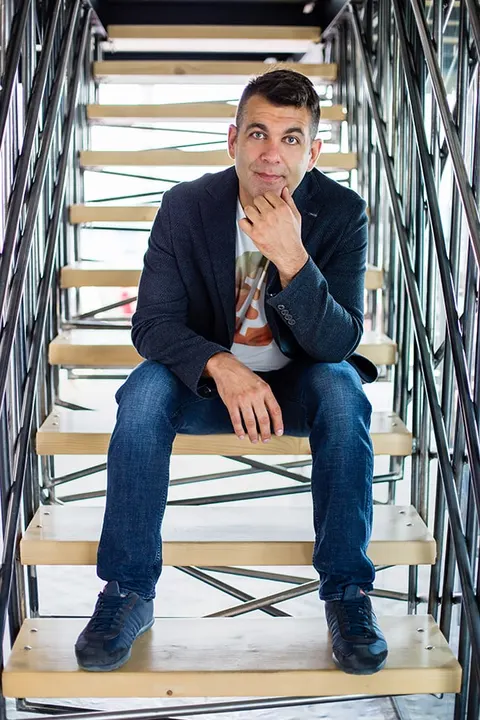
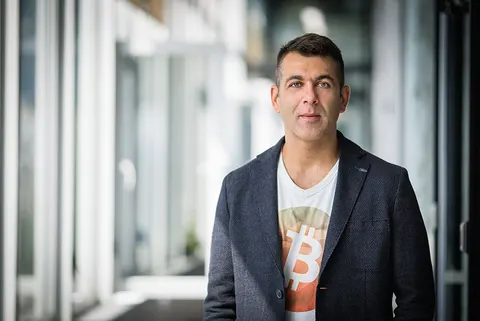
Blagovest Belev is one of the pioneers of Bitcoin and cryptocurrencies in Bulgaria; he has been working with them since 2013. He is the founder of the first Bulgarian cryptocurrency investment fund, BlockChain.bg. From 2009 to 2017 he was one of the people behind Tavex, the largest dealer of investment gold and currency exchange in Bulgaria.
We meet to talk about the future of blockchain technology, about NFTs, and about whether, when everyone is talking about Bitcoin, it is time to buy or exactly the opposite. About the exciting future that technology promises us.
– In recent years blockchain has been a roller coaster. People are no longer talking about a crypto winter but about a whole Ice Age. Why did it come to this?
– We really are entering a fundamentally different investment era. And we are still not sure what that means or what the differences will be. My guess is that
the crypto winter will end at the beginning of 2023, or at least in the first half of the year,
and lasting growth will begin. But I'm not convinced the next spring and summer will be like the ones we have seen—they may be shorter. The current global situation with inflation and interest rates hasn't happened in 40 years, and once this problem surfaces, it doesn't go away quickly. Usually
it takes about a decade for debt levels to clear and for inflation to be brought back to some kind of normal.
I expect the next decade to be more inflationary, and under such conditions crypto will be driven far more by fundamentals, by actual use, than by the speculative forces that have driven it so far.
So it's not exactly an ice age, but we are entering a different regime. And that holds for everyone: this decade will have different dynamics for every type of asset. The investments that did best from 2008 to 2021 probably won't perform nearly as well—American stocks, and especially those of the big tech companies.
– Who are the favorites to take their place?
– It's hard for me to say, but it looks as though the real economy, which has been neglected for quite a while, could do much better—commodities and energy companies, for example.
In times of inflation, energy is what compensates best. Better than gold, real estate or other assets. It seems reasonable to me to hedge with energy sources. Although oil and gas will gradually lose influence, we are still far from that moment. Oil, gas and probably uranium will be the winning investments.
Oil and uranium can be bought directly through various financial instruments; gas can't. But the alternative is companies that extract it, or others that deal with infrastructure—pipelines, liquefied gas.
– But IT is hardly going to sink. More and more areas depend on it, so it can't lose its appeal, can it?
– I agree, but right now the valuations of IT projects are already very high. Apple was trading at 20 times earnings—the company's price divided by its annual profit came to 20, which is great. But in inflationary times like these, valuations drop drastically, in this case to below 10. There are exceptions, of course. If the average for all companies in the S&P 500 index is 8, a company like Tesla will hold at 15, although it was at 80 and is now at 40. It will most likely keep growing, but the premium the market gives it over the others will be lower.
My personal strategy is to balance my portfolio between tech projects I can see developing and making sense, like cryptocurrencies, Tesla and Palantir, and commodities, above all energy. That way, if things turn out the way I expect during this inflationary decade, I'll have a bit of both.
Technology brings progress, but the thing of the moment is energy and commodities.
With high inflation, energy will be high and the valuations of tech projects will be suppressed. And if energy and commodities are low, the other half of the portfolio will take off. I think the two halves give a good balance. Unless years of recession are coming—then there's a chance both will go down.
– Then 2022 came, the war began, people were looking for unconventional forms of investment, and many thought a boom was coming in the blockchain world, which had just become fashionable. Exactly the opposite happened. Why?
– War brings instability, and people really do look for alternative ways to save. If you're in Ukraine or Russia and want independence, there are no easier financial means than cryptocurrencies. Gold gets detected at the border, bank transfers can be stopped, cash gets detected too. Crypto is the only thing you can access instantly from anywhere on the planet, just by memorizing a few phrases.
In my view there isn't much of a slump at the moment; it's more in the price.
We should separate the two indicators—the fundamentals, the actual use of cryptocurrencies, and their price.
Sometimes the two diverge. The fundamentals are moving smoothly upward even now and aren't that volatile, while the price depends on 1,000 other factors: market mood, the risks people have taken on, whether there's an appetite.
We had zero or negative interest rates, and people were looking for returns. To get anything decent, they raised their risk tolerance and turned to investments that would pay off somewhere far on the horizon. In the short term, Bitcoin and crypto projects bring less profit. So
the cooling of monetary policy led to an outflow of interest from all kinds of longer-term and riskier assets. Not just cryptocurrencies.
– Do you think all the big cryptocurrencies will survive the current winter?
– No, no! That's the whole point of winter—those that aren't healthy die.
Or, as is the case with crypto, they don't die but gradually fade—when the next spring comes, they don't wake up and never reach their old peaks.
I read a study saying that only 3 or 4 of the 20,000 cryptocurrencies that have been tried set a new record against Bitcoin in 2021 compared with what they had in the previous cycle in 2017. In other words, they gradually fade. This industry changes very fast—literally within 6 months you have a completely different ecosystem. That's why it's important to keep updating your knowledge and preferences. To see what's relevant and to redirect your portfolio.
– And which directions do you think are relevant right now?
– We're at a stage where
you should hold mainly Bitcoin and Ethereum until the winter passes.
When spring comes—meaning Bitcoin gathers a bit of momentum—you can move on to whatever is relevant at that point.
If I had to buy today, I'd choose cryptocurrencies that compete with Ethereum, layer-one blockchains. They're the ones preferred by tech companies from the real world. Solana took a heavy blow from the collapse of FTX, and it's unclear whether it will lose some of its edge. Still, for now, Solana and Polygon have caught a tailwind.
There are a number of other interesting projects too. Helium, for example, builds networks for the Internet of Things—independent ways of connecting to the internet, a wireless network that isn't tied to the big providers.
Another interesting direction is rendering—using graphics cards to create all sorts of graphics, which are used, for instance, by the AI technologies that generate images. With a blockchain system you can organize people who own graphics cards, the way the “miners” were organized. You give them work and pay them in those tokens. If this kind of AI starts making videos and animations, I expect very serious demand in that direction.
– In the beginning, when blockchain appeared, there was great enthusiasm that the technology would be useful in many areas, for tracking products, for example. But it has remained mostly in the world of finance.
– From the very start I didn't like the idea of applying it to the supply chain. There's nothing particularly innovative about it; the person scanning the goods can always make a mistake, and that's that.
The most valuable thing about blockchain is that some kind of value can be transferred, and that this can be neutral and independent.
That's where things are heading. Decentralized social networks are being built; people have been talking about this for quite a while. Farcaster, for example, is building a protocol based on separate networks that are like subgroups. As a user, wherever you join, you keep your history, your audience, your users, your rewards.
But blockchain remains primarily a tool for easily transferring value. Whether that value is financial or not doesn't really matter.
– You say that once 15 percent of users believe in this technology, it's certain that it will irreversibly change the financial world. Are we there yet?
– I think it has already happened. There were recent studies on what percentage of all users own cryptocurrencies. In some countries, Turkey for instance, it had reached 25 percent, but globally it was about 10 percent of users.
I think we've reached the point of no return.
Besides, the biggest risk of slowing down or killing the crypto trend is a coordinated global ban—not just in Europe, the US or China. At the moment that seems extremely unlikely to me, because coordination in the world has fallen to a very low level.
– I wouldn't be surprised if in Bulgaria, too, it's over 10 percent of internet users. But most people see cryptocurrencies as a lottery, as a super-risky investment.
– I've noticed that people see them that way too. But owning Bitcoin right now, especially at these prices, doesn't strike me as risky at all. What could happen?
– Its price could keep falling…
– Yes, but how much further can it fall? It won't go to zero. Any investment can fall further, including apartments in Sofia, but the upside potential is still quite large.
People keep making one big mistake—they hope to put 500 euros into some coin nobody's heard of and make 50,000 euros. Everyone is on the lookout for that; they buy Dogecoin, Shiba Inu, all kinds of weird cryptocurrencies, just hoping they'll go up 100 or 200 times. The chance of that happening is extremely small, close to zero, especially in times like these. Somewhere around the start of the euphoric phase you might try playing the lottery—there's some sense in it—but right now it's absurd.
If you want to win, you need a different approach. If the goal is 50,000 euros, rather than buying junk you'd be better off buying Bitcoin at $10,000 or $20,000. The chance of it tripling within 5 years looks to me like 98 percent.
But most people prefer to bet on a 1 percent chance. In terms of probability, that makes no sense at all.
We humans are bad intuitive statisticians, that's long been known, and that's why gambling thrives.
No one who thinks rationally would gamble; even insurance, statistically speaking, would shrink if people were good at statistics.
– What matters most for succeeding in the crypto world—intuition, financial or technological knowledge, following everything? Or some combination of all of that?
– There are different approaches, and each requires different qualities. You can be a lottery player: if you get in at the right time and pick 10 risky projects, you have a chance of hitting the jackpot. But you need to know when the right time is.
You can be a passive player—buy the three most popular currencies and hold them without looking at the prices at all. If one drops out of the top 3, you swap it for the one that has come in. That requires completely different skills—being patient and stopping yourself every time you feel the urge to sell. It's very hard; you're constantly tempted.
Another option is to play the cycles. To discover new projects that make sense but that the market hasn't valued yet. You do this at times when there aren't many eyes looking in that direction. In the spring and summer of 2020, for example, many people weren't paying attention to crypto, and there was a period when Ethereum sat at around $300 for months, even though it already had tremendous fundamentals. Nobody had just thought of buying; people's attention was elsewhere.
I think times like that are coming again. In 2023, if you understand rendering and the need for it in general, you can get into that specific project and assess how big the market is. Judge whether there's a gap between how the market values it and its real value. But that takes concrete, specialized knowledge, which is hard to accumulate.
I was lucky at the moment I noticed the crypto industry and started investing. I came from a field where I'd worked with money my whole life, and with money outside the monetary system at that. I know the problems of the monetary system and I look for ways to solve them—gold is one of them. So I grasped Bitcoin intuitively; it's simply within my area of competence. If a doctor, say, took it up, it would take a lot of time and effort to figure out what this thing is, why it's even possible and why it makes sense.
– Every technology reaches its winter. Right now artificial intelligence is all the rage, and I simply can't imagine how its winter could come.
– AI has already been through a winter, but where its plateau will be, we don't know. Chatbots and image generation help us, but there are more impressive things too. I watched the latest news from Tesla—the cars already drive very well, in the city, in the dark, in the rain. They still make mistakes, but I suppose within a few years that will be ironed out too. It has such an enormous effect on the economy, it brings such productivity, it's simply amazing.
If cars drive themselves, it would make traveling much more pleasant. Now you try to live close to everything; later that will matter less—we'll be able to talk, sleep and work while we travel. It will unclog cities. I think it's a fundamental change in life; it will affect real estate and lifestyle. It will free up a lot of jobs.

– Autonomous driving really does seem very close. And we can only guess what it will lead to in our lives.
– Yes, there's no way to know. Look, these days we go to the gym. If we'd told someone 100 years ago that we'd build halls where we deliberately lift heavy things because otherwise we don't, it would have sounded absurd to them. It was built into people's lives, and today we don't question it. Doing some pointless physical labor to stay healthy, simply because
our DNA was built on it over millions of years, and now we've reached the stage where there's no need. The same will happen with more and more activities.
Look, Tesla is making a home robot to do all the chores in the house. Suddenly we start wondering what we'll do with all that time. Musk says an era of abundance is coming. A nice concept, but it brings a new kind of problem on the horizon. When it's very easy to be warm, to have food and your basic needs met, you start asking yourself: “Why am I here?” “How can I be happy?” “How can I be at peace with the people around me?” “What is the meaning of life, and what do I contribute?”…
– Absolutely! And those are some of the very topics and questions Digital Stories exists for…