How important is your profile on your favorite social network?
And what would happen if everything it holds vanished in a second, with no chance of getting it back?
More and more often these days, we keep our files in cloud storage and rely on platforms to guard our archives and tell us what is going on. Without having the time to stop and think about what exactly we are entrusting to them.
At least until we feel, the painful way, just how fragile the connections that technology has built for us really are.
Here Today, Gone Tomorrow
“When your profile gets stolen, you feel as if someone has broken into your home. Everything is gone,” I read not long ago… in my feed.
A day earlier I had accepted a “friend” request (social networks really are amusing in their terminology) from a colleague I have known for years. I looked around, convinced myself it was really her and not a fake profile, and moved on. As we all so often do…
It turned out it really was her—she had lost access to her profile.
Have you thought about any of this lately? Where and how do we keep our important memories? Those files that remind us who we are? That data which would help us survive if tomorrow, God forbid, the world woke up without Facebook or Google?
The answer is as different for each of us as the ties we have built with the most everyday of networks. The ones we open and consume every day, the ones that have learned to cater to our expectations.
The point is… to ask ourselves these questions in time.
Wear Your New Clothes, Boys!
And so, today the platforms take care of us by remembering every single thing we do. Every search, every like, every spiteful comment. Everything is much, much more personalized than in the days when we hid behind pseudonyms and creative abbreviations.
The convenience is here: much of the communication on the networks built for it happens between people who stand behind their real names. It isn’t particularly hard to get into an argument even with a popular politician or influencer, and when two digital personas from those circles go at each other, we grab the popcorn and start liking and dropping smiley faces.
When did you last look through the family photo album? Probably not recently, but your favorite platform has surely reminded you what you were doing on this day seven years ago, and you smiled tenderly at the baby picture of the kid who is now moving up through the grades at school.
We are less and less ourselves and more and more our profiles. We delegate more and more to them, give more and more of ourselves to them, trust them with our daily lives… and what if something breaks?
The Armenian Bot
“Verba volant, scripta manent! FB and Zuckerberg have disproved the age-old maxim that what is written remains…,” my colleague also wrote—a journalist with impressive experience, now a specialist in PR and marketing. It is her story that brings us together today.
A decade ago it would have been easy. You make a new profile on whatever platform and start from scratch. But today… Musk may not be the most fitting example, but just imagine: if at some point all his tweets, or X posts, disappeared, he would hardly remember every invitation to a fistfight he has issued—to Zuckerberg or to Putin—all his ideas and ambitions…
We won’t worry about him; he has his own social network, and if he is a little more careful with it, he may even avoid destroying it. The question is about the user. About the “ordinary person”…
Besides the fact that we don’t remember phone numbers and don’t keep photos and memories close at hand… in the ocean of online data, across ever more media, we supposedly have ever more channels for reaching one another, and yet… none of them is really in our hands. Do you know your best friend’s phone number by heart?
God Is High Above, and Zuck Is Far Away
“Then you grasp the scale of it, how much ‘online’ really is part of your life, personal and professional. And in the end it makes you laugh when you realize you ‘have no memories,’” my colleague went on.
And below I saw comments: “I went through this last year!” “A 14-year-old profile… lovingly tended over time, gone for good! Ever since, my colleagues call me ‘the woman with no past but a bright future.’”
And if today things are still reversible—a profile can be restored, and we still keep our connections off the network as well—will it stay that way after the next step, when we leave even more of ourselves online? Technology moves forward, data is stored ever more securely, but… what if we entrust it to the wrong social network? What if we suddenly turn out to be inconvenient or unlikable to the one we have left it with? Isn’t this yet another step toward the other, different history being born online, and not necessarily a true one?
But that, for now, is still in the future. Meanwhile, my colleague’s story shows that even today we risk far too much by leaving everything important as part of our profiles here and there.
Figaro Zuck, Figaro There
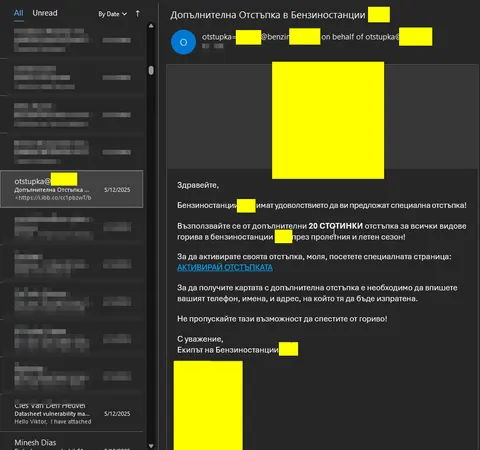
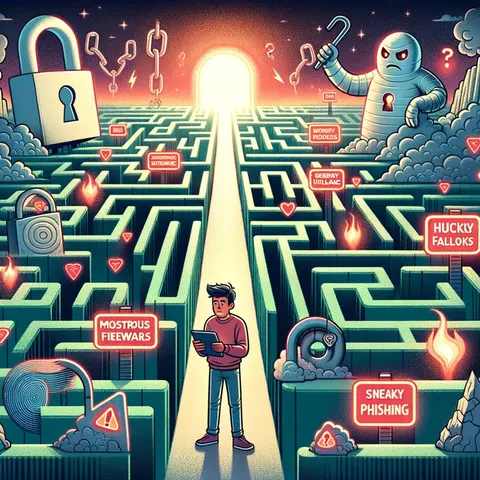
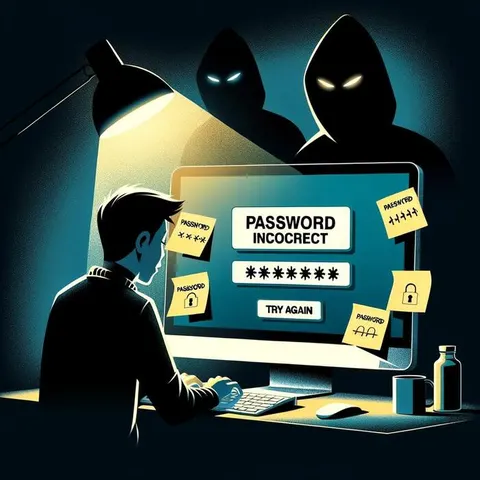
In her case, it turned out to be a hacker attack. Since she manages several pages, on one of them she received a message saying she had violated the community standards. She is very experienced and knows that such messages often come just to get you to click some rather convincing link… but, as has been said before, even cybersecurity specialists sometimes fall for it.
She simply clicks the misleading link, doesn’t even enter any additional information… and forgets all about it.
A few hours later the Facebook mobile app asks her for her password, rejects the one she enters and tells her it was changed a short while ago…
Well, it happens to everyone, a hacked profile, right? Facebook is the most popular network in Bulgaria; surely there must be plenty of ways to reach the support specialists and have everything quickly put back in place…
As is obvious from the way this story began, that is not how it goes. The fact is that the first and biggest social network, and its competitors too, rely on rapid scaling, on fewer teams serving ever more customers. And why should they do otherwise? It’s not as if anyone obliges them to look after yet another profile in the bustle of everyday business…
And just this week Zuckerberg’s people announced there will now be a paid version of the platform, ad-free and with a direct line to “human” support.
Still think social networks are our friends? And what if someone actually benefits from us disappearing online, because we are inconvenient for one reason or another? Should we be glancing at the Chinese “ideas” in that direction, too…?
Black Mirror
For now, help most often comes from algorithms, which learn fast and keep getting better at their job—giving advice or dealing with the problems users run into. And yet… they remain algorithms.
Content is a good example. Once, a single report of a rule-breaking post was enough for it to simply vanish. Then the lines blurred considerably. Today posts disappear less often, and profiles are blocked over content less often… simply because the algorithm turned out to be much better at avoiding many such cases. Which doesn’t mean, of course, that the decisions it makes are necessarily right.
Whether the online giants or their algorithms take good enough care of their users, however, is a question that keeps growing bigger and more important. Above all because users themselves have fewer and fewer ways of influencing things.
Face, Book
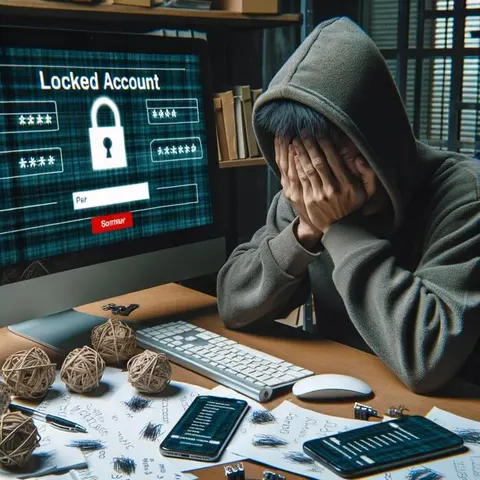
It turns out my colleague simply has no way of getting into her profile: the contact phone numbers have been changed, the backup email… Her profile is gone, and with it everything it held—photos, conversations, connections, memories.
Of course, the first thing she does is block the bank card linked to the profile—that card turned out to be the target that had drawn the hackers. Fortunately, a relatively small sum is missing. The transfers all go to South Korea; apparently she clicked on the wrong message, one sent by hackers there. The attackers made modest transactions so as not to attract attention, the bank reacts quickly, and gradually almost everything is recovered.
But not the profile.
The 12 Profiles
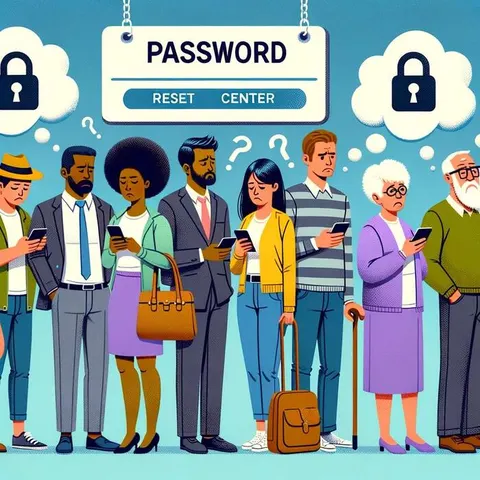
“The more serious problem, in my view, is Facebook support—it keeps you going round in circles through automated menus. When you complete all the steps, it still isn’t enough: the profile isn’t restored, but it isn’t deleted either. Facebook tells me the profile exists but is sort of invisible, because it has been deactivated.”
Her main advice for people who find themselves in a similar situation is to block their bank cards first, and then seek help from a specialist with up-to-date experience of that particular social network.
My colleague does everything asked of her—she photographs her documents, they are validated, but weeks later there is still no access. She creates new profiles, simply because she needs them in her daily life, above all for work.
I wish her with all my heart that she gets her old self back…
But the question here is much bigger.
Now You See It, Now You Don’t
“A Facebook profile, as we all know, isn’t a private space,” she says. “For a number of reasons, in one form or another, it has nevertheless become something of yours, something personal. You literally feel as if someone has walked into your home and robbed it, and now you have nothing.”
She was lucky enough to keep her important photos and her contacts elsewhere as well. “Those you can catch up on. But it struck me as both funny and a little sad—for me one of Facebook’s best features is the so-called memories, what happened on the same date a few years ago. And when you start over, it’s as if you have no memories… I was also struck by the comments under my post—people clearly take great care of their profiles, a bit like the Tamagotchis of old that we used to feed and put to sleep… Like a little flower you feed and water, and when someone snatches it from you, you literally feel cheated and robbed.”
“For me this was one more confirmation that a social network remains just a simple pipe, a channel for sharing information, and you shouldn’t put anything personal in it, because two hours later it may literally be gone,” she adds.
Are we really ready for the next steps? For the virtual world, for the metaverse? For the time when algorithms can imitate our behavior ever more skillfully? For the stages when more and more, and more, and more will depend on our profiles…