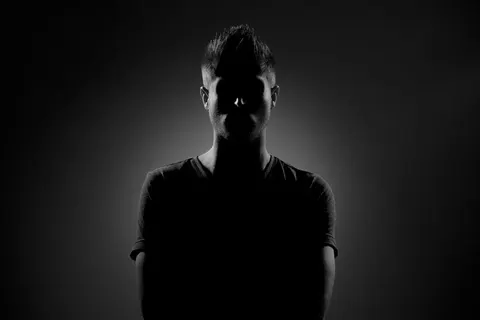
Who are you? The person behind that supposedly authentic profile across from me? Does the person stand behind their real name, or are they hiding? Is hiding itself the freedom, or is it the other way around—does freedom come when you always know who is on the other side?
First we were anonymous by default; anyone could present themselves as sladka_macka22 (“sweet kitty”) or zelezniq55 (“the iron one”). Then, suddenly, it became the standard to put our real identity behind the hate we spew on social media, and the anonymous role turned out to be marginal—good for spam in the comment sections of websites. That was when the trolls arrived with their fake profiles, while on the same side of this argument we found the people who dislike online restrictions and also prefer not to show their names. Only they do it for the sake of freedom.
How did we walk this path, and what lies ahead? Where does the dividing line run today, and which way is it moving? Will more people join the anonymous battalions, or will the hegemons make it impossible to hide online?
Who?
Today, even if your name is Elon Musk and you are the richest person who has ever lived on Earth, there is nothing stopping you from sharing whatever you like, sometimes in a deliberately crude and infantile way.
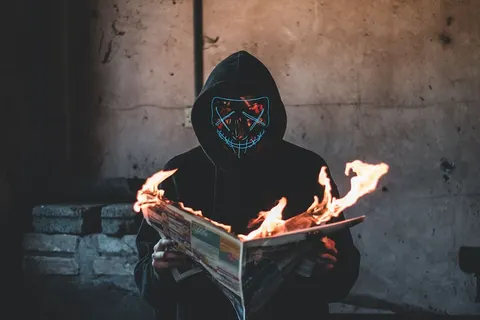
So why didn't we step into the light for good? Why do we so often keep using just initials or pseudonyms, even on social networks that are supposedly meant to present us as we are? Why does the image of good old Guy Fawkes remain an evergreen disguise, when in today's world we supposedly no longer need masks?
The Musk example is very telling. He is the biggest possible proof that even when the source of a piece of information is beyond dispute, clear and unambiguous, that is no guarantee whatsoever of being sensible in online communication. And yet the process is interesting in its evolution, because it says a great deal about the way we talk to each other online.
In the early years of the more widespread internet, the question of identity didn't come up at all. Back then we lived behind naturally dim-witted nicknames, as anyone who remembers mIRC, or who has asked the cult question from the dawn of online communication, “a/s/l?”, when meeting someone, can confirm. We asked each other about age, sex and location without the slightest illusion of getting a truthful answer, simply as a conversation starter in the spirit of the exchanges between radio amateurs, the “ancestors” of online chatters.
The Name of the Pose
Then came the romantic era of social networks. In early Facebook, you logged in to surround yourself with your offline friends, to find classmates you had lost touch with. To compare quiz answers, to see who had traveled where, who had had a baby and who had changed partners.
In 2011, Randi Zuckerberg, Mark's sister and at the time a director at Facebook, said that “anonymity on the internet has to go away.” By and large, that is what happened.
Even the Cyrillic alphabet arrived! It became possible, and pleasant, to write your name the way you wanted to. And the names there were meant to be real; that was the whole idea. Gradually, as the other social networks came along, things split apart. In the more “serious” places like LinkedIn, it is still mandatory today to stand behind your real name if you want to be taken seriously.
On Twitter, there are two kinds of choices: either you deliberately write under your own name, like Musk or Trump, or you pick a provocative name with the idea of hiding behind it. And this became a notable problem, once again connected to the aforementioned richest man on the planet. When he set out to buy the network, long arguments erupted over how many of its profiles were real. Until it turned out that a considerable part of the content was generated by bots, and quite a few compromises had to be made before we got to the notorious entrance of the billionaire into the company's headquarters carrying a sink.
Trolls Versus Elves
Meanwhile, on the far more informal Instagram, YouTube and TikTok, a real name is neither the norm nor an obstacle. Users who want to draw attention to themselves emphasize it and sometimes turn into influencers. Brands conveniently hide behind profiles of this kind, and there are plenty of cases in which content creators prefer to remain anonymous so that the focus falls precisely on the content.
Another form of communication split off as well—direct messaging apps such as Viber, WhatsApp and Telegram. There, a person is usually tied to their phone number, and anonymity is neither as important nor as common, simply because the point is that when you write, you know, and are even certain, who is on the other end.
Somewhere in the middle of this story, additional verification options appeared. Famous people began acquiring numerous “doubles,” and the social networks gave owners the option of submitting documents to receive a visible sign that this was their real profile.
For a while, this even worked fairly well. Today it is still not a problem for people with a truly enormous following, but it is quite hard to police when, for example, the name is a common one. How do you forbid someone to call themselves “Ivan Ivanov,” the Bulgarian John Smith, if that is simply their name, even though someone supposedly more famous has the same one?
And indeed, if your name is Ivan Ivanov, your chances of becoming president are probably slimmer. But then you are safe when artificial intelligence is given the task of digging up dirt on you. That is one of the challenges in text generation—we humans will always tell from context which favorite actor of that name is in a photo or a news story, while the algorithm is almost incapable of doing so.
The Anonymous Ones
That, of course, is not the main reason why today, on the web and above all on social platforms, people with real names and real photos coexist so “peacefully” with those who hide for one reason or another. How and why did we get there?
What has changed in recent years on Facebook—the biggest and oldest social network, which is now living through its hardest days? And might this be a sign of the trends leading us to the next big stage in the development of the World Wide Web?
The trolls showed up. On the one hand, there are the obviously fake profiles that use freely available photos and have some commercial aim. They are still around, despite the administrators' feigned efforts to pretend they are fighting them. But then, more and more, you began to come across people with openly and deliberately invented names. They, in my view, are the harbingers of the big change.
Yes, the phenomenon is nothing fundamentally new, but in a space where you are supposedly free to communicate directly, as social networks ought to be, the whole idea really changes when on one side there is a person with their name, and on the other there are initials, a jokey pseudonym or some kind of wordplay.
Typhoons with Gentle Names
Less often, but still, it is sometimes about deliberate mystification. For several terms now, even our National Assembly, Bulgaria's parliament, has had a woman influencer who became famous more for such a jokey pseudonym than for her own name.
There is something else, too, especially past a certain age: if you lose access to your profile… you make a new one and start sending friend requests. That leaves behind phantom profiles that nobody will clean up, and every time you get a request from the same person, you wonder whether something is wrong.
Here is also the question everyone answers for themselves—is it right to accept requests from someone you don't know? Or is it fine, but only if you are sure they are real? Or if you have lots of mutual friends, does that mean something?
And yet, more and more often, when anonymity appears, it is about something else. About the fact that hate, being shut away in our bubbles, and toxic, meaningless online communication pile up into a frustrating cavalcade of arguments. The solution is rarely just to close your profile, and the reason is purely a matter of serotonin. We have grown so used to drowning in the information scrolling down our favorite feed that we cannot even imagine depriving ourselves of it.
The Nameless Versus the Average
From here on, the first option is silence, but that depends on your character. After all, what are these social networks for—not only to consume content, but also to comment on it and discuss it, right?
And this is where the possibilities of anonymity come in. To pass yourself off as someone you are not, or simply to pull on whatever mask you have dreamed up.
On one side is personal branding, on the other—fatigue. Take, for instance, our meeting with the creator of the cult online venture Squatting Slavs in Tracksuits: he insisted on not revealing who he is, or even which country he comes from, despite having millions of followers.
To a greater or lesser extent, social networks will always allow this slightly illusory anonymity, because it certainly helps them in the main role they exist for—to catch us in their net for as long as possible.
What's more, with the even more perfect virtualization on the horizon and the metaverse timidly stepping forward, with Web 3.0 and its decentralized applications, anonymity will very likely return to its position as the norm.
On TikTok, for example, we are gradually going back to the starting point: it doesn't matter much who posted the clip, the communication is dumb and knee-jerk, but somehow more honest and less weighed down by hate.
The Nominalia of the Bulgarian Khans
A year ago, a scientific study from the University of York showed that stable pseudonyms (the kind we used to have on forums, for example) create a much healthier environment for online communication. Personal attacks and stereotypes are left aside, and people themselves are more willing to accept other opinions.
So it seems we are slowly returning to the beginning. Anonymity is becoming the life buoy of communication and a kind of attempt at an amnesty for sincerity, for full-fledged communication online.
Of course, this anonymity stays on the surface. The mask quickly proves false, insofar as it cannot truly restore freedom. Because even behind it, the user remains exposed and unprotected through their data. Thanks to the popular, but not widely understood, prophecy of the likable and wise Jaron Lanier that when something online is free, you are the product.
Lethe, the river of forgetting: you bathe in it and afterward there is no trace left of what made you human. The mechanism is a salvation, and at the same time the saddest thing a myth can embody.
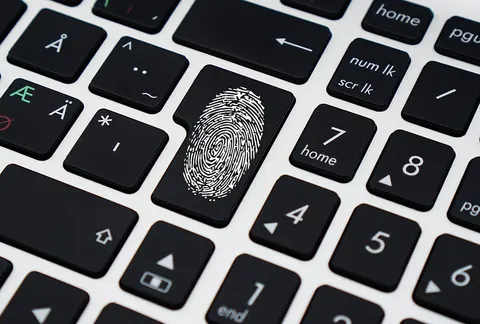
To be truly anonymous online today is almost impossible. Yes, your browser lets you open a supposedly private window that doesn't keep your history… but as the browser itself tells you right away, everything that happens during the session remains visible. If you log in to your account on a social network or search engine, it will keep piling up data on your every “move.”
In the Name of the People
Anonymity online is probably possible today, but it takes truly serious, deliberate and persistent effort beyond the reach of the ordinary user. It means browsers that don't collect information, encrypted communication, giving up social platforms, VPNs that hide the real location from which you go online. And even then you never have a guarantee that you are doing it completely right, which is one more step toward paranoia.
You have to want cover really badly, put in serious effort, learn, be careful, but… who needs that? It is so convenient to enjoy the good things online life offers without getting into such deep reflections.
So people who insist on complete anonymity online are hermits of a sort. You need very serious motivation to make all that effort. Every program we use daily—from the operating system to the browser, the messenger, our email provider, the search engine—lives off our data to a greater or lesser extent. That is the market model it runs on.
Somewhere beyond the border of the obsessive pursuit of anonymity lies a far darker side of the internet, the notorious darknet, the world of online crime. But we will talk about the dark part of the web more seriously soon.
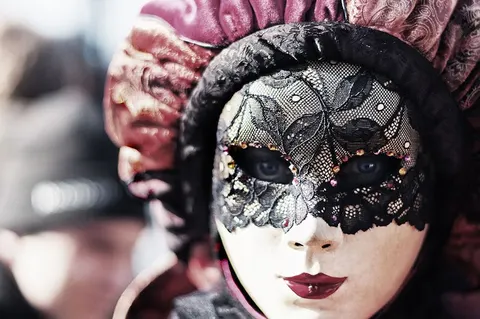
And Who Are You, Where Are You?
Reflecting on the problems of online communication is undoubtedly important. But anonymity is not the most convincing solution to all of them; it is rather an escape. Because change comes from people who stand behind it with their faces. Like some of the heroes whose digital stories we have told—Jaron Lanier, Eli Pariser, Cal Newport.
More meaningful, democratic and normal communication online is entirely possible; there are no technological obstacles to it. So far the obstacles are entirely human and a matter of will. Sooner or later its time will come, simply because the need for such a change will lead more and more people… as long as it isn't too late. As long as by then we haven't shrunk our attention span to a single sentence and turned into unpleasant specimens of the species Homo Facebucus. Then anonymity won't make any sense either…
Long live Guy Fawkes!… one way or another. May we think of his mask more often, but use it as a symbol. And instead stand behind change, and the desire for it, with our faces.