How can letters and bytes, books and technology, meet? That is the big theme of a series of digital stories. After Tuesday's look at some of the favorite books of the world's IT leaders, we once again step outside the cliché, this time with the author of Bulgaria's biggest book blog. And next Tuesday brings the unexpected literary recommendations of some of the most important figures in Bulgarian IT.
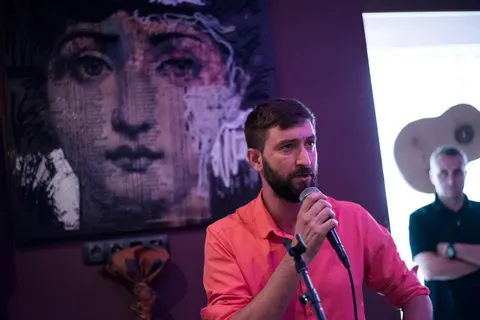
You are what you read. “Kakvo chetesh…” (What Are You Reading…) is a question we should ask ourselves more often, especially in public. It is also the name of the largest and most active Bulgarian book group on Facebook, created by today's guest. For 15 years he has been sharing his recommendations on Knigolandia, the biggest book blog in Bulgaria. Deputy editor-in-chief of the Ciela publishing house, he recently made another dream come true: seeing his name as the author of 100 knigi, koito tryabva da prochetete (100 Books You Must Read).
With Hristo Blazhev we talk about reading and the future of literature. About the technologies that change it, and the books that build technology. Together we hunt for important and unexpected recommendations, to convince ourselves that letters and bytes must walk hand in hand, or nothing good awaits us, not even as a species. Happy reading!
– I ran an experiment: I asked 15 Bulgarian tech leaders about their favorite books, and in a few days I'll reveal the results. You've been a proven expert at recommending books for so many years. Can you guess what kind of books made the list?
– That's interesting. I'd guess they are mostly biographies or autobiographies of iconic figures like Elon Musk, Steve Jobs, Jeff Bezos or Phil Knight, perhaps the books of Simon Sinek or Malcolm Gladwell, and I'd also bet on at least one of Nassim Nicholas Taleb's books?
– Warm, warm… But it turned out there were some far more unexpected titles too, at least to me. What would surprise you (pleasantly or not) to find there?
– I'd be pleasantly surprised by science or history books. Apart from the tons of studies of World War II, I think they're an underrated genre, with both wonderful titles and a great deal to learn from them. It would be unpleasant to see esoterica or something similarly pseudoscientific or conspiratorial. I expect the people who are changing Bulgaria not to get carried away by fabrications.

– So do I. And the interest in history lately really is remarkable… Which books would you recommend to people in senior positions in the IT sector, given their work and the challenges they face?
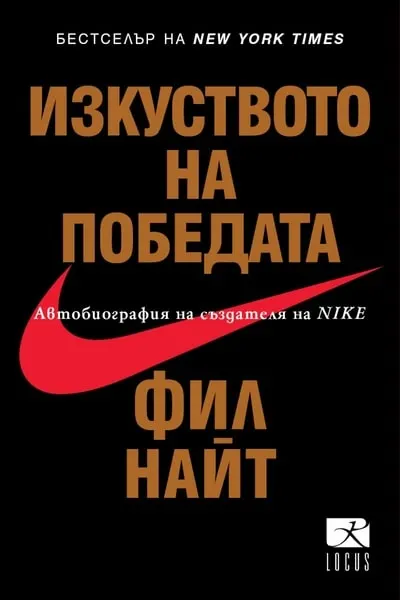 – I'd definitely bet on some of the authors I mentioned, like Phil Knight's Shoe Dog or Taleb's The Black Swan, but also on different books that everyone needs, like Sir David Attenborough's A Life on Our Planet or Norman Davies's upcoming Vanished Kingdoms,
so they don't forget that everything in this world vanishes if we don't take care of it.
– The idea came to me from an interview with Daniel Penev, who said that around the world politicians and public leaders often talk about their favorite reading, while in Bulgaria they don't. Why do people like Musk or Bill Gates keep publishing such lists?
– Because
for these people reading is not only a value but also a source of inspiration for the next wonders they will create.
In Bulgaria, people in positions of power don't read, or they hide it well if, by some exception, they have this passion. And maybe they're right: most voters wouldn't be impressed by anything like that.
– What's more, a very large share of the recommendations from people like Musk are fiction. I've never heard tech people in Bulgaria talk about fiction in public.
– Fiction mainly teaches empathy. It lets you develop emotional intelligence and build the habit of seeing things through other people's eyes. I've never heard any of the tech leaders call any of these skills valuable.
– We'll see whether we can change the cliché… Why is there no such tradition in Bulgaria? Can we change it, and is it worth it?
– Of course it's needed, because books aren't just the last retro pleasure, as I like to call them—
they are the only way for a child's mind to be fully shaped for the modern world,
to learn to build rich inner worlds through imagination and to be ready to face the dizzyingly fast-changing world outside.
– What does a person's favorite book tell you about them?
– I flatter myself that it tells me everything, but that's a beautiful illusion.
For many, though, it shows when they stopped reading
—if they cite one of the required school texts, say, or some title so overhyped it has become banal.
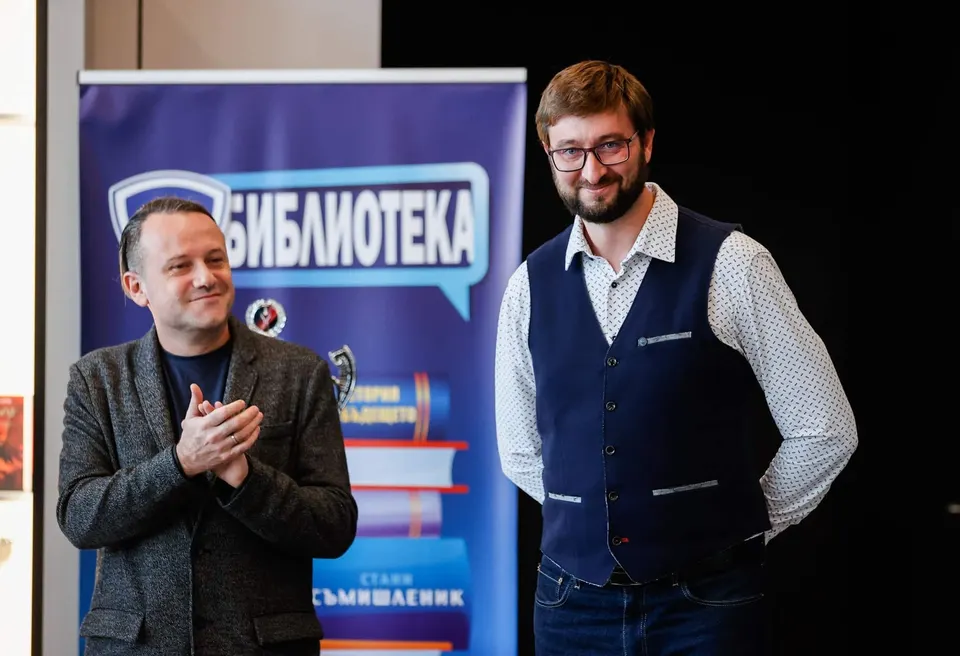
– Do you think the books we read influence the important decisions we make? Specifically in the digital world, does where Sam Altman, for instance, takes artificial intelligence depend on what he reads?
– I very much hope so, because books—and science fiction in particular—are the most effective way of looking into the future. Countless possible scenarios have already been played out in them. At the very least they show how easily the weaknesses of human nature can wreck even the best-planned grand change. And if those weaknesses aren't taken into account, we'll have to live through some already foreseen tragedy in real life.
– Is there a book you consider “mandatory” for every leader in the tech sector?
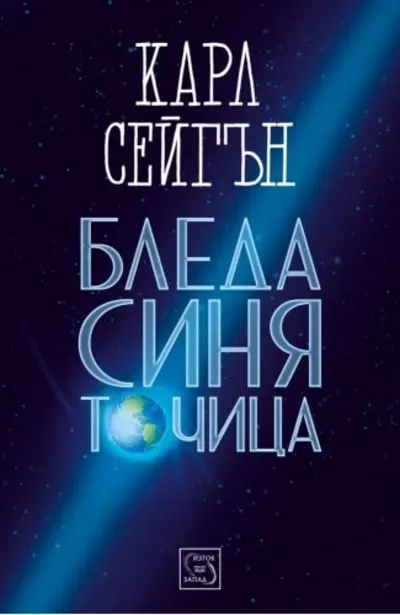 – I wouldn't go as far as mandatory, but it would be useful for them to have read Carl Sagan—whether Pale Blue Dot, The Demon-Haunted World or Cosmos. He manages to convey stirring messages that belong to all of humanity and reminds us what truly matters.
– Which are your favorite biographies that say important things about the tech world?
– Earlier I would have said Ashlee Vance's book on Elon Musk, but I expect his upcoming biography by Walter Isaacson to show him in a very different light. Right now, though, I'd recommend Kai Bird and Martin Sherwin's epochal American Prometheus, about Oppenheimer. Few people have carried such responsibilities on their shoulders and coped with them.
– Do you think you've already read AI-generated literature without suspecting it?
– Quite likely. We receive so many manuscripts that it seems inevitable to me. But I very much hope I haven't yet selected AI literature for publication… I'm counting on the fact that every manuscript is read by several people with different literary backgrounds. Hopefully we manage to catch such attempts.
– How would you tell whether ChatGPT came up with any of the questions on this list?
– I have no idea, I admit.
– I don't think there's a way anymore. A few Digital Stories ago, it was the algorithm that came up with my first questions for Zachary Karabashliev. Things are moving very fast in that direction, now that even professionals can't tell generated poetry apart… Which books have given you the most useful knowledge about artificial intelligence?
– Jokingly, I'd say William Gibson's Neuromancer—it's a true self-fulfilling prophecy—but I'd rather settle on Ray Kurzweil's How to Create a Mind.
– And the next book by Kurzweil is on its way. Far from giving up, he is even raising his expectations of the great changes ahead… As an author, an editor and a writer's helper, where do you see the future of AI in publishing? (Here, by the way, is the interesting take of your future colleagues on the subject.)
– I think that in the near future there will be a new kind of editorial work:
humanizing AI-generated text to hide its origin.
Some kinds of translation will certainly be handed over to AI, but I believe the literary translation of truly good books will always remain in human hands and minds.

– What's the most boring book you've ever read?
– Pass. I wouldn't call any book “boring,” at least not in writing… and sober.
– Maybe we should have done this interview at a different time… Do you have books that surprised you with prophetic predictions about humanity's development through technology that actually came true?
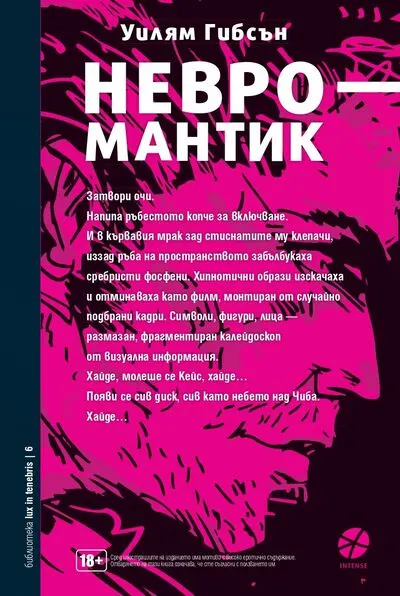 – I mentioned William Gibson's Neuromancer—it definitely gets a lot right (and there's a wonderful explanation that the book's influence is so strong it quietly steers digital evolution). Mind you, many others make predictions I'd rather stay on paper.
– How has technology changed the way we read and discover books today?
– Social networks have completely taken over book discovery.
I still mourn the short-lived era of book blogs. Facebook swept them away quickly,
before surrendering in turn to Instagram and now TikTok. In short, wherever young people's attention is, that's where books are discovered; there's an inevitable and constant evolution. Reading itself, though, doesn't change, even if it takes different forms with e-books and audiobooks, insofar as we can count those as books too.
– To me, both e-books and audiobooks have become different, complementary forms rather than competitors to the good old paper editions.
– That's exactly what I meant. There was talk that they would overtake paper books, but at least so far there's no sign of it. People still know that withdrawing with a book is a different experience from yet another screen in front of their eyes.
– What might come next on this list of technologies to change the way we read?
– It's logical to expect video books, but I can't imagine what exactly that experience would look like, and I hope I won't have to. Or stories written on the fly by AI that change according to the reader, something like the good old gamebooks, but with infinitely more variation.
– The good old gamebooks and the personalized future… On my site I try to explore the ways technology changes us and will go on changing us. One of the main problems it has brought is that it has trained us out of concentrating, out of reading long texts. That, by the way, is also what Ivo Ivanov told me. But how do we reverse this trend?
– Here I'm a pessimist.
I don't think it can be reversed—at least not while children are put in front of screens from a very young age to keep them occupied.
That destroys the brain's chance to focus on anything that isn't colorful, beeping and easy for the mind to digest. And in fact it makes the brain unfit for anything other than the empty consumption of meaningless content.
– How do we get young people excited about reading more?
– They read a lot, far more than people assume in public discourse.
The question is how to get them to reach for something other than entertainment fiction,
and that's a question I have no answer to myself. But I persist in publishing important, valuable books, even if they have so few readers.
– In recent years I've been struck by the decline of science fiction, the shortage of large-scale, prognostic books like those from the days of the Strugatsky brothers, Arthur C. Clarke and Stanisław Lem. In exchange, there's a remarkable fantasy boom… Are my observations well-founded?
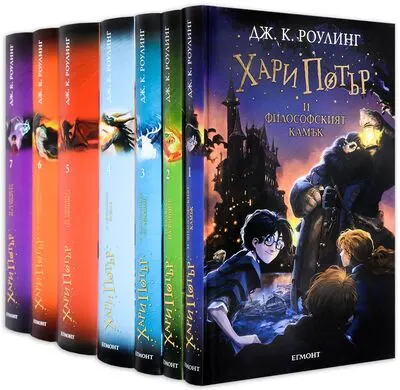 – Half-jokingly, I blame the Harry Potter series. Its global success across several generations definitely created dreams of casting spells rather than the dreams of conquering alien worlds our generation grew up with. But the truth is that
ambitious, wonderful science fiction is coming out in the West; there's just no way to publish it here.
Or at least there wasn't until recently. There seems to be a turn back in that direction; I hope it lasts.
– Let's hope so! Do people like reading about technology? Why do these topics struggle to make it onto literature's “agenda,” when today, in my view, they're a matter of life and death, of the future of our entire civilization?
– I think it's because we're so surrounded by technology that in reading we look for escape. It's hardly a coincidence what huge hits books about an idealized past are: plots set in villages with wise old men, real or invented customs and the inevitable passionate love stories, with no internet or phones.
– How do you explain the big success of the What Are You Reading… group?
– Success is relative. The group is big enough to have become a miniature version of Bulgarian society, which also means it's full of strong antagonism, frequent scandals and mutual intolerance. But for 10 years now I've been enforcing draconian rules. I think they're useful, and they let interesting, different books that readers have discovered one way or another slip in among all the endlessly repeated posts about the current hit titles.
– What will the last book look like?
– Richly illustrated, with handmade elements and very expensive to produce—just as books were before the invention of printing,
when every single book was a work of art in itself. There's
no way the book won't remain as a symbol and as an expensive, precious gift, even if mass publishing disappears for one reason or another.
 – Let's finish with the question I asked 15 tech leaders; I'll reveal their answers on Friday. “Recommend three of your favorite books!” In this case, let them be connected to technology in some way…
– Let's see. I've already made some suggestions, but so as not to repeat myself, let them be these:
-
The Evolution of Everything by Matt Ridley
-
Homo Deus: A Brief History of Tomorrow by Yuval Noah Harari
-
The Circle by Dave Eggers
– And so I've found a recommendation for myself too—I haven't read Ridley. But the guests from the IT world added plenty of very interesting things… Thank you!