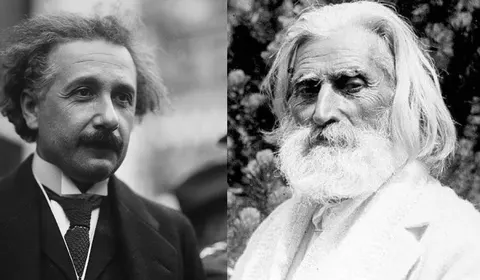
The first Christian monastery is in Bulgaria. Plovdiv is the oldest city on Earth. Einstein bowed before Petar Danov, the Bulgarian spiritual teacher, and Khan Tervel was the savior of Europe. What's more, we have never lost a battle flag.
Which of these claims, which you can find online every day, have any historical basis? Where can we talk about differing interpretations, where is the pride fully justified, and where are we dealing with outright fiction?
History is such an important field, one that both unites and divides us. A generous field for pride and for manipulation alike.
Can you tell some widely accepted claims about Bulgarian history from ones invented by artificial intelligence? Try it here, this experiment will give some interesting results!
Meanwhile, we'll look at some of the most popular claims, the online reasons for pride you can see everywhere. No, we won't be fact-checking—in my view that idea is doomed, because history, like journalism, cannot be an exact science.
I meet the historian Alexander Moshev to talk on the basis of the sources and of logic, and to try to find a rational perspective. With no preconditions, I hand him 12 selected clichés, and he tells us more about them and how far they match the views of today's historiography.
Bulgaria is the only country that has existed under the same name for more than 1,300 years
The earliest source to mention the name “Bulgaria” directly is a statement by the presbyter Constantine of Apamea before the Sixth Ecumenical Council in 681.
It is indeed the name the state still bears today. And yet, for roughly two centuries, and then for another five, there was no state entity called “Bulgaria.”
One more thing. Whether and how the Third Bulgarian State—the one founded in 1878—has any institutional link with the first two is a rather contested, debatable question. We cannot trace any direct institutional continuity between the Principality of Bulgaria of 1878 and the state of the seventh century.
So to me the claim belongs more to the realm of national mythology and national propaganda—the idea of continuity, of an uninterrupted Bulgarian statehood, under one and the same name at that, which merely gets slightly modified on paper but is in practice the same. As we can see, if we examine it closely, that isn't quite the case.
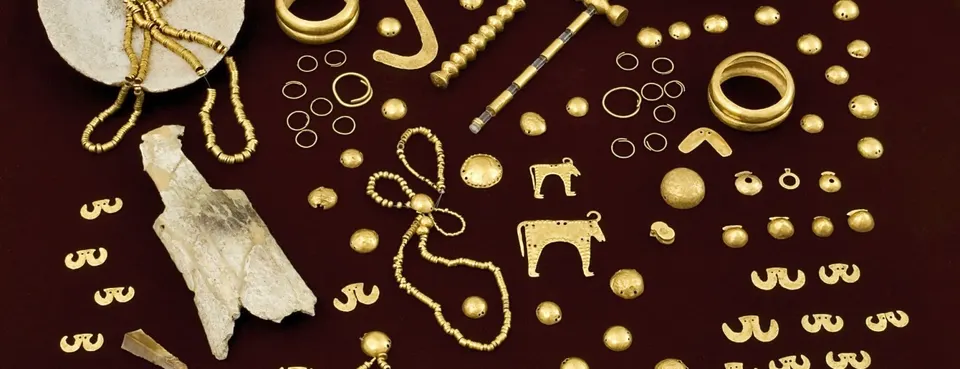
The Varna Necropolis holds the world's first worked gold
There's no doubt about it, although the finds from Hotnitsa and Durankulak are also good “candidates” for this “title.” I even think the fact deserves far more serious promotion beyond Bulgaria's borders.
The link between the population that left behind the Varna Necropolis and today's population of the Bulgarian lands is another matter. In practice, the people who lived there most likely had no genetic connection even with the Thracians, let alone with later ethnic groups.
In a bookshop abroad I once spent a long time looking for a history book that mentioned the name “Bulgaria” at all. I kept leafing through until I came across an album in which Bulgaria was mentioned precisely in connection with the Varna Necropolis. Yes, around the world the Varna gold is associated with Bulgaria, since it was discovered on present-day Bulgarian territory.
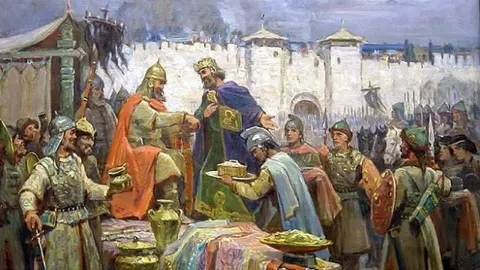
Khan Tervel is the savior of Europe
You come across this one very often, and factually it isn't unfounded. The Bulgarians did indeed help the Eastern Roman Empire (Byzantium) in the early eighth century during a serious siege by the Arab Caliphate. Their intervention seems to have been decisive in the failure of the siege of Constantinople and the Arabs' withdrawal.
But Khan Tervel's name is not mentioned anywhere in the sources contemporary with that era. They speak of the Bulgarians and their army. This leads some researchers to suggest that the events may have taken place in the time of the next ruler, Kormisosh.
There are also arguments that the ruler who sent the help was Tervel, since during his reign he built good relations with the emperors in Constantinople. He came to the aid of the Eastern Roman Empire more than once and received the title of “kesar”—a modified form of the ancient Roman title “caesar.” Granting it to a ruler who was not a Christian was unprecedented not only for its time but for the whole history of Byzantium.
There is another aspect, too. What does the phrase “savior of Europe” mean? Is it assumed that if the siege of Constantinople had succeeded, the Caliphate would have continued its expansion and conquered not only Southeastern Europe but the whole continent? From today's perspective, it is quite hard to judge whether events would have unfolded exactly that way.
The very term “savior” reveals an unambiguous Euro- and Christian-centrism. What are we saving Europe from? From a development that sounds undesirable from today's point of view—but still, as I read in a Greek historian, the Arab conquest of Constantinople “did not happen, for good or for ill.” An alternative scenario simply did not play out. What's more, Europe was not entirely “saved,” since a little later the Arabs entered the Iberian Peninsula and reached present-day France, where they were driven back by the Frankish ruler Charles Martel. And it was precisely in Moorish Spain that some of the highest achievements of civilization at the time are attested—street lighting, well-developed sewage systems.
That's why I consider the claim a cliché: the historical reality is in fact deeper, more complex and multilayered, and it cannot be summed up in a single sentence. The “truths” of history are rarely unambiguous or flat, and they hardly ever line up along the vectors of “good versus evil” or “us versus them.” If we strive for some basic objectivity, our view shouldn't be so one-sided.
Bulgaria is the third country to adopt Christianity
According to this claim, the first two are Armenia and the Roman Empire. But before us came Ethiopia and several states around the Black Sea, such as Georgia and the Bosporan Kingdom. The latter was Christianized in the fourth century and was sovereign, not part of the Eastern Roman Empire at the time. If we look more closely, the claim turns out to be debatable, to put it mildly.
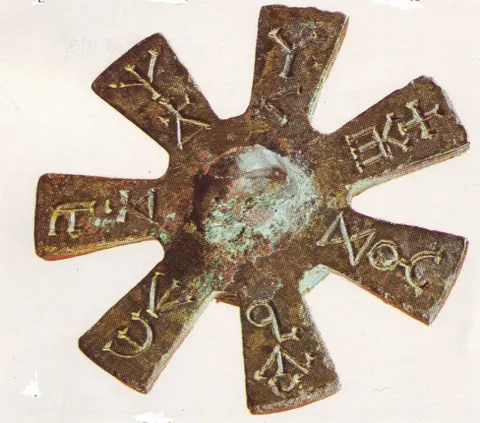
The Bulgarian army has never lost a flag in battle
If we set aside the First and Second Bulgarian Empires, it is accepted that in the Third Bulgarian Kingdom all the flags were saved. Even when large groups of Bulgarian soldiers were taken prisoner, they took their battle flag with them, hid it, and so it never fell into enemy hands.
The fact is confirmed by the leading specialists on the subject.
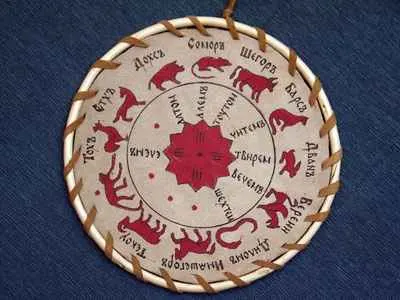
The Proto-Bulgarian calendar is recognized as exceptionally precise and was declared by UNESCO the most accurate in the world
What's more, websites often mention that this happened in 1976. Apparently the specific year is supposed to add credibility to the claim. In all my attempts to verify it, I found no UNESCO document anywhere dealing with any Old Bulgarian, Proto-Bulgarian or ancient Bulgar calendar.
UNESCO has never issued such a document for the simple reason that this isn't part of the organization's “profile”: it deals with cultural, historical and natural heritage, as well as with education around the world. This certainly never happened, yet it lives on in hundreds of websites and has somehow become an accepted “truth.”
The other aspect is that whatever data we have about such a calendar is fragmentary, coming from only a handful of sources. The main one is the so-called Nominalia of the Bulgarian Khans (Princes). It contains words that have not been definitively interpreted, but according to a number of specialists they are the names of years and months in a cyclical calendar, presumably related to the 12-year cyclical calendars still used in Asia to this day.
It seems to me this is not enough for a detailed reconstruction of an ancient calendar system. Such a system involves many other characteristics and specifics, too many for us to draw categorical and sweeping conclusions from a few very fleeting mentions.
The first Christian monastery in Europe was founded near the village of Zlatna Livada by Saint Athanasius himself
The legend says that Saint Athanasius took part in a council in Serdica, today's Sofia, in the fourth century, and then went to Philippopolis, today's Plovdiv. After that he passed through the lands of today's village of Zlatna Livada and founded a monastery that now bears his name.
The facts, however, are far more prosaic. The monastery in its present form was founded in the 19th century, and its buildings date mainly from the late 1970s. Near the monastery there is a so-called “squeeze-through”—a rock formation through which people crawl as part of a ritual practice, pointing to cultural layers that are ancient from an ethnological point of view. But that is hardly a conclusive argument for dating the monastery to the fourth century. The thesis needs very serious verification and possibly confirmation, including through archaeological excavations, and I am not aware of any having been carried out.
Kolyu Ficheto repaired Notre-Dame
This is a series of claims so unprovable that they can't even be refuted; they sit outside any context whatsoever.
The idea is that in the 1860s the master builder Kolyu Ficheto, the great architect of the Bulgarian National Revival, was summoned to Paris, perhaps through Midhat Pasha, and went to help save Notre-Dame from groundwater. And having handled the task brilliantly, he left the French a small drinking fountain as a memento of his stay, from which Parisians still drink water to this day.
There is no information—serious, documented information—confirming such a version. According to Kolyu Ficheto's descendants, it is simply a beautiful legend with no historical basis. Even so, you can find it on many websites presented as the plain truth.
It's wonderful to have legends, but let's clearly distinguish them from historical facts.
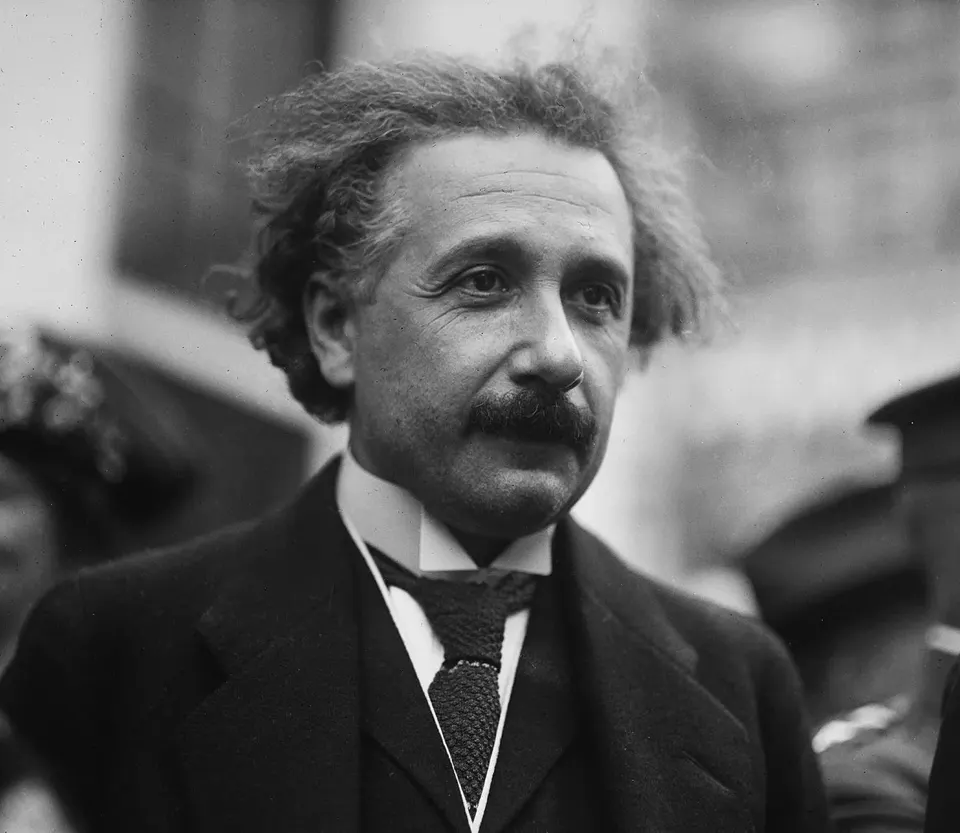
Einstein said: “The whole world bows before me, and I bow before the Master Danov”
This myth dates from the “pre-internet era”; it was first voiced in the 1980s and is cited today as absolute, unshakable truth. But it has been checked, and in the surviving documents and archival records on Albert Einstein there is no evidence that he ever said anything of the kind.
What's more, if he had been so impressed, he would probably have said it more than once. The words don't fit the context or style of Einstein's public statements at all. He would hardly have declared that the whole world bows before him. It isn't even clear whether Einstein knew who Danov was. The supporters of this legend will probably have to look much harder for evidence of their claims before we believe them.
Seven of the ten portraits in La Scala's hall of fame are of Bulgarians
From interviews with Bulgarians currently working at La Scala, we learn that there are no portraits in the foyer at all. There remains the possibility that the La Scala museum holds portraits of singers who have performed on the opera house's stage, but they are hardly just ten. The names mentioned in the legendary accounts—Ghiaurov, Ghiuselev, Kabaivanska, Christoff—are without question authoritative and significant enough that we have no need to add non-existent honors to their image and to the memory of them.
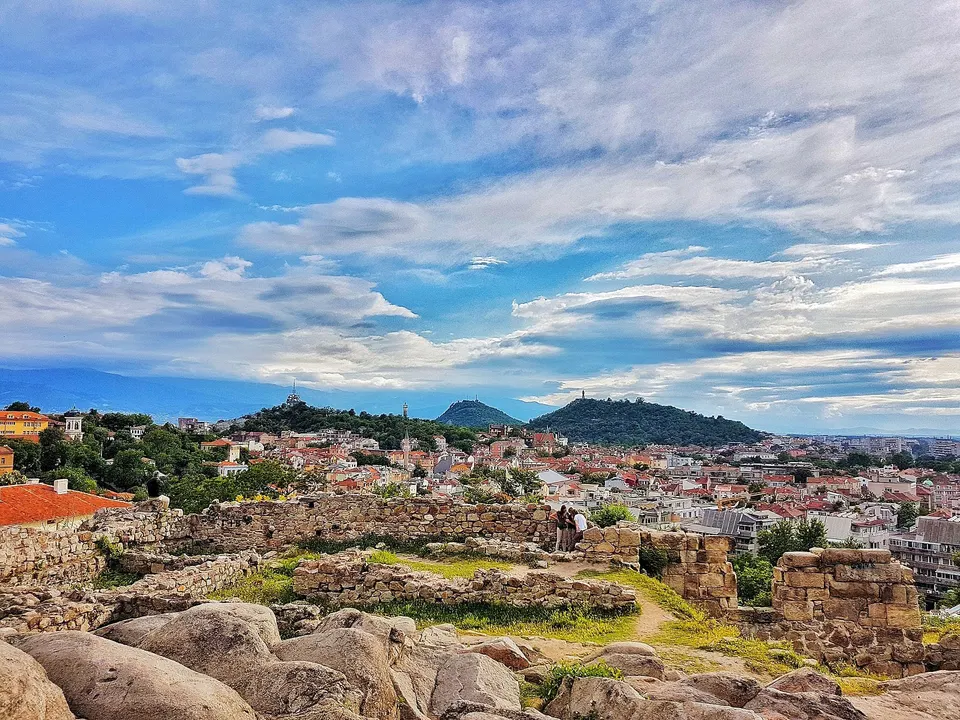
Plovdiv is the oldest city in Europe
It is extremely difficult either to prove such a claim irrefutably or to reject it categorically. It does seem, however, to have some basis. In a number of foreign-language online resources Plovdiv is listed as the oldest city in Europe. The city is said to be 8,000 years old. Some sources mention that Plovdiv competes with the Greek city of Argos, for which there is said to be evidence of habitation from 7,000 years ago, meaning Plovdiv is older by about 1,000 years. Personally, I would be cautious about using the label “oldest,” because in my view everything depends on what we mean by “city” and how we can prove continuous habitation of a given place over thousands of years.
Bulgaria ranks third in Europe for the number of archaeological monuments, after Italy and Greece
I don't think we have any verifiable quantitative data for this cliché.
If we take the number of UNESCO cultural and natural heritage sites as a criterion, without treating it as absolute, we see the following: according to UNESCO's website, the countries with the most historical sites are China, Italy, Germany and France. Bulgaria has ten, of which only seven are archaeological and three are natural. That is many times fewer than a number of European countries, even taking into account the size of the territory and the population.
I have heard this cliché repeated even by people with a solid education, but without any argument to back it up. There are simply no serious studies giving the total number of archaeological monuments in a given country.
What's more, archaeological research is an ongoing process, and so far no one can boast of having completed 100 percent of the archaeological study of a given territory.
Bulgaria is undoubtedly a country with an exceptionally rich archaeological heritage, but exactly what place it holds in the “European ranking” is something we can hardly determine unambiguously.