The Cat and the Quantum Computer
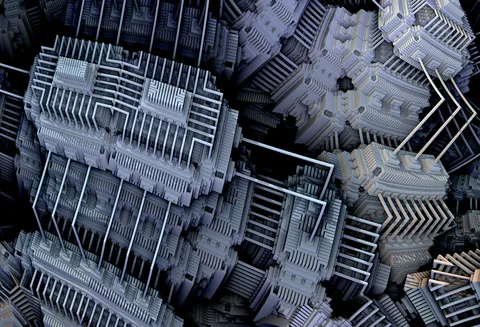
Quantum computers have been one of the most talked-about technology topics of recent years, and the biggest companies in the IT world are locked in a furious race to build working prototypes. More and more people say that they are the next step of the technological era. Yes, the subject is rather complicated, especially when you try to explain it in plain language, but let's give it a go!
 02
15 Predictions About the Future We Can Laugh At
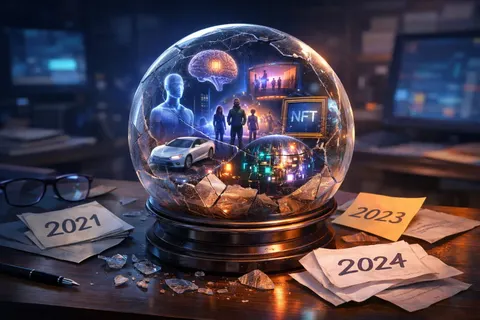
Trying to peer into the future is a doomed challenge, yet reading tech predictions that never came true turns out to be unexpectedly entertaining, especially when… they are your own. In more than five years, I have published just over 500 Digital Stories. I will invite an impartial observer to assess them and pull out specific passages that have not aged well at all.
 03
Five Jobs on Their Way Out and Five the Future Is Bringing In
Technology is drastically changing the needs of society, needs that must be met by the daily work of its individuals. Today whole professions vanish and new ones appear faster and more quietly than ever, and although forecasting in so dynamic a field is nearly impossible, we will try to sum things up: which five professions will soon disappear, which five will be most in demand in the near future, and what five professions we can only imagine might one day exist?
 04
“AI Is Everyone’s Big Chance to Climb Their Own Everest”
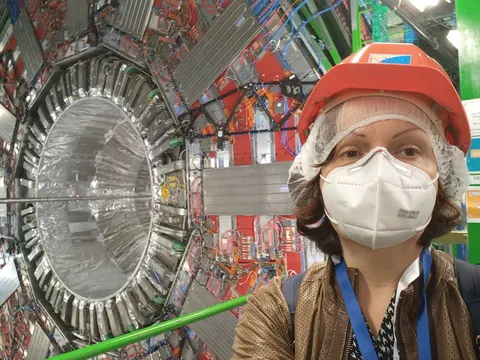
“The world stands at the Rubicon. We will live alongside smart machines, a new and different world awaits us, but are we ready for it?” That question, the very reason Digital Stories exists, is posed on the cover of her new book by today’s guest, Petya Minkova. In The Transition from the Digital Age to the Hybrid Civilization, she traces the long road from the first computers to a future of superpowerful artificial intelligence. And while the answer to whether we are ready is clear, there are so many other important questions we will discuss in the lines below! Do we have any future other than as a hybrid civilization of humans and technology? What does our survival depend on, and what will our daily lives look like once this transition hits with full force? Why is AI far more than a danger—why is it also a chance for each of us to climb our own personal Everest?
 05
“We Live in a Time of Total Transformation”
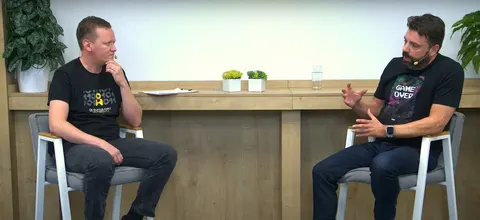
“We are surrounded by a huge number of software systems, we use them in our daily lives, and they were written by mediocre programmers. The way we create software is broken!” “The value of meaningful content will rise, because there is far too much garbage, far too much noise. The only way to preserve ourselves as human beings is to put up barriers. To sift what gets into our heads.” Boris Simandov has vast experience in technology. For nearly 10 years he held a director's position at Chaos Group, one of the most successful Bulgarian IT companies. Today he helps develop the next generation of startups. Together with Rosen Genchev, he created the Facebook group DevBG, the liveliest (and often rather strange) online space where people from the tech world meet. We talk about: – whether we can feel at ease in today's turbulent times – the artificial intelligence revolution we are living through, and the skeptics – the next important step: Sora and video generation – the big challenges and the professions doomed to disappear – the return of truth as a value, and the media of the future – the DevBG group as the best example of why and how democracy doesn't work today.
 06
Caught in the Whirlwind of Quantum Nanotechnology
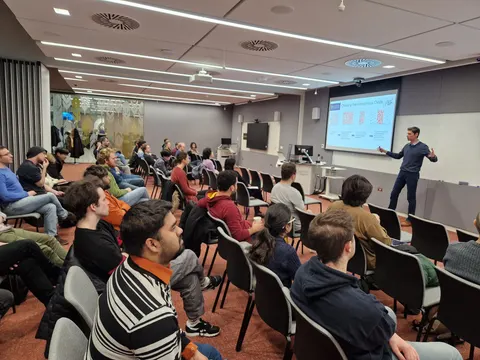
We live in the Silicon Age, says today's guest, and the next steps in how we make chips depend not only on technological progress but on how we develop as a civilization. Prof. Vihar Georgiev, who earned his doctorate at Oxford and now teaches and does research at the University of Glasgow, works in exactly the field that will decide whether we can keep the famous exponential growth of computing power going. He is also helping build the technology that could let a tiny sensor tell us more about our vital signs and illnesses than today's most advanced laboratories can.
 07
The Living Computers
Information technology has always tried to imitate nature's most perfect model: the human brain. Now it is on its way to doing so more successfully than ever—by building a computer that runs on living human brain cells! What happens if we bring together the best of both worlds: the biological, with its evolutionary efficiency and its instinctive, creative imperfection, and the technological, with its ability to derive patterns and build on them? Biocomputers look like the logical future, and it is no accident that many of the people sketching tomorrow have turned their eyes in this direction. Serious scientific breakthroughs and successful startups in recent years suggest that the next big technological leap may well be coming from here. These are the arguments.
 08
“AI Today Is Redrawing the Boundaries of the Impossible”
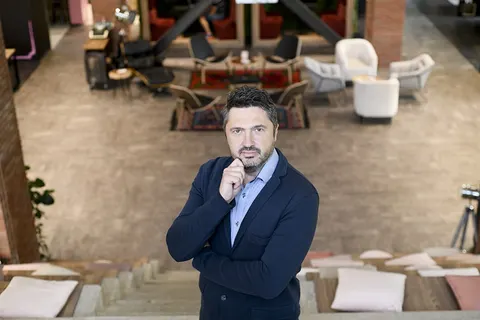
LivePerson… A live person? No, this one isn't alive—and that's exactly what makes it interesting. It's the name of an American company with a fascinating software project that relies on a serious team in Bulgaria. Alexander Raychev is the executive director of LivePerson and has years of experience as a manager in IT. From that vantage point, it's interesting to hear where he thinks we stand today with the much-talked-about artificial intelligence. How long will the algorithm remain distinguishable from a “live person”? Beyond all the hype, what are the optimistic and pessimistic scenarios for the development of this kind of technology?
 09
Five Technologies We Expect Big Things From in 2022
Here it comes, just days away! We expect so much from 2022! Not only for it to finally rid us of the pandemic, but also to bring back normal. And we also expect some purely technological solutions from it, each of which certainly has the power to change the life of every single one of us. Still: which are the technological fields where we hope the coming 2022 will be especially hot?
 10
Blockchain Keeps Us Connected…
Bitcoin has been in the headlines for quite a few years now… but do we know what the technology behind it actually is? What else could blockchain be good for? For example… helping to create a new form of democracy?