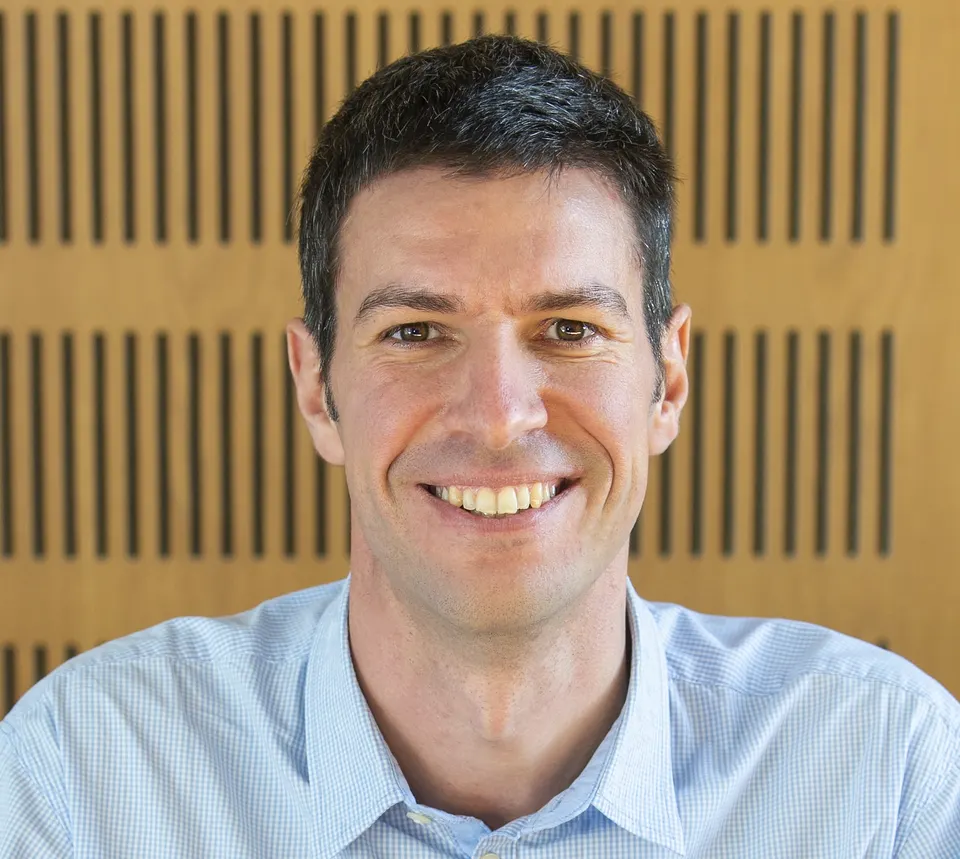
We live in the Silicon Age, says today's guest. And the next steps in the way we make chips are tied not only to our progress in technology but also to our development as a civilization.
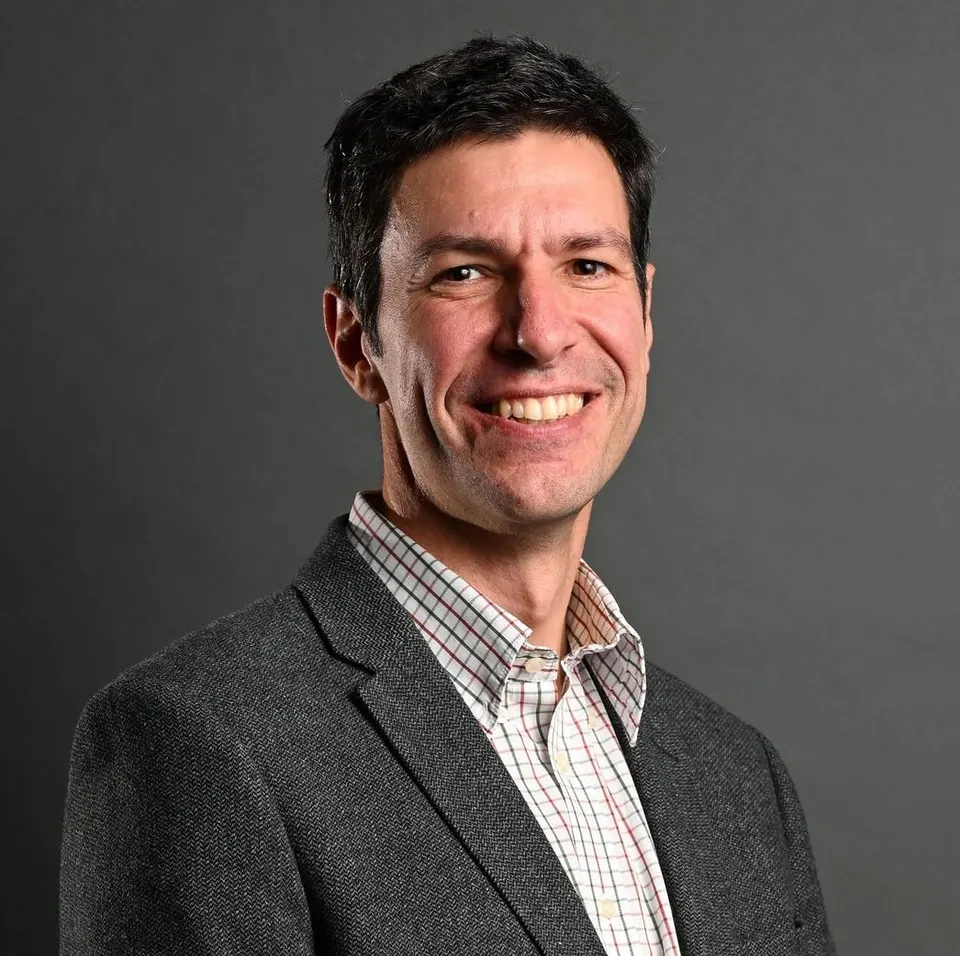
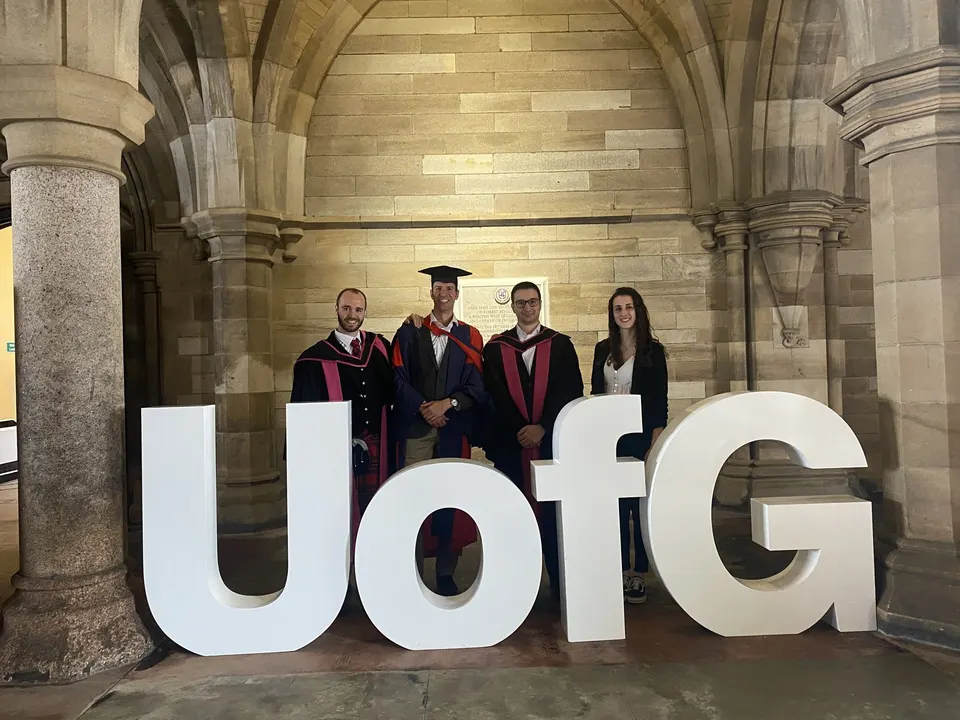
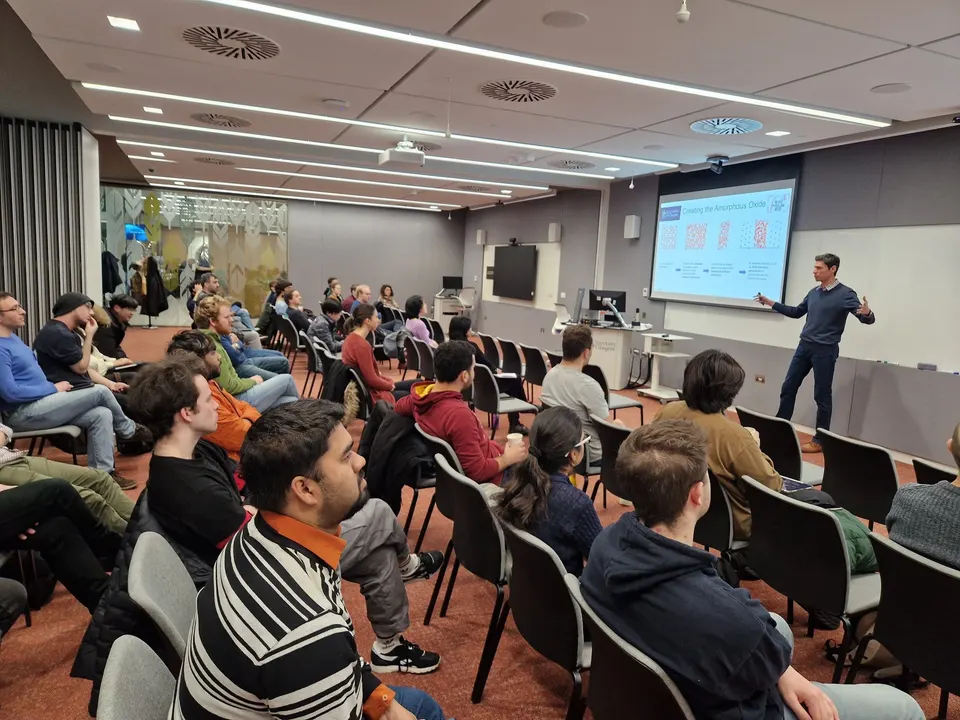
Prof. Vihar Georgiev completed his doctorate at Oxford, and in recent years he has been teaching and doing research at the University of Glasgow in precisely the field that will decide whether we can move up to the next level. Will we find the next paradigm, the one that lets us keep the famous exponential growth in the computing power of our machines?
The professor is helping to create not only the next generation of chips but also the technologies that could take laboratory testing so far that a small sensor would tell us more about our vital signs and the diseases in our bodies than even the most modern labs can today.
Muscles, Mass, Silicone
What is it like to be a professor of quantum nanotechnology? Even his own mother isn't entirely clear on what Prof. Vihar Georgiev works on. “One day she called me to show off: ‘I bought you an aftershave, it says it's made with quantum technology.’ She wanted to make me happy, because in her mind that's exactly what I do.”
And how quantum is that aftershave, really? Not at all. As the professor puts it, these days if we hear about quantum or nanotechnology, chances are we're dealing with marketing hot air with nothing behind it.
So what does he actually do?
You may have heard of Silicone Valley. That one is in fact near Dimitrovgrad, an industrial town in southern Bulgaria, while Silicon Valley in the US owes its name to the chemical element that has carried digital technology this far. Far enough that I have in my pocket computers capable of miracles—giving us access to all the information on the global network, connecting us by live video, making artificial intelligence possible.
A Whirlwind Start
Silicon-based chips turned out to be an incredibly successful solution, one that helped us build information technology with all its advantages and imperfections. But they are close to their limit—we already make extraordinarily refined microscopic semiconductors, transistors that stubbornly keep getting better. Plenty of people will comment on this without much enthusiasm, but the steady doubling of computing power over the last five decades is a fact no one can dispute.
We have refined chipmaking down to incredible detail. Which is why it was no accident that a few years ago we ran into the notorious shortage—there turned out to be far too few manufacturers able to make the precious molecules that form the body of our digital society.
The problem has gradually sorted itself out. And now the next huge question comes to the fore: technologically, it looks as if we have “squeezed” the full potential out of silicon chips and are fighting for the next few percent of efficiency. Hasn't the time come for the next big step, the one that will make the next great breakthroughs in information technology possible?
Major Whirlwind
Right here, in the whirlwind of events, is the moment to talk to Prof. Vihar Georgiev—whose first name, fittingly, means “whirlwind.” Though a chemist by training, in recent years he has devoted his work to the technologies for developing the next generations of chips.
Every device—our phone or our computer—now holds at least several million transistors, the miniature parts that do the calculations. If you think the topic is overrated, it's enough to mention the tensions of recent years between the US and China over Taiwan. The small island became the world center of chip development, and the business there grew and deepened so much that only a handful of companies in the world can make them.
How does Prof. Georgiev's research help in this? “My goal is to simulate devices, these transistors, so we understand how they work and how we can move forward,” he says. “Today they keep getting smaller, on the scale of 10 to the minus 9 meters, about 100,000 times thinner than a hair, and at that scale physical rules apply that are very different.”
When we're talking about units this tiny, the main problem that comes up is measurability. “Bulgarian-made Kalashnikovs keep working even if there's some deviation,” the professor jokes. “But in nanotechnology, if you have a deviation, every transistor starts working in a different way and has different characteristics. Then the chip you're trying to build from them doesn't work properly. At the nanoscale the biggest problem is to average out the parameters as much as possible, to predict how a given material will behave.” That is what makes it possible to create chips with sufficiently stable parameters.
We're All Nano!
And while we're on the subject of the difficulties of the nanoscale, it's time to mention the other big direction of the scientist's work. Thanks to the COVID madness (which we quickly forgot), we all now know what a PCR is and what a rapid test is—two ways of finding out whether we'd caught the disease that was so fashionable back then.
But couldn't there be a more effective technology? Chips that would let us judge not only whether a person has a particular infection but also their overall condition and what other health problems they have? Couldn't we take advantage here, too, of the fact that we live in the Silicon Age?
That is where another part of our guest's work is headed. “I can put some substance on the chip and learn what signal to look for. The sample may be for COVID, but I may also want to track blood sugar levels. A blood sample contains many molecules, and for each of them it's possible to work out what a given signal means, what its ‘fingerprint’ is.”
Chip 'n Dale
This is where Prof. Vihar and his team bring in machine learning, which lately we've all grown used to calling “artificial intelligence.” Ordinary data analysis proves insufficient, while the algorithms manage to judge more precisely which sign from the molecules in the samples can reveal what.
“The idea is to make a universal device that measures everything possible in a blood sample,” Prof. Georgiev explains. “Normally, for blood tests they draw blood into a test tube, sometimes as much as 200 ml. With transistors, the whole test can be done with a minimal sample.
That's because over the last 50 years we humans have perfected the making of flawless chips at miniature sizes. I believe that soon it will be possible to run every test from a single drop of blood. That a million-dollar laboratory with a machine the size of a room will turn into a biosensor the size of a phone chip. Then we'll have personalized medicine too,” Prof. Vihar Georgiev is convinced.
Turn On the Transistor!
The results are promising enough to push the professor to focus mainly on this line of development, with commercial aims. He admits that one reason for choosing this next step is the direction science is taking, which he doesn't like. He would prefer to carry on with his research without having to venture into the world of business. But in the UK—the country he chose for his career—the top priority in recent years has been military technology, which gets the most serious funding.
“Because of the war, in the UK the money now goes mostly to weapons,” the professor says. And he moves on to the other areas of research he works in. Quantum technologies that could produce a next generation of GPS navigation, far more precise and not directly tied to satellites. It uses the gravitational field, which lets it work in places currently out of reach for the technologies we know, such as underground or underwater.
But back to chips: will we manage to keep living up to Moore's law?
“Many people say we no longer manage it, because it's an economic law,” says Prof. Georgiev. “Every 18 months you have to halve the cost to stay competitive. It still holds if you go out to sell technology. With processors we're no longer talking about nanometers but angstroms, one step further down. 10⁻¹⁰ meters. We're reaching atomic precision in materials, and we don't know what comes next.”
According to the professor, one possibility is for silicon chips to be upgraded with the capabilities of graphene, as the next material that would allow the next steps. Only a few companies remain in this race today—TSMC, Samsung, Intel and GlobalFoundries—and the first two are several lengths ahead of the rest.
Change the Chip
Perhaps the most promising next step is “upward.” Most transistors so far are flat, and the big companies are working to add the vertical dimension, stacking transistors one on top of another. There are still far too many questions about how these building blocks will be built, though, because three dimensions bring their own new and unexpected challenges.
Another big direction, as has been discussed here before, is quantum computers. Our guest, an undisputed expert on the subject, is skeptical about their development any time soon. Mainly because of economic limits—so far these technologies have failed to stir the interest of the big players in chipmaking, and every new technology arrives not only thanks to scientists' successes but also thanks to economic interest. “That's the big problem for quantum companies. TSMC don't want to work for them, because they talk about 100,000 chips. Meanwhile TSMC work with companies like Apple, for whom they produce billions and billions of chips.”
Yet another of today's paradigms is biocomputers. Prof. Georgiev believes news is coming from that direction too, but in a rather different context.
Bio or Not a Computer
“If our brain is a biocomputer, it is the hardware, and the software is the books we read. We program this hardware in a specific way so it does a certain job. We have the architecture; we have to come up with algorithms. A biocomputer has to be the same. Can algorithms be devised to program a biocomputer? Most likely, yes. What problems could such a biocomputer solve? I don't know. Most likely there will be classical computers for problems that have been very well worked out over the last 50 years. And for specific, completely different solutions we'll have biocomputers, say in pharmaceuticals, simulating how molecules interact.”
And amid all this, we'll lose Moore's law, because we'll no longer be able to “squeeze” any more out of silicon chips…
“In my view, our problem is that physics and biology—nature is one,” says Prof. Georgiev. “But we don't understand this nature well enough, and that's why we have biology, chemistry, physics.”
Chip-Nosed
Is there a chance we'll understand the physics of the very small better, so that this becomes the next breakthrough letting us make chips even tinier than the angstrom scale? “Yes, there's a chance. People are trying all the time. But the thing is that as computing power grows, the effort, time and money needed for the next step grow exponentially too,” the professor says.
That's why chipmaking increasingly resembles aircraft manufacturing. Once every country had many manufacturers, but planes gradually became so complex that passenger aviation today rests on two giant companies—Boeing and Airbus. And that development didn't turn out so well when it came to the next steps. In recent decades aircraft manufacturing has achieved no breakthroughs remarkable for society; if anything, the opposite. The breakthroughs are in image and in the planes themselves.
What if the same happens with chips? What if we hand their production to two global companies that could easily settle into a showy kind of competition that more conservative, market-minded people would liken to a cartel?
“Most likely the same will happen in the future. TSMC and Samsung will produce innovations that come every 18 months, every 3 or 5 years. More and more they'll be looking for where to squeeze out 5–10 percent of a material's performance,” says the professor.
Ice Age
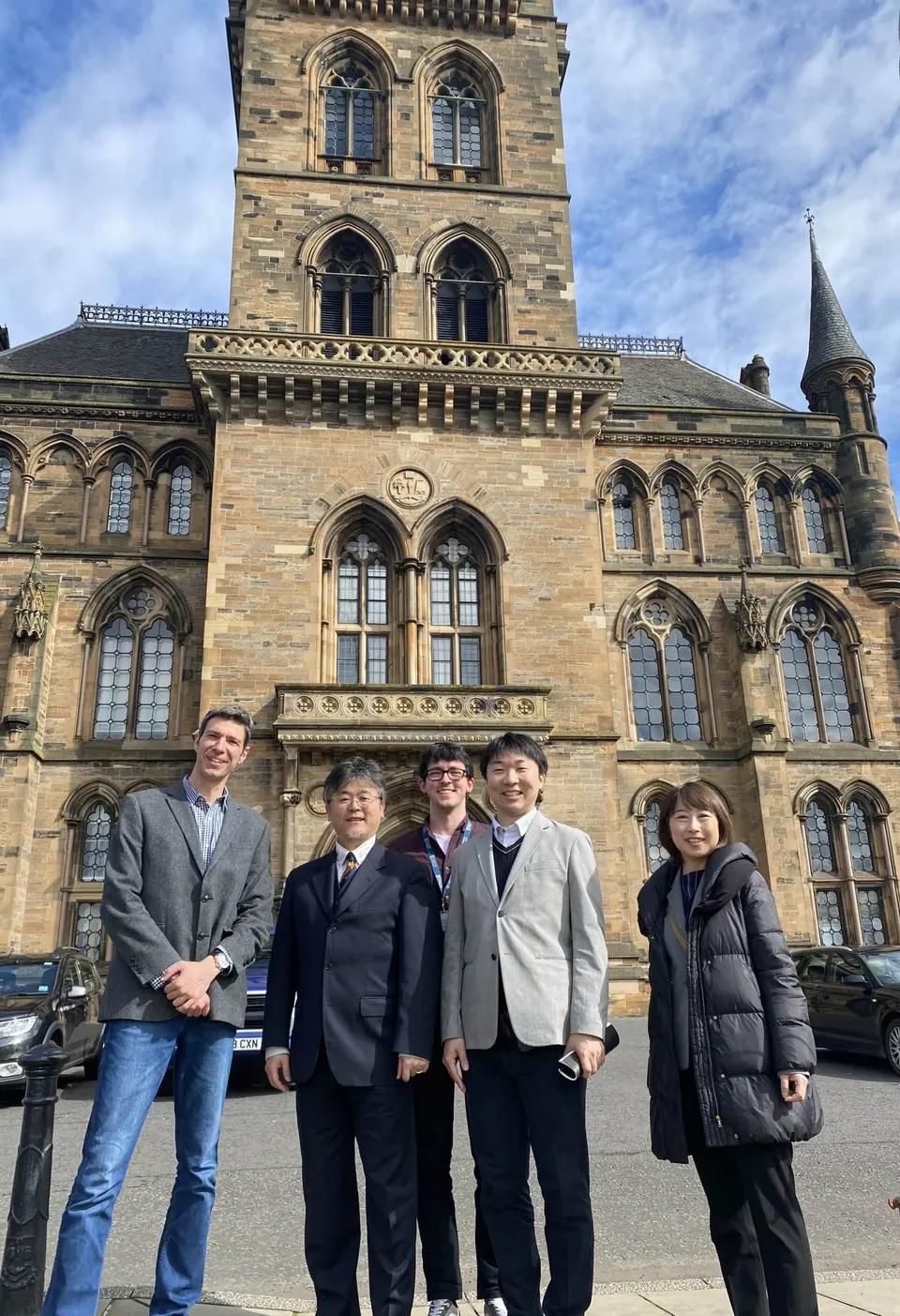
In the public conversation in our part of the world, we have certainly grown used to neglecting science in recent years. That's why it feels both familiar and strange to hear the professor, from the other end of the continent, from a country that even left our formal union, the European Union, talk about funding problems. About budgets going not to important areas like the next generations of chips or the chance to diagnose serious diseases, but to technologies of war…
“I think we live in the Silicon Age. Everything around us is semiconductors. Like it or not, Musk's next company aims to put them in our brains too, and it will probably succeed. Whether we want it or not, that's how it is.” But what will the era after the Silicon Age be? “Who can tell? Maybe the cyborg age. Let's hope it's not a biocomputer in the full sense of the word,” the scientist smiles…
In the whirlwind of events we don't have much time to stop and think, to discuss, to plan with foresight. And I believe we are lucky to live in the best and most interesting of times. In an era when we have to make important decisions for ourselves as a civilization and as a biological species. And where we go from here still depends on each of us.