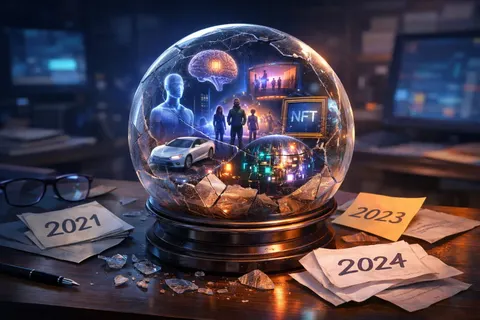
No, there's no astrology here, just pure science. How many scientists do you know who can predict the future with 85 percent accuracy?
I know just one. And the verdict isn't only mine, but also ChatGPT's, from a particularly telling experiment.
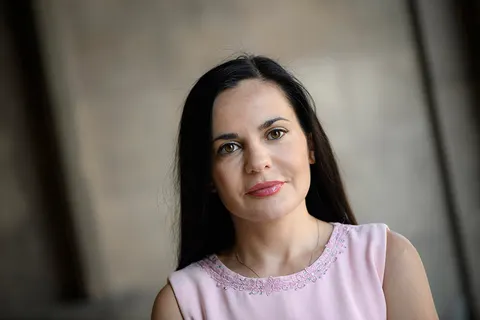
Assoc. Prof. Mariana Todorova returns for what has become a traditional Digital Stories interview at the start of each year. The futurologist always gives us important things to think about, so there's no need to waste time on a long introduction. Let's peek into the future together!
– Thank you for doing our traditional annual interview once again. The first time, we talked about artificial intelligence, long before everyone else started to. Not that we're having a real dialogue about it now, but it's such a ubiquitous topic. Still, aren't other important trends being left in its shadow?
– Exactly. There are global trends that cascade and that, unfortunately, will make 2026 more complex and more difficult.
People have been talking about polycrises for a long time.
Unresolved problems keep piling up, layer upon layer, and they create risks.
These can be existential or ordinary—the kind that cause trouble but that we can cope with.
One big trend that people still underestimate is the way climate change is manifesting itself. It's clear that it's happening and that it's not just an environmental crisis. Whether it's caused by human activity or by the planet's journey with the Solar System through the universe, it's here. What isn't widely understood is that it
affects the supply and the quality of food. It calls our reserves of drinking water into question.
It's also already affecting health, because there's a new, emerging field studying how climate change alters the patterns of disease. In other words, it will increasingly and directly change health systems too. It also brings a new type of economic crisis, a function of damaged infrastructure. This year we saw the destruction in Tsarevo, a small town on the Black Sea coast, and around Burgas.
So we see six effects: food, water, infrastructure, health and a new economic model that we have to think through.
The last element, which is also still not being discussed, is that the new refugees and migrants will be climate refugees.
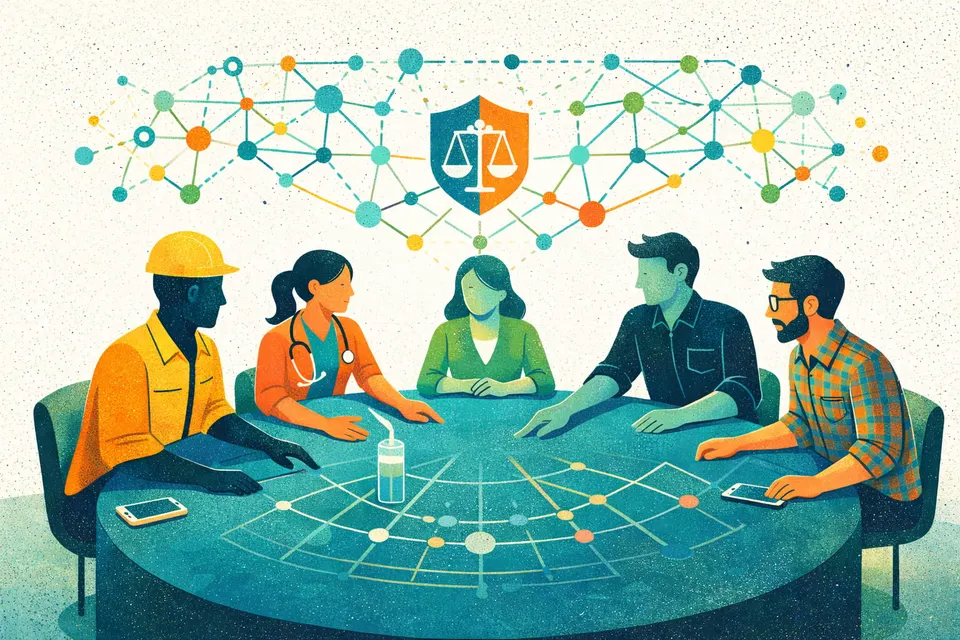
– Conversations with you always take an unexpected turn. But really, while we talk about AI, problems keep piling up that I, again, would link to the chaotic spread of technology. And all this is already showing up at the political level, in more and more countries.
– That's right. Europe, and a large part of the world, is now tempted by the conservative wave. Trump says he won't support Europe as much and will leave it to deal with multiculturalism and migrants on its own. Yes, let's say there's some basis for the claim that Europe is losing its identity as a Western European and Christian civilization…, but I think we can take countermeasures when it comes to economic migrants. That is,
it's better to build capacity in the countries they come from, rather than allow such a massive civilizational intervention.
But when, in 20 or 30 years, the planet warms—proven!—by 1.5 degrees, and many of the territories that migrants come from anyway, in Africa for example, become uninhabitable, our arguments about preserving civilization and so on will no longer hold up. At that point, it will be tantamount to genocide if the world doesn't take these people in. Solving the climate crisis is directly tied to preserving the world's many cultures and civilizations.
So there we see the first strand of the many multicrises that we aren't solving. Add to that the fact that the global share of clean energy really is growing, but it still isn't enough to change the game. And on top of that we pile yet another big problem:
all the new technologies we want to adopt and embrace to make our lives easier need electricity. America is opening new coal plants!
And we've just said how important it is to keep climate change under control.
The second big multicrisis problem is geopolitical and geostrategic fragmentation. What's happening in relations between the US, Russia and China, and the exclusion of Europe as a partner for dialogue, reveals a fragmentation, a new desire to strengthen nation-states, a “decoupling” from the traditional military alliances. We see that NATO has been shaken, economic alliances are being abandoned—Trump wants to create a G5, not a G8—and the “decoupling” from supply chain alliances is intensifying. That began with Covid and deepened with the war in Ukraine.
– Meanwhile, within individual countries, and within alliances too, public conversation remains “broken,” shattered by technology.
– For our generation, yours and mine, that looks like a problem. For Gen Z it looks like a great opportunity and a great advantage, but in fact it creates a crisis. I've given this example many times. In the 1970s, America had 4 television networks. In 1998 it had 24; now every Facebook, Instagram and TikTok user is a media outlet. There is
an enormous fragmentation of the shared public space, the place where people need to talk to each other and, by hearing different, pluralistic points of view, still reach a consensus.
That is gone. We see how hard it is to talk to each other and arrive at any common political decisions, let alone at the global level.
That's the third multicrisis effect—fragmentation of the public space, fragmentation of the generations, the lack of a single platform where people can talk. Post-truth—a multitude of conspiratorial and fabricated facts, fake news, propaganda, disinformation.
Generations like Gen Z get their information mainly from social media. If it's objective, fine, but if the algorithms steer them in a way that shapes their attention for the sake of engagement and interaction, that can distort the information quite a lot.
Here's another layer of the problem: politics and political parties no longer find their identity in ideologies. There's a lot of talk now about conservatism and liberalism, but the real aim is more about solving problems, finding causes and an identity, and
ideologies are becoming hybrid. When that happens, they no longer have a clear face; everyone moves into everyone else's territory, or is a populist.
– Last time, too, we talked not only about post-truth but also about fluid truth. Which inevitably brings serious political upheavals in its wake, and today's global and national order isn't ready for them.
– Yes, people no longer know whether something is true or not. I've been saying it since 2012, and now it has happened. But this has led to an inability to govern. In purely political terms, governments' terms in office are getting shorter and more limited in every country. These shorter terms mean that
unpopular decisions and unpopular measures can't be taken, reforms can't be made.
How will we fight climate change? What electricity will we produce to power AI?
Another crisis layered on top of the political one is that all countries are becoming more and more dependent on issued debt. It's getting more expensive because many countries are taking advantage of it, but since every short-term government inherits the process, it too is forced to keep refinancing that debt, while also taking on new debt to top up systems that used to be self-sustaining—such as pensions and social security.
With the arrival of AI, automation and robotization, and
without some radical political decisions along the lines of “there must be a human quota” or “taxes on such production will be 70 percent,” this approach will force debt to finance more and more current systems, which will break.
If, within 5 years, the retirement age isn't raised to 70 worldwide, there's no way this model can hold,
but at the same time we're blocked by fragmentation, by the absence of a clear ideology, by the fact that everyone wants their own demand satisfied.
Politics is becoming heavily influenced by civic activism. On the one hand, that's good, because it's a very strong corrective mechanism—we see that with the protests here in Bulgaria. But on the other hand, everyone wants their own cause satisfied. Today's digital technologies can offer solutions to some of these issues—climate change, environmental disasters, for example—but they can also complicate others considerably and make them unsolvable if we don't approach them wisely, especially when it comes to political governance.
– And perhaps that's exactly why tearing down something that doesn't work as a social mechanism is possible, while building something new remains an enigma.
– Last week I was at an event organized by the magazine Stalbata (The Ladder), and I found it interesting because the audience was mostly Gen Z. They said: “Nobody will ever lie to us again, because we don't watch traditional media, our phones are in our pockets and everything is out in the open.”
Which is wonderful, because in the post-truth era, alongside the many versions of the truth, the objective truth itself still exists and is visible.
It's visible to everyone—these generations included—that something is wrong, that things aren't as they should be.
But on the other hand,
nothing is heard beyond the act of protest itself, nothing about how to construct the systems in a new way, how to transform them.
That's a big problem on a global scale too. We want to destroy Carthage. Fine, but what are we building in its place? And building it with all these risks in mind, so that we can respond to them. Hence the lack of a common platform for talking—both in terms of ideology and between generations—may turn out to be a big problem.
– We've been talking about the broken public conversation for a long time. But the sad thing is that there's no sign of any way to “patch it up” or “weave” it anew. Meanwhile, some strange amalgam carries on by inertia and sets the agenda. You mentioned climate change as a key issue. Five years ago, anyone you asked, or at least anyone active in the media, would have said, “Well, this is a huge problem, we're all talking about it, we're holding COP 25, 26, 30, we're taking measures.” Then suddenly it vanished from the public conversation, and not just in Bulgaria. Even Greta Thunberg went off to save Palestine and isn't fighting so hard for emissions cuts anymore. The European Commission backpedaled on gasoline cars. So there is some form of public conversation happening above everything else, despite the absence of normal media. Right now, AI is one such topic.
– This shows that we
already live in a kind of parallel reality, curated by both traditional and social media.
Wherever the spotlights turn, whatever space they light up, becomes important to us. The war in Ukraine, Gaza, climate change all disappear and reappear periodically.
One reason is that when the pendulum swings to an extreme in one direction, someone inevitably needs it to swing to the opposite extreme. What Trump, say, and his defenders and followers came along with is that some scientists say there's no clear evidence that this is solely the result of human activity, because there were such extremes in the past too; it's just that no one could describe them, because it was before the span of our civilization.
And second, what resonates strongly with people is that it has turned into a business model. In the post-truth era, when there are many truths and many untruths and disinformation, as Kimbal Musk, Elon's brother, said back in 2015,
“trust will be the currency of our time.”
Simply because it's no longer even a battle over interpretations—many people give up on interpreting altogether—it's a battle for trust.
– And on top of all that comes the rise of AI. We can't avoid getting to it, because here at least the noise seems justified. Without a doubt we now have a new, extraordinarily powerful technology, and yet here in Bulgaria, for instance, it remains unfamiliar. I recently read data showing that only about 20 percent of people use it at all, and as for how sensibly and appropriately…
– AI is a very important, very interesting phenomenon to study. 2025 was expected to be the year of big changes, the year of maturity. Not asking whether we can use it or where, but how—specifically in business, in economic processes.
It turned out there's strong cultural resistance, compounded by the fatigue people already feel from other technologies.
Simply put, screen technologies—phones, tablets, computers, the internet—plus the lack of a clear policy from those who are supposed to educate, schools and so on. What is this new digital and AI literacy? The cultural resistance applies to earlier generations, while Gen Z is very optimistic; they see nothing critical or dangerous.
The fact that Europe and Bulgaria have lagged behind is due precisely to this resistance, this cultural pushback.
This year, 2026, a very clear effect is expected, because people have started talking widely about AI agents, about workflows, and about how
I'm more competitive and can keep my job only if I know how to add value to my work with AI.
In other words, I'm not afraid my job will be replaced; I know some of my tasks can be done by AI, so it's better to understand them, so that I can be even more effective.
– At least in the software industry, this is very, very visible. I've recently started working professionally on helping more people in our industry make full use of what they have, but even there, there's some very strong resistance.
– There's something else I talked about a year ago that's already visible in America and will lead to a big problem. Juniors, the entry-level experts in many professions, are under threat, and I think this will spark a global debate about a new type of structural youth unemployment, because the effect will become visible.
It's clear that repetitive, monotonous work is also under threat. For people who can only do that, it will be a big problem too, and they'll have to retrain. Although in America, at least until a few months ago, it was evident that people weren't being laid off en masse when AI was brought in to replace them; they were being redirected to other work.
A third phenomenon has emerged, which I'm also watching in the US: literally
a “mass culling,” huge layoffs, as you said, of programmers, the way it happened to you too.
And then total crisis, even bankrupt businesses, because of excessive over-trust and ignorance of the fact that AI makes mistakes, that it hallucinates, that someone has to go over and read the code it has written, to see whether it's relevant, whether it has bugs—and those people are gone. Some overly optimistic businesses, especially small and medium-sized ones where losing people was critical, have already gone bankrupt because they can't fix AI's mistakes…
But this year, the expectation is that it will move in quite seriously, especially in logistics, in healthcare, in the defense industry—there are quite a few such specific fields—and in finance, the fintech industry.
– You mentioned a “public conversation” that needs to get going on topics like youth unemployment and everything else we're talking about. I, for one, expect the next step, in which we'll break it even further thanks to AI. To a large extent, the way we get our information has already moved there. I don't open Google to check something, and Google itself now offers an AI answer first. But that means even murkier mechanisms by which information is served to us. A black box.
– There need to be
some global opinion leaders, and some in individual countries too.
Like you, like me, a new generation of politicians, platforms at the UN, where some kind of public agenda can be communicated so that there's saturation. And so that topics aren't hidden or censored, intentionally or not, according to what the algorithms steer and copy.
Because we see that people aren't as insensitive to topics that aren't popular with them as we thought. I truly
didn't expect my daughter's generation, Gen Z, to react at all the way they have to the problems in our country.
Evidently, when information is presented in the right way—whether as memes, funny clips or a clear definition of the problem—people respond.
The question is, which platform will it be?
Should other generations also join these social media? Should we fight to revive and protect traditional media as “gatekeepers” and seek popularity for them among Gen Z? Or should they promote their content on Instagram and TikTok?
– That's my own personal million-dollar question. And at least my personal answer is—a little of all of the above. But none of it will happen without active public will.
– Being informed and holding a global debate must also become a clearly defined problem in its own right,
one that humanity, people and nation-states must solve. Because it's the main communication channel through which to think about issues like youth unemployment, the impact of AI and the political inability to govern.
Perhaps two powerful lobbies will clash here. One will want to justify its investments in AI at any cost. We already see that OpenAI, if it carries on the same way, will go bankrupt, even though it made a revolution. Many people will fight to keep the bursting of the AI bubble from becoming a self-fulfilling prophecy. But to counter it, AI has to make serious inroads into the labor market and change professions.
And another lobby, as we're already seeing in Australia, says: “Social media is harmful for children under 16; it must be banned.”
So
perhaps there will be some sobering up.
– Let's hope so! Around the world and here in Bulgaria, I see very few examples of the latter.
– It's more about some partial manifestations of AI. As for general AI, which many people hoped would be the new nuclear weapon that decides the next superpowers, we see that for now there's no desire for restraint or cooling down—neither from China nor from America. And that already leads to existential risk.
If we could call all the risks so far ordinary—although they're anything but ordinary; they're very serious and can have grave consequences—general AI is an existential risk.
It won't even be a black box anymore, but a black box containing the extract of all human civilization. They believe AGI will be as smart as the whole of civilization. Each one of us, as an individual and a subject, will face an entire civilization!
If we don't know how to understand it, align our values with it, control it, govern it, that is an existential risk.
But here we see a fundamental misunderstanding. The people working on AI perceive it as a technology that will solve problems and help with production. They don't see it as a new kind of entity, as something that is no longer a technology.
So there will be a battle. Either people will get a fright, and politicians will realize that these short terms, this inability to govern, is closely tied to technology and social media, and that the education and social systems and the labor market could collapse.
Or we'll wade into some serious crisis, a multicrisis with many problems, and then we'll be looking to repair the damage.
It's not out of the question that the social order will break and that there will be some quite serious social upheavals and unrest. Even in Bulgaria this is happening. And it could happen right after New Year's, if everyone on this final list of people eligible to head a caretaker government refuses to become prime minister.
– That development surprised me, since I see social networks as a social pressure valve. A perfect hub that destroys every form of revolution, because it leads to sublimation. Everyone vents whatever complaints they have there, and so real change never comes.
– It is a form of sublimation, but it's also becoming clear that when attention is structured, it can lead to physical action—to calling a protest, to serving as a unifying platform for a single message, a single communication channel. If we accept that it's mainly a medium for one age group, they too need a concrete physical expression. There's no other way to call them out and bring them together.
Evidently, it can be done. Evidently, people still need to stay connected to material reality, to take real action.
Let's also not forget that many users of these media are precisely the carriers of the hybrid. Some are liberal, others conservative, and they can be influenced across these different platforms with the right messages.
I don't know whether you've noticed yet that the people who stood together in the first days of the protest have already split up and started attacking each other from within.
Once that goal was achieved, internal discord began, and it's precisely because of this hybridity. That's exactly what shows that perhaps one step will be taken, but the second—what to do, how to stay together, what the constructive part is—is much harder.
– What to do with the empty Carthage… As expected, as it has always happened, the next step is much harder. Maybe we want it, but the systems don't let us.
This conversation turned out a little gloomy. Yet lately, both of us have been trying to build, one way or another, with the help of AI. Would you like to finish with a bit about practical applications? Clearly we're lagging behind, in Bulgaria even more so, but I don't think it's too late to change that. What do you think?
– First, something needs to be done at the level of national policy. I had gotten as far as a high-level conversation with the Ministry of Education about a vision for using AI in education. There were intentions to set it in motion, because once teachers acquire that literacy, they can show children how to use it, and that's how a culture is created. Separately, this also needs to start happening in the public administration.
On the business side, it's not enough for some AI company to show off what products it has.
There needs to be a layer of consultants—either in-house or freelance consultants like you or me—who explain things.
For example, what speech-to-text can be used for, how to build your own AI agents, what it can optimize and how it can lighten your administrative workload, freeing up your employees for other tasks. But also that someone will have to control it, supervise it, so that it doesn't make a big mess.
We see that AI itself creates a huge list of needs for new specialists—AI consultant, AI cloud architect, AI integrator, AI ethics monitor and so on.
Because it's becoming clear that businesses themselves, even proactive ones, will either make the mistake of laying people off wholesale and over-trusting it without weighing the risks, or will be very conservative and resistant and fail to see the concrete benefit.
– I very much hope more people and businesses will appreciate this. But for the first and only time, I hope your forecasts turn out to be wrong, because the subject of multicrises definitely sounds frightening. Thank you for another important conversation. I hope that in a year at the most we'll continue it. And may the forecasts be more optimistic then…