In 2015, seven leading futurists laid out their expectations for the decade that was just beginning. In a few hours we will welcome that very 2025, so we can now judge how well they lived up to their own predictions in the dynamic and turbulent first quarter of the 21st century.
And then comes the even more interesting part: we will peek into what those same futurists expect today, and above all the ones among them who turned out to be right.
What lies ahead in the coming years, according to the people who successfully predicted the last decade?
The end of every year is a time to look back and look ahead, which is why each time a themed Digital Stories piece on forecasting awaits you.
Here are the previous ones, which are definitely still relevant:
-
2022, 60 Years Earlier. What Did the Science Fiction Writers Get Right?—from Isaac Asimov to the Strugatsky brothers.
-
“Programs, programs and more programs! That’s what we should infect the young generation with…”—what a curious book from 1988 got right in its predictions about the computer world.
-
“The Computer Will Be Like Bread!” How Did Bulgarian Science Fiction Writers See the 21st Century?

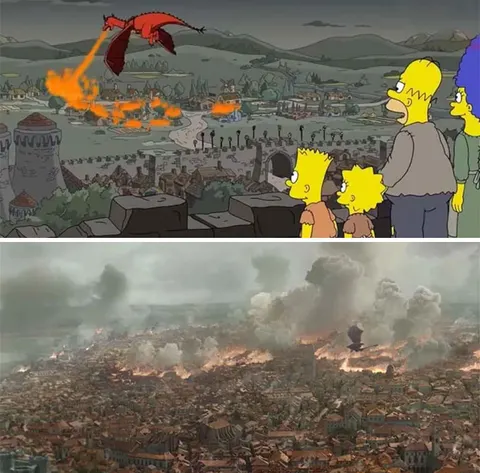
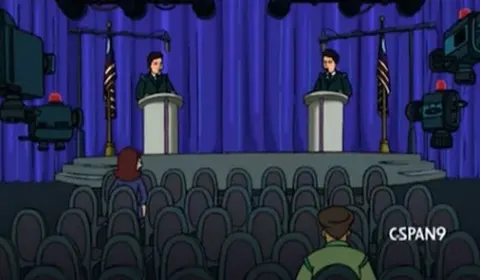
1. Of course, the most famous prediction that came true is the election of Donald Trump (now twice) as president. The idea is mentioned or shown many times, years before it became reality.
Two Five-Year Plans
Where were you in May 2015? Personally, I was still working at a magazine, I had no children, life was so different… It is different whichever way you look at it. Technology has changed us to the core since then, the international situation is radically different, even the problems we argue about online are other ones. And who could have guessed there would be COVID, that Russia and Ukraine would go to war, that artificial intelligence would become the most discussed topic and make such remarkable progress?
Then again, maybe… there are people capable of catching what is coming with ruthless accuracy? Let’s check.
In May 2015, this piece appeared in the Huffington Post: “7 Futurists Give Their Predictions for the Next Decade.” Futurists, futurologists, forecasters… someday it will be worth untangling that topic too—the similarities and differences, and the scientific approach to the future—with Assoc. Prof. Mariana Todorova, a beloved and frequent guest of Digital Stories.
Still, lots of people make predictions, and they are hard to keep track of, especially in the commotion of the ocean of information flooding us. That is why I chose this angle on the subject: a specific set of predictions with a specific due date. A date that has just arrived, so we can check what came true and what came crashing down. And from there, hear what those same people expect from the future that is coming.
How Kaku It Be?
Michio Kaku is a professor of theoretical physics, a legendary figure in forecasting who definitely deserves a Digital Story of his own. How well did he do in 2015, peering ahead to 2025? Let’s see.
“In the next 10 years, we will see the gradual transition from an internet to a brain-net, in which thoughts, emotions, feelings and memories might be transmitted instantly across the planet.
Scientists can now hook up the brain to a computer and begin to decode some of our memories and thoughts. This could eventually lead to a revolution in communication and even entertainment. Movies of the future will transmit emotions and feelings, not just images on a screen.
Teenagers will go crazy on social media, sending memories and sensations from their prom, their first date and so on. Historians and writers will be able to record events not just digitally, but emotionally.
Perhaps even tensions between people will diminish, as people begin to feel and experience the pain of others.”
Ah, professor… if you are right about the optimistic part of your predictions, we will definitely have to wait (a little?) longer. The brain is still having a hard time learning to connect to the computer, and emotions remain as indecipherable as ever. As for whether we are already in a brain-net to which we delegate more and more of the work of our most important organ… that deserves a deeper look.
Teenagers will go crazy on social media… it seems they are not the only ones.
Either way, I at least could not find where Prof. Kaku set a precise deadline for each of these predictions. And whether a decade later we have come closer to their fulfillment, judge for yourselves…
Space, Brain, Immortality
But what does the famous forecaster expect for the coming decades? Here are three specific predictions of his from 2022:
- We will become a space-faring species
“We are entering the next golden era of space exploration. Not only do we have new energy, new funding and money coming in from Silicon Valley, we also have a new vision. For Elon Musk, the goal is to create a multiplanet species. Jeff Bezos, for his part, wants to turn the Earth into a park, so that all the heavy industry, all the pollution goes into outer space. I once talked to Carl Sagan, and he said the Earth is in the middle of a shooting gallery of asteroids, comets and meteors, so it is inevitable that one day we will be hit. We need an insurance policy.
Remember that 99.9 percent of all species here eventually go extinct. Extinction is the norm. We think of Mother Nature as warm and cuddly. And most of the time she is. But sometimes her wild side shows. Right beneath your feet are the bones of organisms and fossils, that 99.9 percent that were doomed by the laws of nature. The laws of physics also doom the entire planet. Those are two death sentences for humanity, and ultimately our destiny will be in outer space.”
- We will expand the capabilities of the brain
“In the history of science, we have had big projects that galvanized entire nations. The ‘Manhattan’ Project gave us the atomic bomb. The Genome Project allowed us to map the genes of the body. Barack Obama launched the Connectome project to map the human brain. It is already possible to connect it directly to a computer.
We can already have telepathy. We can already merge minds with the internet, send memories, emotions.
Computer chips will cost a penny, they will be everywhere and nowhere, in your eyeball, in your contact lens. You will blink and be online. We are entering a new era in which the internet may become a ‘brain-net.’ And that will revolutionize entertainment. When radio came along, silent movies were out of a job. Nobody wanted to watch Charlie Chaplin when you could hear actors talk. Think about what will happen when you can feel emotions, sensations. Then movies will seem so barbaric, like technology from the days of the dinosaurs.”
- We will defeat cancer
“I think the synergy between biotechnology and artificial intelligence will lead to a revolution in everything around us. First, the job market will explode, because the baby boom generation is aging, it has disposable income, and it wants answers to its problems now, not next year. So there will be a lot of money tied to people who want to find a cure for terrible diseases like Alzheimer’s and Parkinson’s. Right now we have no cure for them, but a huge share of the effort is being redirected toward the diseases of old age.
We will have a silver bullet against cancer thanks to nanomedicine. We will have DNA chips that let us look for signs of cancer in colonies of a hundred or so cells. One day your toilet will tell you that you have cancer, do something, you have 10 years. The word ‘tumor’ will disappear from the English language. Our descendants will wonder how we could ever have been so afraid of cancer.”
Ah… I hope he is right. On every single point.
Well, Well, Weil
Ray Kurzweil is an inventor and a pioneer of computer science, best known for continuing to predict the trends in how technology develops. Trends that, in his view, (perhaps ever more) convincingly lead us toward the singularity in the foreseeable future—the moment when machines surpass human intelligence.
But do his predictions really come true with such precision? Here is what he expected of 2025 a decade ago:
“By 2025, 3D printers will print clothing at very low cost. There will be free open-source designs, but people will still spend money to download the clothing files of the latest hot designer. 3D printers will print human organs, and we will be able to repair damaged organs with reprogrammed stem cells. 3D printers will print inexpensive modules for snapping together a house or an office building, Lego-style.
We will spend considerable time in virtual and augmented reality, which will allow us to see each other even when we are hundreds of kilometers apart. We will even be able to touch each other.
By 2025, avatars will be convincing but not quite at human level—that will happen in 2030. We will be able to reprogram human biology against many diseases and aging processes, for example by deactivating cancer cells and slowing the progression of atherosclerosis, the cause of heart disease.
We will create avatars of deceased people from all the information they left behind. They will be convincing but not fully realistic, at least not before the mid-2030s. Some people will find this technology unsettling.”
Let’s say that technological predictions are Mr. Kurzweil’s strong suit. His predictions in the medical field are definitely still in the future tense. Unlike, for instance, the idea of digital twins and the conflicted attitudes toward “digital resurrection.”
What is curious, though, is that he stands by his predictions where the singularity and technology surpassing human intelligence are concerned. His new book, The Singularity Is Nearer, came out recently, and it is definitely the subject of a future digital story.
And here is what Ray Kurzweil expects in the coming years, according to a June 2024 interview with the Guardian:
“I have stayed consistent. I expect we will reach human-level intelligence—AI that has attained the abilities of the most skilled humans in a given field—and by 2029 that will be achieved in most respects. There may be a few transitional years after 2029 in which AI has not surpassed the best humans in a few key skills, such as writing Oscar-winning screenplays or generating deep new philosophical insights, though that will happen too.
General AI is something else—it can do everything any human can do, but at a higher level. It sounds harder, but it is coming as well. In fact, I am the only person who predicted the tremendous interest in AI we are seeing today. In 1999, people thought it would take a century or more. I said 30 years, and look what we have. The most important driver is the exponential growth in the amount of computing power for a given price.
As AI gets smarter, it will be able to understand its own knowledge more accurately and tell people when it doesn’t know. Think of it as having a phone, but in your brain. If you ask a question, your brain will be able to go to the cloud for an answer, much like you do now on your phone—only it will be instantaneous, there will be no input or output issues, and you won’t realize it has been done. The answer will simply appear.”
Take Kjaer
Dr. Anne Lise Kjaer is the founder of Kjaer Global, a London-based trend forecasting agency. In 2015, she predicted:
“The WHO predicts that by 2020 chronic diseases will account for almost 3/4 of all deaths worldwide, so the development of M-Health (mobile diagnostics, biofeedback and personal monitoring) will revolutionize the treatment of conditions such as diabetes and high blood pressure.
Apps developed by medical professionals will provide effective real-time feedback, tackle chronic diseases at a much earlier stage and help improve lifestyles in developed and developing countries alike.
That is exciting, but what excites me even more is the parallel development of apps that address our underserved mental health needs.”
Alas, as already mentioned, things in the health sector are moving more slowly than our fond hopes, and that too is the subject of quite a few Digital Stories.
Dr. Kjaer rarely makes public appearances, and I couldn’t find sufficiently recent specific expectations of hers for the future, but she has developed an impressive system on which she bases her forecasting.
And its presentation includes some predictions as well:
“Thinking cities. High-speed digital infrastructure is transforming cities, bringing fresh thinking and new solutions that deliver environmental innovation at scale.
Internet of everything: artificial intelligence and the internet of things are evolving and influencing work, production and skill sets; most future jobs have not yet been invented.
Immersive experiences: creativity is the key to developing high-quality, immersive and augmented experiences—technology is merely a tool.
Omni-channel: we expect seamless interactions and instant responses in a world where all things, places and people are connected.
Radical transparency: digital ethics, openness and transparency are the norm, built into products, services and interactions.”
The Internet of Everything and Everyone
Dr. James Canton is not just a forecaster but also one of the founders of Apple, one of the people who paved the way for the iPhone, and with it for all the changes that came with the rise of mobile technology. Here is what he expected of the year now upon us:
“Portable mobile devices will cover the entire world. By 2025 we will have an internet of everyone and everything, connecting every nation, community, company and person with all the world’s knowledge. This will accelerate real-time access to education, health care, jobs, entertainment and commerce…
Humans and robots are merging, digitally and physically. Artificial intelligence is becoming as smart as humans, even smarter. It will be embedded in cars, robots, homes and hospitals, and that will create an entire AI economy.
Predictive medicine is changing health care. Personalized genetic medicine will prevent disease, save lives and save billions in lost productivity.
The next generation of bitcoin will replace traditional money, creating a new paradigm for digital commerce and business that will create an entirely new economy.”
Hmm, it seems to me that quite a few nuances were captured here. Yes, medicine, which according to every forecast quoted here should have been transformed by now, is still not what we would like it to be. Not at a Sofia polyclinic, at least. But the rest?
A Virtual Friend
That is exactly why we are peeking into James Canton’s current predictions, given in an interview with Newsweek in June 2024. About how he imagines the iPhone, the symbol of technological progress, will continue to evolve:
“Smaller, lighter, faster—eventually the iPhone will disappear into a small wearable device. Think Star Trek.
AI will be fully integrated into the iPhone, as everyone will have one or more personal AI agents helping them navigate their life, security, work, health and creativity.
AI will become a tool for self-improvement, a tutor, a virtual friend, a guide, a creative force. General AI is bound to arrive too, the ‘constant radical change’ that will accelerate adoption and personal empowerment. That could happen within five years.
AI is a particular problem, especially if it is not controlled, monitored and protected by strong ethical and legal frameworks.”

Future Perfect
“Self-driving cars will be ubiquitous, transportation will be automatic, clean and cheap. We will move to a world where access trumps ownership and the world is at arm’s length,” predicted Jason Silva, host of the show Brain Games, for 2025 in the same article. Automated vehicles are certainly advancing, but taxi drivers still seem far from losing their leading role as universal sources of topical wisdom.
According to Amy Zalman, president of the World Future Society: “Researchers now have increasingly sharp ways to peer into our brains and bodies to understand our attitudes and behavior. A few years ago, researchers at Harvard University showed that leaders actually experience less stress, not more, than non-leaders. I find the potential application of this kind of insight awe-inspiring. A more precise understanding of how we humans function—how we trust, cooperate and learn, but also how we quarrel and hate—is a tool that policymakers and we citizens can use to build better governance and a better future.”
I think so too. But it still looks like yet another direction in which the optimism of forecasting has proven stronger than the skepticism of time.
As Amy Zalman herself says in another interview, though it is not certain who coined the phrase, it seems that “we always tend to overestimate the effect of a technology in the short run and underestimate it in the long run.”
Not that the reverse isn’t possible, of course.
Man Is the Measure of All Things
The last prediction on the 2015 list belongs to Mark Stevenson, author of the book An Optimist’s Tour of the Future:
“Technology is not the most important part—although it is super cool. What matters is what society does with it, and right now institutional change is the problem. What is really worth looking at, in my view, are new ways of organizing ourselves.”
By the way, can you think of someone who sets specific goals for the following year every year and achieves them with precise persistence? I can, although I don’t know him personally: his name is Sam Altman. Recently he too gave his predictions for 2025.
“What do I expect in 2025? AGI. I’m very excited about it.” He and his partner are also expecting a baby; life always brings unexpected and exciting possibilities. But as for general AI, according to Altman, “it will come and go.” While “society itself will change surprisingly little.”
Looking at the future is impossible, but obligatory.
If it interests you, here are a few more texts on the subject:
-
2022, 60 Years Earlier. What Did the Science Fiction Writers Get Right?—from Isaac Asimov to the Strugatsky brothers.
-
“Programs, programs and more programs! That’s what we should infect the young generation with…”—what a curious book from 1988 got right in its predictions about the computer world.
-
“The Computer Will Be Like Bread!” How Did Bulgarian Science Fiction Writers See the 21st Century?
In 2025, too, I will keep telling the important Digital Stories and giving the floor to people who have something to say.
I still disagree that it is a curse to live in interesting times. Our lives are more dynamic than ever, creating astonishing opportunities and confronting us with new challenges. That is exactly why it is more important than ever to talk about them; only then will we be even a little better prepared for both…