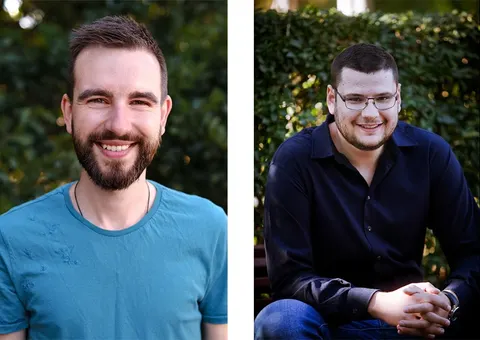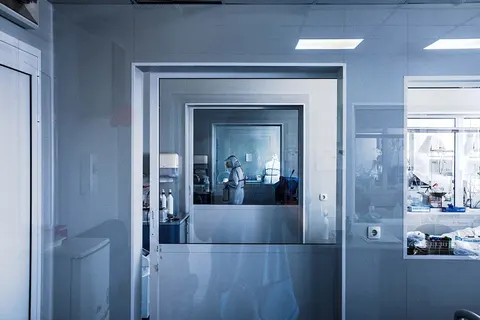
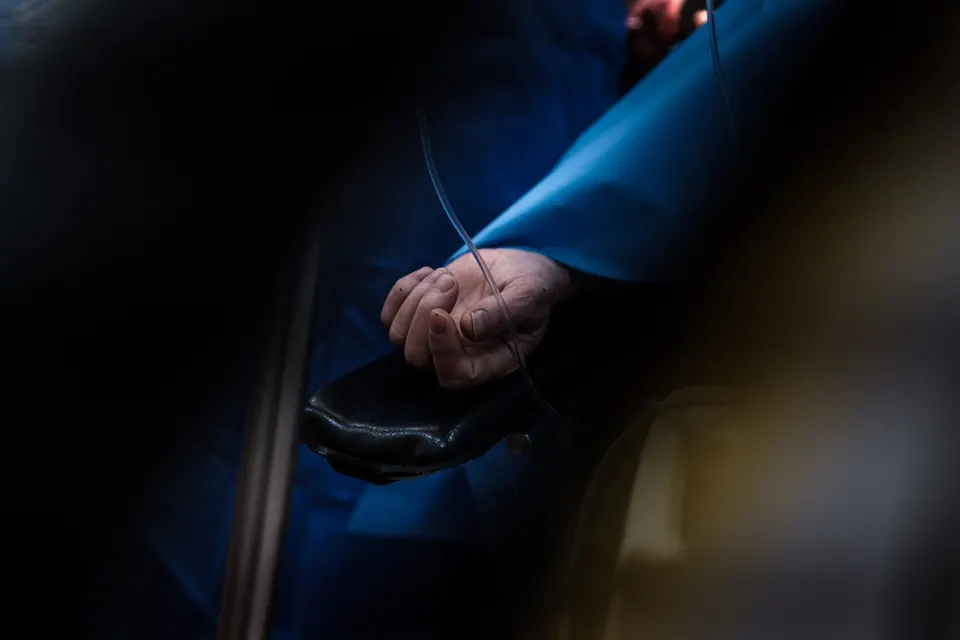
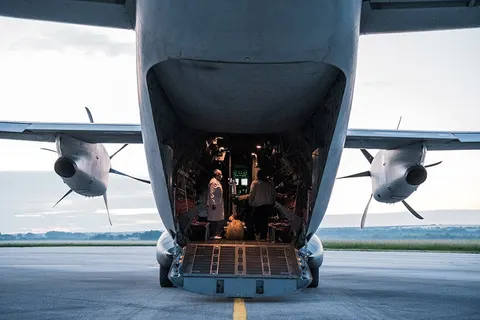
“Posledniat dar na choveka” (The Last Gift of Man) is an impressive journalistic project that takes an emotional, in-depth look at organ transplantation in Bulgaria. At the lives we lose while we look the other way.
Through it, Alexander Nikolov and Dimitar Panayotov show what journalism means and where it is headed. The two set out on the path of “the last gift” in their mid-twenties, and it took them a full six years. They offer an inspiring example of how media content can be made today, even in Bulgaria.
That is why we meet again, to hear what they think about the future of journalism, and about what drives young people to follow this path in spite of everything.
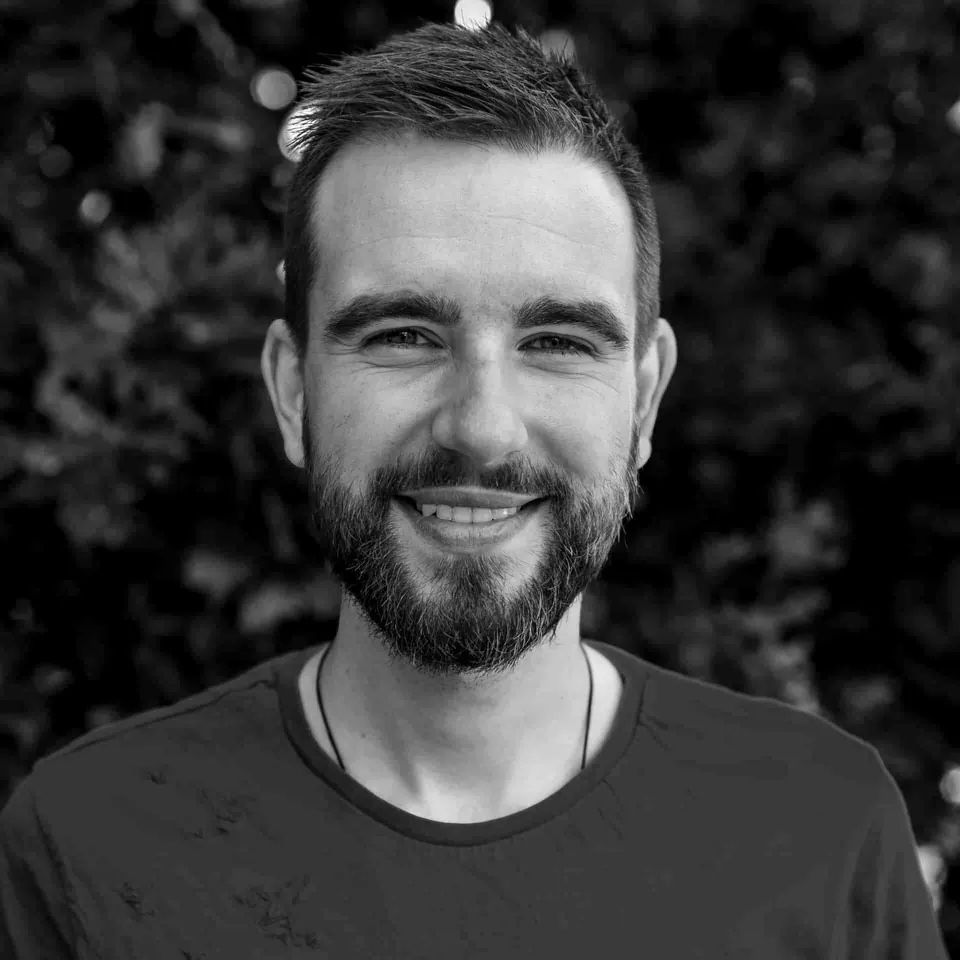
Alexander Nikolov:
Distrust in the system is a natural reaction
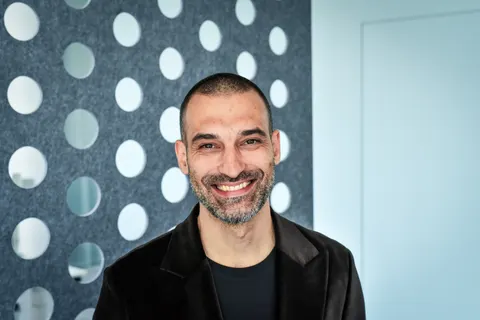
Alexander (30) holds a bachelor’s degree in photojournalism from the University of the Arts London and is a scholar of the Royal Photographic Society. He earned a master’s degree in the E-Europe program at Sofia University. He works as a communications expert at the Bulgarian Biodiversity Foundation. He is the author of the visual content of The Last Gift of Man.
– The Last Gift really impressed me. You and Dimitar took on a heavy subject like transplantation, deeply and for the long haul. The problems surrounding it in Bulgaria have seemed unsolvable for decades. Do you believe journalism today has the power to bring change?
– The honest answer is that we cannot bring about direct change, and we are perfectly aware of that. I have been doing documentary photography for a long time, studying different authors and projects. That is why
I think indirect change, the kind that leads to solving problems like this, is entirely possible.
My favorite example comes from Papua New Guinea, where there was a huge problem with violence against women. A photographer, Vlad Sokhin, went there and started working on the subject with real purpose. His book was published by Photo Evidence, whose editor-in-chief, Svetlana Bahchevanova, is also the photo editor of The Last Gift of Man. The book stirred outrage around the world, which in turn put pressure on the government. That led to changes in the law and far fewer cases of violence. A strong project can lead to real change once the public pushes for it. And that is exactly our goal. To stir things up somehow, so that people understand the scale of the problem and demand change themselves.
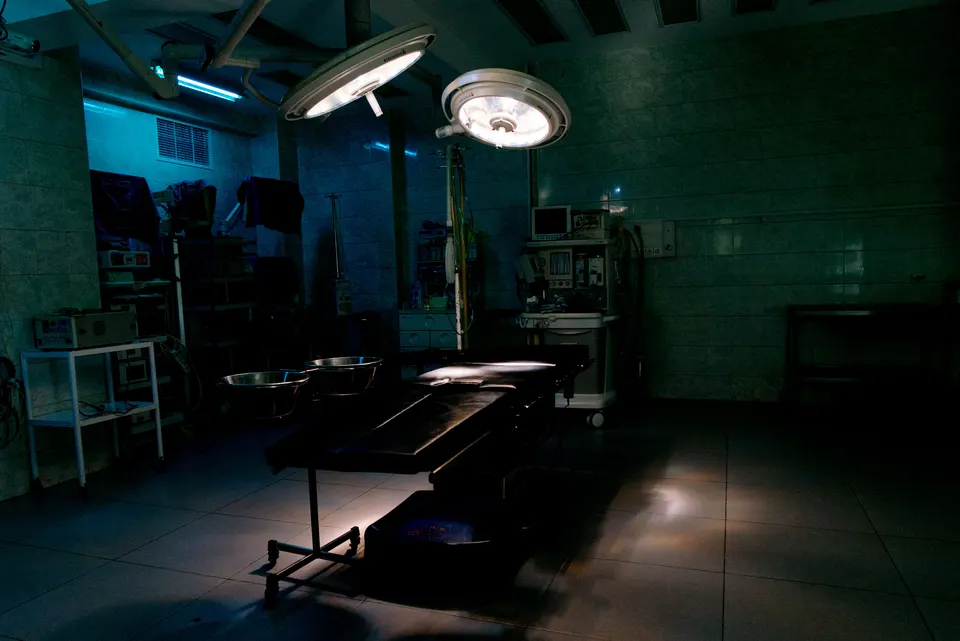
– Will it work?
– Our appeal is for more people to have this conversation at home, to tell their loved ones that, in the event of brain death, they agree to have their organs donated. That is the human side, and this is how we can somehow prepare society, or at least try to. Everything else has to be settled by those in power, who must reform the system. The steps are clear, and there are plenty of examples: Spain, Croatia, even Romania. Here we are at rock bottom.
– You say most people refuse to donate their relatives’ organs because of prejudice. Do you think these are the same prejudices that lead to distrust of vaccines, and to the general attitude toward medicine and science?
– Absolutely, but it is really distrust of the system. And that is normal, because when a person is robbed, oppressed, perhaps even deliberately kept in a state of weightlessness, with a sense that nothing can be done, this is the natural reaction.
People simply do not believe in the system. If someone from the government came out and said, “Do it, it’s good for you,” who would believe him?
Even extremely intelligent, sensible, educated people are against vaccines.
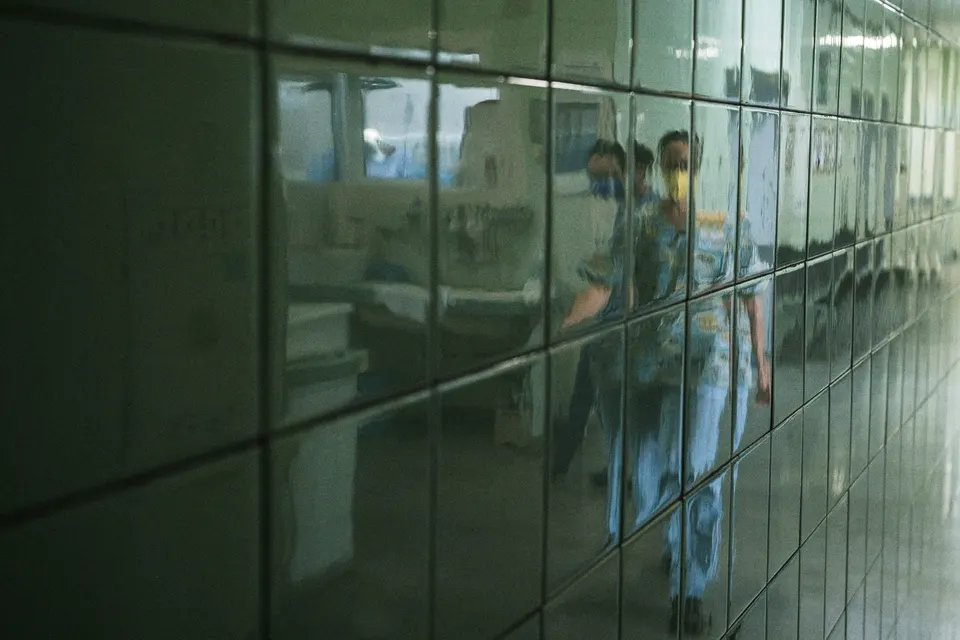
– I have interviewed people waiting for a transplant, and it is truly very hard; you can’t help feeling it with them. What gave you the strength to keep going?
– At first it was very unpleasant, but you go there as a journalist. You see things and you detach yourself; your mind does it on its own. Of course you live through it, however detached you try to be, there’s no way around it, and afterward there is post-traumatic stress too. But,
especially when shooting, once you put the camera in front of you, it becomes the barrier that protects you.
Shooting is a constant process of thinking and analyzing the situation. In that moment, all your brain thinks about is how to get the good shot, how to compose it, how to present the person in a way that won’t diminish their dignity.
The hardest were the people on the waiting list. Shooting transplants, or blood, has never been a problem for me. Several times in my life I’ve wanted to become a doctor; just two or three years ago I was thinking of dropping everything and giving it a try. But even when you think it wasn’t hard, especially after a kidney transplant, you lie down at night, close your eyes, and the photos start appearing behind your eyelids.
– Can anything truly new be invented in journalism?
– Globally, journalism never stops evolving. Innovation shows up both in form—podcasts, multimedia, games—and in the technology used, such as virtual and augmented reality. In Bulgaria we can hardly talk about global innovation; it’s more about adapting to our reality. Depending on the segment, Bulgarian media lag between five and 20 years behind.
– Is “slow journalism” the future of the profession?
– It is certainly not the only future, but it has a well-deserved place. Audiences will always need quick news to stay informed. Slow journalism, on the other hand, is
the format that invites the reader to settle in comfortably and immerse themselves in a complete experience
while exploring a subject in depth.
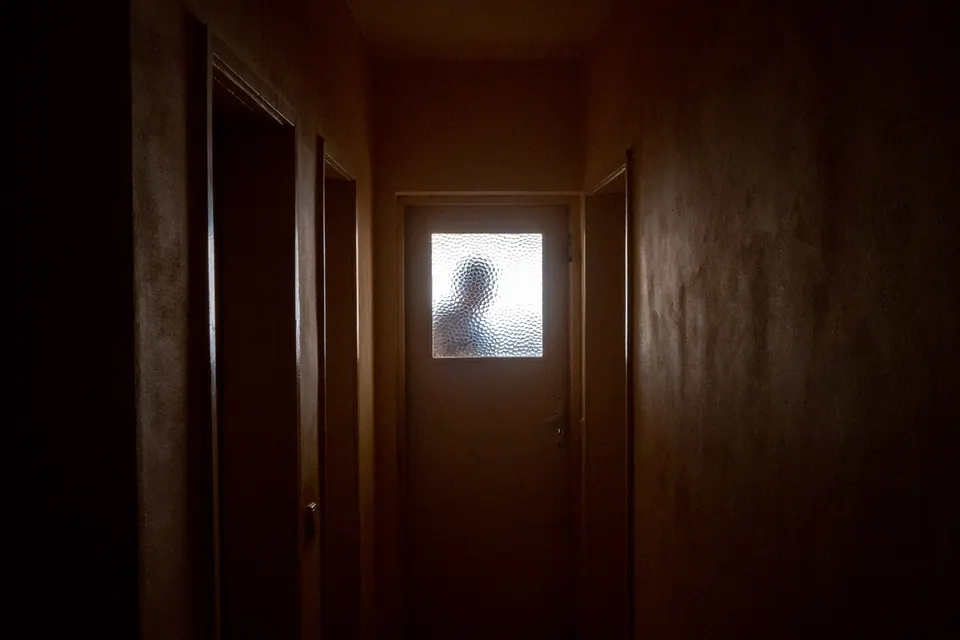
– And how can it be done in small media outlets and on a small market like Bulgaria’s?
– In a word, with heart. But also, with difficulty, through sponsorship, grants, reader support, crowdfunding. When you are not a news outlet and nobody expects daily output from you, the situation is more manageable and the pressure is lower.
That said, crowdfunding has never been a sustainable model for public media financing anywhere in the world. Many media initiatives have raised hundreds of thousands of dollars on platforms like KickStarter, but not a single one has survived.
On the other hand, we are already part of the global internet market, and even though stories from a country like Bulgaria rarely spark interest abroad,
I believe that stories of value, which speak of universal human emotions, feelings, experiences and problems,
can find their way on foreign soil too.
– Why are there so few slow journalism projects in Bulgaria?
– One reason is underfunding. Slow journalism demands enormous resources and the dedication of a large group of specialists. At big media organizations, as many as 30 people sometimes work on such projects—journalists, photographers, camera operators, producers…
We all know the state of the media in Bulgaria. The top priority is survival.
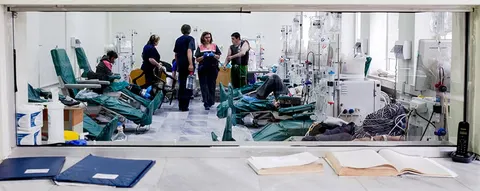
– Would you advise young people today to go into journalism? I wouldn’t—here I explain why.
– There is no easy profession. But if a person believes journalism is something important, worth investing countless hours in, why not? My mother used to say it doesn’t matter what you do; if you strive to be the best at it, you’ll always make a living.
– Have you ever regretted taking on the project?
– We’ve had many hard moments of despair, a sense of helplessness, a feeling that it was all pointless, but we never gave up. One of the biggest blows came while we were looking for funding for a book, back when we still planned to release the project in print. A rather wealthy man with a publishing business turned us down. He said, “This is a story about death, and business doesn’t like stories about death.” We tried to explain that it was exactly the opposite—a story about life. Well, let’s hope we’ve managed to show that now.
– What will your next projects be?
– We’re starting with the climate, then the demographic crisis—heavy subjects. The climate, because that’s where much of my work is right now; we’ll try to tell it through ordinary people and their personal stories, more emotionally. And then the demographic crisis, which has been a dream of mine for a long time.
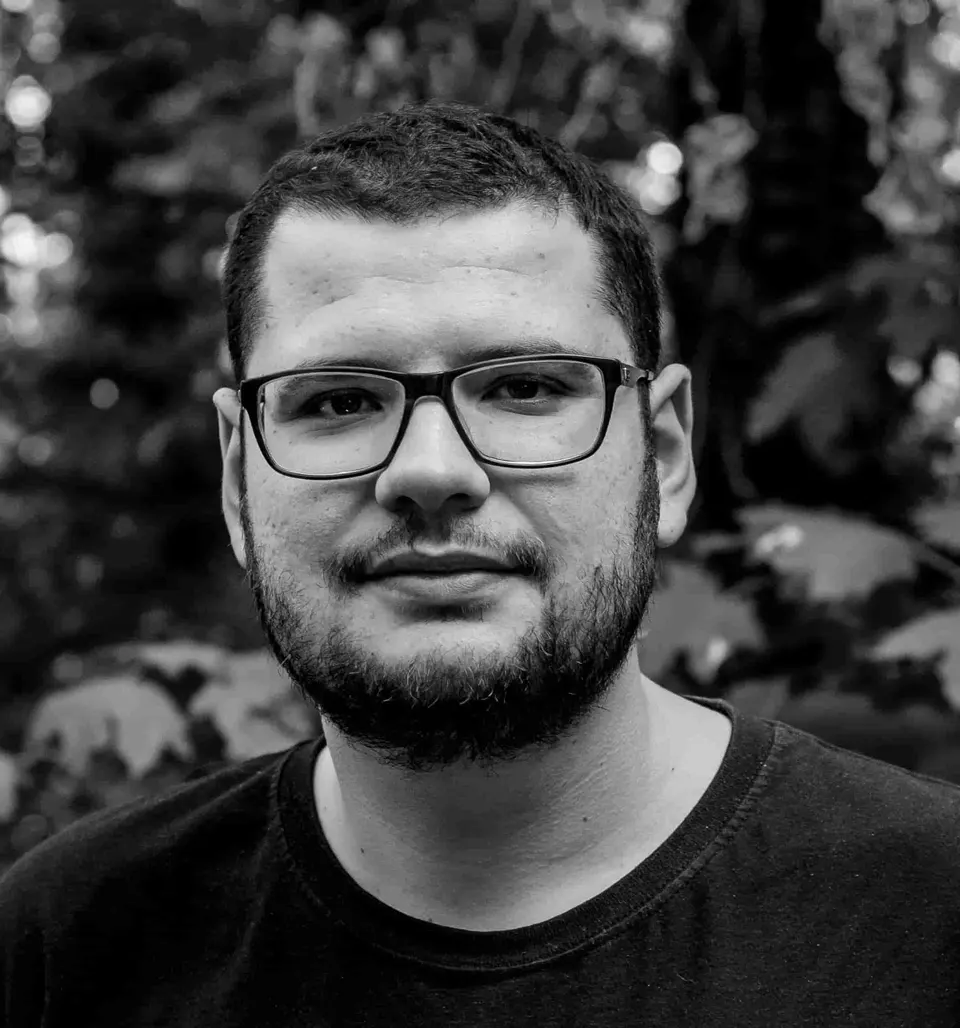
Dimitar Panayotov:
“It’s time we started learning critical thinking”
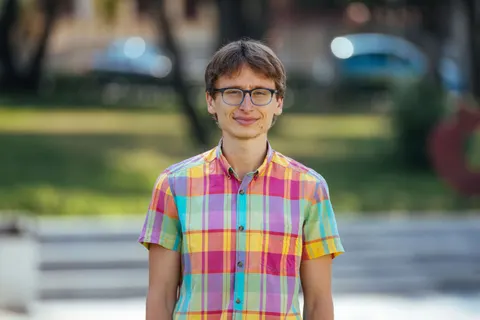
Dimitar (29) holds a bachelor’s degree in journalism and a master’s degree in the E-Europe program at Sofia University. He has been working on digital journalism projects for 10 years. He is the founder of Pod mosta (Under the Bridge), a culture and arts outlet, the editor-in-chief of the podcast Den (Day), and a producer at the Govori internet (The Internet Speaks) network. He wrote the texts of The Last Gift of Man.
– What kept you from giving up on the project over such a long time?
– The answer is prosaic: we are both extremely stubborn and persistent, and we find it very hard to give up on anything. At some point we had gone so deep into the subject that there was no way we could let it go. Many people were waiting for this story and counting on us—our families, our professors, and the people in The Last Gift of Man, for whom
organ donation is a matter of life and death.
– In The Last Gift, I was struck by your writing. The form is long, but you manage to keep your prose concise and tight. Was that deliberate?
– The text was actually much longer; it was supposed to come out as a book. I have 300 pages of raw material, interviews, ideas. All of that had to be cut drastically. The text is now relatively short given the subject and the scope of the story, but for the web it is quite long, taking 10 to 20 minutes per chapter. It sat and matured for a very long time, and many people read and edited it. Besides, I have experience as an editor myself.
To this day I work on one of the biggest culture and arts outlets in Bulgaria, Pod mosta. It grew into a business, and I was its editor-in-chief for eight years. More than 300 writers have passed through my hands in that time. We started as a student project with classmates from university. I became editor-in-chief almost by default. We began as a lark, and then the outlet grew; at one point we had a team of 20 to 30 people.
That experience helps me. It’s hard to be your own editor, but I know how to work with a text and how to clean it up.
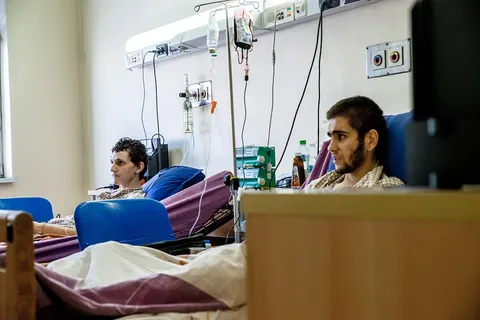
– In your view, is educating people part of a journalist’s job?
– Journalists have many tasks, but educating people is not one of them. They themselves, of course, must be literate. But I don’t see literacy only as how you write and speak—that should be learned earlier, in the family and above all at school. To me, it’s a huge problem that, outside the most elite public and private schools,
media literacy and the cultivation of critical thinking are largely absent in Bulgaria.
I believe this is fundamental, and without such soft skills, however literate and high-quality the journalism we produce, there will be no one to see it. It’s no accident that we Bulgarians are so susceptible to fake news and conspiracy theories, and trust media and publications that are far from objective and factually sound.
– Do we need professional journalists? Or can anyone step into that role?
– Yes, of course we need them, because there are fundamental principles of journalism. It is a profession that is much more practical than theoretical. At the same time, without theory you get big gaps, especially in the ethical conduct of some journalists. Unfortunately, at least in my day, and as far as I know still today, journalism education in Bulgaria is not at the level it should be, above all in terms of practice and keeping up with the times.
– I completely share your view. Do you regret going into journalism?
– No, never.
– Which journalists inspire you?
– Many journalists who are impressive both as professionals and as people. I’d rather name the media outlets that inspire me, because of the way they develop their media products: Time, the New York Times, the Guardian, the Washington Post.
– Have people forgotten how to read long texts?
– That is a fact proven by many studies. The way we consume information has changed a great deal over the past ten-plus years. Everything is now in “short” form; everyone is trying to hold the audience’s attention, and there are thousands of outlets and channels of information. More and more people, however, are returning to
long-form journalism, which is sorely missing in Bulgaria.
– How do you see the future place of journalism in society?
– I don’t consider myself some kind of global visionary, but I work in this profession, and I think the future of journalism has many faces. Things are changing terribly dramatically and fast. If you had asked someone 25 years ago, very few people would have told you it would be the internet. And yet here we are. Until five or six years ago, no one would have guessed podcasts would be as successful as they are now.
I think we are already living in the future of journalism.
The formats we know and consume are already well established, but they will keep being refined.
Right now we have an endless number of media outlets, and I don’t think many of them will survive. Business models have changed, and people are looking for more reliable sources of information. I think the genres that exist right now will keep evolving.
– And where do you see technology fitting into all this?
– Media will evolve together with technology and will be closely tied to it.
It really matters whether they go hand in hand. There’s a lot of talk about augmented reality, about the metaverse. It still looks like science fiction to us, and I don’t know whether it will break through.
In recent years, so-called citizen journalism has become the norm: something happens, and even the big outlets share clips from Twitter and Facebook, while people on the spot stream it live. If at some point we have a metaverse and we’re all wearing the glasses, we’ll find ourselves right there. You won’t be watching clips, you’ll be there; it will be broadcast live in such a way that you’re inside the event itself…