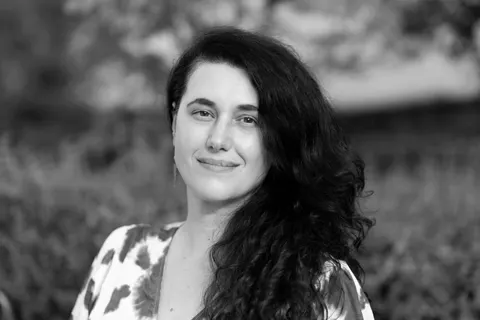
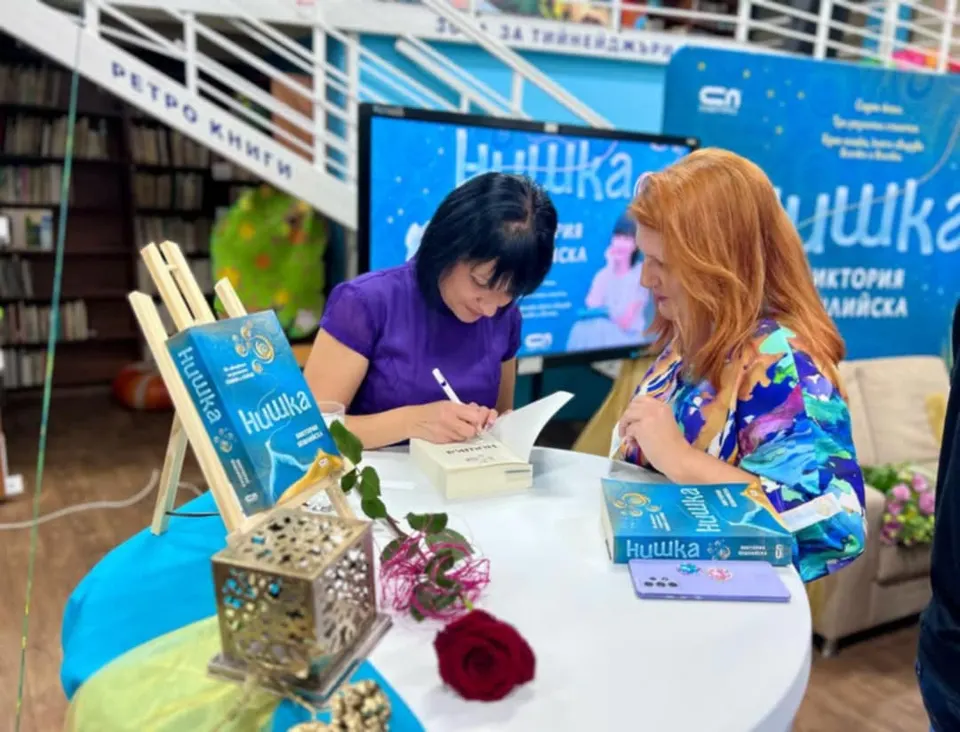
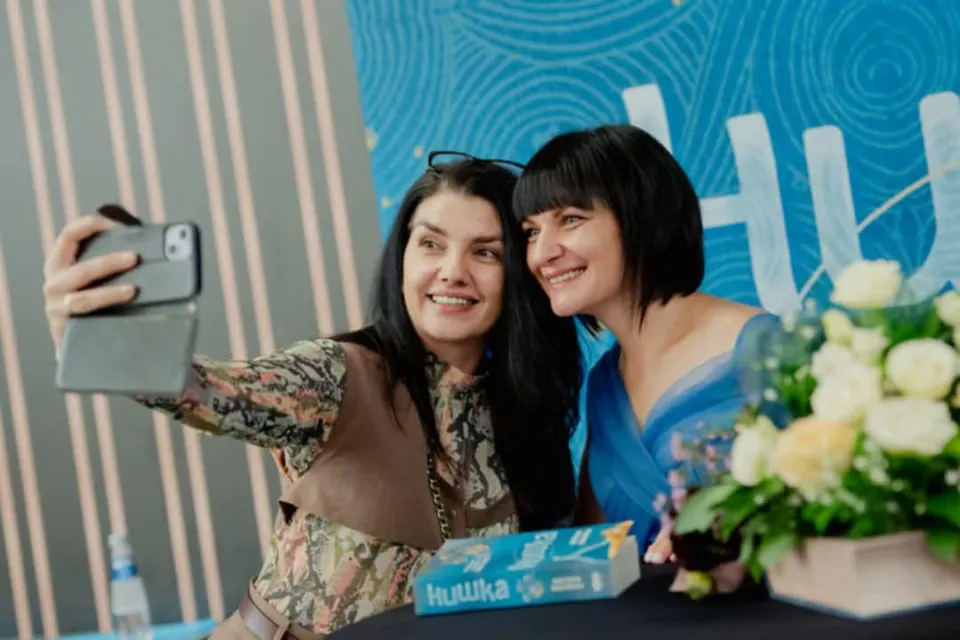
Nishka (Thread). That is the title of the third novel by the guest I am meeting today—and not by chance. I wholeheartedly recommend this book to everyone; it tells seven stories in a remarkable way. It comes to remind us that the thread does not begin with us, and must not end with us—as Bulgarians, as people, and as humanity.
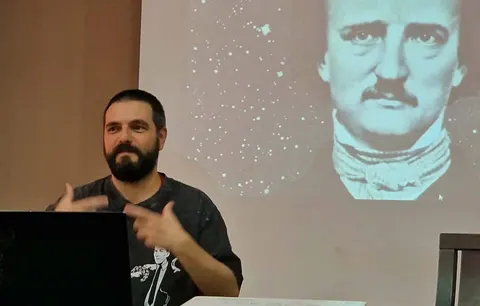
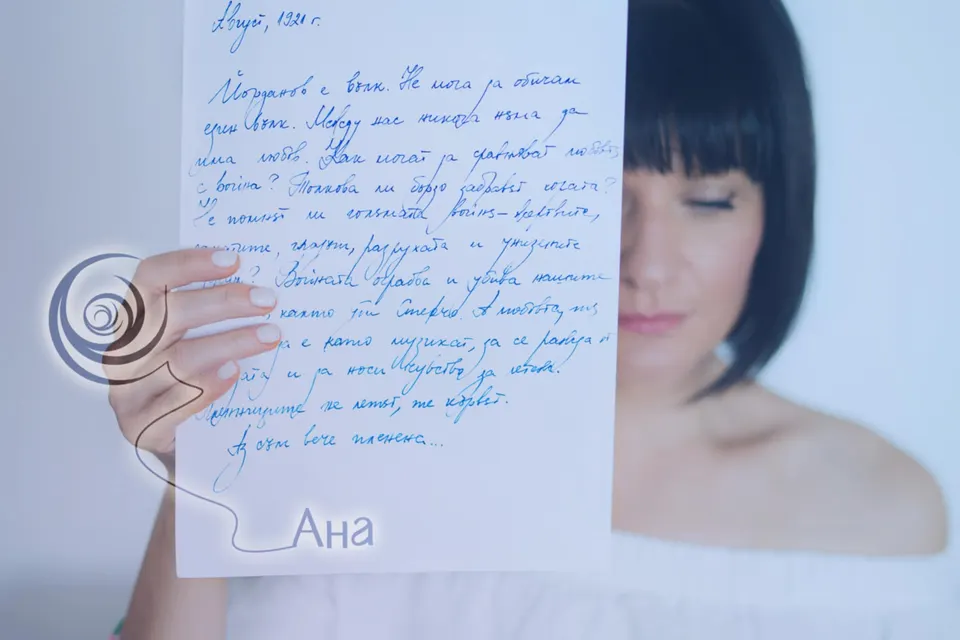
Viktoria Beshliyska impressed me no less with the courage and skill with which she delivered a lecture at the biggest tech event in the country, DEV.BG All in One. In front of nearly 2,000 IT specialists, she explained why, in the digital age, it is so important to keep writing by hand.
It is time to talk about all of this. After following the thread of words at our previous meeting, we will now look into human relationships, rethought and reshaped by technology. We will talk about love in the digital age. About what makes us human. About the necessary meeting of the humanities and technology, on which the future of all of us depends.
– It is no accident that this interview comes out today, on February 14. What do you think of this holiday? Why do we start quarreling about it every year? I don’t celebrate it either, but I see nothing wrong in having an occasion to talk about love, about what connects us, about the thread. It doesn’t happen often anyway…
– I hadn’t realized it, but yes, we quarrel about this too. Though it seems a bit more muted.
The holiday is becoming more and more popular because of social media and because of the younger, growing generation—they are the ones who get most excited about Valentine’s Day. I see it in my children: one is in first grade, the other in eighth. It becomes a topic at school very early. Of course, it is more a part of Western culture. For me it is
simply a nice occasion to talk about a subject like love, which is always relevant.
In previous years, I always ran campaigns on my blog dedicating February to words connected with wine—because of Trifon Zarezan, the Bulgarian winegrowers’ feast that falls on the same day—and with love.
I have no problem with it, as long as it isn’t used solely for commercial purposes. I don’t like that in recent years commerce seems to have overtaken the holiday. The idea is to look closely at what holds us together. Last Valentine’s Day I posted on my blog
a favorite word of mine—“държило” (darzhilo, a hold, the thing you grip). And a quote from Heart: that love is what holds the world together.
Maybe we simply need an occasion to look for the things that hold us together. To try to take stock and give our own human answer to the question of what love is for us. Nothing more.
– What model of love are we really giving the next young people? In the 1990s we imagined that the Western ideal of family and relationships would sweep in, since we were surrounded by those films and that whole culture. Yet at the same time our traditional family models are still alive. With the patriarchal way of life, with stronger family ties, but also with not expressing our feelings much.
– I notice a generational change; I think people have readjusted quite a lot. In the family model, love between parents and children is now something far more expressible. Remember what we used to hear from our grandmothers—you only caress a child while it’s asleep. It wasn’t something you expressed. Few people, including from our generation, heard words like “I love you” from their parents. Today it’s different; I think modern parents know how to express it. They have higher emotional intelligence.
– Children and parenting today are a huge topic, to which I am devoting a long series on Digital Stories right now. But I don’t tell mine that I love them either. It just feels strange to me.
– I talk with people—close ones and not so close—and I see on social media that we now know how to express it. From that point of view, I think it’s good;
more talk about feelings is never superfluous.
Because that is how we develop others, and ourselves too. And perhaps we manage to unblock some channels that have silted up.
The bad thing I see in all this is that we materialize our relationships. On the whole, relationships between people—romantic ones, those between parents and children, family ones—are terribly materialized, and that influence came to us from the Western world.
We approach the other person with preset expectations. We have—I’ll use this word on purpose—a “checklist” of how the other should look, what criteria they should meet. And I think this is a problem, because it’s getting harder and harder for us to accept people as they are and simply hold on to the value, rather than clinging to the frame, to the material side of things.
– In the series on children, an interview on fatherhood is coming out soon, and I think the guest put it very aptly: it’s good to encourage boys to be emotional and girls to be tough, so there is some balance against the traditional stereotypes society pushes them toward.
– I agree. I think you get better “traction” between the sexes, and it helps in partnerships, if we are enriched a little by the other’s energy. For men to develop emotionality, empathy, understanding of a woman’s feelings, and the reverse—for women to understand that men are more focused on their goals, and if, say, they are silent, it doesn’t necessarily mean they don’t love us or are ignoring us.
That is,
this ability to understand what the other brings as energy, attitude and inner world is very important.
And perhaps the key to future relationships lies in it. Because nowadays we see more and more families and unions falling apart. I believe this is due to the egocentrism we have developed in recent years. Precisely this absorption in the material, everything having to be perfect and meet a certain standard. If we had a little more understanding for one another, I think relationships would be more balanced too. If we stepped back a little from this egocentric wave, from this whole idea of working on yourself that leaves everyone else aside.
Yes, it’s important to take care of yourself. To be able to care for someone else, you must first have taken care of yourself—that’s a clear rule—but it shouldn’t become the goal of our lives.
– Caring for others is almost always caring for yourself as well.
– Exactly! That energy comes back to you. All the more so because we were made to live in relationships, in communities, in unions.
None of us can live alone.
We simply have to find ways to place between us the values that work and that keep us together.
– In all this, though—and this is why this site exists!—I think we can’t leave out the role of technology. In my view, the way we embraced it is largely to blame for this trend. I came across data, for instance, that in recent years a huge share of people meet their partner online. Isn’t that where the problem comes from, that communication “broke”? That we text each other from opposite ends of the table instead of talking…
– Exactly. How do you look for a partner on the internet? They have to meet some preset criteria. So you
immediately rule out the chance to meet the person first and the partner after.
Rather, you go the other way round: you try to impose the template of some perfect partner on the person. And that also leads to big mismatches. I have no experience in this area—I’m from the old generation, I communicate face to face, and for me that is an important contact.
But technology certainly takes a lot away in this respect. I notice how young people can’t talk for long without showing each other something on a screen. That is,
their communication doesn’t flow eye to eye, directly; it always passes through the device.
Even if it’s not a chat, even when they’re talking, phones are always involved.
– How can we change that? And should we?
– I don’t know if we should; maybe it’s some natural path we are on.
Part of our evolution… or of our fall, one of the two.
– Years ago, again for Valentine’s Day, I wrote a dystopia about how love would be roboticized. And today I see it happening. The algorithms know; they show me today’s wonderful options for an electronic partner, and that will surely be a future topic on the site. But… isn’t having a virtual girlfriend awful?
– It is awful, yes. And what do you do with it?
– You chat, you set it up by telling it, with specific requirements, what kind of person you’re looking for, so it’s perfect. It cooks moussaka just the way you like it, or it’s into fashion. You never fight…
– But
once you set it up by your own criteria, it is a partner perfect for you. Then what is your growth?
How do you develop in that case? You only receive, without giving back. One of the basic human energies is destroyed here—the constructive, creative one.
Even in a partnership between two people, we grow and expand ourselves when there is opposition, a different point of view that enriches you or simply makes you develop an inner debate. Or when you reach a moment of crisis with the person—in fact,
it is your creative potential that kicks in so you can find your way back to the person, to resolve the crises,
to get out of the problem together. If your partner is a robot, what chance do you have to grow? For me, none.
– For me too. And yet, if that were the goal, the “ideal partner” could be set up that way too—to make you grow…
– When things don’t pass through our sensory experience, it is even more terrifying, because
everything stays only in the realm of fantasy, and fantasy can be very destructive.
– It’s a matter of time and effort for robotics to develop as well, for us to leave the virtual world and reach the real one, to become roboticized. But let’s change direction. It seems to me that in our time there are no love stories as strong as those of the past—between the poet Peyo Yavorov and Mina Todorova, which you touch on in Thread, between Yavorov and Lora Karavelova, or in the life of the poet Dimcho Debelyanov.
– Oh, there are very strong love stories. No less thrilling. Yes, many of them begin on the internet, but they exist.
– I don’t see them around me. Maybe we just don’t tell them enough? Yes, they are in your books, and they are powerful, though they mostly come from the past too. Could it be that we have forgotten how to tell strong love stories?
– In real life I listen to many such stories, I hear them, I know they exist. Maybe they just aren’t given as much publicity, as much visibility.
– Yes, perhaps in some way the “storytelling”—and I use the word on purpose—that we need in everyday life doesn’t include them.
– It is very fast, our everyday “storytelling” on social media; it is very easily digestible.
A moment ago you mentioned roboticization, but
have you noticed how even our empathy has become roboticized?
Those absurd AI images with the birthdays: “I am a poor child, a poor woman.” And yet people respond! When I see something like that with 16,000 likes and 3,000 shares, I am stunned. On the other hand, maybe some kind of empathy does work after all. Roboticized, alas.
– Could it be, then, that the natural kind is missing? Or is it somehow tied to gender stereotypes? Women, for example, definitely read much more fiction. Are we back to the stereotypes that we expect men to be stricter, hardworking, to watch football?
– My audience is predominantly women, but I can’t say whether they read more.
Perhaps women seek a little more escape from reality.
Men, I think, are more inclined to process reality, to cope with it, to be able to solve a given problem. Whereas we very often lack the resources for that and compensate with escapes—reading books, and creativity as an act. Whether it’s gardening or cooking, that is our way of coping.
And it is not a stereotype. Perhaps it is a matter of potential and ability.
– Oh, we men also wonder how to escape, and we escape so successfully that you need only look at average male life expectancy in Bulgaria. Very often stereotypes don’t hold—take technology and books. I ran an experiment of my own: I invited 15 Bulgarian IT leaders from various fields to recommend three books each. Nine of them responded, and their recommendations, at least in my view, are remarkably varied and substantial, with a great deal of diverse fiction.
– There is something else as well. We should be very grateful to Bulgarian publishers, who publish many and varied books. So much literature comes out, translated and Bulgarian, of every kind. And I think that helps too.
That is, on the whole we are awake.
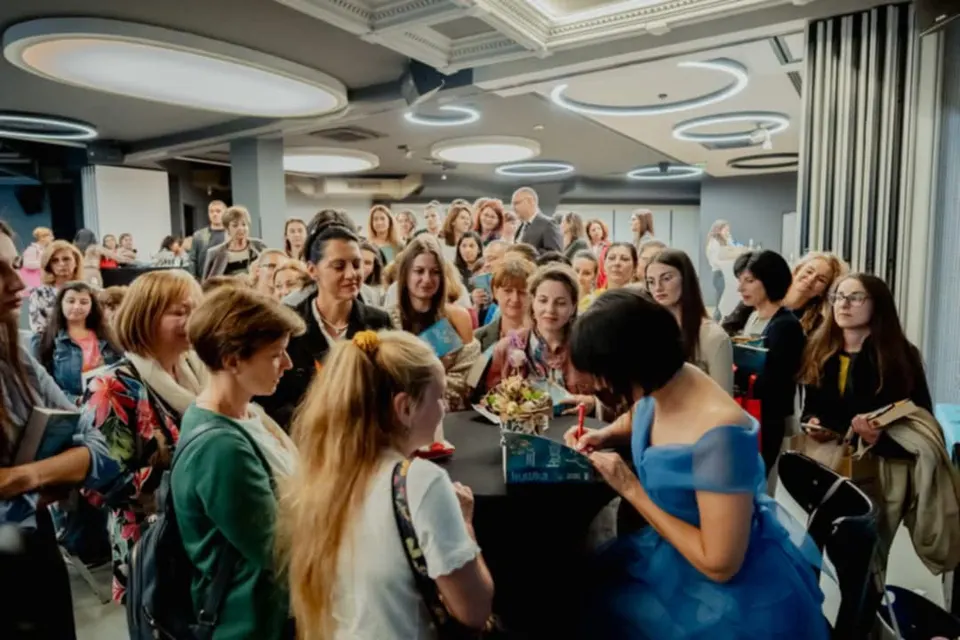
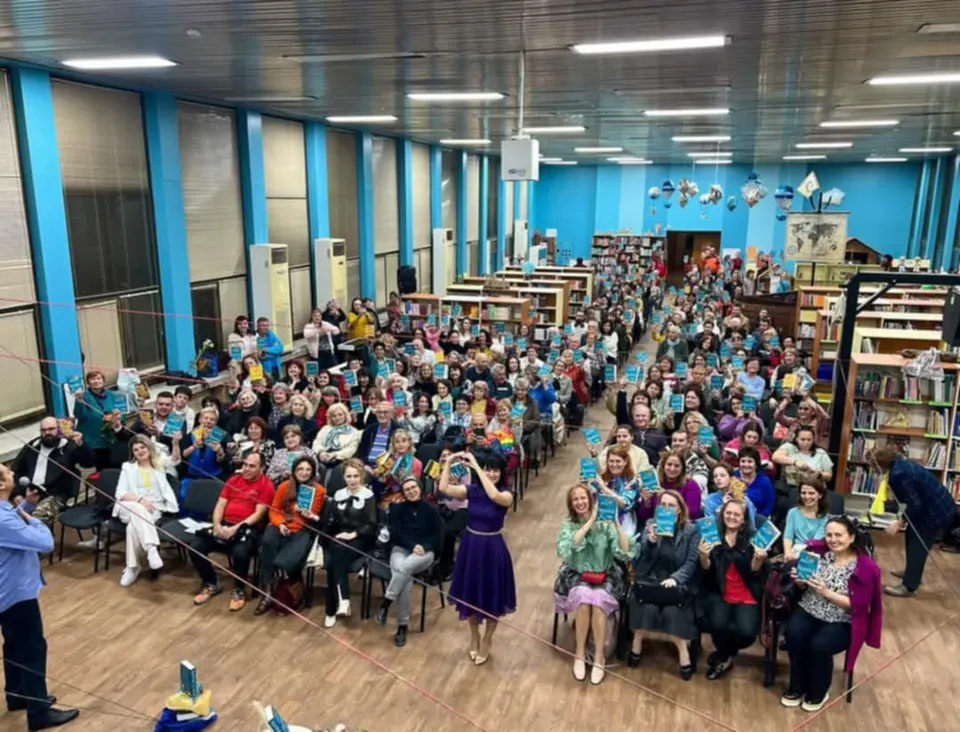
– A few months ago you were a guest of my friends at DEV.BG, and I saw how the hall, full of 2,000 “software people,” listened to you. I also saw the looong line that formed for autographs.
– I got very good feedback on my lecture; the organizers sent me the survey they conducted among attendees afterward. So they heard me. They had found it interesting; the topic had intrigued them. That shows open minds. I’m not saying they’ll decide from tomorrow to write only by hand—I’m far from thinking that. But they can hear it and process it as an idea.

– How did you decide to challenge yourself to speak to programmers, and on the topic of how important it is to write by hand, no less?
– For me it was a way to step out of my safe space. I know how my audience, my readers, would react to such a topic, but it was a big challenge for me whether, as an author, I could reach a different audience.
To what extent does what excites me as a writer excite people from an entirely different field?
That was the challenge for me—can I move this audience, speak to it? Can I make it think about something?
– And it turned out you can.
– Yes, and that was a rewarding feeling.
– What surprised you about this encounter with the IT world? I witnessed your preparation: you approached it thoroughly and carefully, met many people, got to know this technological world that is so far from the humanities.
– What surprised me was precisely their curiosity. Their wide-ranging interests. I watched them go around the different booths, listen to different lectures. I saw that, in the end, these are open minds.
I was also surprised by how many young people there were. And that they are familiar with all sorts of current topics and fields.
– That’s one of the big reasons this site exists—to try to bring together technology and the humanities, letters and bytes. Yet somehow we keep pitting them against each other. Why?
– But they are coming together more and more.
At some point we will have to consider technology part of the humanities, part of what changes human beings.
We separate them, but they invariably move toward coming together.
– I hope you’re right. It’s no accident that, in the conversation about technology on this site, I include many guests from both sides, and from many others too. Because today technological change affects all of us.
– The question is where the boundary will remain after all. The boundary of recognizability. And the experiment you did with the poetry competition raised interesting questions. Where will the boundary of recognizability be, and will people hold it? Will they be able to tell whether a text, an image, anything at all, was generated by another person or by AI?
– I think we lost that battle, and now we have to live with the clear awareness that we won’t be able to. Instead, we need to discuss and make sense of what to do in such changed circumstances.
When AI starts writing indistinguishably from you, will that frighten you, please you…, make you stop writing?
– It won’t stop me from writing, but it will frighten me to some degree.
When it comes to imitation, it isn’t impossible. And the point here is that we, as humans, must have the incentive to develop in unpredictable directions, to do the unexpected, to surprise.
You can surprise when you reach insights.
And you reach authentic, deep insights through experience, through reading and knowledge.
I keep thinking that we are infinite beings.
Yes, we are limited in matter and perhaps in our potential, but we are infinite. Even technology proves it, because we are the ones developing it. We keep moving forward.
– So far, at least. Because by all indications, on mathematical measures, we will probably turn out to be the second most intelligent species on the planet as early as this year.
– Well, yes, but is it a species? Do we count it as one?
– I don’t have a clear-cut answer, but when we can’t tell it apart by its words, we somehow naturally start to anthropomorphize it. And the next question is how to preserve what is human. How do we learn to let things be hard for us? How and why should we learn to write if we know that “it” will write better than us, however much effort we put in and whatever “better” means?
– I can’t imagine that we, being a biological species, will stop needing to communicate with people, to see people, to touch people, to feel them and to be provoked by them at all, whether creatively or in the most ordinary conversation.
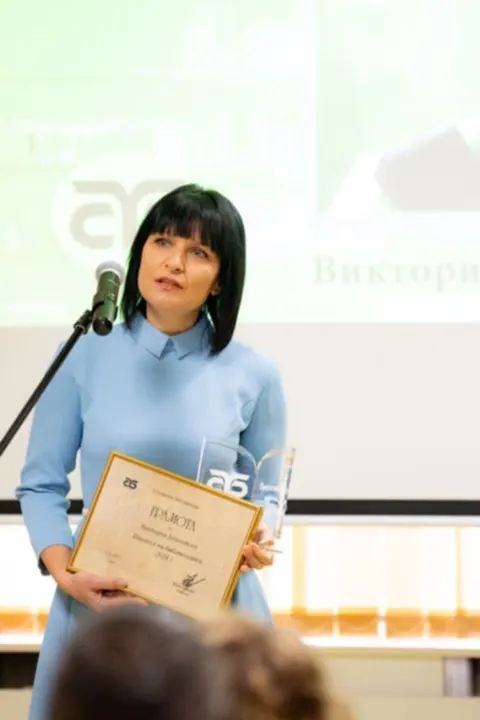
I think our advantage as humans and creators of content is that we can prove the authenticity of that content. And that happens through meeting eye to eye, through live contact—between writer and reader, say. Two weeks ago, at the Sofia City Library awards, I said that, yes, books written by artificial intelligence and printed in millions of copies are already a fact. No one denies it. Our main advantage is precisely that we can go and meet the reader. That they can ask us all those thousands of questions that interest them. That we can provoke them, touch them as one human being to another.
– Alas, that isn’t always a solution either. Even though I invite every Bulgarian writer who has impressed me for an interview, and only one has turned me down… I will never meet Stephen King or García Márquez eye to eye.
– That is also an inevitable part of our path. But if there are witnesses that you were there, that Stephen King was there, then his work should, in time, fall into a different category, shouldn’t it? The proven, the living…
– I’d like to believe that, but I think that’s over. Precisely because it is now indistinguishable. As was suggested in one of the poetry competitions I mentioned—authors should now declare that they haven’t used AI. Fine, but… you declare something that can’t be proven in any way?
– I
live with the calm sense that we are heading where we should.
That is, since we are stuck so firmly in this rut, and it is something we no longer control as much as it controls us, we probably have to go through it. How far will we go? I don’t know. Whether it’s a rise or a fall, nobody knows.
We can live with it only from the standpoint of our values.
– I, on the other hand, am not calm at all, because so far we have handed everything over to technology very easily. Now we’ll hand over creativity and art too, and what will be left for us? Aimless hedonism. We won’t even manage to teach our children to be bored well, to let things be hard for them and not to take the shortcut.
– Yes, that is important. But look at the example we ourselves set for them!
I believe every person should be a little more present in reality as it is.
Not to forget to feel things. To be in the present, not in a parallel world through their screen.
– Indeed! This—and I will never tire of repeating it—requires a broader public conversation. Thank you from the bottom of my heart for this meeting! I can’t wait to read your next book—I hope it’s soon!