What will tomorrow look like? Why is “the era in which we will have to reinvent ourselves” approaching? What is worth teaching today’s children so they are ready for the future? Which professions will survive? And how do we find those ever scarcer skills that are worth helping them develop?
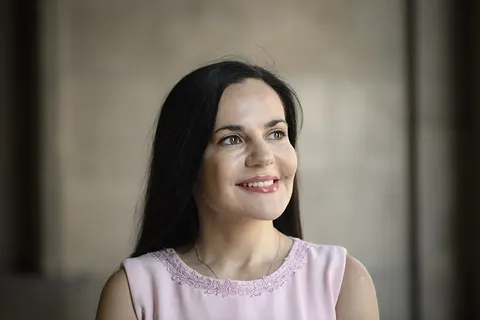
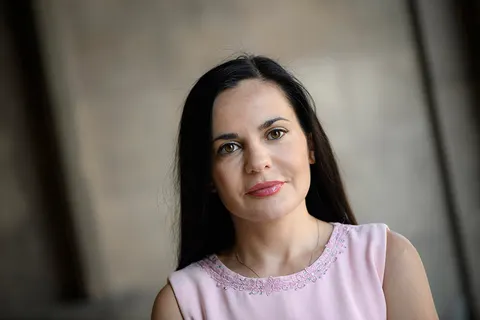
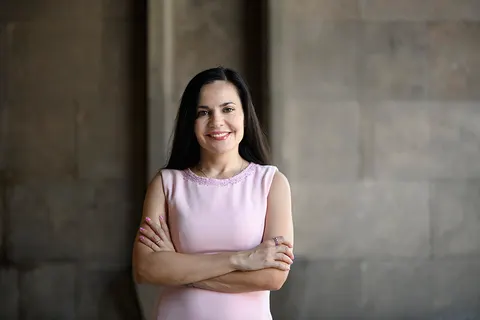
Assoc. Prof. Mariana Todorova is a pioneer of Bulgarian futurology in its modern form. It has become a tradition for her to be my guest at the start of every year with forecasts that unmistakably come true (see here and here).
“We are returning to that most primal human quality of critical thinking, reasoning and debate.”
“It is only a matter of time before most of the tasks we perform are taken over by artificial intelligence. We will live in permanent change, and at some point we won’t be able to catch up. As humanity, we could respond only through a global political consensus in which we decide: even though the technology can do almost everything, people stay. But such a philosophy is deeply anti-capitalist, and imposing it would take either some boundless humanism or a dictatorship.”
Can we be ready for the future?
The Digital Children series continues. I am looking for the important points of view and the useful advice that can help us as parents and adults. Your opinion matters too! Take part in the survey, and let’s paint the picture of parenthood in digital times together.
– Technology is advancing astonishingly fast, and everything suggests that more and more human activities will be performed successfully by machines, indistinguishable from us. Against that background, what is worth teaching children today?
– The answer will probably surprise you, but
it is worth them learning everything that interests them.
The analysis some people offer, that there is no need to learn facts or accumulate basic knowledge the way we have done so far, is only partial. Yes, it’s true that
our education system is at the level of the 19th century, as Jack Ma says, while it has to cope with the conditions of the 21st.
On the one hand, it was built to serve industrial society. All our social systems were designed that way too. But perhaps soon
we will be mourning classical capitalism, because it needs people,
so it provides them with social systems—education, health care, pension funds. Technology, on the other hand, has no need for these systems unless they are business niches themselves, which means we will find them ever harder to sustain.
On the other hand, though, there is no way to develop our personal intelligence, our individual experience and awareness, which differ from the whole accumulated body of human knowledge and wisdom, without processing a large amount of information that settles in us as knowledge. Intelligence is a mark of dwelling in the material world, of experience and knowledge; it is a function of the neuroplasticity of the neural connections in our brain, which is unique to each of us.
In other words, to create these neural connections, to create intelligence as a personal quality, we have to encounter fundamental knowledge and, through a personal perspective and a personal refraction, develop unexpected links between different fields. That is individual intelligence—
every person combines this kaleidoscope of human knowledge in a very peculiar way.
– So, caught up in innovation, we must by no means underestimate the role of good old memorizing facts…
– Exactly. Classical learning, the way we have done it so far, is important because it creates this neuroplasticity. But it has to be dosed—if we spend our time cramming and reproducing facts that we forget afterward anyway, because that is how our brains are built, it is not useful.
It is no accident that some experimental schools in America have introduced the concept of the “flipped classroom.” At home, the children read and listen to lessons with artificial intelligence, which even serves them personalized content. Then at school, in the humanities, they do critical analysis of classic works such as Anna Karenina.
– Whereas, alas, reading an entire Tolstoy novel seems today an ever rarer and more underrated skill.
– We are returning to that most primal human quality of critical thinking, reasoning and debate.
In the United States, at least until recently, debate was considered an invaluable tool because it teaches pluralism. I hope that hasn’t vanished in recent years, when America has become so fragmented and polarized.
If we are truly very good at what interests us and combine it with technology and AI; if we don’t do our work mechanically, indifferently, just going through the motions with minimal effort, we have an advantage.
In this era in which we will have to reinvent ourselves, we will create many unconventional, interdisciplinary niches where, say, a musician and a neurobiologist come up with some new AI audio product.
So we are still at a stage where we can learn pretty much anything, as long as we are open and know that it may be basic knowledge we will need to build on and combine with much else.
– I see it in the software industry—AI is advancing, making things easier for us, and far fewer junior specialists are being hired. I think this will soon become a problem, when there will be no experienced people left to catch the errors and hallucinations the algorithms are doomed to produce.
– Exactly. Large generative language models are the reason why perhaps
as early as this year it will become clear that finding a job is no longer so easy.
The inertia of labor shortages in every field, in Bulgaria and around the world, will gradually fade. Big companies, especially software companies, are already reorienting and integrating many AI products—agents, chatbots that answer questions and write code. This will reinforce the trend of having no junior experts. The same has been seen in the media—the Fox group and other big media empires use ChatGPT both for editing and for generating trivial articles. At some point it will turn out that there are no beginners left to become experienced experts.
Youth unemployment will appear again, but of a different structural type.
Not as before, affecting people who have no experience and whom nobody wants to train, but people who were the first to feel the effects of artificial intelligence—lawyers, journalists, accountants, diagnostic imaging specialists, primary data processors.
Some kind of state intervention is needed here, because this is becoming a problem bigger than the companies themselves.
– Is there a way to predict which professions will disappear? Because we often speculate on the subject, and yet there have long been positions with no practical reason to exist, such as cashier or waiter. Having their tasks done by machines is no problem at all.
– Perhaps these professions won’t disappear, but will split in two—dehumanized and humanized. For example, going to the tax office in 10 years, we will be able to choose whether we want an automated process, a chatbot, or a humanized service that will be, say, 10 percent more expensive because a human factor is involved.
This will be purely psychological—driven by the desire for communication and human interaction, not by the quality of the service.
But there is categorically no reason for, and there are already almost no, graphic designers in America, people who process primary data, translators—unless they are Angela Rodel, the American translator of Bulgarian literature, and the work requires specific mastery—office managers, accountants. Also security guards at large production facilities and anywhere the necessary investment has been made in AI-driven security infrastructure, fingerprints, retina scans.
In the future, taxis will most likely be robotized in certain cities, first where the infrastructure allows it. It can’t happen soon in Naples or Palermo—it can in Saudi Arabia, or in Sofia.
The human role will rather depend on our needs and psychological wants, because otherwise we could go on for days living, receiving services or goods, without any human involvement.
– You mentioned translation, and it is a fact that AI already handles that task better than many people for whom it is a profession. Is there any point in learning foreign languages now, if you really aren’t Angela Rodel?
I made an effort to have my children start learning foreign languages as late as possible, because my logic is that it is far more important for them to learn Bulgarian in depth, in detail, with a rich vocabulary.
– Yes, there is still a need, if only because of that same neuroplasticity of the brain. It has been proven that in people who have a gift for languages, the more they learn, the more areas of the cerebral cortex develop, and they improve their overall level of intelligence. That holds, however, only if the person actually wants to learn. If it is forced and the pace of learning is slow anyway, then there is no need.
It is important to know your native language well, and it is important to know one that AI uses,
because it is clear how important the role of the prompt is, and the skill of detailing it with great precision so that it is effective. The more detailed and thorough our instructions to the AI, the more accurate, unique and individual the answer we will get. This matters especially for people who are creators—it is their personal signature.
But it is also important because of the overall cognitive decline and dumbing down.
With AI’s new capabilities as a voice agent, people will also lose the ability to write, to read, to use language correctly.
From now on, we will need a great deal of self-discipline to master things we have used for millennia and which now seem unnecessary. We will do it to preserve our intelligence, not because we need them directly.
– Isn’t it too late? Hasn’t the pendulum already swung for good toward brain rot—a cognitive decline that is not just a word of the year but, in my view, the most important phenomenon since our species came into being?
– It really has swung, and several generations are already its victims. I don’t want to be a prophet of doom, but I think there will soon be incidents of every kind that are a function of this “brain rot.” It will shock people—we always learn through bad experience, through cataclysms, through catharsis, not through successes and achievements.
There have been experiments in which children trust only their navigation app and not what they see. Mothers have burned their children because an AI hallucinated that food should be served at 42 degrees Celsius. A train derailed and released toxic gases into the atmosphere because responsibility had been diluted and there was excessive automation. Some such manifestations of “brain rot,” or perhaps one big incident,
will show people, belatedly, that they must take responsibility for themselves, for their own intelligence,
otherwise we really will see the decline and decay of rationalism and of our civilization.
– Or else a stratification between a minority capable of deep knowledge who control these machines, and everyone else, the vast majority of people, who will keep sliding down the chute of scrolling, consumerism, the easy path, brain rot.
– Yes, but if we reason in that direction in a very inhumane way, elites will emerge who control everything and are essentially a new type of human race. Yet they will have no need for the rest of the human mass, because it will have nothing to do for them.
Until now, always, even under the most inhumane regimes, slavery or Nazism, there was some need for the unprivileged, the downtrodden and the crushed—to build, to expand the empire. Whereas now,
if this dystopian future comes to pass, the remaining human mass will have nothing to occupy itself with. That would be the most ruinous and saddest moment in human history.
We can see how far robotics has advanced, fine motor skills like those of Boston Dynamics and Elon Musk’s Optimus; progress like that means they will be able to do everything that is possible.
In the past, some of
the elites flirted with the masses and took care of them out of fear of revolt, so that no social revolution would be “cooked up.”
But with these technologies of hypercontrol—AI that operates drones or is incomparable with humans in performing its tasks—that possibility falls away too.
– Meanwhile, along those lines, because of the way we communicate, social networks make us ever more manipulable, gathering or dispersing public anger. They steer it wherever they see fit.
– That social engineering is also very interesting. But
I also see the beginning of an attempt to prevent it.
A clear sign was a discussion at the London School of Economics a month ago with a guest from Harvard and a former MIT professor. The call was for serious regulation of social media—not as legal restrictions, but as financial mechanisms. Fines precisely for the fact that
social media deliberately exploit fragmentation and echo chambers, sustain the pathos of aggression as clickbait in order to turn it into a financial model and generate traffic.
This is already giving birth to a total dystopia, and we are living through it right now. In 1974 the United States had 4 television channels; in 1992 there were 28; now there are thousands—social media, podcasts, blogs, private radio stations. This fragments and dismantles the public sphere to such a degree that, in practice, we no longer have one. People cannot sense and take in the same message.
The same is happening in Bulgaria. Conspiracy theories, fake news, polarization, the splintering of the public space.
This takes away the big ideas, the big priorities. It replaces ideology with causes and turns politics into civic activism.
The conviction that acting in politics as civic activism for a few separate causes is enough.
But I think there will be financial sanctions as regulation, because politicians themselves understand that they won’t be able to govern. And that democracy is in a crisis that will give rise either to total, extreme authoritarian regimes, which we are already seeing, or to anarchy with some elements of democracy. However far the pendulum has swung in one direction, it is now starting to swing back.
– And yet many people still say: yes, technology is arriving, it has been destroying professions for two centuries, but new ones appear, there has always been work for everyone, and that won’t change. I’m convinced that’s not the case; far too many activities are being automated. But could they actually turn out to be right?
– I don’t believe so, because all the technologies and significant discoveries so far have been different. The stirrup made it possible to master the horse, for armies to restructure and no longer need foot soldiers, and that led to the fall of the Roman Empire. Even if we talk about electricity, steam engines or anything else, each is a technology or a tool that permeates everything, but its basis stays the same as it was 200 years ago. It does not evolve.
Here we have a technology that, first, evolves constantly and, second, increasingly takes on the traits and qualities of an entity, of a new type of subject. It interacts with every other field and transforms it, and with each separate technology it produces many new qualities. With biotechnology, with CRISPR-Cas technologies, it makes total gene editing possible, the invention of new molecules, drugs, antibiotics—but also new parasites and pests. With the Internet of Things, it lets us create a digital twin of everything and run systems without human labor. With virtual and mixed reality, it makes the creation of worlds possible.
What we see here is not just development but exponential development. Our brain can’t even imagine what is going on. There is no way we can say it will create just as many professions. Yes, new ones are appearing—an AI product at a startup, if it succeeds, requires project managers, people who will deliver the service or product. These are new jobs, that’s a fact. But on the other hand, they are for people who are good specialists and can carry out their tasks, not just any jobs. And second,
it is only a matter of time before most of the tasks we perform are taken over.
The new professions are more in mentoring and coaching, meant to calm people down from this neurosis. It can already be felt. Perhaps not so much in Bulgaria or in Europe, but a permanent change that we cannot keep up with is undeniable.
It could only be done through a global human political consensus in which we say: even though the technology does everything better, people keep their jobs, even though they contribute between 5 percent and 10 percent to the product. But that is deeply anti-capitalist, against market logic, and imposing it as an effective solution would take either some boundless humaneness and humanism on everyone’s part, or a dictatorship.
– When OpenAI released ChatGPT, they were about 300 people, and they changed the whole world before our eyes. What kind of productivity are we talking about?! It’s discouraging. For me, a telling example was the experiment in which, in two consecutive poetry competitions, in two attempts, generated poems were chosen among the best. Examples like that make it seem very disarming to me to be only now learning to create. Why bother, when “it” creates better than we do, or at least better than the vast majority of us?
– I hear that answer from children. I visit some schools and they tell me: “It thinks better than me, it creates better than me.” This new kind of powerlessness can already be felt. Just as some judges in China, once the AI has ruled, don’t know how to refute it or keep it in check.
This is exactly where the self-discipline has to come in, so that
despite everything, we accept AI as a partner.
That we create together, that all products, poetry included, will be hybrid from now on.
Whoever wishes can impose limits on themselves and, as a poet, create entirely alone, and that will carve out different niches of art—human, humanistic, and hybrid, techno-humanistic.
But the most important thing is that we must not give up!
At least in the prompt, we must never stop trying to be as original as possible, to provoke, to experiment.
Because banning it… is no longer possible.
– That option is gone. At one of the poetry competitions they said they would require a declaration that no AI had been used. But since that can’t be proven, and the AI itself can write the declaration…
– It is precisely cases like these that will inevitably lead to regulations in which some intellectual property rights are awarded to the technology. Because without us, without our instructions, it won’t do anything.
– Because of all this, the role of today’s parents seems impossibly hard to me. It is clear that the first 7 years, the foundations, are essential, but after that… What I have formulated for myself as a parental mission in turbulent times is, first, to try to make things hard for them, so they don’t quickly grow fond of the easy path. And second, for them to develop a knack for being bored well. Not how they will succeed, but how, with free time on their hands, they can use it to enjoy a book or a game. We will need that soon, when for the first time we find ourselves the second most intelligent species on our planet.
– It really is very important today
for children to stick to the classical forms, to read.
“Brain rot” happens in children because on TikTok and other social networks the brain sees images. That way it works only with the right hemisphere; there is no transfer from the left to the right, which is what happens with reading—from the act of reading itself, through stimulating the imagination and visualizing in the brain, to transferring information from one hemisphere to the other. It shortens the path of information processing, and that is the heuristic.
The other thing really is creating challenges.
It is no accident that Elon Musk said his greatest fear was that his children would not have hardships. What we see in Generations Z and Alpha is that when they face some difficulty, it doesn’t mobilize them to succeed; their psyche is very fragile. They are more ready to give up and leave the problem unsolved than to look for a way. We are talking almost about this skill being forgotten altogether. So, yes, that is the direction.
– Perhaps these generations will also change the logic you mentioned—that we will pay extra for the human touch in a given task. Perhaps for them it will make no difference at all; what will matter is whether the task gets done, not whether there is a human on the other side.
– Perhaps it will be like that for the next generations, but for us—the transitional ones—there will be a need. On the other hand, COVID made us think that from then on we would work from home, would no longer go to offices and have normal human contact. It turned out, however, that it inflicted a huge social trauma.
There is no research on this, and I think it deserves reflection and study. The Spanish flu, which wiped out a third of Europe’s population, was an enormous trauma. Yet it appears in so few literary works, and it is analyzed so little.
Because of the epidemic came the Great Depression and the First World War.
In other words, the trauma is extraordinary, but it has not been brought to light. And the same thing is happening now.
– Definitely! Look how quickly we forgot the lessons.
– Yes, and I think it is the same now. Yet we would benefit from reflecting on the damage. So that we can learn the lesson: will we be able to carry on at all in this technologized world and dehumanize ourselves, or will it inflict such harm that our children and grandchildren will be totally depressed, even without understanding what they are missing…
– Will we indeed… Thank you for never ceasing to seek out the important questions about the future, and from the perspective of science. The ones we never seem to have time for, the very ones this site exists for… This conversation is worth continuing.
So far in the Digital Children series:
-
Survey—children and parents in times of technology. Your opinion on the subject matters!
-
Why is a programmer advising parents on how to get offline? – Alexandrina Georgieva of Offline Kids
If you have ideas about other important aspects, they are always welcome here too.
Coming up:
- How did we damage two generations, and can we find the middle path? – psychologist and children’s author Slavi Stoev
- Why and how does humor save today’s parents? – illustrator Neda Malcheva
- What is it like to be a father today? – communications specialist Mihail Stefanov
- Meet… AI – an experiment in which I will introduce my children to ChatGPT.