Singularity: When Computers Become “Smarter” Than Us
Computers keep getting faster and more sophisticated, and at some point they will move beyond our ability to judge them. That point is called the “technological singularity,” and according to Ray Kurzweil, the researcher who popularized it, it will arrive in 2045. Some consider him a brilliant forecaster, others a charlatan. Either way, it is worth asking whether, at such a moment, artificial intelligence will help us solve humanity’s eternal problems—or enslave us…
 02
Which Predictions for 2025 Came True—and What Lies Ahead?
In 2015, seven leading futurists laid out their expectations for the decade ahead. In a few hours we will welcome that very 2025, so we can now judge how well they did in the dynamic and turbulent first quarter of the 21st century. Then comes the more interesting part: a look at what the same futurists expect today, especially the ones who turned out to be right, and what the coming years hold according to the people who called the last decade.
 03
Why Do You Read?
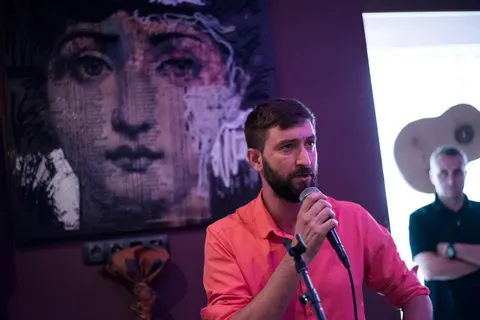
How can letters and bytes, books and technology, meet? That is the big theme of a series of digital stories. After Tuesday's look at some of the favorite books of the world's IT leaders, we once again step outside the cliché, this time with the author of Bulgaria's biggest book blog. Next Tuesday brings the unexpected literary recommendations of some of the most important figures in Bulgarian IT. You are what you read. “Kakvo chetesh…” (What Are You Reading…) is a question we should ask more often, especially in public. It is also the name of the largest and most active Bulgarian book group on Facebook, created by today's guest. For 15 years he has been sharing his recommendations on Knigolandia, the biggest book blog in Bulgaria. Deputy editor-in-chief of the Ciela publishing house, he recently made another dream come true: seeing his name on the cover of 100 knigi, koito tryabva da prochetete (100 Books You Must Read). With Hristo Blazhev we talk about reading and the future of literature. About the technologies that change it, and the books that build technology. Together we hunt for important and unexpected recommendations, to convince ourselves that letters and bytes must walk hand in hand, or nothing good awaits us, not even as a species. Happy reading!
 04
“Our Only Chance Is to Remember That We Are Creators”
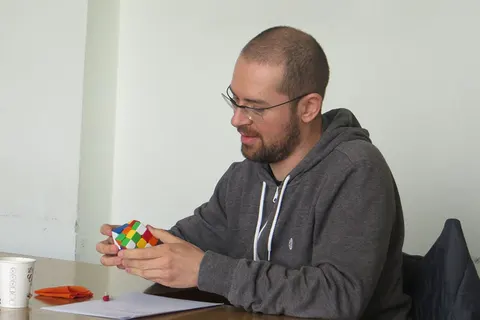
Todor Kolev is a seasoned programmer, entrepreneur and mentor to remarkable young talents in information technology, but also a man with his own, deeply curious view not only of technology but of how we are evolving as a civilization. Are we ready for the next step in evolution that technology is bringing, and what comes after the end of capitalism?
 05
When Musk Puts a Chip in Our Brains…
“It’s very important that artificial intelligence not be ‘other.’ It must be ‘us.’ That’s the only way we survive,” says Elon Musk. To get there, he has launched Neuralink, an ultra-ambitious project whose goal is for us to merge with machines: a tiny chip in the brain that makes us part of the global network. Is this fantasy, or the only chance for the human species to survive?
 06
“In Building True AI, We Get Only One Shot”
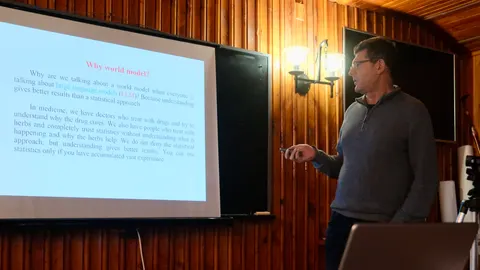
Everyone is talking about artificial general intelligence, the enormous next step that will confront us as a species with colossal and unpredictable challenges, and one of the first scientific conferences on the subject was organized in Blagoevgrad by Dimitar Dobrev, an AI and mathematical logic researcher who teaches at Sofia University. Before we let the genie out of the bottle, he says, we should at least decide what we want from it. We talk about intelligence as a force, our naivety about the future, control, regulation, open source, and one simple but frightening question: if we don't know what future we want, how do we expect to get it?
 07
Dario Amodei: Is It Too Late for Humanity to Wake Up?
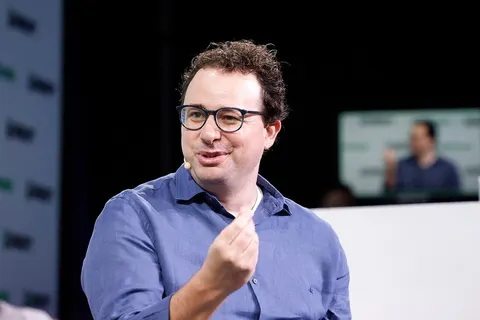
“Humanity is about to be handed almost unimaginable power, and it is deeply unclear whether our social, political, and technological systems possess the maturity to wield it.” So says perhaps the most talked-about tech leader of the moment, and he has good reason to. “He hates Western civilization,” wrote Musk. “A liar with a God complex,” snapped Under Secretary of War Emil Michael. “Leftwing nut jobs,” added Trump. All words from the past few weeks, aimed at today’s hero. Who is this fearsome enemy? You would hardly guess that it is a level-headed, mild-looking physicist from San Francisco who simply announced that he will not allow his company to be used for building autonomous weapons or for mass surveillance. Dario Amodei, the creator of the most advanced AI models, has finally landed where he deserves to be—in the spotlight. And not only because he stood up to the most powerful state on earth at the real risk of destroying his multibillion-dollar company. Not only because, in recent years, Anthropic’s models have pushed artificial intelligence to incredible heights. But also because he dared to peer into the future. The place we are all heading toward, where few dare to ask the truly important questions. Such as—how do we survive as a civilization in the age of super-advanced artificial intelligence?
 08
“Right Now, the Conditions Simply Aren't There for AI to Make a Dramatic Leap”
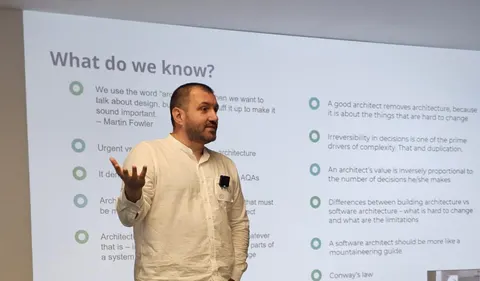
With Krasimir Kostadinov you can talk about geopolitics, astrophysics and history, all in the context of technology, the march of time and the trends that shape all our lives. He is the chief technology officer of Scalefocus: an engineer, architect and programmer with wide-ranging interests and deep knowledge, which he often shows off in his tech blog. In his current role, one of his direct duties is… to peer into the future, trying thoughtfully, sensibly and from every angle to predict where technology is taking us. We will peer into the future with him, for a sober and very different look at AI and the other big themes of the new age. Join us for a stroll through what lies ahead!
 09
The Living Computers
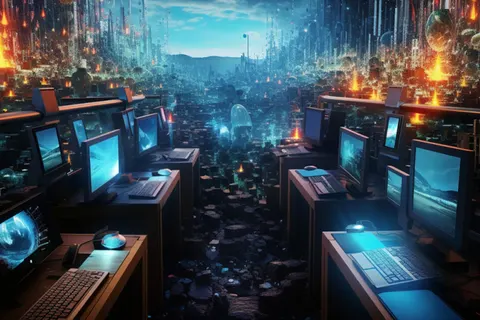
Information technology has always tried to imitate nature's most perfect model: the human brain. Now it is on its way to doing so more successfully than ever—by building a computer that runs on living human brain cells! What happens if we bring together the best of both worlds: the biological, with its evolutionary efficiency and its instinctive, creative imperfection, and the technological, with its ability to derive patterns and build on them? Biocomputers look like the logical future, and it is no accident that many of the people sketching tomorrow have turned their eyes in this direction. Serious scientific breakthroughs and successful startups in recent years suggest that the next big technological leap may well be coming from here. These are the arguments.
 10
The Genius Terrorist and the “Evil of Technology”
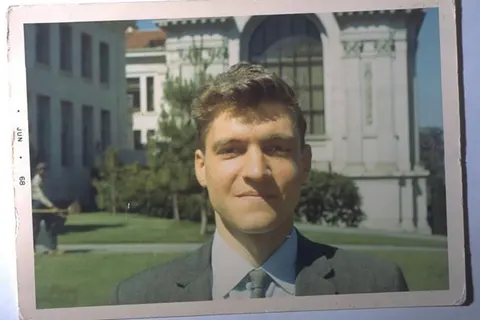
Last Sunday, in the hospital of a federal prison, while serving the first of his eight life sentences, a man who began life as an exceptionally promising scientist passed away: Ted Kaczynski, known as the Unabomber. A child prodigy, at just 25 he became the youngest faculty member in Berkeley's history, and a dazzling career was predicted for him. Then he suddenly decided to withdraw to an ascetic shack in the middle of the woods. For 17 years he carried out terrorist attacks on scientists and people connected with the computer world. He became the FBI's most expensive target. Meticulous, elusive! He was recognized and turned in by his own brother, from words in his manifesto, which is sure to be much discussed. “As society and the problems that face it become more and more complex and machines become more and more intelligent, people will let machines make more of their decisions for them, simply because machine-made decisions will bring better results than man-made ones.” “He might not be wrong,” Elon Musk wrote, sharing the news of Kaczynski's death. The Unabomber was a terrorist who took the lives of innocent people. And at the same time a scientist who predicted the dangers that come with technology. Obsessed with the risks it carries, yet incredibly perceptive in the way he looked at them.
 11
“Nothing Will Replace the Human Programmer. Not for Another 10 Years, at Least”
Will artificial intelligence soon put programmers out of work? Is the end coming for the huge demand for specialists, the hunger for talent, the good conditions in this industry? Is an algorithm on the horizon that will outstrip human intelligence? How is technology leading to the end of liberal democracy? We hear the view of someone from the heart of the software world. Mihail Panayotov has a long and colorful track record: he has been programming since he was 14 and started his first business at 15. He has more than 18 years of experience in a range of roles, from programmer and software architect to chief technology officer and entrepreneur. Add to that his interest in politics and his intriguing view on why it is time for more and more people from the software world to enter it.
 12
The Cat and the Quantum Computer
Quantum computers have been one of the most talked-about technology topics of recent years, and the biggest companies in the IT world are locked in a furious race to build working prototypes. More and more people say that they are the next step of the technological era. Yes, the subject is rather complicated, especially when you try to explain it in plain language, but let's give it a go!