It can sniff out fake news better than a bloodhound. More than that, it can tell you they are coming… before they have even been written. What kind of telepathic hunter is this? You have probably guessed already: it simply isn't human, it's an algorithm. And it is no mere idea; it is already making serious inroads into practice. Nor does it just brand disinformation and censor it. It helps people catch it themselves.
The Massachusetts Institute of Technology is involved in the project, but it is run by the Qatar Computing Research Institute. And the development team is led by a Bulgarian.
Preslav Nakov heads the researchers. He is the creator of the project Tanbih (meet it here), an Arabic word meaning “alarm signal.” His specialty is natural language processing (NLP), and many rankings place him among the top scientists in the field worldwide. Thanks to this field, where artificial intelligence meets linguistics, we already enjoy serious technological gains, such as advanced machine translation. Dr. Nakov, however, has focused his research precisely on using this extraordinarily promising technology in a battle that otherwise looks lost for good. The battle for the truth.

I'm a Hunter and a Fisherman Too
How do you know you're a misunderstood genius? You're a genius and nobody understands you.
What is fake news? News, only fake.
No, we haven't gathered here to make memes and little jokes, but to see how this hunter—an algorithm—does its job. What it does, how it works.
The problem with fake news really begins with the definition. If a journalist gets a number wrong in a story, does that make the news fake? Or does there have to be intent? Or is it a problem when facts get tangled up with interpretation?
The subject is as old as the second-oldest profession—journalism. And yet today it matters more than ever, because we live in an information society. Because of the filter bubble and the fact that the way we take in information is changing profoundly. Today fake news is a more dangerous weapon than we can imagine. The authority of serious media is gone; anyone can say anything and stand on an equal footing with the undisputed authorities on a subject. The information space around the coronavirus is example enough.
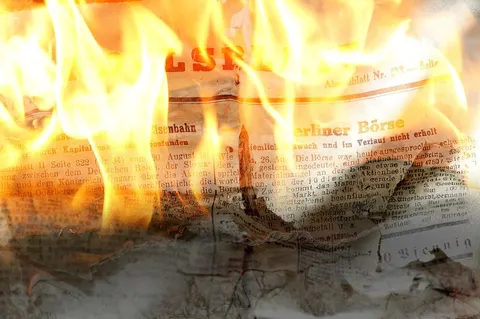
Good Hunting
“Yes, false information in the news has always been around—think of the tabloids,” says Nakov. “But social networks changed everything. They made it possible for malicious sources to microtarget their audiences by demographics. To spread information much faster and in enormous volumes. Thanks to social networks, news can be turned into a weapon on an unprecedented scale.”
Fake news played a significant role in the last two US presidential elections, and serious political decisions are often made with its help.
The problem took on new dimensions once the coronavirus arrived. As early as February, the World Health Organization ranked the fight against the “infodemic” second among the most important steps toward ending the pandemic.
It is true that the not-always-adequate communication policy of the authorities and the experts also played a serious part here. And yet even the WHO could hardly have imagined that the way the pandemic was covered online would lead to a point where, with a vaccine available to everyone, more than 70 percent of Bulgarians would not see the need to get one.
With a Rifle in Hand I Roam the Woods
A few years ago, services that checked the accuracy of a given fact were all the rage. And they are useful. After all, it isn't that hard to compare data from sufficiently authoritative sources with a report that, say, some world celebrity has come down with sciatica. Or that one football team has beaten another.
But that is elementary. Not to mention that every one of us ought to be doing it. To stop and think before sharing a headline that sounded intriguing, to open a more serious site to check it, especially if the link comes from an obviously dubious domain.
Gradually we got used to this. Of course, anyone can be fooled, and very often it is older people who fall into the trap, as they still relate to information differently: if it's written down, it must be true. You probably know the old joke about the grandfather who read in the paper that crocodiles fly: “Well, how far can it fly, grandpa? Two or three meters at most…”
The Hunters' Meet
And so, at the heart of our electronic hunter's work, this Arabian Sherlock Holmes, lie definitions.
“The big problem isn't that fake news is untrue,” says Preslav Nakov. “It's that it is being turned into a weapon. And that is what worries even the scientist who made the internet possible, Sir Tim Berners-Lee, the most.”
For many people, fake news is simply news they don't like, regardless of whether it is true or not. That is why, according to Preslav Nakov, the more fitting term here is “disinformation.” “Here the definition is quite simple; it has only two components. The first is that a piece of information is untrue, and the second is that it has a malicious purpose, that it is meant to do harm in some way. Most work on the subject focuses only on the first part of the problem. But the second is more important, and that is exactly what Berners-Lee means when he talks about news being turned into a weapon. The main problem with fake news, as journalists will agree, isn't that it doesn't report true information. The problem is that it becomes a political weapon,” the researcher adds.

Propa-nasty
We often call the phenomenon “propaganda,” but according to our interlocutor that is not justified. “Propaganda overlaps with disinformation. It too has two components: the first is that someone is trying to convince us of something, and the second is that there is a predefined goal. And yet with propaganda there is no truth or lie, no good or bad. The government's vaccination campaign is propaganda, and so are the words of Greta Thunberg, who tries to frighten us with the claim that hundreds of species go extinct every day. That is one of propaganda's techniques—deliberately stirring up fear. Only in this case we wouldn't consider it a problem. Propaganda is neither good nor bad; it is simply a set of techniques aimed at persuasion,” Nakov adds.
These are exactly the techniques that Tanbih, a machine learning algorithm, is learning to recognize. And it layers them on top of everything else. As a result, it doesn't look for a final binary verdict of “true/false”; it simply informs the user of the risks and nuances, leaving it up to them to decide how to make use of the information.
Tanbih analyzes language. It checks how the source of information relates to the news it publishes: whether it contains proven-reliable or proven-fake stories. If false claims are frequently cited, that is a pretty clear sign that the outlet's future publications will head in the same direction.
There are more than 60 propaganda techniques, and Tanbih focuses on 18 of them, the most widespread and most effective today.
The Brave Hunter
The battle against fake news is an unequal one because, as an MIT study shows, it spreads six times faster than true news. It is more attractive, designed to be liked. Besides, online things happen at lightning speed: 50 percent of its spread happens in the first 10 minutes! How can anyone check whether a story is true in that time?
Only users can do it. Users who, in this case, get help from the capabilities of artificial intelligence.
It is easy to check whether a single sentence is true. Even if it is analytical, that can easily be handled too. But, as our interlocutor points out, in a US presidential debate, for example, about 1,000 sentences are spoken. The same goes for a longer, analytical article. How can every single claim be checked? The only chance is with the help of artificial intelligence. Algorithms, especially in language analysis (and, unfortunately, mostly for widely spoken languages), have incredible skills, as the example of GPT-3 shows. Tanbih takes the best from this field to analyze long texts for the reader and give its own independent assessment. What the reader does with it is their business. But that is how it should be, quite unlike, say, the world of Facebook.
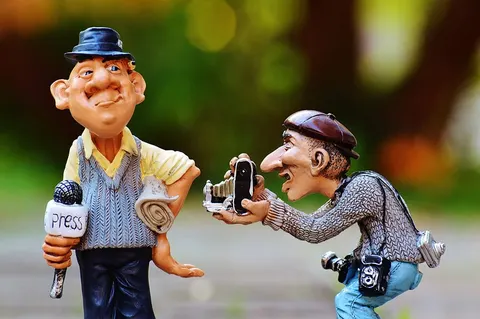
Lying in Wait
The devil is in the details. In the insinuations. And above all in cases where the lie is deliberate, massive, has a specific propaganda goal and brings certain benefits to its source.
As Dr. Nakov says, the many fact-checking projects, manual or automated, cannot solve the problem, because by the time we can prove a story is false, it will already have reached millions of people and there will be no stopping it. That is precisely why the scientist is directing his efforts toward technology that can predict fake news.
We all know that even Facebook, despite years of effort, has never managed to find a solution that works well enough. The enormous volume of information on the social network can't be monitored automatically, and because of the system for reporting posts, censorship often claims texts that someone simply disagrees with. But that doesn't make them fake, especially in an environment that is supposedly about opinions and points of view rather than news content (and the tangling of the two lies at the root of the biggest problems in this area).
If it has been proven that a given site, profile or any other source has already produced fake news, we certainly ought to be more suspicious. That is exactly where the Tanbih algorithm helps. The idea is to predict. Not by censoring, but simply by helping users. It gives them basic indicators of how reliable the source is and whether it is emotionally colored on the subject it writes about. Politically, for instance.
Fake News, Hunter Style
The only chance to build a better internet environment is to stop propaganda and fake news before they spread, Prof. Nakov is convinced. And the first step is to verify and single out the reliable sources of information.
“There's no way to check every single claim in the world. And yet, this way you can check a story before it has even been written.”
The real problem arises when things pile up, when there are insinuations, when it's not only the lie that matters but also who obviously benefits from it. That is exactly what the Tanbih algorithm aims to catch.
For now it works in Arabic and English and covers publications on politics, business, sports, science, technology… and COVID in particular.

Hunters by Degrees
Tanbih can assess the overall reliability of the facts in a text, the degree of propaganda content, the presence of extreme political shades and ideologies. It evaluates a story within the overall framework of all the others. It analyzes individual units of information, but it is even better at analyzing the sources of information.
The story of this artificial intelligence began as an ordinary system for personalized news filtering, similar to Google News. Then its creators decided to extend it with the core idea: not merely to collect news, but to enrich it with information about the content of the text and about the key characteristics of the author and the outlet it comes from. It is useful to know whether a source has a clear political affiliation, whether it is a prominent anti-vaxxer or pro-vaxxer. And above all: whenever it is extremely biased on a given subject.
100 Carp… and One Red Herring
And, as mentioned, its specialty is recognizing propaganda techniques. Stirring up fear is just one of them. Broadly, they fall into two groups, and the first relies on emotions. It may be fear, patriotic feelings, sympathy. The second group is more about logical paradigms. For example, “you're either with us or against us.” A classic technique is the “bandwagon effect,” when we are convinced that someone will win the election by a huge margin and that we should feel we're on the right side of history by joining in.
The “red herring” is another propaganda technique; it owes its reddish name to William Cobbett, who popularized it in 1807. In Bulgarian we call it by the far duller name “distraction.” And when we hear “red herring,” we somehow can't help wondering whether such a fish really exists. Colorful term aside, we know this propaganda approach painfully well from Bulgarian media and politicians.

In the Crosshairs
“Intentional obfuscation” is another propaganda approach. Here the communication is deliberately blurred, delivered in purposely convoluted language, full of “morphic resonances,” as a famously murky phrase goes back home in Bulgaria.
Tanbih has been taught to recognize all of these and the other classic techniques, while at the same time analyzing the evaluative side of the text.
Ah, if only we were all a little more like Tanbih.
Soon, we hope, we'll have it in Bulgarian too. If only to have a little warning light go on. Whether it's too late for warning lights, and whether anyone is left to watch them in a media environment as utterly gloomy as Bulgaria's… who knows, we'll see.
We have good reason to despair of natural intelligence, especially when it comes to politics and the media in our part of the world, so let's give the artificial kind a chance.
The Kite Runner
“I still believe that media literacy is the best long-term solution for how we get informed,” says the researcher. “That's why I'm proud of the tool we've created. It manages to catch the subtle techniques of propaganda and to let readers know they are being manipulated. That way they know how to approach these sources of information, and what to avoid in the future. At some point they won't even need the platform; they'll recognize the techniques on their own. That's what happened to me, and to other scientists working on the project,” Preslav Nakov adds.
“I can no longer read the news calmly. Every time I open it, I start recognizing the propaganda techniques one by one. I believe it would be very good if more people reached that stage.”
And so we part with the new AI and its creator, but with an agreement to meet again soon for an interview. To talk about other subjects too, connected with the most important and fastest-moving directions in which algorithms are expected to change our world. About the much-hyped artificial intelligence, which we have burdened with so many (often exaggerated) expectations of changing our lives in so many ways.
And you: what would you ask him?