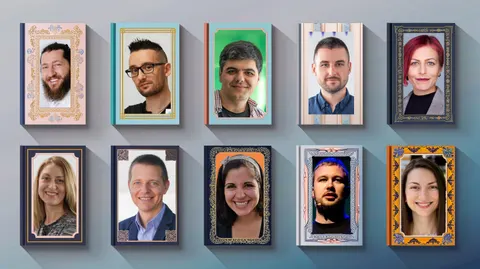
You are what you read—that's what I believe. I also believe that holidays like the Day of the Buditeli, Bulgaria's November 1 tribute to the enlighteners of the National Revival, are an occasion to reflect. On ourselves, on books, and on the awakening we need in our relationship with technology.
For many global IT leaders it's a tradition to share their favorite reads and give recommendations. Here in Bulgaria that tradition doesn't exist, as my guest Daniel Penev made me realize. Nobody asks politicians (I can think of only one politician's favorite book), and there are few places (for example, Georgi Nenov's The Superhuman) where IT people talk about books.
Half a year ago I tried an experiment for the first time: I invited people from the tech sector I had chosen to share their book recommendations, and the result, at least for me, was astonishing. And thought-provoking—what would happen if I asked more people who have impressed me?
I sent a short invitation to 30 figures I find remarkable: recommend three of your favorite books to the readers of Digital Stories. I tried to make the lineup of guests as varied as possible, from people in leadership roles to well-known speakers, from those working across the ocean to foreigners the industry has brought to Bulgaria, representing the widest range of technologies and different generations.
Get ready for some stereotypes to blow up!
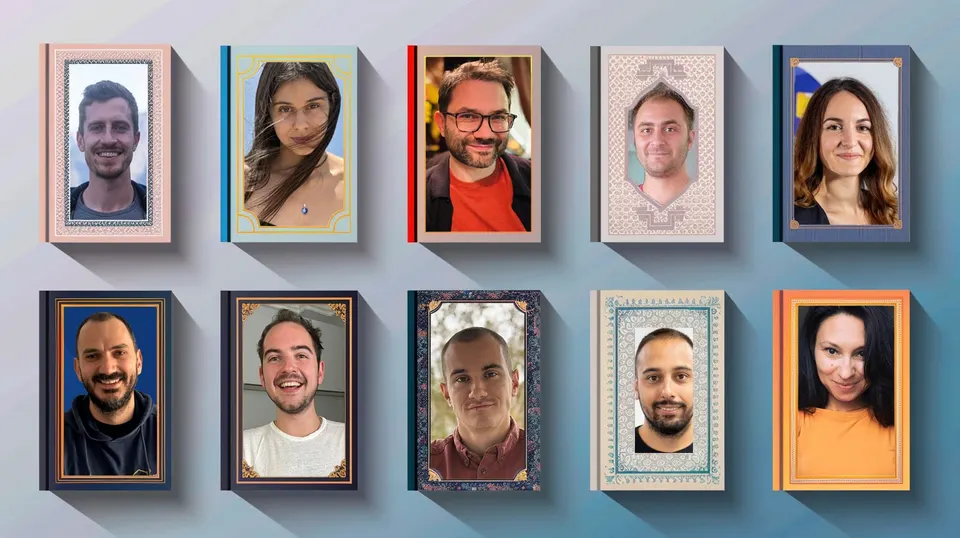
I received no fewer than 20 replies, and I have the pleasure of presenting them to you! Once again they amazed me with their variety, their range and their depth, and they gave me plenty of ideas for future reads to add to my Goodreads list. Today I present the recommendations of the first ten guests; the rest will follow in a week. They aren't grouped by any particular logic—they simply turned out too varied and unexpected for that—so I offer them in the order I received them.
Happy reading!
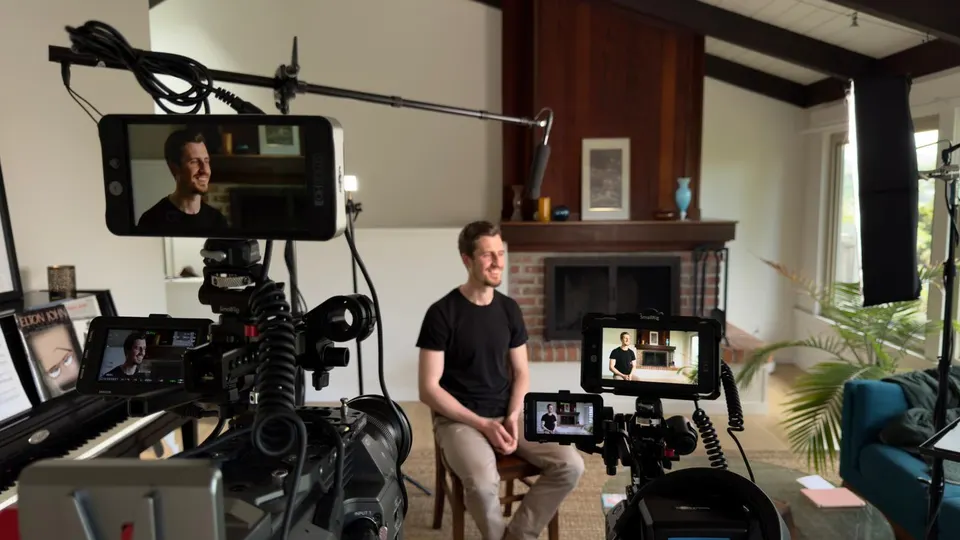
1. Love and Math
Minko Gechev holds a black belt in karate… and in programming, as a seasoned senior developer at Google, where he still works today. For many years he has been one of the creators of the Angular platform, which also helps me earn my living.
(More about him and from him—here.)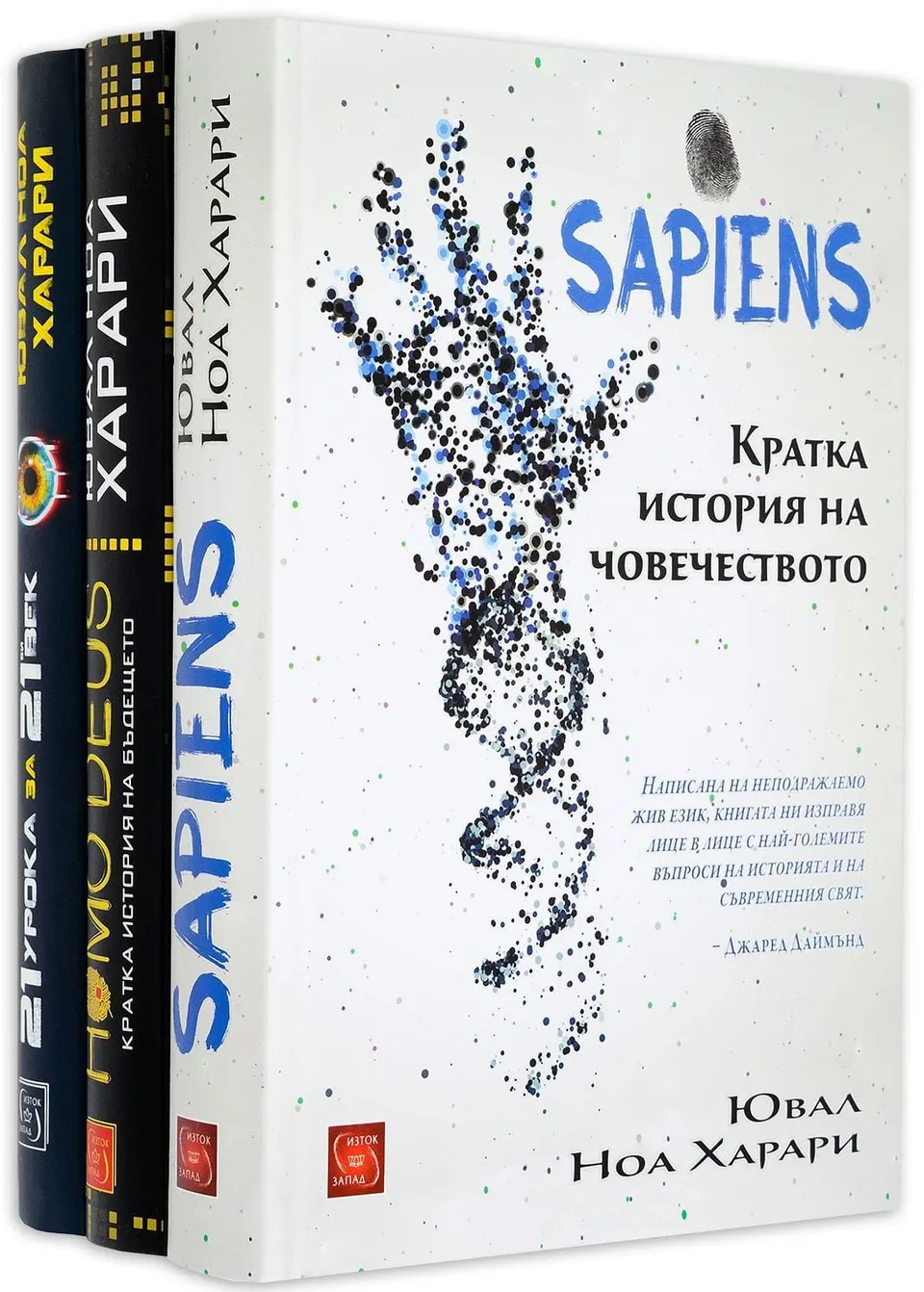
- Sapiens: A Brief History of Humankind by Yuval Noah Harari
A book that helps us look beyond our personal, emotional perception and toward humanity, through the author's rationalized emotional perspective.
- Love and Math: The Heart of Hidden Reality (never published in Bulgarian) by Edward Frenkel
A weaving together of fascinating mathematical concepts and Edward Frenkel's life experiences. The author is from Eastern Europe and shares the obstacles he faced while developing as a mathematician. The book is relevant for people with interests in science, art and business.
- The Mountain Is You by Brianna Wiest
This book popularizes useful ideas and practices that can help us understand our actions on a deeper level. A good starting point toward more in-depth literature.
So the first recommendation comes from across the ocean, from Silicon Valley itself! Harari—how interesting… And the third pick is so much on the crest of the wave that it will very soon be published in Bulgarian for the first time!

2. Count Harry Morev
Yoana Borisova heads the engineering team at Codexio. She graduated in public relations from Sofia University, but quickly and boldly turned toward the tech world, which makes her the youngest IT leader I invited to share her recommendations. Here they are.
- Harry Potter by J.K. Rowling
A very personally important series for me, read some ten times between the ages of 9 and 24. Apart from creating a world I escaped into from reality more than once, the most important thing in this case is that in those years it taught me I could come to love my quirks and turn them into a part of me that helps me. And in a way, that's where the first step toward who I am now began.
- Tobacco by Dimitar Dimov
Very interesting to me, since it's set in my hometown (I know there are disputes on that point, but they're not the focus). What I find most interesting to examine here is the personal development of the main characters. I like that it vividly shows the brutal part you have to go through in order to win (which hasn't changed terribly much), and its consequences—not only with criticism, but with understanding. And the conclusion that life goes on regardless.
- The Count of Monte Cristo by Alexandre Dumas
Again something I read at a very early age. I liked the emphasis on the knowledge and wisdom needed for the whole thing to happen, as well as the way they were acquired. And also the subtle hint that, in the end, they are a bigger victory than the revenge itself.
If someone had told me I'd receive such a colorful list of reads—and all of them fiction, at that—I wouldn't have believed it. Heartfelt thanks to Yoana for the unexpected perspective!
3. On the Road to Success
Petar Tornev is director of the Accenture Technology Center in Bulgaria, one of the largest companies in the sector here. He has more than 20 years of experience in the tech world.
(More about him and from him—here.)

- Outliers: The Story of Success by Malcolm Gladwell
The book shows that success is not just the result of talent, but of a combination of effort, opportunity and environment. It makes leaders think beyond individual qualities and create conditions in which people can unlock their potential.
- Good to Great (never published in Bulgarian) by Jim Collins
Collins analyzes why some companies go from good to exceptional and others don't. The book teaches leaders discipline, the right selection of people and long-term thinking—the foundations of lasting success.
- True North (never published in Bulgarian) by Bill George
This book guides leaders toward discovering their own “north”—the authentic values and goals that lead them. It's invaluable for anyone who wants to lead with integrity, meaning and inner clarity.
- Shoe Dog by Phil Knight
The autobiography of Nike's founder reveals the true price of success—the struggle, the risk and the faith in a dream, even when everything seems lost. The book is inspiring for leaders because it shows how passion, courage and persistence can turn an idea into a global brand.
So here we've boldly peeked into pages beyond fiction too. And from one of the best-known IT leaders in the country we got no fewer than four book recommendations… which are surely useful on the road to a successful career in our industry. Isn't that priceless?
4. Ages Come and Pass
Doncho Minkov is the co-founder of an artificial intelligence startup, and he also has invaluable experience as a teacher, having trained more than 10,000 people who went on to enter the software industry.
(More about him and from him—here.)
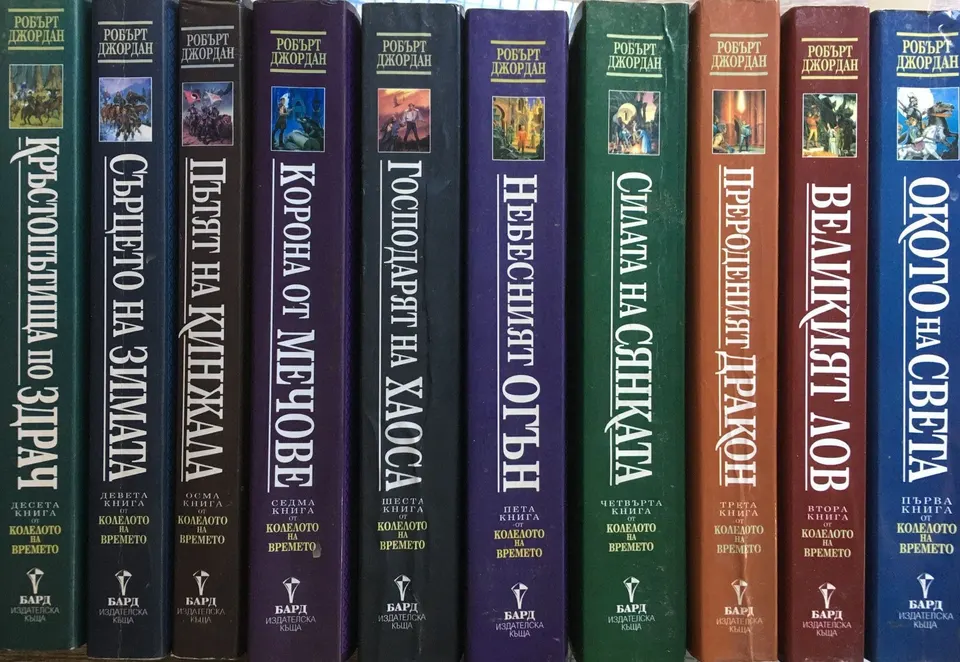
- The Wheel of Time by Robert Jordan and Brandon Sanderson
This was the first serious fantasy series I read, and I recommend it to everyone.
- The Stormlight Archive by Brandon Sanderson
Maybe the best fantasy series I've read. An extraordinary approach to building the world and the characters. I was saving the last book for a long flight, but I couldn't hold back and read it in six days.
- Harry Potter by J.K. Rowling
I was lucky enough to read the books at 24 or 25. Everyone knows Harry Potter! One of the most relaxing and emotional series I've read. Since then I've listened to it at least four or five times.
“The Wheel of Time turns, and Ages come and pass…”—and anyone who loves fantasy can't remain indifferent to these picks. I confess I still haven't read the last installment of the Archive, only because I'm busy looking for a new job. And here's the first one to appear a second time: Mr. Potter. Apparently IT people have a soft spot for wizards—isn't that curious?!

5. The Unbearable Lightness of IT
Iva Gumnishka is the founder of Humans in the Loop, a company that provides work to refugees and people affected by armed conflict, who help develop the most cutting-edge technologies.
(More about her and from her—here.)

- Popravitelen za roditeli (Remedial Exam for Parents) by Madlen Algafari
A unique book on parenting, different from all the other books by foreign authors I've read in recent years. It covers every stage of childhood from a psychological point of view and offers guidance on how to be mindful parents and correct our parenting mistakes, toward our children and toward ourselves.
- The Unbearable Lightness of Being by Milan Kundera
I've lived in the Czech Republic for two years, and although they promote Kafka a lot, for me Kundera is their best writer. The book tells of the period between the Prague Spring and the Soviet invasion through the personal stories of various characters. What I really like is how he manages to convey the subtleties of human experiences and feelings, even in their banality or absurdity.
- The Impossible State (never published in Bulgarian) by Wael Hallaq
A book written by one of my professors at Columbia University. It discusses the differences between the structures of the modern state and the principles by which society functions in Islam. Not in order to show how backward traditional societies are, but to expose how states in modernity are utterly incompatible with the idea of a society guided by ethical and moral principles.
All that's left for me is to wholeheartedly join one of the recommendations—Kundera's book is definitely among my favorites too.
6. An Optimistic Theory of Our People
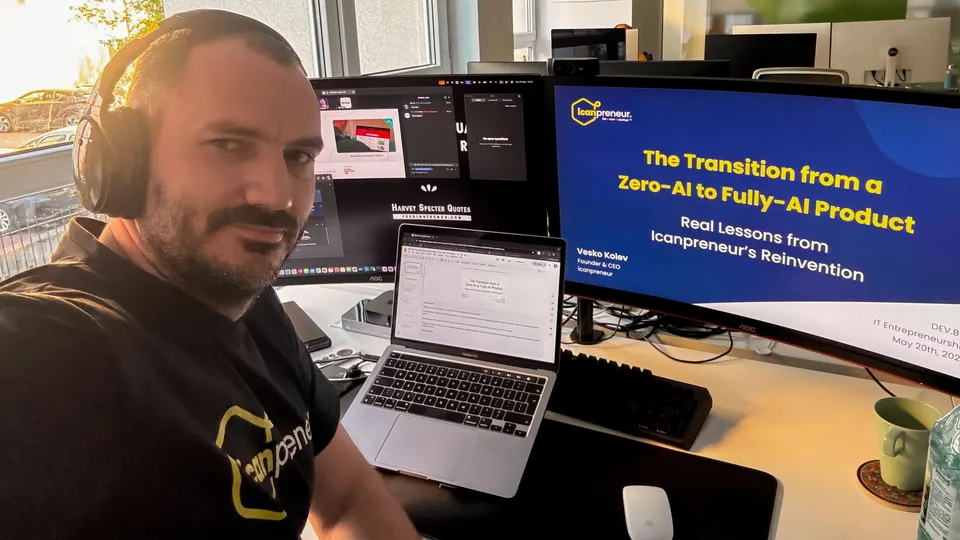
Vesko Kolev heads Icanpreneur, a startup that helps more IT companies build a product that works, and he has extensive experience in the software world.
(More about him and from him—here.)
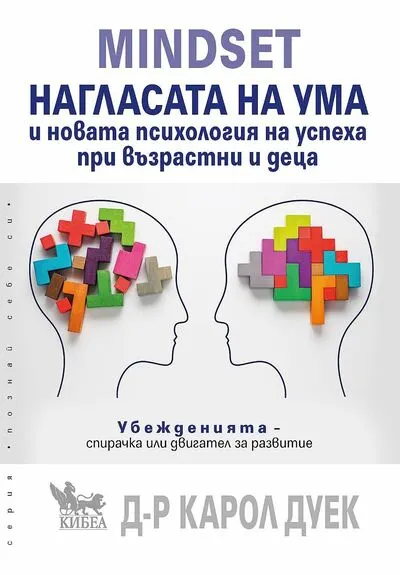
- Mindset by Dr. Carol Dweck
One of the main things I'd really like us Bulgarians to change is our mindset, our self-confidence, our sense of how much we can actually do and how much greater our potential is. This book is very important because it shows and proves how anyone can do anything, as long as they're ready to put in the necessary effort. If you consider something impossible, you won't even try. But if you know it's possible, however hard, then with the right motivation and effort things will happen. The book divides mindsets into two kinds: in the fixed one, the belief is that you're as smart as you were born and there's nothing you can do about it. In the growth mindset, the core belief is that you can achieve anything, as long as you put in the necessary effort.
- The 7 Habits of Highly Effective People by Stephen Covey
Each of these habits is very powerful. For example: “Speak of people as you would if they were in the room.” This matters a lot, because the opposite often happens, and that's toxic. If a person sets out to be sincere, yet at the same time to do it in a healthy way, it really helps a great deal.
- How to Win Friends and Influence People by Dale Carnegie
This is a classic from which we can learn something very important: criticism by itself leads nowhere. Nobody likes to be criticized. Criticism is destructive, so it's much better to approach the feedback we give and the way we treat people in such a way that we don't discourage them from striving to do things and move forward. There's a lovely Bulgarian saying: “A word spoken is a stone thrown.” I have the feeling we need to be far more aware of what we say to the people around us, and how.
The two things that, for me, hold us back as Bulgarians—and that these three books largely address—are believing in ourselves and in the potential of those around us, supporting one another, and taking responsibility for our own fate instead of waiting for someone to fix it for us.
It's no accident that Vesko Kolev is considered by many (myself included) a truly wise man, with whom every conversation enriches you. I'm sure the same goes for the books he recommends.
7. Mirrors and Pretotypes
Ilia Valchanov is the founder of the startup Team-GPT, one of Bulgaria's most successful ventures in artificial intelligence. Before that, he had more than 1.4 million students on the Udemy platform.
(More about him and from him—here.)

- Pretotype It (never published in Bulgarian) by Alberto Savoia
A book that shows any idea can be tested extremely easily in a very short time, without the need for a big investment.
- Principles for Dealing with the Changing World Order by Ray Dalio
A foundational book on the principles of managing life and business. A handbook of good practices.
- The Picture of Dorian Gray by Oscar Wilde
A classic that holds an enormous amount of wisdom of every kind. It presents a path people can take, where it leads and how it ends.
Fiction, books that make sense of things, books that move us forward and even ones tied to our national psyche. The wildly different perspectives our guests bring to the invitation to recommend books are a great treasure. Here, from a successful entrepreneur, we find reads that can be useful precisely in that field. Meanwhile Mr. Dorian Gray is yet another figure I find, to my huge (and extremely pleasant) surprise, in today's “syllabus.”

8. A Book Changes Your Life
Georgi Spasov is the founder of LimeChain, a global technology partner to projects in the Web3 and blockchain industry. With a seven-year history and more than 250 projects, they help develop numerous ecosystems.
(More about him and from him—here.)
- Karmic Management by Geshe Michael Roach
A book that has helped me a lot in building my moral and emotional compass, in doing things that may seem naive and illogical to others. The more good karma you put out into the world, the more you get back—and right when you need it.
- How to Win Friends and Influence People by Dale Carnegie
The tried-and-true wisdom of communication and mindset. It dramatically changed my communication and relationships with others, and through them my whole life. From it I learned the fundamentals of attitude and effective communication with others, so that we end up in situations where both sides win.
Mr. Carnegie appears for the second time with a specific title. I don't know about you, but I doubt it's a coincidence, especially coming from people whose point of view is so valuable. I'm adding it right away to my list of next must-reads.

9. Heavy, Heavy…
Alexander Kondov is a frontend developer, speaker and… writer. An unexpected combination—just like, as you'll see, his list of favorite books.
(More about him and from him—here.)
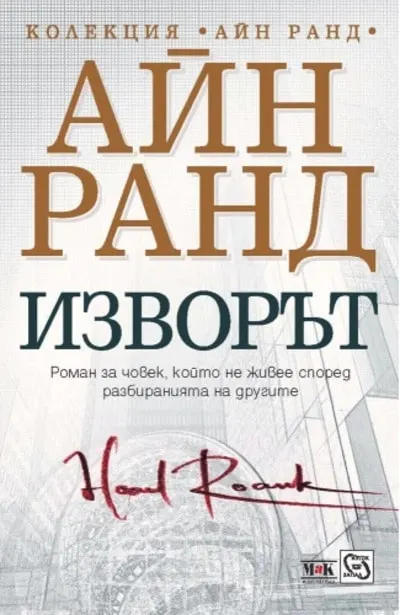
- The Fountainhead, Ayn Rand
A story about how a person is morally obliged to pursue their own happiness. I was raised in a collectivist society, and this book showed me that being independent and having your own views on life is a value. I think it will resonate with all engineers, artists and innovators. I return to it at least once a year and reread my favorite moments.
- Crime and Punishment, Fyodor Dostoevsky
Speaking of values, this is a story about how there exist certain unwritten moral laws that apply to all of us, and there is no reason that can justify breaking them. Dostoevsky shows us that on the road of ambition it's important to be able to sleep well at night, and that not everything should be had at any cost. It's frankly a heavy read, but if there's one book a person must read in their lifetime, this is it.
- Ballad for Georg Henig, Viktor Paskov
I wanted to include a Bulgarian book on the list, and this one became a favorite within its first few pages. It's a story about creativity and the sacrifices a person may have to make to preserve their dignity and the purity of their art. I've never romanticized stories about the starving artist, but this one tells how the value of a creation isn't always measured in money and fame.
“I think that, on the whole, we should read more fiction, because it's through stories that we pass on valuable moral and philosophical lessons. All the fables, parables, legends, even religious texts have this purpose,” Alexander adds. And I simply have nothing to add…

10. The Pages That Say “Why” and “How”
Laura Toloș is a data specialist. A graduate of the Max Planck Institute, she now heads the data processing team at the pharmaceutical company Teva.
(More about her and from her—here.)
- Sapiens: A Brief History of Humankind by Yuval Noah Harari
For me, this is the book that complemented what I learned at school, skillfully filling in all the “whys” and “hows” the dry textbooks never answered. It's captivating to trace the evolution of human societies and thereby discover explanations and unexpected perspectives on today's world. I was especially struck by the idea of “collective, or shared, fictions”—like money, religions and organizations, which exist only in society's common imagination and reveal the power of human cooperation. To be honest, it's because of this book that I don't take careers and corporations so seriously; I stopped worrying and having unrealistic expectations.
- Fooled by Randomness by Nassim Nicholas Taleb
A wonderful way to learn to see the world as the result of processes in which randomness (luck, or the lack of it) plays no small part. This book taught me that decision-making skill isn't the only factor in success (or failure)—a significant part of both is down to chance. I also realized I can make better decisions when I know how much uncertainty, and of what kind, lies ahead of me. Finally, the book helped me a lot while I was learning to lead a data science team.
- Flip Thinking (never published in Bulgarian) by Berthold Gunster
This book taught me to use positivity, creativity, kindness and humor to find solutions to everyday problems that otherwise seem difficult or impossible. Contrary to first impressions, the book doesn't preach unwarranted optimism in the face of hardship. It's full of wonderful little ideas on how to reframe our challenges so we reach the best possible outcome within a difficult situation.
We began the first half of our list with Mr. Harari, and by pure chance we end with him too, in the recommendations of a wonderful guest whom the IT world brought to Bulgaria from her native Romania, yet who sent me her answers in beautiful Bulgarian.
You are what you read. So what are your favorite books?