Someday there may be an artificial intelligence that writes moving stories, ones that grab you by the throat, sweep you away, stay with you forever. But until we build it, that job will have to stay with today’s guest on Digital Stories.
If you love good writing and for some reason have never touched Ivo Ivanov’s stories, I envy you. Give them a chance and you will find yourself in a far more meaningful world.
Sometimes they sound like parables, sometimes like fairy tales, but to me they most often read as remarkably powerful short stories, born not from a novelist’s imagination but from the piercing eye and heart-beating pen of a journalist.
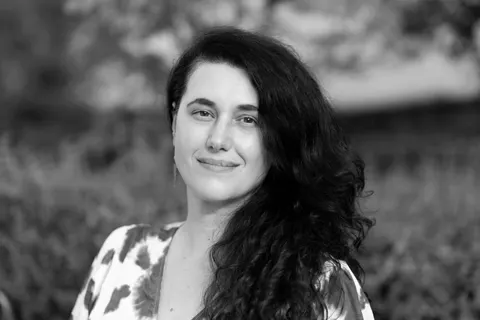
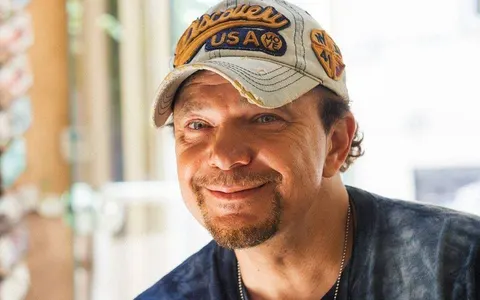
Ivo Ivanov is direct, warm, erudite and a wonderful conversationalist. He has lived in Kansas for several decades. He is the author of the collections Krivata na shtastieto (The Happiness Curve) and Otvad igrata (Beyond the Game), which held the top spots among Bulgaria’s most-read books for years.
Like every sensitive and observant person today, he has his own many-colored view of the digital transformation, the subject this site keeps examining from every possible angle.
Will artificial intelligence one day write moving stories? What did the online age give us, and what did it take away? How do we stay human in it? Read Ivo Ivanov’s captivating answers.
– What are the best and the worst changes technology has brought us?
– I really wish this question were put more often to people of my generation, because we lived half our lives without the internet. Somehow we have stood on both shores of the digital ocean. My children, who are both around 20 now, don’t remember a single day without the internet.
What has technology brought us? Many things, of course. When the internet picked up speed,
I hoped it would help us achieve that chimerical global social consciousness we have always dreamed of.
One shared, pulsing, searching brain. Connecting the whole world. And yes, it did that, but at the same time, especially over the past few years, it has also managed to divide us as we have never been divided before.
– What changed inside us?
– Before technology moved in, our capacity for concentration was stronger, sharper. We were able to sit down and give ourselves over to contemplation. Contemplation, I think, matters: it is the ability to concentrate for a long time. To “switch off” the reality around you completely and focus on one thing. Today it is very hard for a young person to read East of Eden or War and Peace. To sit down, draw the curtains, be alone with the masterpieces of Steinbeck or Tolstoy and be swallowed up by them.
For a group of friends to get together, turn off the lights and listen to a concept album from beginning to end. Or Gustav Mahler’s Third Symphony. We had that skill before digital technology barged in.
I’m wandering into stereotypes and clichés again, but it needs saying. In recent years
we have far too many stimuli competing for our attention. We have sensory overload.
Too many screens, too many things around us beeping and demanding our attention. On the one hand that is wonderful, because we are connected to one another; we can see our parents instantly, even if they are 5,000 kilometers away, as in my case. But at the same time this convenience has taken away our ability to concentrate. That is why there are almost no concept albums today. Musicians release single songs, quickly digestible bites. The kind of concentration responsible for building things, for creativity, is gone.
– For the big things in life… And the change crept up on us unnoticed, as Digital Stories has discussed. Precisely in the things that make us human and pull civilization forward.
– Exactly! As a person of digital technology, you know that it keeps narrowing our ability to concentrate, the length of time we can stay focused. That is why the news cycle is so compressed. A piece of news, however important, is stale after just 4 hours.
I was very happy when Napster appeared in 1999; that kid Shawn Fanning revolutionized the way we consume music. I’m a huge music lover, and suddenly I had access to the entire treasury of the world’s music! But at the same time, we know what it did to musicians. It took away their ability to earn money and make a living from their craft. It completely changed the music industry, and in my view for the worse.
By the way, do you know what the first mp3 file in history was?
– No. The first music CD carried Beethoven’s Ninth Symphony, which is why the format held exactly 74 minutes of sound. I wonder how that tradition continued with the first mp3?
– There’s a song from the ’80s, “Tom’s Diner”—you’d recognize it instantly if I hummed it. Well, a German programmer, an interesting character, two meters tall, very intelligent, managed to compress it and used it to create the first mp3. That very annoying song, which seems so simple: a vocal and practically no instruments. There’s a beat generated by a drum machine. But its creator says it was incredibly hard to compress that file with the primitive software of the day.
Things change very fast, in some ways for the better, in others for the worse. Of course, the fact that we can exchange thoughts, knowledge and scientific literature at the push of a button is a phenomenal, incredible treasure for humanity!
But somehow we should have foreseen the destructive effect that digital technology, and social media in particular, has had in recent years
on human society. On its fragmentation. It’s rather depressing that there are now separate information ecosystems depending on your preferences and prejudices. The algorithms of these social networks feed on prejudice and amplify it. In effect, they have locked us in echo chambers where the only truth that exists is the one that suits us. It bounces off the walls and comes back to us amplified. It turns us into beings completely isolated in terms of information, far from the human who inhabited this Earth before the digital revolution.
– The subjects of the filter bubble and the way we create idols in the digital world are huge, and I have written about them too. And yet the success of your own writing somehow contradicts all of this. Your stories became very popular precisely in the age of the internet, and they are certainly not quick reads: they demand immersion, concentration, an eye for nuance. How do you explain that?
– I started writing before the internet. I sent my articles to newspapers and magazines; every Monday I filed a piece for 7 Dni Sport, a newspaper that no longer exists. Those articles tormented me, because I couldn’t be brief. I didn’t want to reflect an event like a mirror; I wanted to give flesh and blood to every person I wrote about. To bring in some existential lesson and message. I wanted to put myself into those pieces too, my thoughts and anxieties. So they kept getting longer, and at some point the editors told me: there’s no more room!
When the chance to write on the internet came along, it literally took the shackles off me
and let me develop stories the way I wanted. Honestly, my expectations were very, very low, because I didn’t believe people would read such long pieces. I was genuinely and pleasantly surprised.
What explains their success in this era of diminished concentration… I have thought about it. And you know, I have a very strong emotional filter that everything I come across passes through. I’m hyperanalytical, which torments me. Every night I wrestle with sleep. Between my eyelids and me there is a space full of thoughts and worries. That hyperanalytical streak and the emotional filter, I think, make the stories more real. People believe them because they sense that I myself have gone through pain, joy and disappointment while writing them. That, I think, is how the stories somehow make up for their length.
– Besides, throughout our whole history as a species, stories have remained the universal thread…
– Stories… they have been with us since the very dawn of human civilization. Once upon a time we sat in front of the cave around the fire, and someone told a story that made everyone fall silent, listen and take something from it. From that moment on, storytelling became an existentially important part of our existence. If you think about it, every film, every new format, Twitter or TikTok—these are all stories. Some are longer, others are just 140 characters, but they all have a narrative.
I believe there is a storyteller living in every person. And when they read my stories, I think quite a few people discover that figure in themselves. Or at least that’s what I try for.
To make them wake the storyteller inside themselves, and to make my voice become theirs.
I try to put myself in the reader’s place. Will I want to read the next word? Does the first sentence of the story matter? And the last? Do I want to find out what happens in the middle?
You said it takes some effort. Yes, it does. One hundred percent of the time, I write about things that have moved me. That matter to me, that have made me think about my own place in the universe, about the place of humans. About the meaning of good and evil, of death and life, the meaning of friendship.
I don’t write about things I’m supposed to write about, but about things I want to. I have no boss; my editor-in-chief is life and the subjects that stir me. Maybe I was simply lucky to end up here, in the United States, surrounded by many extreme personalities, by strange stories from which a universal human lesson can be drawn. Maybe that’s why people put up with the length of my texts. They know that, to some extent, they themselves would have written them the same way. With the searching and the curiosity I have. That is an innate quality of every thinking person.
– I’m smiling, because I answer the same way when someone asks me why I put so much effort into this site. I worked at newspapers and magazines for 14 years. I always had freedom from my editors, but there are always limits in terms of subject matter and audience. Now, for the first time, I have my own little corner where I can do whatever I like and let my curiosity run free…
It’s somewhat paradoxical that you have lived in the US for so many years, yet you write and are popular only in Bulgarian. Why don’t you translate your work?
– There were a few attempts. Once someone tried to translate “Edinadesetiyat chovek” (The Eleventh Man), the second story in The Happiness Curve. He was trying to help me; he said he really wanted to share it with his friends. I was horrified: in English the piece was unrecognizable. That’s when I realized that if these stories were going to be translated, I had to do it myself. Start from scratch. English has a completely different rhythm, a different melody, a different way of expressing itself on the page. There are words that want to land in a particular place in the sentence, and if they end up elsewhere, the whole harmony of the thought is broken. English has a completely different rhythm, a different idiomatic richness, a different humor, double meanings and so on.
Unfortunately, I’m still at a stage in my life where I’m far too busy. I do a lot of things, just like you. I have a 9-to-5 job. I produce video, editing, multimedia. Then I get in the car and drive for about an hour, faster than the speed limit, to get to practice on time. I coach high school soccer teams: the boys in the fall, the girls in the spring.
– Let’s hope the Kansas police don’t follow Digital Stories too closely…
– After that I have plenty of other commitments. Until recently, an Englishman and I did a radio show every Saturday for 14 years. We finally pulled the plug. On Wednesdays I do a podcast with a group of friends. On Tuesdays and Thursdays I run with other friends, and I play basketball on Monday and Wednesday evenings. On Sundays I play soccer in the local amateur league.
And at night I write.
In 2008 I won a contest at our biggest newspaper, The Kansas City Star. Print hadn’t been fully pushed aside yet, and they hired me to write a column. The contract was for one year; after that they gave me a lifetime blog at the paper, which I abandoned simply because I don’t have the time.
Back then I was writing constantly, in Bulgarian, in English… And I burned out. I felt that writing had begun to torture me. I was at the edge of my sanity, and I told myself that a person has to know when to give some things up.
But I hope that one day, when I have a little more time, I’ll sit down and pick 20 or 30 pieces that ought to stay relevant forever because they deal with universal, humane themes. Translate them and make them available, no matter whether 5, 10 or 20 years have passed since they were published.
– Lately we have been talking about artificial intelligence a little too insistently. Do you think there are things we will never teach algorithms, things that will remain purely human?
– I don’t write fiction. Actually, I have since I was very young, but I haven’t published it. I never thought it was necessary, or that it would be of use to anyone. Same with poetry: I think a person writes it for themselves and only they can understand it. But a few years ago my friends Zachary Karabashliev and Hristo Blazhev managed to recruit me to write a story for an anthology they were putting together, Obicha me, ne me obicha (He Loves Me, He Loves Me Not). The idea was for it to come out on February 14 and be devoted to love.
I chose to write a futuristic story. In fact, it was partly magical realism, but it was set 300 years in the future, and society lived under a system I called “algorithmic democracy.”
Under it, decisions could no longer be entrusted to humans. The human was seen as far too unreliable a variable
in an equation whose outcome was far too important. A high-capacity algorithm, a vast computerized central nervous system, was supposed to make vital decisions for every person and for global society as a whole. And in that world, which I built within some 20 pages, the conclusion, broadly speaking, was that there are things that always, always, always must be entrusted to people.
– Yes, but politics really is an area where it may soon be worth giving algorithms more of a chance…
– That may be so. Right now we are trying to build an artificial intelligence that is an exact copy of the human one. The most powerful computers in the US, China and Europe are working tirelessly to copy the human connectome. The most complex thing in the universe!
So far we have found nothing more complex than that kilogram and a half of gray matter
sitting inside every person’s skull. It is a network billions of times more complex than the internet.
Every person carries it inside. And we still have no precise idea how it works. A hundred billion cells with trillions of connections between them. How do they form those connections? How are they able to produce that flickering mystery we call self-awareness?
Consciousness and self-awareness are an absolute mystery. We have no idea what gives rise to abstract thought. We have no idea why, unlike animals, we can model the future. Will humanity ever manage to recreate the human connectome, to build an artificial intelligence with self-awareness of its own? It’s not clear, and I don’t know whether it should happen.
Artificial intelligence is both a chimerical goal and an incredible danger.
– And if we succeed at those tasks, the famous singularity will arrive, which some scientists still “promise” for 2045.
– Yes. Many theories hold that if we manage to awaken self-awareness in an artificial neural network, we will also awaken an instinct for self-preservation. And that could drive the artificial intelligence to look for a way to rid itself of its greatest potential adversary. Us.
Once we reach that moment of singularity, the process will not be reversible, and we will be doomed.
According to another theory, however, whatever we do, we will never awaken those instincts, because they are purely organic, human, and have nothing to do with the artificial synapses we create.
I don’t know whether it’s worth the risk, but that is the direction we have taken.
These are things that worry me. And at the same time they thrill me!
We are a searching species. Progress, moving forward, the search for something new—these are what give meaning to the existence of our entire civilization in the first place.
– Will algorithms one day be able to give birth to stories like yours?
– Of course there is a mechanical element in creating these stories. There is an algorithm in them too; it’s internal. There is a beginning, a middle and an end. There is logic in their structure. There is an architecture that a machine could reproduce. But so far there is nothing in technology that can replace human imagination.
Nothing can replace me or you.
One of my stories, “Devet bez neshto” (Not Quite Nine), has that title because it is based on something I lived through when I was eight and a half. It is a very powerful memory, and it gave me one specific moment. That moment is the engine of the story; it is its heart. If a machine doesn’t have that same memory, there is simply no way it can write exactly this story in exactly this way. And pull the trigger on the emotional ecosystem inside a person. Only a human who has lived through that moment can do that. Lived through it because of who they are, because of their parents, because of the moment they found themselves in.
I meant to write about something entirely different, but I reached for that memory inside me, which is priceless. One of a kind. In the entire existence of humanity there is only one such memory! This one, and it is mine. And you, and every person reading these words, has memories that belong to them alone. Memories that have never had an equivalent, not even in the time of the pharaohs.
You create moments that are yours alone. Every human life is simply a chain of moments, of memories. And at the end, at the very end, before you close your eyes forever, that is you. You are simply an accumulation of priceless memories that belong to you and you alone.