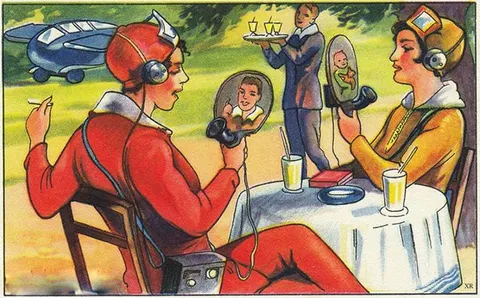
Is There Still Such a Thing as a Foreign Language?
Is there any point in learning foreign languages? Machine translation has developed astonishingly fast, and today it captures much of what needs to appear in another language… Have we reached the limit, and what comes next? Kaloyan Kirilov, a translator and interpreter with nearly two decades of experience, on the art of translation in the age of advanced artificial intelligence—and on whether we can teach an algorithm to curse convincingly enough to sound like a native speaker.
 02
“It’s Not Loanwords That Erode the Foundations of a Language”
Kak se pishe? (How Do You Spell It?) is a website that has become hugely important to life online, where its creator, Pavlina Varbanova, gives volunteer advice on spelling, grammar and punctuation in all their nuances. Our first conversation is still the most-read story on Digital Stories, so on the eve of May 24, the day Bulgaria celebrates its alphabet and culture, we meet again to continue it. We talk about the words that shape us and how we treat them, about the holiday and its sometimes false pomp, about words turned into weapons and the technologies that give them enormous power to destroy.
 03
“AI Has Already Changed the Translator’s Job”
Did you know that automated translation systems are at work all around us? That a huge share of administrative and commercial texts are translated into every language by artificial intelligence, and the job of humans is to check and correct them? They are no longer even called “translators” but “post-editors.” Rada Gankova returns to talk about her main work, translation, and how artificial intelligence is changing it.
 04
An Experiment: Has AI Learned to Translate Yet?
Is the technology finally here for high-quality translation, including to and from less widely spoken languages like Bulgarian? DeepL boasts of being “the world’s most accurate translator,” and plenty of people already use it every day, but how will it handle classic passages by Tolstoy, Murakami, Remarque or Gospodinov? Will we end up lost in translation, or is translation one more field where we can now rely on artificial intelligence, so that the money spent on the kids’ private language lessons turns out to be thrown to the wind?
 05
Literatron: ChatGPT in… 1964?!
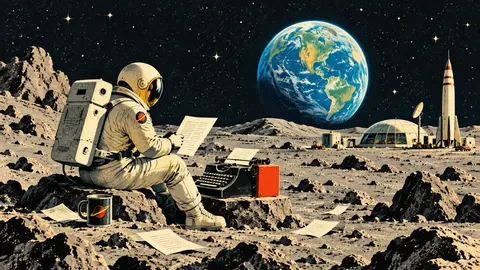
Have you heard of the literatron? It is… a machine that produces text on a user's instructions. It analyzes texts, writes bestsellers, composes campaign speeches, assembles comics and threatens to shrink the language of the media to 500 permitted words. Nothing new, right? We all have AI now, and these plots are everyday life; only that word “literatron” sounds a little retro. Why it does becomes clear when you look at the date on the cover of a slim little book that it is no exaggeration to call prophetic. The novel Le Littératron by the Frenchman Robert Escarpit came out in 1964 in the series Le Meilleur des mondes. But does the invention really resemble large language models? To put it mildly.
 06
Experiment: Can AI Do Our Writing for Us?
There is no doubt that we already read algorithm-generated texts every day. How does it work in practice? Are there AI-based programs ready to take the bread from the mouths of people who work with words? Reporters, editors, proofreaders, copywriters, digital marketers, writers, translators… which of them could be the first to be “replaced”? I meet several of the most popular apps for generating and processing text. Here is what they have to show.
 07
Five Jobs on Their Way Out and Five the Future Is Bringing In
Technology is drastically changing the needs of society, needs that must be met by the daily work of its individuals. Today whole professions vanish and new ones appear faster and more quietly than ever, and although forecasting in so dynamic a field is nearly impossible, we will try to sum things up: which five professions will soon disappear, which five will be most in demand in the near future, and what five professions we can only imagine might one day exist?
 08
Five Technologies We Expect Big Things From in 2022
Here it comes, just days away! We expect so much from 2022! Not only for it to finally rid us of the pandemic, but also to bring back normal. And we also expect some purely technological solutions from it, each of which certainly has the power to change the life of every single one of us. Still: which are the technological fields where we hope the coming 2022 will be especially hot?
 09
Robot Pavlovich Chekhov: Artificial Intelligence as a Writer
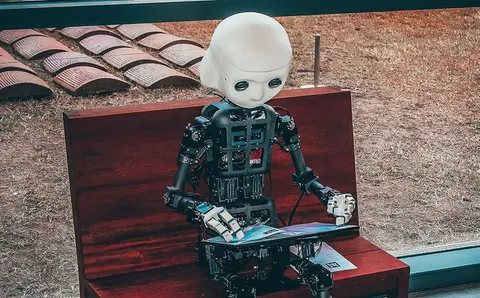
“There is nothing to writing. All you do is sit down at a typewriter and bleed,” said Hemingway. Can we teach artificial intelligence to create gripping literature, and how will the cultural world change if we do? Here are the most exciting projects and the arguments of the two extremes: that the robot writer will become reality, or that algorithms will never reach the human emotion of a text.
 10
The EdAItor Test: Can Artificial Intelligence Edit a Text?
While we debate whether artificial intelligence will ever write indistinguishably from a human (and it already can!), everything quietly changed. Whether we realize it or not, we now read algorithm-generated texts every day. The latest undeniable proof surfaced on social media a month ago: some of the most respected Bulgarian media outlets uncritically published texts riddled with the telltale sentences that unmistakably show they were written by ChatGPT or its kin, and that were not even read by their “author” before going online. So can't we invite AI to save us… as an editor? Not long ago we tested how some of the most advanced AI models perform as proofreaders, and now it is time to raise the bar. In our next major experiment, we put AI's skills as an editor to the test.
 11
“We Don’t Appreciate That We Live in the Best Moment in History”
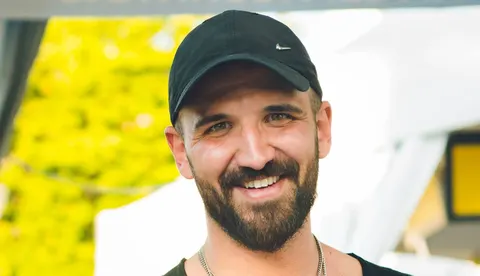
“People don’t appreciate that we live in the best moment in human history. We have advanced medicine, transport, communications… everything, everything you can think of. To have the chance to travel the whole world without restrictions and not take it is a crime against evolution. Because it won’t last forever. Covid, wars, regimes, diseases… Right now we are in a perfect situation, where the biggest problem is that Windows computers freeze for 8 hours and your flight gets pushed to the next day.” We’ll talk about the joy of writing and the need for hardship in life. We’ll travel around the world, through literature, through the big issues of the day. With a man who truly loves to travel like nothing else—he has lived on 4 continents and visited more than 40 countries. Abo. He chose a name that sounds like an AI’s. He trained in criminology, teaching and psychology, and today he is a writer—the author of two books, an editor, a translator and a journalist. But how come, and why, is he called Abo? And why does a subject of King Charles III, after so much travel, choose to come back to Bulgaria, which he considers a balanced, happy, cozy place?
 12
How Bulgaria Became No. 1 in the World of Linguistics Olympiads
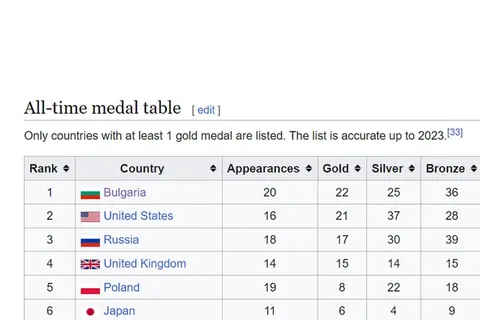
Bulgaria leads the world with the most gold medals from the International Linguistics Olympiad, and after 20 years of these competitions our team is first, ahead of the US, Russia, China and the UK, as Alexander Velinov, the teacher who has stayed close to the team for two decades while teaching and working in the software industry, announced online. How did we get here, what sets good competitors apart, why do wild parties turn out to be a key factor, why don't today's winners listen to music, and what is the unexpected explanation behind the notorious spelling rule of the full definite article?
 13
Hating, Outsourcing, Branding… Must We Always Parrot English?
“We need to talk and think about our language, about what it will look like and the state in which we will leave it to our children!” How is our language changing, and are we growing careless with it? Why do we now accept foreign words uncritically instead of trying to explain them? Are all languages doomed to be gradually influenced and “swallowed” by English? Rada Gankova works as a conference interpreter in Brussels. She has a particularly interesting view of the word and of our attitude toward it. In the capital of the EU she teaches Bulgarian to people who translate from our language into other European languages. For her own satisfaction, she also translates literature. One article on her blog brought together the pepper roaster and the air fryer. What could they possibly have in common? The subject is very important: how our own attitude toward language is changing. We used to have imagination and, when needed, we “built” words, while today we take them ready-made, and so we leave them without logic or context. And what hope, then, for the world of AI, IT and high tech…
 14
2022, Seen from Sixty Years Ago: What Did the Science Fiction Writers Get Right?
In the 1960s Isaac Asimov wrote a remarkable essay containing some astonishingly perceptive predictions. Around the same time, the first issue of the magazine Kosmos ran a similar piece collecting the ideas of Soviet science fiction writers on the subject. What did the writers get right, and where did their expectations fall flat?