What kind of world will today's children live in?
What is worth learning today, and what would be a waste of time, effort and money?
When and how should we introduce them to technology so that both sides get to know each other without anyone getting hurt?
And when should we “introduce” them to artificial intelligence?
I will look for the answers to these and other important questions about children and technology. A long series of children's Digital Stories begins.
Here is why I believe it is vital to dig deeper into these especially important topics:
So far in the Digital Children series:
-
Survey: children and parents in the age of technology. Your opinion on the subject matters!
-
What should tomorrow's education look like? How do we choose the best teacher? Evgenia Peeva
-
“I want to tell today's mothers to take it easier.” Krasimira Hadzhiivanova of Mayko Mila!

Child's Play
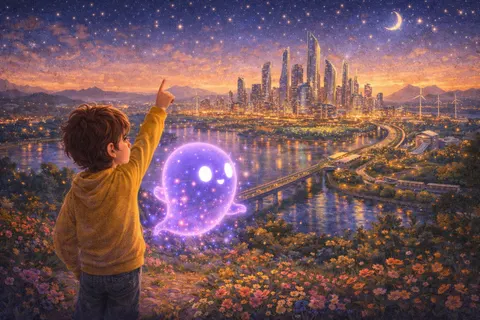
They give us meaning, they give us pause… what kind of world will they live in? How do we prepare them for the future in a way that makes sense? Children in the age of technology. They are the first to find their bearings, yet they are also the ones to whom we must give the very best we can, because that is what the little flame of meaning demands.
This site exists because I want to do everything in my power so that my children can live in a more meaningful world. And who, if not us, holds the future in their hands?
The series begins with a survey aimed at parents of children under 11 and the people close to them. I will be grateful from the bottom of my heart if you go here and spend a few minutes telling me honestly what you think about each of these topics.
How many hours does your child spend in front of a screen? When does that become a problem? Do you think today's education system is adequate? Will artificial intelligence turn into a great opportunity or a problem for today's children? The floor is yours!

My Childhood, Beautiful and Magical
While I wait for your answers, over the coming weeks I will hand the floor to the experts one by one. A series of interviews lies ahead, with people I consider authorities, and their answers show that they deserve it.
Only a few months ago, 750 people took part in the Digital Stories survey on how Bulgarians feel about artificial intelligence. The largest journalistic study on the subject (correct me if I am wrong) showed clearly that it divides us. And if there were two questions on which a consensus undeniably emerged, they were whether we discuss AI and its impact on society enough, and whether we are still far from the limits of what this kind of technology can do.
The fact is that remarkable news comes out in this field every week. And that we do not discuss it in enough depth—that is why this site exists, and I hope there will soon be more like it.
But amid all the commotion of technologies that challenge us in different ways and do ever better at activities that until recently were invariably human… What will the future look like for today's children? That is the next topic we will peek into in the series. With futurologist Assoc. Prof. Mariana Todorova, we will look toward a future in which inevitable, extremely complex social changes, important for every one of us, are looming.
Childishness
Yes, every attempt to peer into the future seems doomed to collide with the unexpected variables in the equation. And yet the only chance for it to look closer to the optimistic sketches and further from the dystopias lies in realizing that we cannot go on the same way in so many areas. That it is time to rethink ourselves as a civilization.
Which professions are doomed to disappear, and will the ones that emerge manage to make up for their absence? What is worth learning today, when technology remembers for us and is already able to translate, to help and to create better than most people? Is there any point in private tutoring today? In learning a foreign language? Or might the ability to learn, to look for connections, to go deep turn out to be more important than ever?
Education is meant to be a conservative institution that reacts to change more slowly. And yet today it in no way meets the demands of the modern person's success or happiness. We will talk about this with Evgenia Peeva, founder of Teach For Bulgaria, an education specialist with vast experience in a colorful range of roles on different sides of the textbook.
Can we change the system? And until that happens… how do we choose the best school, the right teacher?

We Are All Children of Mother Earth
It is evident that parenting in technological times is very different from before. So far, this is one of the answers on which the people taking the survey are almost unanimous. And if we look more closely, we can find two phenomena that complement each other. On the one hand, topics related to parenting, to motherhood, to seeking help and advice on the relationship between children and technology are flourishing. On the other, as one of my special guests, Krasimira Hadzhiivanova, will put it, today's parent is lonelier than ever, drowning in a sea of information in which it is impossible to swim.
In the series of children's Digital Stories, we will look into the history of phenomena such as BG-Mama, Bulgaria's biggest online parenting forum, Mayko Mila! (roughly “Oh, Mother!”) and Mama Ninja, to trace the path the topic has taken online.
The internet era gave birth to another phenomenon as well: parenting as a source of smiles. A typical example is the artist Neda Malcheva, whose cartoons, drawn straight from real life, certainly help us find fellow feeling in our everyday woes. She is another of the series' special guests.
The Child Within
And if the “moms” are the engine of the internet era in Bulgaria… where are we, the fathers? How has our role changed? Have we gotten lost among the different models of fatherhood? How are our responsibilities different today, in technological times, when circumstances have changed so much and so unexpectedly?
I will reflect on this with communications specialist Mihail Stefanov, in search of yet another important nuance of parenting in digital times.
You surely know the feeling: you know you shouldn't shout, you know how you should treat your child… and you do exactly the opposite. As one of my guests in the series will say, you can have seven theories about raising children while you have zero children, but when you have seven children, you will certainly be left with zero theories.
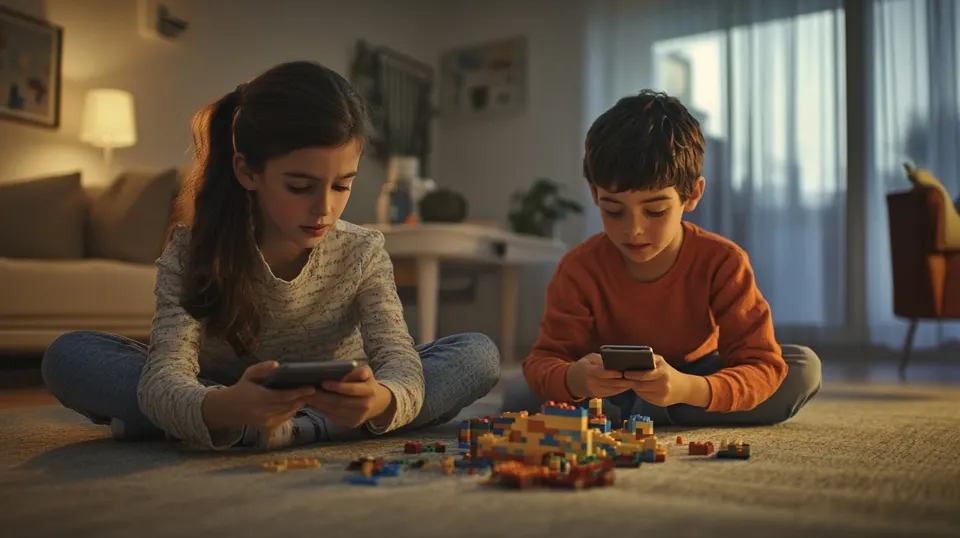
Children's encounter with screens is a touchy subject. With psychologist and children's author Slavi Stoev, we will talk about how we have done irreparable damage to two generations already by introducing them to technology, and above all to screens, too early, too drastically and too thoughtlessly. Then came TikTok, and we keep underestimating the enormous problems we create for ourselves.

The Phone as Babysitter
No, it is not normal to hand a baby a mobile phone or turn on the TV for it. Of course, there is no guarantee that this will cause problems, but the risk is very high. We will look deep into this topic and into the conclusions psychology draws today.
Life online is tempting, but… it is increasingly important to seek out the real deliberately. The human, the everyday, the natural. That is what I will talk about with Alexandrina Georgieva. For many years she was a programmer, then she stopped working to give birth to and raise her two children… Then she became convinced that something was wrong. Today she heads a foundation that helps children and parents find meaning offline.
How and why does this matter?
Where Are My Childhood Mice?
And what will change with the arrival of artificial intelligence? Can we be prepared? And can we prepare our children for the news in a field that shows impressive progress every week?
This answer is so hard that I will look for it in practice. I will introduce my own children to the advanced models to see whether they will find a common language more easily. What will it occur to them to use them for?
Quite a few interesting topics have piled up, and important Digital Stories await you. To close, there remains one focus that I believe will never lose its importance. Val Stoeva is the guest with whom we will talk about how to kindle a love of books in children.
Why is reading important? What is reading? How do we choose a book in the ocean of children's titles?
I am sure you have an opinion on this, as well as on the other questions raised. Over the coming weeks, important, practical and in-depth answers to each of them await you, from experts I would trust myself.
But your opinion as parents, teachers or people of the digital age who care about the future remains especially important. I will be grateful for every response, for every share of the survey, which you will find here.
If you have ideas about other important aspects, they are always welcome here too.
So far in the Digital Children series: