How can we be sure we are giving our children an adequate education, one that will still prove useful tomorrow?
Let's say it plainly: the education system is in no position to turn out people prepared for today's challenges of life. Not to mention the near future, with all the social changes that seem inevitable.
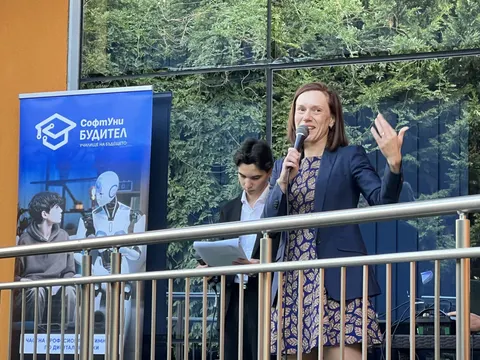
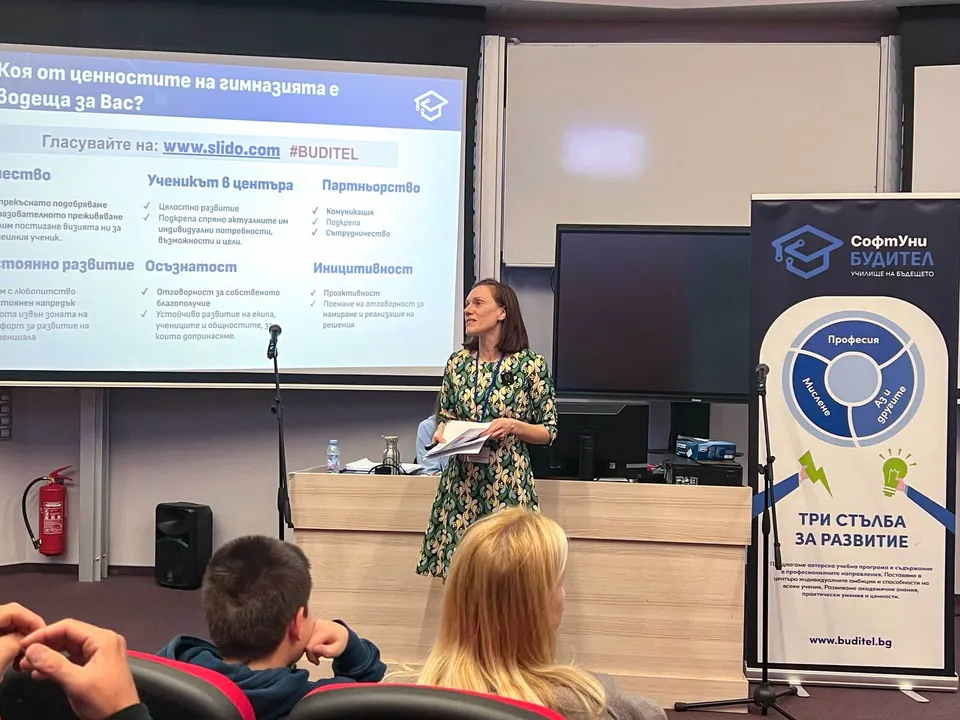
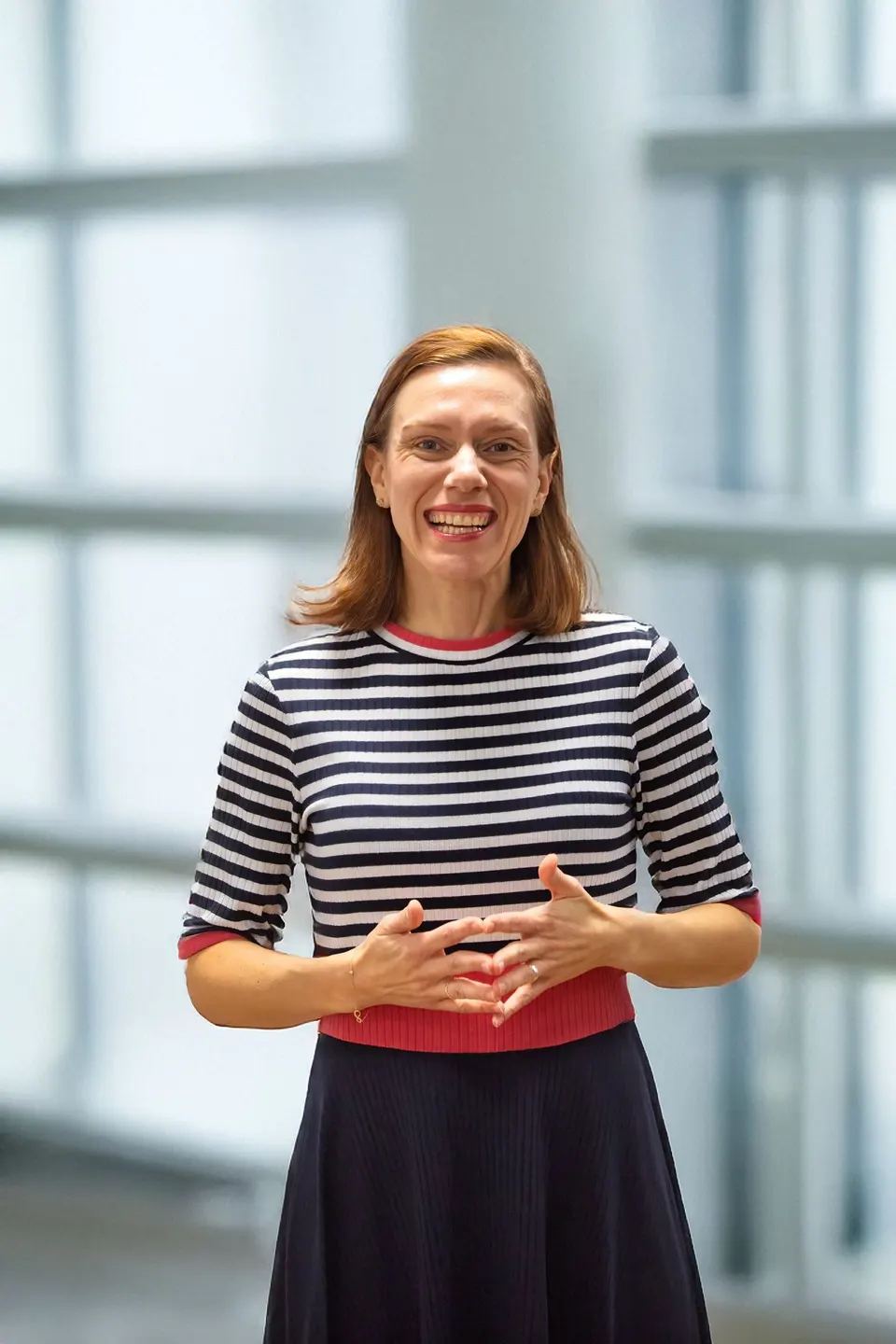
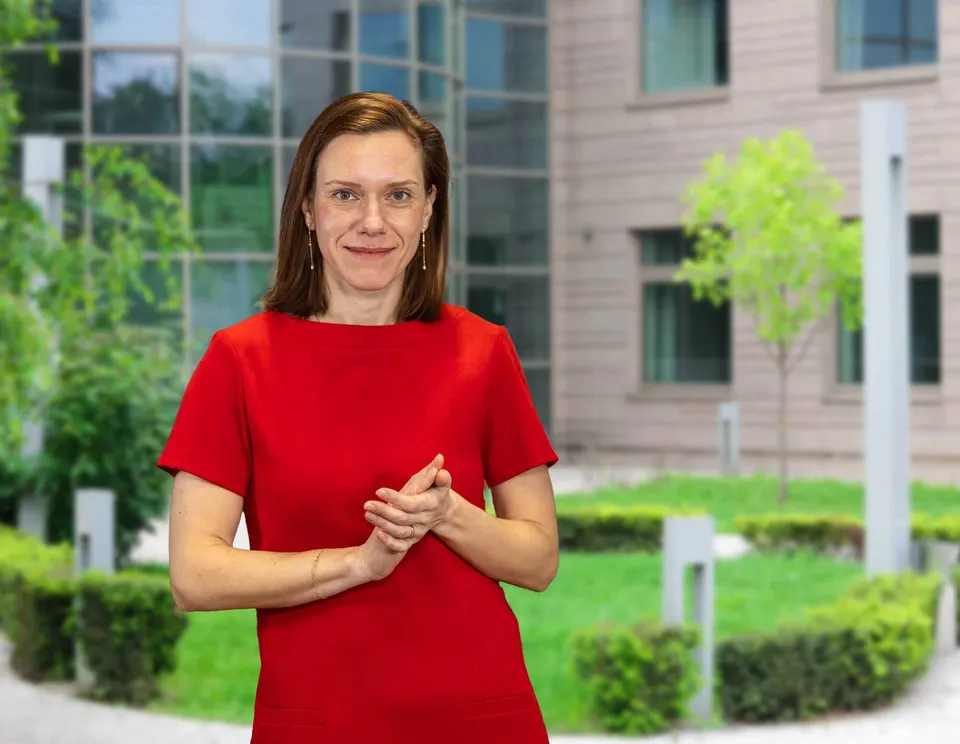
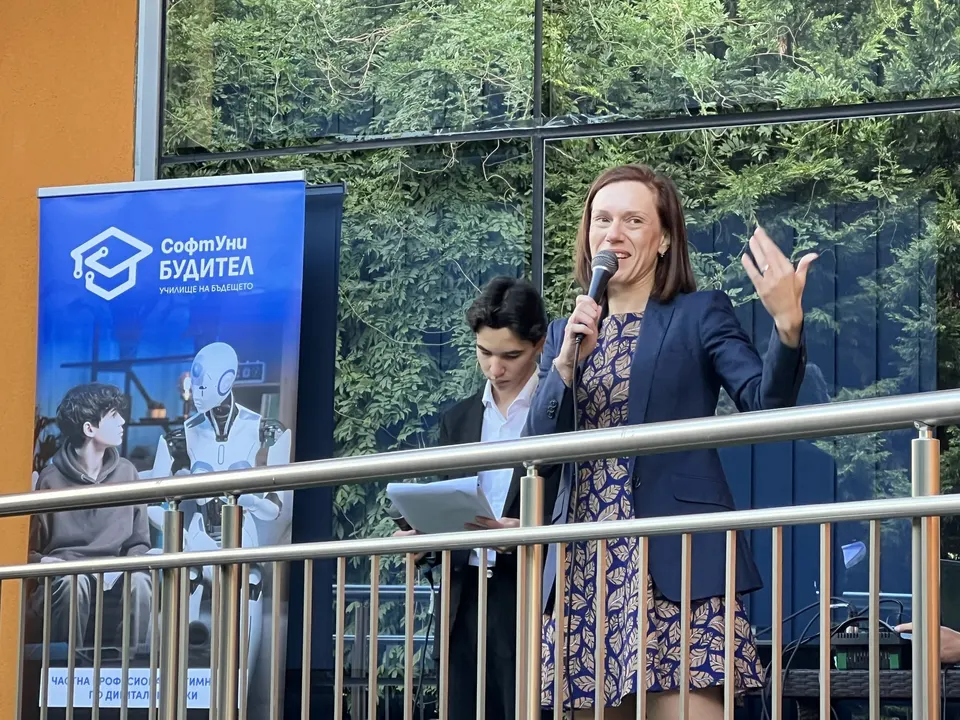
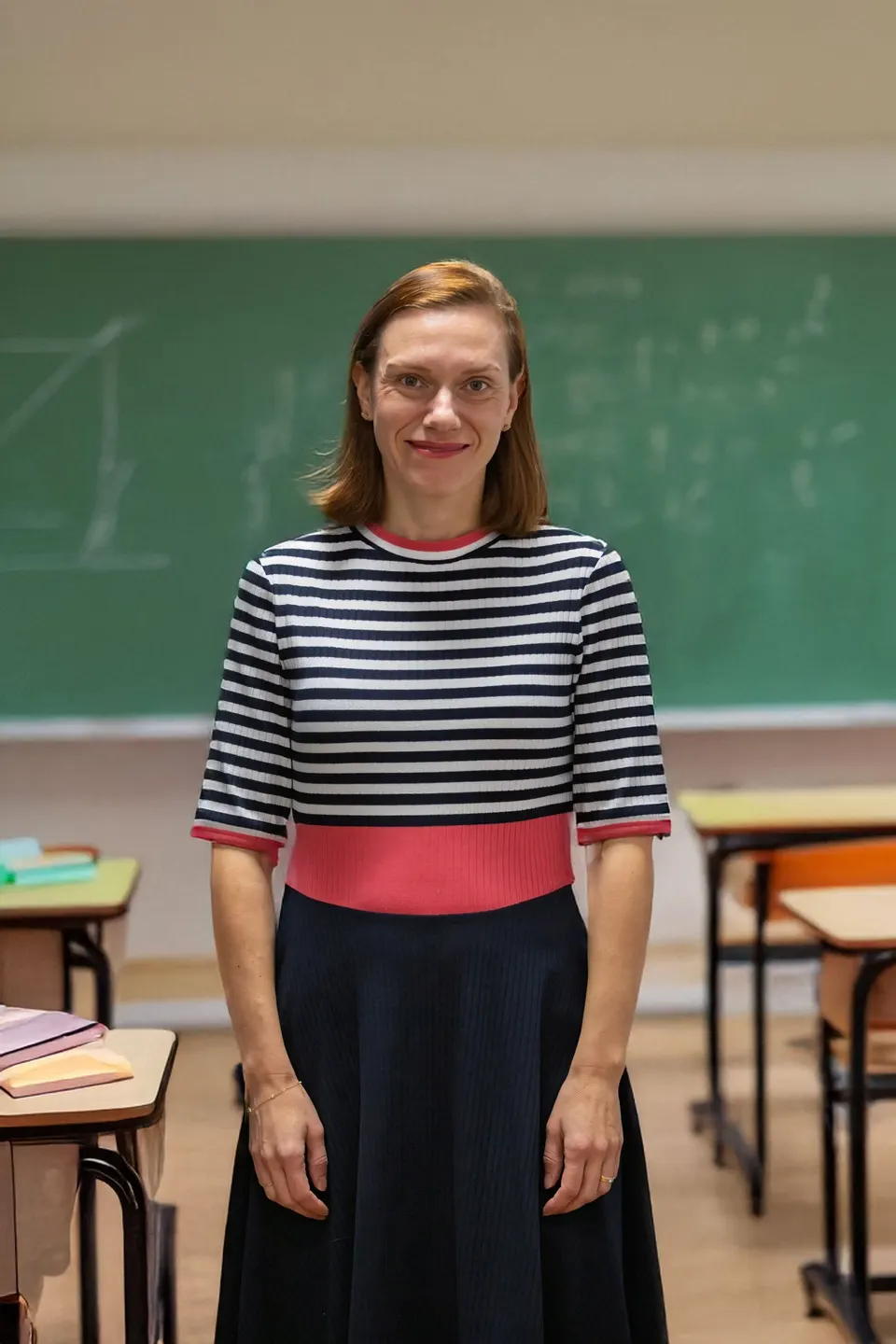
Evgenia Peeva offers countless reasons to stop and think, speaking from her remarkable experience. She is the founder of what is, in my view, the biggest change in Bulgarian education in recent decades—Teach For Bulgaria. (Here is one of many examples of why.) Today she heads the SoftUni Buditel high school—named after the buditeli, the enlighteners of the Bulgarian National Revival—where she manages not only to ask the questions that trouble all of us, but also to find the answers.
Which knowledge and skills matter today? Why is it time to stop staring at the results of the matura, Bulgaria's school-leaving exam, and the national external assessments? What should an adequate education system look like, and can we achieve it? How do we choose a school from which our child will emerge ready for life in this hyper-dynamic technological world?
The Digital Children series continues. I am looking for the important points of view and useful advice that can help us as parents and adults. Your opinion matters too! Take part in the survey, and let's paint the picture of parenting in digital times together.
– Let's start straight with the big question. What should today's children learn so that we can be sure it will make sense in the future?
– That's my big subject. For a long time I've had my own inner understanding, different from the established one, of what a quality education means. All these years I've tried to work toward that vision. And right now I can see how far we actually are from understanding this as a society. Including among educated, thoughtful parents who worry whether their child will get into the right kindergarten, so that later they can go to the right school, the right high school, and have a chance in life. I don't know whether it's for lack of access to information and to recognized experts, or simply because the conversation in our society has frozen in a past from decades ago.
Clearly, the stagnation in the education system is very serious and ruinous.
Despite everything being proclaimed, and all the STEM centers being built, it can't happen until you change the whole philosophy and the way you train teachers, the way you talk to parents about what is valuable, the way you assess students.
Even if you change the curriculum, if you don't change the exam, the criteria by which you assess children, you won't get a better result.
In my current role I have to show what makes the school I'm responsible for valuable. We've had many discussions about how to measure success, how to measure ourselves against the other schools that are the benchmark for most parents.
– We're all used to it—the external assessments, the matura…
– Exactly! For every school, the only way to prove its worth is through the results of external assessments and school-leaving exams. But in and of themselves they
only measure a child's ability to memorize certain patterns of thinking, certain words or answers, and reproduce them within a set time.
In “expert language,” this tests whether the brain's executive function works well. And that develops from age 0 to 7, not afterward! The foundations of an enormous number of skills depend on that period—that's when the brain develops at its most headlong pace, both in size and in building the fundamental neural pathways that govern movement, thought, emotion and interaction with the world around us.
So we told ourselves—given that
for us this particular function is not the most essential one in determining a person's success today. All the more so in the age of artificial intelligence.
Because AI has a perfect executive function.
– I did an experiment that shows exactly that. I competed with ChatGPT: we both sat last year's matura, a real examiner graded us, and we both got excellent marks. In other words, at this task competing really becomes impossible.
– Exactly. Today there's not much point in remembering everything—you click and find the answer much faster. What matters is being able to judge whether it's the right answer. The deeper the question, the more context it requires, the harder it is for the chatbot to answer—and for a person who doesn't know how to think. But
thinking is very different from repeating memorized answers.
Here's another dilemma at our school. We were talking with the colleagues responsible for teachers' professional development, and the mentor of our math teachers told me: “Math is the perfect subject for developing thinking, cognitive skills. But when I talk to colleagues—in order to prepare students for the external assessment in 10th grade, they have no time to teach them to think. They have to drill them on those memorized patterns, and those are two different goals.”
– My driving instructor used to say he wasn't teaching me to drive—I'd do that on my own later—he was teaching me to pass the test.
– Exactly. The question is what we want to teach them—to drive,
to maneuver through life, to be its engines and its owners, to be independent, self-reliant individuals—or just to pass their tests.
In the past this really was very important: tests decided not only whether you got into university, but whether you got a job. But for at least 10 years now, top employers around the world haven't looked at your university grades or which exam you passed—they conduct interviews. They assess your ability to communicate with other people, your values, your willingness to contribute, not just to receive. They assess how you think, how you analyze.
Especially in the age of AI, if you know how to handle it well—to think and evaluate the results it gives you—the so-called soft skills become much more important. How you communicate with people, how empathetic you are, your emotional intelligence, whether you sense yourself well enough, whether you can communicate yourself, your goals and your feelings well, whether you can understand the other side and find common ground amid differences and goals.
In a study from late last year on workforce trends, the McKinsey Global Institute's main conclusion was that
for top positions the weight is increasingly shifting to soft skills, beyond the technical and cognitive ones.
For leaders this will matter more and more.
– Not even just for senior positions. I see it in IT at every level. But what can schools do in this direction? How do we develop all these skills when they're not in the curriculum?
– We ask ourselves that every day, because we have to comply with the curriculum and the requirements of the Ministry of Education and Science. At the same time, we'd like to build engines of development for the global digital age—people who are thoughtful, proactive, adaptable, independent, empathetic, responsible toward themselves and others.
We set out to build a definition of our own. Which skills do we want to develop? They aren't ours, they're universal, but we're trying to find the right words to describe them as a coherent whole, so that we can reach parents. Everyone says—yes, it's important to have critical thinking; to be able to analyze a problem in a given context from different points of view; to look for possible solutions, not just have ready answers; to know there may be several possible solutions; to have social and emotional intelligence.
But most people, because they never went through a system that develops these skills, can't imagine how it could happen, let alone how we would measure it. That's perhaps the most complicated topic. In Bulgaria we need a lot of investment and support at the highest level for schools to work in this direction.
Cognitive skills, the ability to prioritize, to manage your time, the discipline to complete your tasks. Nowadays, with instant access to information and distraction from screens of every kind, that's extremely hard. Even people at top universities tell me they struggle to concentrate and look for outside solutions. Skills like entrepreneurship or initiative—I don't wait for someone to find solutions for me, I look for them myself, I propose ideas.
Combined applied skills—being able to use theoretical knowledge in a specific situation. Civic literacy—how I relate to climate change, to topics connected with cultural diversity, to volunteering.
Teamwork! A typical, very key example, whereas in most schools the model is usually “teacher to student.” That's what our list of goals looks like.
– But how can it actually happen, when at the same time you have to teach the material for the assessments and the matura?
– That's exactly what we're looking for a solution to. I'm counting a lot on additional technological solutions. For example, right now we're testing an idea—
whether a trained chatbot can help students prepare for exactly those exams.
And their time in class can then focus on more developmental activities—interaction with the teacher and with each other, more practical tasks and project-based learning.
The other thing, while we wait for the national criteria to change, is to meet parents who feel connected to our vision and definition and say: “Yes, the external assessments and the matura aren't that essential. Let's work in the direction we've agreed on together and not give those exams so much weight.”
Unfortunately, in Bulgaria we often put an equals sign between ambitious students and those who do well on external assessments. And every parent wants their child to go to a so-called elite high school after seventh grade, because they believe the children there are hand-picked, the environment is good, they're ambitious and pull each other up. To get there, they prepare with grueling extra private lessons. Those schools certainly create the environment, and the students do pull each other along, but… toward what, exactly?
– Against that backdrop, the criteria themselves are questionable. When I sat the matura, I was left with the impression that it's extremely hard not to get at least a 3—the lowest passing grade on our scale of 2 to 6. You'd practically have to be unable to read a single page. And yet there are entire classes with nothing but failing 2s.
– The criteria keep getting lowered and aren't comparable across the years. That's another problem—they aren't designed so that each year you can say whether a 6 equals last year's 6. So the matura and external assessments
are currently just a tool for sorting each year's cohort of students into different schools.
That's it. They measure neither how successful a person's career will be, nor the skills for it, nor the success of the system by comparing results over the years. Just a snapshot that tells students: “You can go to this school based on how much you memorized and managed to reproduce during a few hours of exam.”
– Still, more concretely, how could these skills be developed at school?
– There are different ways for each, but they're quite similar. Some techniques are almost universal, such as project-based learning. When you engage students with a broader or interesting question, it develops all these qualities.
This year we created a separate subject—“training company.” In it, 10th- and 11th-graders from our different majors—programming, graphic design, digital business and entrepreneurship—work together. It's happening for the first time; we bring them together precisely with the idea that you need to be able to work with different specialists, to hear different points of view. Each has a different role, but they work together. We left it very open. “Come up with a problem you want to solve and find a suitable, feasible solution with business potential. We'll support you throughout the school year to structure and implement it.” I was very impressed when the students presented their ideas!
Social and emotional skills are part of teamwork. And, of course, digital skills, without which we simply can't manage today. Look,
when it comes to AI, students are usually far ahead of their teachers.
Some teachers impress us with their innovative approach, weaving these technologies into everything they do. Students use them in a certain way, check, and decide for themselves whether the AI is giving them the right answer. Other teachers are quite anxious and would rather keep it at arm's length.
– But they can't, because you can no longer be sure when a student actually wrote a project. Not that you could since the internet went mainstream, but now it's completely unprovable.
– Yes, our current conclusion is that working with AI should be introduced gradually in the lower grades—for us, from 8th grade—and much more actively from 10th grade up, precisely in project-based learning and research projects. There it can be a very good partner in research and in finding solutions, where once again the student is the protagonist and makes the final decisions.
The idea of the student at the center is very important. To move from the model where the teacher stands in front, lectures, is the master of knowledge and has all the right answers, to the understanding that the teacher is in constant conversation, joint searching and exploration with the student. And that
the teacher's role is not to give the answers, but to ask the questions
in a way students can answer, gently lifting them to the next level and nudging them to find the more complex answer. Starting from the general and arriving at finer detail. Stimulating investigative thinking.
If there's one thing that is key to moving us forward as people and driving our constant development, it's exactly this. To ask ourselves questions and know that we can find answers together with AI, but not have it—or anyone else—simply hand them to us. That search for the right answers is also at the heart of entrepreneurship.
– But, as you said, measuring that kind of skill is much harder. If it were up to you, what would the equivalent of the matura look like—one that tested how prepared a person is for life when leaving high school?
– I don't think there will be a single exam that you give everyone and then declare them prepared. Rather, at school the
teachers should be well enough prepared to say, hand on heart, through authentic assessments: “Yes, our students are ready to be independent, confident, enterprising, growing, inquiring individuals, based on their demonstrated overall behavior and achievements at school.”
This is about a process that isn't confined to the classroom and the textbook material, but is holistic. We call it the “comprehensive student portfolio,” in which we track the student's development: not only what grades they get in general and vocational subjects or on exams, not only which olympiads they take part in and what awards they've won, but also extracurricular initiatives, how sustained their participation is, whether they've taken on any volunteer initiatives, what projects they've done, how they present them.
The goal of this portfolio is that one day it will be presented to a future employer or university, and they'll decide whether this is the right candidate. Every organization, every university has profiles it looks for, whereas a single exam, I'll say it again, can only tell you whether a person has a good enough executive function, how disciplined they are, and that's it.
Yes, those things are important too, but they're only two out of many. It makes no sense to place them above, say, creativity, which is the key quality and can still set us apart from AI.
– Can it, though? That worries me too—that we'll stop seeking creativity now that we have something that seems more creative than us. For example, it's already happening in poetry. The existentially important urge to create seems to me ever harder to turn into a goal we develop in children. Just as with memory, for instance—not so long ago it was important to remember capitals, phone numbers, chemical valences; now you find them in seconds.
– I have no doubt AI can achieve good results. The point is that
without human creativity we will surely lose, because it draws on a much deeper source, one that philosophers and researchers have argued about for thousands of years. Intuitive, rooted in many places.
AI can synthesize, it can offer good combinations of existing things, but something entirely new, the kind of thing human creativity can give birth to… no. It has to be fed new things, otherwise it will keep repeating combinations of the old.
And if you don't stimulate that creativity, we're stuck in the pattern again. That's dangerous. Very dangerous.
– Just as it is with knowing facts. I see a risk that the emphasis on soft skills could lead us to stop valuing the learning of principles, basic ideas, rules. Knowing the fundamentals of geography, physics, history, even if you'll never work in those fields…
– It really is important. Last year we held a discussion on the future of design in the age of AI, with Antoni Hristov from ARC Academy. In his view, to be a successful, creative designer and stand out from AI in the future,
it will be very important to know the fundamentals of art and of human history, to make connections between different events and elements.
Because in the end, critical thinking too is fed by knowledge and context. The question is whether we need to memorize them, or grasp their essence? So that we can later bring them into our thinking as elements of our models of analysis.
Take history, for example—how is it taught in Bulgarian schools? Sadly, I never had the necessary interest, probably precisely because I'm not one of those people who memorize things at first go. For me, names, dates and facts were never what mattered, but the processes behind them, the causes, what I can learn from a given situation. I don't think we've ever studied history that way, and we've actually lost out because of it.
– The only chance is to have had a very inspired teacher. One such person, Boris Rusev, was my guest, and that's exactly what we talked about. But from that point of view, isn't it logical for education really to be a conservative system? In these dynamic times we can't make sense of, can't fully grasp, the effect of technology. For instance, that phones are harmful to small children—we may have sensed it intuitively, but only now has it been proven. Because of things like that, shouldn't the education system be more sluggish, working with tested and proven paradigms? Which, on the other hand, is completely impossible in today's digital world…
– That's reasonable when it lacks enough data. Our education system, however, has had it since at least 2006, when the PISA studies began being conducted in Bulgaria. We can't call them into question—it's perhaps the only internationally valid instrument across hundreds of countries, administered by the Organisation for Economic Co-operation and Development, that tests several of the key skills for success. Critical thinking, functional literacy; there are questions about student well-being, about a growth mindset, about integration at school, about levels of optimism or pessimism. A very valuable source of information.
In 2012, at Teach For Bulgaria, we organized the first education conference with Forbes and put PISA squarely in focus. And nothing—the minister's comment was that it didn't concern us, because our goals were different. It took so many years for it to become more visible that developing functional literacy really is very important. To this day we keep having these debates, and the curricula remain the same.
– Only our PISA results keep falling and falling.
– Supposedly the goals of education were changed to some extent in the opening articles of the Preschool and School Education Act. But the curricula are the same, and so are the external assessments. So I wouldn't call this system conservative. It's simply very outdated and changes far too slowly.
It demonstrably ignores the data and takes no measures.
– How can things change? Clearly, at the system level, for one reason or another, it isn't working. Take the other sector that often appears on this list—healthcare: nothing changes there either. Obviously some strong political will is needed, and it's always missing. Both systems remain inadequate, running on a kind of inertia that can't last much longer.
– There are two approaches. Top-down—a prime minister, ministers of finance, education or health come along, shake hands and say: “These are the systems we need to reform. We need the right people in these ministries who can achieve these goals.”
And the goals are so clear! To have literate children who succeed, who find their place in the labor market, who are healthy, independent, responsible individuals.
The approaches to achieving them are also clear. The world has already worked them out; there's no need to search from scratch. Every so often someone comes to me, including educated and thoughtful people, and says: “Let's figure out how to make it happen.”
But there's nothing to figure out! Volumes have been written on the subject since the beginning of the 21st century. The World Bank invests very serious resources in large-scale analyses that end with concrete recommendations and spell out processes.
As deputy minister, I witnessed three volumes written by the World Bank, funded with European Commission money, requested by the Ministry of Education for that purpose. For every stage of education! From early childhood development, through school, vocational education and universities. For each there was a detailed analysis with all the existing data, on the key components, with very concrete recommendations. One volume of recommendations was devoted solely to developing the teaching workforce.
What happened to those volumes, which we made a point of publishing in 2021? They stayed on someone's desk, gathering dust. The problem isn't a lack of solutions, it's precisely a lack of will. And of capacity within the institutions to implement those solutions.
As deputy minister, I was genuinely struck by the lack of capacity at many levels.
– So perhaps it has to come from outside somehow, as you've already done once. Teach For Bulgaria is a strong and rare example that any system can change.
– Bottom-up—that's the alternative. During the time I spent inside the institution itself, at the highest level, I realized that at this point, given the lack of political unity and stability, it really makes more sense for people who want to change something to work on the ground.
– As long as the system is what it is and we can't change it, what matters when choosing an institution—a kindergarten or a high school? My experience as a parent comes down mainly to making sure the teacher deserves trust, manages to build a connection and to light the spark… I think the person remains what matters, even more than whether the school is public or private, in a small town or a big city, specialized or general.
– I'd take it up a level. For me the most decisive thing is the leadership. The principal and the key people around them—I want to see that they share one language, one set of values, which I not only hear about but can see in action.
I may like a particular teacher, but if they're at odds with the school's leadership, they may soon leave. The school, though, stays with its leadership, unless that changes. And that's the second element—how stable it is. Whether it has a clear vision, whether it's consistent, whether it has certain principles it stands up for and they're visible in the environment, in the feedback from students.
Besides, every parent has a different vision of what's important for their child.
– And still, at the root of it all are the people—the teachers, the principals… Here's hoping there are more thoughtful, motivated people, despite the system.
– Exactly! First and foremost, the parent has to be very clear about what matters to them and what matters for the child.
Self-discipline, setting high goals… These are important things. But with my own child, I see she's very ambitious and a perfectionist, yet she finds it hard to relax and is very influenced by outside opinion. I want her to learn to relax a little. If I sent her to a traditional school, her typical tendencies would be reinforced and would go in the opposite direction—toward low self-esteem and constantly judging herself by external yardsticks of success. That's certainly not the path to a lasting, inner, emotional contentment with oneself.
Our system breeds exactly that—being subordinate to external measures of success. Yet the truly successful people, the ones who don't collapse emotionally in the face of difficulty, who keep going and find the strength within themselves to cope with unexpected problems, are those who have inner confidence.
There's no universal answer, but when you're clear about what you're looking for and sense it intuitively, you go, you observe, and you see whether the leadership stands up for it.
From there, when there's a shared vision and shared values, the teachers, even if they aren't on that path yet, will gradually get there.
The school can be a partner, as long as it's open to partnering with parents,
something that matters to me as a parent, and to the schools of the future.
Over the years, the notion persists that the school educates and the family brings up, and each blames the other for not doing its job well. But in these challenging times, with constant exposure to screens, constant contact with social networks, with influences that neither parents nor teachers can track on their own… It's important to accept that we're one team, that
there are three participants in this process—the parent, the student and the school team—otherwise we don't stand a chance.
However good the conditions may otherwise be, the schools with high added value are those where parent, school team and student are together. Where the parent knows their job isn't just to drive the student to the school gate and check that the homework is done. It's far more complex, and it requires very good interaction with the school staff.
So far in the Digital Children series:
Coming up:
- Why and how does humor save today's parents? – illustrator Neda Malcheva
- How did we damage two generations, and can we find the middle way? – psychologist and children's author Slavi Stoev
- How has technology changed motherhood? – Krasimira Hadzhiivanova, creator of Mayko Mila (Dear Mother)
- What does it mean to be a father today? – communications specialist Mihail Stefanov
- Children and books: why is this bond more important than ever? – Val Stoeva, creator of Detski Knigi (Children's Books)
- Meet… AI – an experiment in which I introduce my children to ChatGPT.