Surely you've heard of Alan MacMasters, the famous inventor of the toaster? While searching for the perfect alloy for light bulbs, he accidentally stumbled on a substance that browned bread to a perfect tan. Alas, after a heavy evening in the company of half a bottle of whisky, his rival Stephen Crompton stole the venture and passed it off as his own. Then he reaped all the glory. And, along the way, quite a lot of money…
The BBC aired a long report about him, The Washington Times described his incredible story, and the Daily Mirror put his name among the “50 greatest British inventors.” He is still often mentioned on World Toaster Day—February 27. Articles, anthologies and encyclopedias tell his story. A popular British cooking show even dedicated a challenge to him: contestants had to come up with a remarkable dish in honor of the toaster's inventor.
The small detail is that… there is no such person. The inventor MacMasters was “invented” by two students who decided to show how important it is today to check information, especially information about the past. How easily we hand out our trust online, and how much more critical we ought to be. The made-up Wikipedia page survived for almost a decade before the truth came out.
How easy is it today to fabricate history? The answer lies in a special list in which English-language Wikipedia itself chronicles its longest-surviving fake entries.
Grand mystifications and small jokes that took on a life of their own. They are here to remind us how easily we can be led astray online.
And how well do you know Bulgarian history? Can you tell some widely accepted claims from ones invented by artificial intelligence? Try it here until November 17. A curious challenge awaits you, and prizes too.
Once Upon a Time
This other history has been around for a long time. A history in which an entire state can appear, linking the pasts of two of the greatest civilizations, only for it to turn out in the end that a bored woman had become the Chinese Borges while writing for the Chinese edition of Wikipedia. Such stories exist all over the world, and to my mind they are a telling sign of how much more careful we need to be with the past. As a field that gives us meaning and strips us of it, that brings us together and divides us.
How do we check historical facts today? I'm sure that every day, whenever you hear something about Khan Kormisosh, an eighth-century ruler of the First Bulgarian Empire, you run to the nearest library, read sources from different decades of the 20th and 21st centuries to compare the information, gather your notes, then analyze them, summarize them…
Or you simply open your browser, and the first result that comes up is the Wikipedia page that has gathered everything important?
The common, democratic encyclopedia is undoubtedly one of the great treasures of our day. Its rules are liberal enough that anyone can add information and contribute to shared knowledge, yet strict enough that the information is expected to rest on external links, on impartial assessments… just how impartial assessments can be, I won't tell you. It's enough to open the page on the history of Macedonia in the language editions of a few neighboring, culturally close countries—Bulgaria, Serbia and Macedonia itself.
A Tangled History
Yes, history can hardly be unambiguous or impartial. And yet that is exactly why it becomes such convenient ground for deliberate manipulation. And again, that is exactly why it is ever more worthwhile to question every fact, every judgment that crosses our eyes. Especially in times when AI-generated content is becoming yet another very powerful threat on the wrong side of the battle for truth.
It is no accident that English-language Wikipedia maintains a detailed list of fake articles on historical subjects (garnished with an explanation of why we should never do anything of the sort). Let me stress it again: these are not simply debatable topics, matters of interpretation and “judge for yourself,” but a list of specific articles that survived for years, in which someone played a joke or built a deliberate mystification without it being caught by the thousands of readers and the experienced editors of the free encyclopedia.
The list runs to no fewer than… 71 articles that survived for more than 10 years! Not all of them are directly about history, but by a rough estimate at least three quarters are. The list of invented events and people that lasted between 5 and 10 years is so long that I couldn't count them, to say nothing of those that survived “only” a year or two. There are surely hundreds. It's important to note that the list doesn't include April Fools' pranks or honest factual mistakes. It covers only completely invented pages about people, places and events.
One more important clarification. According to Wikipedia's own data, the long survival of such fabrications is the exception. In the English edition, 89 percent of all proven hoax pages were caught within the first hour of publication, and just 1 percent survived longer than a year.
The Boy Who Cried Wolf
Let's once again see why this matters, with an example. An article about a made-up country survives for a year, and during that time (say) a few thousand people read it. Then all of them carry the story within them, retell it, are ready to argue about it… Then it ends up on the web, where large language models are trained on it. That's how important the benchmarks of credibility can turn out to be in the chaotic world of fluid online truth.
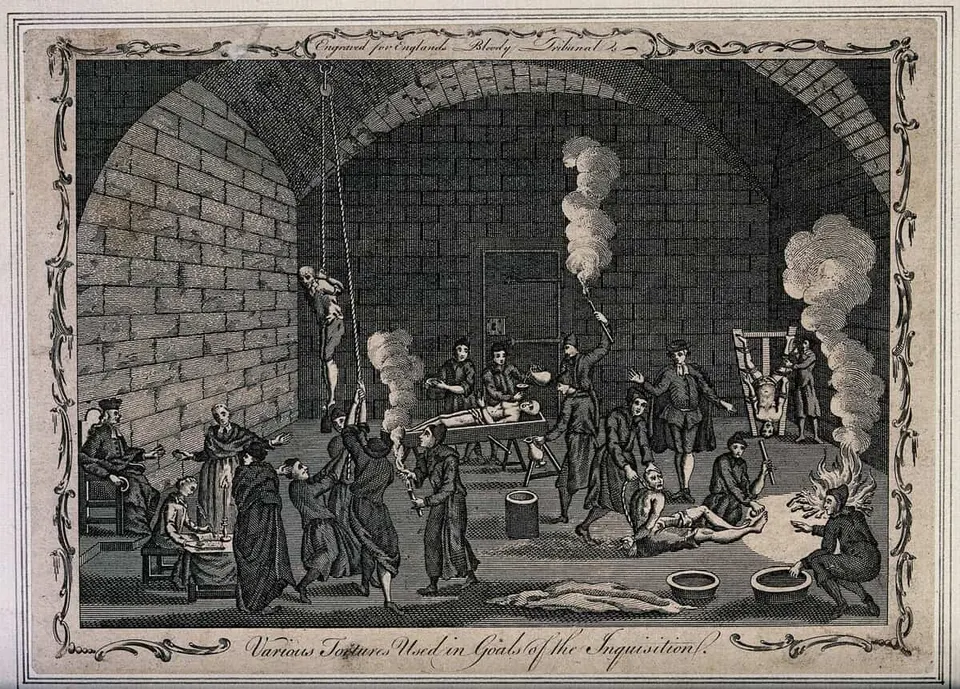
Or another example, not related to Wikipedia but squarely on topic. Regular readers of Digital Stories can't have forgotten the story of Chergar. The blogger wrote, as an opinion piece clearly labeled as fiction, “The Last Letter of Vasil Levski”—Levski being Bulgaria's national hero, the revolutionary hanged by the Ottomans in 1873. Only the text became hugely popular, was shared hundreds of thousands of times and liked en masse across social networks, until… it gradually began to circulate as a genuine document. Historians commented on it; it was quoted at official commemorations. Facebook groups with thousands of members even sprang up, proposing that we drop the letter rather than a ballot into the box the next time Bulgaria's seemingly monthly parliamentary elections come around…
Inventor of the Waterfall
But enough drama. Let me tell you in more detail the instructive story of the great inventor I began with. Born in 1865, Alan MacMasters died unrecognized, even though he paved the way for the modern manner in which we toast our slices of bread. Because his work was stolen.
The hoax began when the real Alan MacMasters, then an aeronautical engineering student, was warned by his professor during a lecture that “he should be careful not to use Wikipedia as a source of information, because you never know who might pose as the inventor of the toaster.”
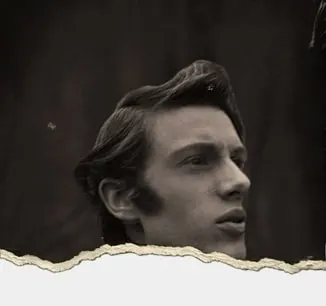
And Alan decided… to do exactly that. He photoshopped a picture of himself, deliberately aging it to look like a 19th-century portrait. He and a fellow student sat down and, as a joke, began writing the inventor's dense biography. A genius of electrical engineering, he helped create the lighting of the Glasgow subway. Then he became famous and made his way to London, where he created the lighting of the English capital as well.
A Historic Compromise
While there, however, he met the not-unknown Rookes Evelyn Bell Crompton, an inventor who founded five successful companies in his lifetime. Over a bottle of Scotch whisky, MacMasters told him his idea for saving money on light fixtures. He had found a cheaper metal for incandescent filaments. It turned out, though, that it couldn't be used for that purpose, because the filaments got too hot, but… they showed an unexpected effect! They toasted bread held near them to perfection!
Crompton (who, by the way, is a real inventor) stole the idea. MacMasters, meanwhile, managed before his death to leave one more remarkable legacy that we all use today—the electric kettle.
Once you know it's fake, the story sounds absurd. And yet it came close to celebrating its 10th anniversary as a genuine page, and in the meantime it was quoted by media around the world without anyone expressing a doubt.
What gave it away was not the absurd plot but… the photo. A 15-year-old Reddit user found it suspicious for the period it supposedly came from, and the thread gradually unraveled. Alan readily confessed, since he had created the story as a social experiment—to show how careful we need to be when checking history online. (You can see the archived version of the article here.)
Playing with Fire
You could find plots for a novel if you keep browsing the list of invented pages that Wikipedia itself provides. Take Donovan Slacks, for instance. The famous British revolutionary survived in the encyclopedia for 19 and a half years, all the way to February 2024! Only then did it emerge that he had been created not for humorous or experimental purposes like Alan, but for entirely commercial ones. He was supposed to promote a low-budget film telling his story… The film came and went, few even suspected it existed, but the page stayed put, ready to tell every visitor about the glorious Donovan.
Do you know where the Apostle Thomas died? In the town of Kalloor in India. There's no such town? Well, that didn't stop his page in the encyclopedia from surviving for 18 years.
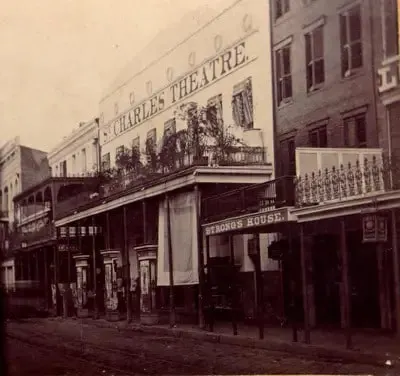
Jack Robichaux was a 19th-century serial rapist who terrorized all of New Orleans. Most of his victims were overweight women. He was Creole, although the police initially suspected he was Black. His talent as a jazz musician was praised throughout the city until his crimes became public knowledge. The whole story was propped up by racist classifications, a single cited source and not one external link. And yet the article survived a little over a decade.
And if all this makes you think oversight is lax, nothing of the sort, as shown not only by the statistics we started with but also by the story of the jazzman rapist. Because he was the “work” of Bill Maas and Van Robichaux, students from Washington who spent long years and many attempts trying to manipulate real articles. They turned it into a kind of hobby and… failed dozens of times. In most cases their tampering was caught within minutes of appearing in the encyclopedia.
Herostratus the Second
“We were very impressed by how quickly all the edits we made, even if they seemed harmless or genuine, were reverted,” Maas recalls. Then they were banned from editing several times… So luck smiled on them when they created a brand-new page. And that's how Robichaux made his surname famous… though not in the most flattering light.
In their view, the “success” lay mostly in the book cited as a source, which really exists and tells a great deal about the history of New Orleans, but has not been digitized, so someone would have had to go and check it by hand.
The two decided to keep the joke going and changed the information about Robichaux several times, but… editors reverted their corrections. Then both of them forgot about it, and the article just sat there until a local history buff happened to dig into the subject a decade later. And Maas and Robichaux got to enjoy their dubious fame.

Not Everything Edible Can Fly
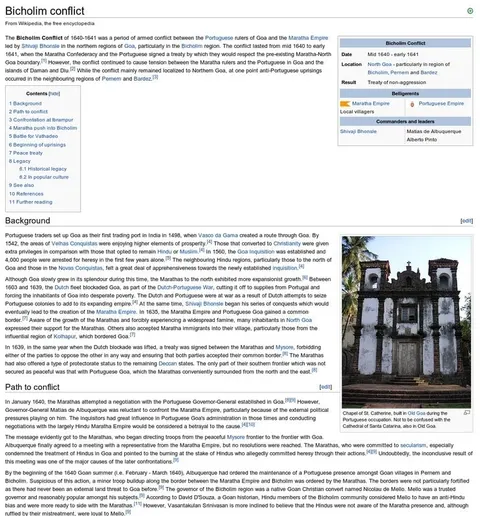
The “Bicholim conflict” was a collective hoax by several editors who agreed to approve each other's changes. In 4,500 words they described a 17th-century war between Portugal and India, so convincingly that it earned the status of “good article”—an honor granted to fewer than 1 percent of entries. A full 5 years passed before editors discovered that everything rested on citations from a single book that also didn't exist in digital form, while hundreds of links scattered across the internet pointed to the article itself.
Sometimes the lie doesn't even need to stay up for long. Shane Fitzgerald, a 22-year-old student from Dublin, decided to run a small experiment on who uses Wikipedia as their main source of information. In March 2009 the famous French composer Maurice Jarre died, and the young man seized the moment to add a made-up quote to his page. Less than an hour passed before editors removed it; he put it back several times, but that proved enough. The next day the quote appeared as genuine in media around the world, because the first thing journalists writing about the composer's death did was to gather information about him from the free encyclopedia.
“One could say my life itself has been one long soundtrack. Music was my life, music brought me to life, and music is how I will be remembered long after I leave this life. When I die there will be a final waltz playing in my head that only I can hear”—that is what Jarre (never) said.
The Highest Form of Trust
Gaius Flavius Antoninus, the supposed assassin of Julius Caesar, who was then “killed by a male prostitute hired by Mark Antony,” “existed” for 8 years. The inventor of a shower cubicle for pigeons; the fake Sheikh Yerbouti, a fierce Egyptian rival of the Americans (whose name hides an obvious English pun); the famous tap dancer Eduardo Corrochio, who lived well before the dance was invented…
The list is endless and entertaining, and we could go on for a long time. The fact is that Wikipedia's verification system is proven, successful and extraordinarily democratic. But mistakes and breaches are bound to happen.
And what about the age of AI? Of lightning-fast text generation, which coincides with the period in human history when we have no time to read slowly, carefully, to immerse ourselves? While language models have demonstrably been writing scientific papers, with all the errors that leads to…
The thing is, anyone can be fooled, and I say that from personal experience. (And clichés are another very big topic.) After I launched the experiment on whether people can tell historical facts selected by ChatGPT from ones it invented, it turned out I had missed inaccuracies in no fewer than 3 of the statements. Despite thorough checking, despite more than 10 of my acquaintances having tested them, two of them with degrees in history. But the errors were quickly fixed, and I'll say more about that soon, when it's time for the results.
No one is immune to getting history wrong, but the consequences can be unexpected.
It's still not too late to join the experiment. How well do you know Bulgarian history? Can you tell some widely accepted claims from ones invented by artificial intelligence? Try it here until November 17. A curious challenge awaits you, and prizes too.