You are scrolling through your feed and there is a nude photo… of you, just as your mother brought you into the world. You have never been photographed like that, and yet it all looks so real?!
This can now very much happen, which is why it matters that we are ready. And that we keep asking the next questions: how should we change the way we relate to what we see? So that it actually fits the reality technology has brought us to.
Caught Bare-Handed
Perhaps this sounds abstract or far away to you, but it is not. Almendralejo is a small town in Spain, about the size of Guernica. On Instagram, a mother from there drew wide attention with her story of how her daughter came across nude photos of herself… photos she had never suspected existed. “One day my daughter came out of school and told me that photos of her without a top were going around,” says María Blanco Rayo, mother of a 14-year-old girl. The girl is adamant that she never took those pictures, and then it turns out that similar ones have surfaced of her classmates too.
So far, 28 girls between 11 and 17 are involved. Their schoolmates simply used software similar to the one I am about to tell you about. One of the mothers says her daughter found out by chance that classmates were trading a picture of her; another says her child was threatened that the image would appear online.
The police and prosecutors step in… while the mothers worry above all that these fake pictures of their children will end up on pornographic websites.
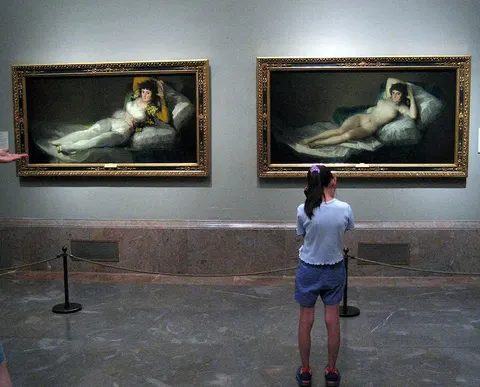
The Naked Maja
No, if that is what brought you here, I will not tell you where to go to “undress” the photo of the neighbor you have fancied for ages. But by now even Google can do that.
Generating and editing images turned out to be a field where artificial intelligence stepped in with incredible success. Not long ago DALL·E 3 arrived, the latest generation of algorithms built to amaze us. The neural network has been trained to create images from complex concepts and full descriptions, and it is on its way to tackling yet another series of challenges—it can add text, it makes sure hands have the right number of fingers… all challenges the previous generation could not handle.
Counting fingers? Yes, nobody could have guessed that a problem like that would crop up with the first astonishingly good generation of artificial intelligence that makes images from text descriptions. But just as imperceptibly as such unexpected problems appear, they get solved. And image generation and editing become astonishingly good.
Alter Nude
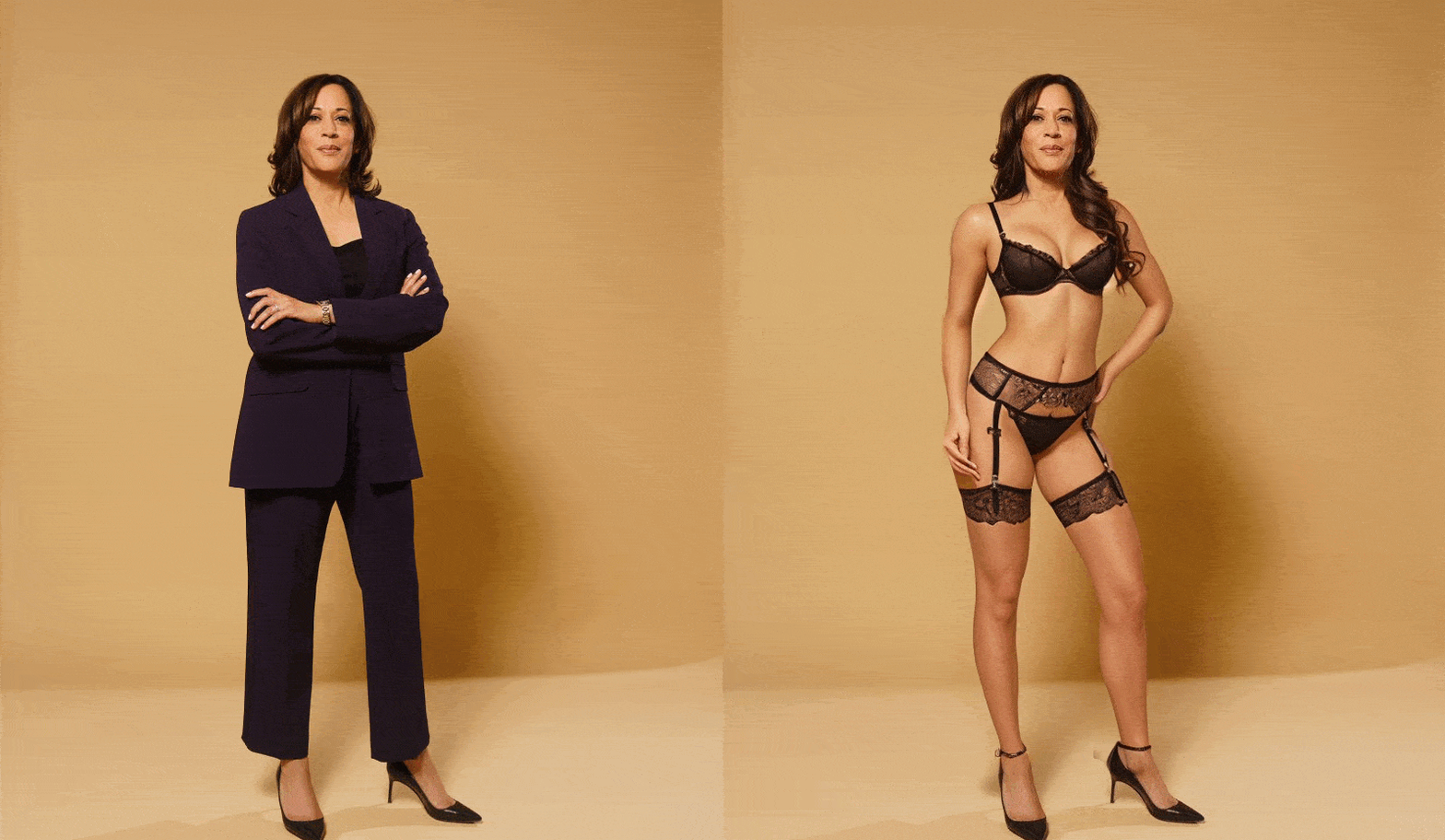
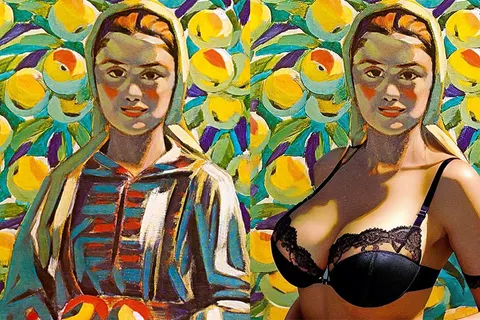
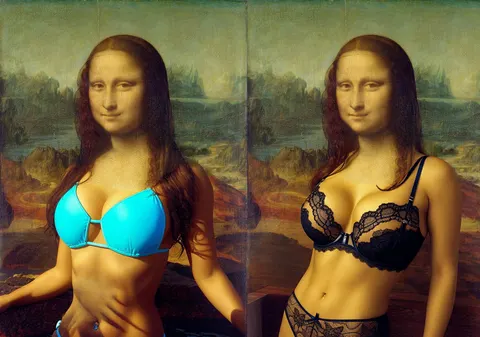
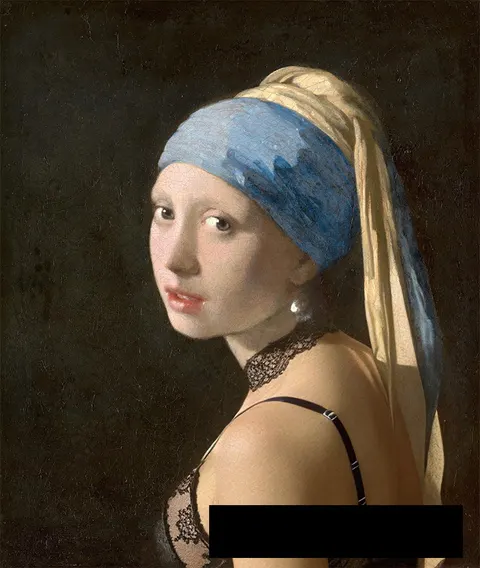
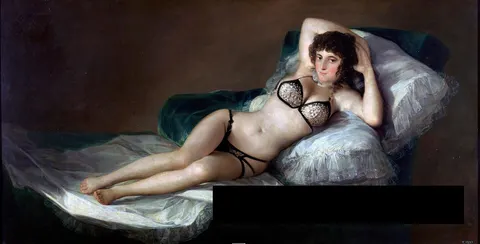
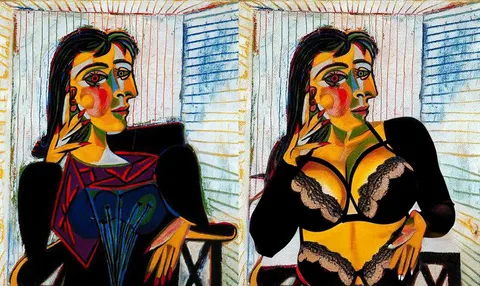
The algorithms have already figured out the number of fingers, and the number of breasts gives them no trouble at all. You can see in these images how easily well-known paintings have been altered so that the person in them suddenly turns out to be unusually lightly dressed. Frankly, they are far better when the goal is no clothing at all; their skills there are literally impressive. But I will not show you those.
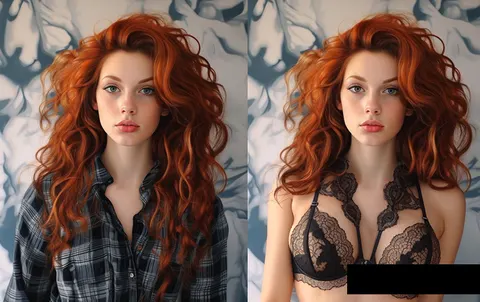
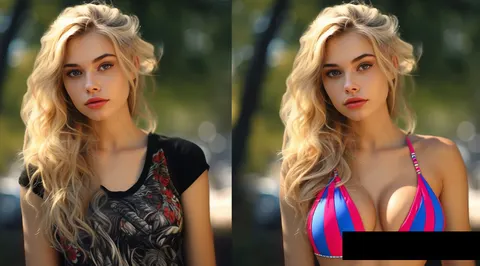
Yes, we upload a photo and get the person in it stark naked. The result is not 100% convincing every time, of course. But with a bit of tweaking, some reading and a little “luck,” out comes a picture that… well, there is no way to be sure whether it resembles the real thing. But it is extremely convincing.
Where does the boundary of reality lie? So far the algorithms' new abilities have not been enough to push ahead, say, in directions like deepfakes. Generating video is hard for them. Images, on the other hand, no longer are, yet that still has not changed much about how they are perceived and used.
Naked as a Jaybird
Maybe simply because we have such a powerful weapon that we are still learning how to use?
Yes, the most popular models will not let you use image generation for a task like this. And yet here we are: right now it is easy to open a particular app and give it a try.
You can fine-tune it, too, and quite precisely. What age range the algorithm should aim for when generating the naked body, what physical features… or simply whatever seems most plausible. Interestingly, some features cannot be adjusted at all. Yes, the algorithm turns out to be always, and obligatorily, rather generous in the cleavage department.
It is no surprise that the algorithm works very well with female bodies, and if you try to “undress” a man, it will fail. But that, too, is a matter of settings, of a few extra options. With all this, it is more than clear that we are looking at the usual trend in this “economic sector,” which has come up before. Supply and demand, you know…
Slugs, or Snails Without Shells
Yes, products from OpenAI and Google such as GPT cannot be forced to do things like this (at least when the engineers have done their job). Stable Diffusion, however, does allow it—the open-source, freely accessible model that scientists use for innovative work in the field of large language models. But so do enterprising folk, like the makers of the software in question.
The first hugely successful platform of this kind was for video. And it arguably goes even further beyond good taste and ethics, because it pastes the faces of Hollywood celebrities into porn clips. You have long dreamed of seeing a steamy scene with Princess Leia, or Aragorn, or both… and… that is how we got to the site, which in August this year had 14.7 million visits and broke into the top 200 most visited in the “genre.”
Still, the barrier there is that every Hollywood celebrity has an enormous number of images that can be used for extra training of the neural network, so that it can then reproduce them in a spicy way.
Whereas, as we have seen, the new software manages quite well with just a single photo. It already gets over 8 million visits a month, with the average person staying more than 21 minutes. Few websites that are not social networks manage numbers like that. Evidently it is a rather engaging pastime…
Bare Assertions
And it stands to reason that all these platforms are used to “undress” people who have not given their consent (and never would). If you want to see yourself without clothes… you probably have a mirror at home; there is no need to pay the site.
Yes, Photoshop was the first to blur the line between images and reality, although even before it, retouching allowed tricks like the popular meme in which Stalin suddenly finds himself in noticeably thinner company.
But algorithms “paint” superbly. They are so good now that the makers of Photoshop have added them too. You tell them and they change things. They enlarge, remove noise, fix the background. Alas, they are no use if we need them to cook us moussaka or write us a song. The much-hyped models handle pictures beautifully, but why are they still not as skilled at generating music?
I heard the logical answer from someone close to me: because that is not what people are looking for. Because we live in the world of the image. An image that, however, is no longer a testimony to the moment or to authenticity, but has crossed over to the other side, turning into an end in itself and into a currency.
Bare Bones
With good photo-editing software around, manipulating images became much easier and more convenient, and yet a person still had to seriously develop their skills with the particular program to get good enough results.
Here, though, you pay for access to the algorithm, open it and… there before you is the naked body of whoever you decided you needed.
Yes, for better or worse, the breakthrough in sufficiently convincing video fakes is taking its time. And yet, now that large language models have passed the test of still images, there is no reason moving pictures should hold out against them.
If you follow Bulgarian politics, you might wonder whether the next pictures of a sleeping prime minister next to a nightstand drawer full of gold bars, or others involving a parapet, will be real, but… so what? Even if we take those to be real, did they serve any purpose other than manipulation?
And still, if we let our imagination run a little on what sufficiently perfect manipulated images could do in the arena of politics… we arrive at yet another big question about the future of the media and of public life. About the validators of truth and the gatekeepers.
With a Naked Blade in Hand
Regulation! Anything like this must be banned!
That is probably the first thing that comes to your mind. Whether things are really moving in that direction is debatable. Whether we talk about it enough is not up for debate, at least in my view.
I will only note that alongside the large language models we all hear about, there are also projects that copy them and build on them, or simply open-source ventures that handle the same tasks. As a result, it is no great problem today to skillfully imitate ChatGPT's abilities even on a not particularly powerful laptop. Any teenager will be able to “run” such a language model and, with minimal extra tweaking, use it for whatever they like. So where do the restrictions go then?
And at the same time, isn't it wonderful that we now have mature large language models, that we have seen how applicable they are, and that today anyone, even without especially advanced knowledge, can with a small intervention let them tackle the next big and interesting problems facing humanity?
Exposed
What if software like this is used by pedophiles? First of all, to teach the algorithm to recognize pictures of children, we would need some input database saying whether there is a child in the photo. And that means a certain number of people sitting and labeling the right examples for the algorithm to learn from—can you imagine…
And since the “undressed” pictures are more the algorithm's fantasy than a real nude image? Could it be that this way we are actually “treating” those pedophiles, so there is less risk of them getting to children?
Again we come up against the boundary of reality. “The Naked Truth”—that was once the name of a news program on a boutique cable channel, in which the presenter, while reading the day's headlines, gradually took off whatever she had on. Who knows why, this format did not survive or catch on.
On the one hand, of course, because our purely human instinct is still tied to whatever comes closest to reality. Even the silicone fashion stayed back somewhere in the days of Baywatch. Not that it is gone now, or that plastic surgery is not part of many celebrities' arsenal, but only when it manages to imitate reality.
To pass itself off as reality convincingly enough.
Naked, Brazen and Young
So… should we stop showing photos online altogether? Since the algorithm can undress us… Of course, it does better with photos in typical poses, against a clean background, in not overly complicated lighting. But again, that applies when the software has not been trained specifically for the task.
And even if you keep uploading only old-style passport photos, what is to stop the algorithm from learning to paint in everything else based on some other data?
It will be fake? And are the lighting, the conditions, the dynamics ever perfect in all the other pictures of scantily clad people you have seen? Photography is an art, which means it too is always, in some way (even if it is magic!), burdened by its limitations.
Laid Bare
Nudist beaches remain exotic. What is hidden (at least as far as the body goes) still stays more attractive than what is shown, even if the latter surpasses it in other qualities.
If we turn algorithmic undressing into a metaphor, aren't we all more “undressed” online than ever?
A decade ago you would hardly have been so ready to quarrel with a colleague or a neighbor over what they think about COVID vaccines or who is right on the latest hot topic of the day. Simply because we never used to “undress” our views on every subject without restraint, and when that feeds a social network's algorithm, nakedness does us no good.
Truth in public dialogue increasingly has to be a matter of feeling. And yet, the truth is there. Perhaps what we see simply differs more and more from what is real. “I'm looking and I can't believe my ears,” a popular TV character used to say; it became a meme, even though, from today's vantage point, it sounds as if he was right after all.
Technology is undressing us. Which is good, on the one hand—being sincere and genuine. But on the other, it reminds us that this is evidently not what comes naturally to our civilization. I still will not tell you the name of the app, but anyone can find it, and soon others will appear, surely better at the task. That is part of both the magic and the curse of digital times…