I know what you’re thinking!
Of course, I know nothing of the sort—I have no idea what’s spinning around in your head. It turns out, though, that this rhetorical claim is quietly becoming the plain truth.
Technology can already “translate” brain signals into readable data, and the first breakthroughs are here. Swept up in the progress of artificial intelligence and the notorious GPT, we may miss a huge leap when it comes to the natural kind. Prof. Nita Farahany, a scientist and legal scholar with vast experience, is drawing attention to it.
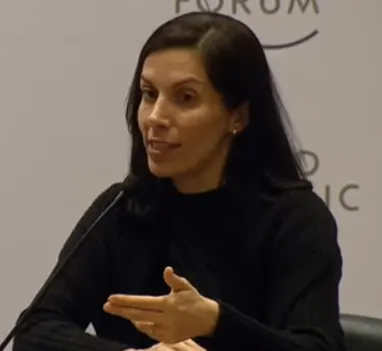
“Today there are already companies capable of decoding brainwaves,” she told the world forum in Davos at the start of the year.
Are we ready for the moment when someone reads our thoughts? Will it lead to total control, or will it make our lives more comfortable?
Brain Drain
It sounds rather tempting. You merely think about what you fancy for dinner, the smart device “hears” you and makes sure the dish is waiting for you at home. While you drive, it monitors how alert you are, and the moment you nod off, it stops the car. It “reads” your mood and instantly tailors the feed of your favorite social network to match. Finally, it picks out the perfect series, and comfort is guaranteed.
A piece of news weighs on you? Oh, you’ll never see anything like it again. Someone is planning to rob you? Not a chance—his own device has already reported him to the right people.
So far, so good. But what happens if your employer, or your partner in life, gains access to all your thoughts?
At first glance these are plots and questions from science fiction, yet they are quietly slipping out of it, bursting into reality, and very soon we will have to find answers to them.
Hackers of the Human Soul
“You may be surprised to learn that the future has already arrived,” Nita Farahany said in her speech in Davos. “Thanks to artificial intelligence, it is now possible to decode brain activity in ways we never imagined possible. Everything you think, everything you feel, becomes simply data, vast arrays of data that can be decoded by artificial intelligence.”
Her words echoed through the forum of the richest, where the world’s leaders gather to discuss the future. This is not the first time she has turned eyes toward the subject; the researcher has long been trying to draw attention to this rarely discussed issue. What Farahany herself calls “the battle for your brain.”
She is no random voice—she knows what she is talking about, and the proof isn’t just the fact that she was invited to speak in Davos of all places. Nita Farahany works at Duke University, where she is a professor of law and philosophy. Her bachelor’s degree is in biology, and she holds a master’s in biotechnology. Her main field of work is the ethics of technology, especially technologies tied to our future as a species. From 2010 to 2017 she served on the bioethics commission created by then U.S. President Obama.
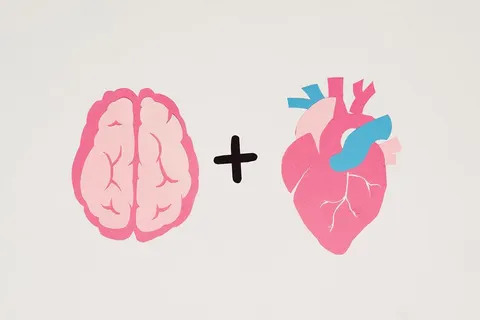
I Think, Therefore I Am
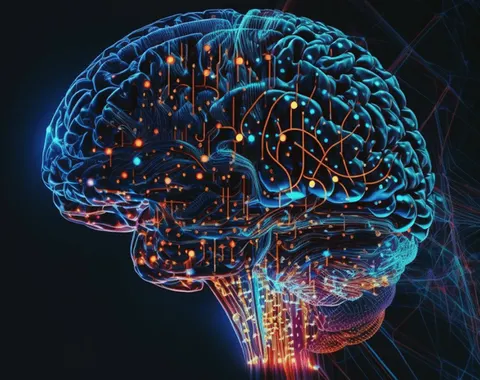
Is our brain—this complex organ that lifted us to the crest of evolution—really so easy to “read”? Not at all. We still can’t explain how it works, nor replicate it, no matter how often we call the new technologies we develop “artificial intelligence.” It turns out, however, that it isn’t all that hard to capture and decode some of the signals tied to the way it processes information.
The first route is obvious. Although it hasn’t been in the spotlight much lately, the brain-computer interface is the path by which we will connect to computers in the most literal sense—through a chip implanted in the brain.
The best-known effort is the Neuralink project, through which Elon Musk is convinced he will achieve the long-awaited breakthrough… Except that, as it seems, he has lately been far too busy moderating Twitter and working to halt AI development to focus on chipping people. Or perhaps the venture simply turned out to be too complicated?
A Wandering Mind
For now, the serious breakthroughs are coming from the other direction—devices capable of capturing and decoding brainwaves simply by getting close to our heads. Progress in this field is impressive. According to Prof. Farahany, it will very soon give us handy gadgets in our daily lives that can pick up our mood, judge whether we are focused, and tell what we are picturing. And create a host of new challenges…
Filter bubbles, the false comfort of letting an algorithm decide what matters to us… And then come the conscious and the unconscious in all their depth, in images that are hard to imagine being captured and that would make even Freud’s beard stand on end.
Sounds utopian to you? Here is a piece of news from a month ago. Japanese scientists developed a technology that can reconstruct an image a person has seen from their brainwaves. They use data from functional magnetic resonance imaging, and the breakthrough came once they added the capabilities of the latest generations of artificial intelligence.
Stable Diffusion is a platform for generating images from descriptions, much like the more popular DALL·E and Midjourney. This neural network is open source, which makes it a frequent choice for scientific work. The Japanese team further trained the algorithm with data from images shown to four volunteers and the corresponding reactions of their brains—which areas lit up. Each of them viewed 10,000 images, as varied as possible.
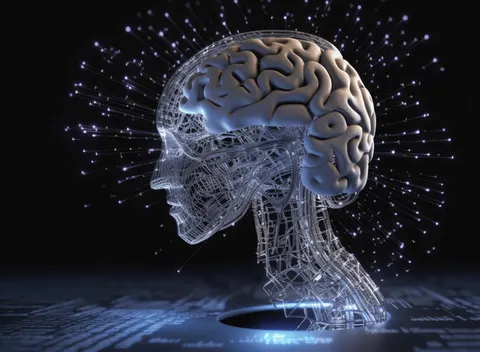
A Matter of Vision
Two parts of the brain are active in this process: the temporal lobe is responsible for the content of images, while the occipital region, home of the visual cortex, reproduces the size and general layout of objects.
And lo and behold, the algorithm handles the task beautifully. Working from the data, it proves remarkably good at “painting” the shapes and even the colors of the pictures the volunteers saw. At reading what they see!
Yes, perfection isn’t here yet, but the result is remarkable—see for yourself. All the more so given that these are pilot studies, with a small number of volunteers at that. The accuracy of reproduction is estimated at 80 percent, which led the scientists to write in their paper that “this allows us to effectively read people’s minds. Our method, based on human brain activity, can reconstruct images with sufficient resolution and high semantic fidelity.”
“The accuracy of this new method is impressive,” says Iris Groen, a neuroscientist at the University of Amsterdam.
All of this is wonderful! Technologies of this kind promise so much… They will let us communicate with people who are fully paralyzed and have no other way of expressing their thoughts. We will be able to learn more about how the brain works, to “record” our dreams, even to see what our pet is dreaming about…

Thinking About Meaning
“We humans should get used to the idea that we are no longer mysterious souls. We are now hackable animals,” Yuval Noah Harari said in a speech, again before the World Economic Forum in Davos, but back in 2020. With his typical vividness, he painted the picture of a totalitarian state, North Korea for instance, that has found a way to control people so thoroughly that it can read their thoughts. Harari even offered a formula: B x C x D = AHH—our biological knowledge, multiplied by computing power and by the data at our disposal, adds up to the ability to “hack” humans.
Well, three years later, according to Nita Farahany, this is already a fact. It is happening with the help of various technologies. Besides the MRI mentioned above, there is the far more widely available technology based on EEG—electroencephalography, in which brainwaves are tracked using electrodes.
The breakthrough also comes with the progress of artificial intelligence. The approach used by the Japanese scientists may prove successful in so many other areas. That way we don’t even need to understand the brain’s physiology and workings all that deeply. It is enough to set modern algorithms loose in their signature role—analyzing patterns in large volumes of data.

Open House
“In the future, and I mean the near future, these devices will become the common way to interact with all other devices. It is an exciting and promising future. But it is also a scary future,” Prof. Farahany said in her speech.
“Surveillance of the human brain can be powerful, helpful, useful, transform the workplace and make our lives better. But it also has a dystopian possibility of being used to exploit. To bring to the surface our most secret and unflattering selves.”
Where is the line? No one knows, but on the basis of the breakthroughs at hand, we can let our imaginations run fairly freely. Could the patterns between brainwaves and, say, a person’s propensity to commit a crime be analyzed? Logic says there is nothing to stop it. But what comes next? Will we end up in a crime-free future, or in a digital concentration camp?
We start with images—what will we “read” next? Emotional state, levels of concentration. What makes us happy and what makes us sad, what we find funny. Whom we will vote for and what we think of the person across from us. Or the password to our email or our bank card…
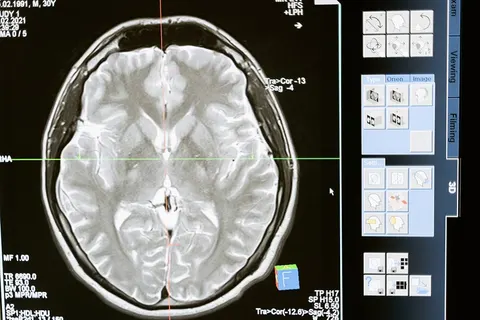
Brainstorming
In recent years, quite a few scientific studies have shown that ever more complex brain functions can be read. Big technology companies are investing serious money in this kind of research too, Prof. Farahany explains.
Nissan, for example, is developing technology to read drivers’ emotions; Nielsen, to study consumer behavior for more effective marketing. IKEA is researching how works of art affect the brain, with the study gradually turning toward how to sell goods more successfully. In China, pilot projects monitor the brainwaves of factory workers, soldiers and high-speed train drivers.
Farahany expects the first industries to take advantage to be video games, healthcare, aviation and neuromarketing. In her view, we are at least five years away from being able to read brain activity in full, and we may never reach that stage at all. But the time when the technology works for a specific task, as in the example with the images, is already here.
Thrilling Waves
The technological questions are evidently being solved quite quickly, but not so the ethical ones—exactly as is true, in full force, when it comes to artificial intelligence.
We all love things getting ever more convenient, right? It’s a lot cooler to have a vacuum cleaner that does the work for us. Or a feed that gathers the most important things for us. Perhaps it’s no accident that in English this word means not only the list on social networks but also fodder, the stuff livestock are fed. Surrounding ourselves with the news we want to read, with opinions we love or, the opposite, that make us angry, has already fundamentally changed the way we communicate and the way we perceive the world.
All of this could continue with renewed force and in very frightening dimensions once “brain-reading” technologies advance, Prof. Farahany warns.
“Imagine a dystopian but entirely real scenario in which an employer uses the technology to monitor employees—how focused they are, how they do their work, what they think of the clients,” the researcher says. “When you combine brain activity tracking with other surveillance technologies, the power becomes quite frightening.”
Do You Think So?
“All of this has some big advantages. For example, people won’t need to type text messages while driving; they’ll be able to send them with just their thoughts. But the downside is that we suddenly give access to the most private and sensitive information we have… to Facebook, Google and other tech companies, with no guarantees that this information won’t ultimately be misused against us, that they won’t try to manipulate us or change what is in our brains.”
In her view, the way we treat the subject today is telling. No one has time to read the long terms and conditions; we leave our data online with the giants without realizing where it might lead. But all of this moves to a new, even more dangerous level when it comes to the most personal thing of all. Our own thoughts and emotions…
“People have become so complacent and used to handing over their data without seeing the harm in it. We have given up almost every other kind of privacy and personal data; freedom of thought is the one space we have all always assumed would be sacred and protected,” the researcher says. “That is why I fear that what will happen with brain data is that convenience and the ‘wow’ factor will lead most people to jump in without thinking about the consequences.”
The Last Bastion of Freedom
That is exactly why, in her view, it is important to establish the field of “cognitive liberty” as soon as possible. To set ethical limits that, this time, get ahead of the technology, rather than coming onto the agenda only once the consequences are already here. In that case, they are quite likely to be irreversible. As Prof. Farahany puts it, we will then have lost “the last bastion of our freedom.”
The limits should include areas that are off-limits to technologies of this kind. They should guarantee that we will always be the ones holding the right to hide our thoughts, to deny access.
Will Harari turn out to be right in the end? With his idea that we are no longer mystical souls but simply animals that can be hacked…
We have plenty to think about. Yet another technology is on its way for which we, as a civilization, are unprepared. Let’s think about such things more often. Before, at some point, it turns out that someone can see what we are thinking and use it against us…