Will the future really force us to give up meat? Or will we simply eat meat that… was made without killing an animal? Will technology soon let us understand more about how our best animal friends see the world? Will it let us talk to them…
Our relationships with the other species on the planet have always been more layered than we realize. While we have turned our greatest natural enemies—the predators—into little more than decorations of our daily lives, the “small fry” like the coronavirus remain an unpredictable problem for our species.
And yet the most fascinating remain our ties with our closest “relatives”—the mammals and the other links that have climbed high up the food chain. We give them souls and make them part of our daily lives… while the vast majority of the planet's inhabitants rarely pass up a chance to snack on them.
Our relationships with the other species on Earth are yet another field where technology promises striking news, and in the foreseeable future at that.
The Steak Is Dead, Long Live the Steak!
The young Zuckerberg liked to boast that he belonged to the school of thought holding that there's nothing wrong with eating meat—as long as you have personally killed every animal you put on your table. He even showed photos… Then someone apparently decided the idea wasn't great for his image, and he switched to combat sports, where, they say, he turned into a real predator.
The fact is, we like to run away from this subject. It's convenient when an appetizing steak appears on the plate, its aroma stirring not only our refined palate but also something of the old instincts… And yet, to get there, there has been a killing. Most of us conveniently delegate that step down the line, with no desire to find out exactly how it happens.
If we look at it from an evolutionary angle… Aren't we supposedly the most advanced species? Is it “well-mannered” to treat the others this way? And what if the next link in the chain—artificial intelligence, for example—decides to take the same approach?
It Never Grew, It Never Grazed
Let's leave science fiction aside for now: there is some inner conflict in eating meat. Ask the children. We tell them fairy tales about ugly ducklings and call our own kids “little chicks,” and then we sit down in a restaurant to snack on… yes, little chicks, whose existence hasn't always been the loveliest.
Add to this the topic that has lately become obligatory—environmental damage. Meat production is responsible for a huge share of our civilization's carbon footprint.
There's been a lot of talk recently about turning to proteins from the lower floors of the evolutionary ladder. Since huge numbers of people in Southeast Asia are used to nibbling on insects, maybe we in the West will have to get used to something similar? It hardly seems a challenge for our digestive system—humans are omnivores. Especially in our part of the world, where we survive everything that ends up in our frankfurters…
Tamagotchi
Jokes aside, there may be plenty of arguments in this field, and most of them are culturally determined. Is pork really forbidden in Islam because the religion took hold in warmer latitudes, where pork is the meat that spoils fastest? Are our delicate Western stomachs really not evolutionarily suited to locusts as food?
Maybe we don't even need to venture into such speculation!
In recent years, technology has been bringing good news. It makes sense to look for a substitute for meat, and while all the attempts to imitate it with soy, chia or mushrooms evoke only distant associations, it looks as if we'll soon have meat that is completely real, only… not a single animal has “suffered” for it.
Off with the Cell's Head
“Lab-grown meat” sounds deeply unappetizing. But then “belly soup” isn't the pinnacle of marketing either, if you're introducing shkembe chorba—the tripe soup Bulgarians swear by—to your children, and tripe… is, with good reason, a favorite.
Let's look at it from another angle. What is meat? On the one hand… a carcass. On the other—simply a collection of animal cells. So what if we take cells obtained without anyone being slaughtered and teach them to divide… wouldn't that be a natural process, even if under laboratory conditions, that leads to a fragrant little steak?
It's already entirely possible. Yes, skeptics will remind us to be careful with such technologies, because even the most revolutionary invention can turn out to be dangerous. And we may find out far too late. Nor will it seem particularly appetizing if you see the big steel vat where the cells divide… As if the slaughterhouse that supplies the ham in your fridge were such a pleasant sight.
The steel vessels are called bioreactors, and no one dies in them; the cells divide contentedly, happier than any free-range hen. The technology has advanced considerably. Even the FDA—the US food agency, famously fearsome with its regulations—has approved the first cultivated meat product, “chicken breast” grown by the California company UPSIDE Foods, as safe to eat. The next step is clear: for these products to reach the market and fight their way past the stereotypes.
Whitey and Greyling
They'll succeed, in my view—both digital marketing and the Overton window are capable of miracles. What's more, generated meat is already being sold to gourmets: Singapore became the first country to issue such a permit.
As for Upside Foods, the startup's ambition is for its “chicken breasts” to appear in restaurants as early as 2023, and in stores five years after that.
“This is real meat, grown directly from animal cells,” says Upside Foods founder Uma Valeti. “These products are not vegan, vegetarian or plant-based—they are real meat, just made without animals. The production process is similar to brewing beer. Only instead of growing yeast or microbes, we grow animal cells.”
A sample is taken from the relevant species, the cells are placed in a controlled environment and fed nutrients, thanks to which they begin to divide.
Flesh of the Flesh
But why is chicken breast the first dish? Upside Foods doesn't say; I have a hypothesis. The meat is homogeneous enough to be convincingly recreated. For pork ribs and chicken wings (or the other way around) we'll have to wait for the bioreactors to advance—those involve more varied textures and types of cells.
And might 3D printing be the way forward? It seems it would be easier to create more complex structures that way.
In April, the Israeli company Stakeholder Foods printed the first three-dimensional fish! No wonder—that part of the world has long been known for feeding a great many people with just two fish and five loaves.
To the Animals, with Love
Shortly after the factory opened in the city of Rehovot, Prime Minister Benjamin Netanyahu tasted the first portions. “There will soon be new permits for the production of such products and new heights that will change the world,” the prime minister said.
Alas, in this direction we're heading back toward the synthetic; at this stage, what we get would be more of a meat lookalike.
But then… maybe it's again a matter of culture and self-suggestion? There won't be as much fat, and you know the chain from there: cholesterol, clogged arteries, early death or, worse still, middle-aged diets.
Or, even worse, the infamous animal gases: livestock farming is believed to account for around a quarter of global harmful emissions.
Got a Cow, Drink Beer
Let's say the question is settled, especially if we get far enough to start printing sudzhuk and lukanka, Bulgaria's beloved dried sausages. But what will we do about milk? Have you ever wondered how cows manage to give it to us all year round? I don't recommend opening documentaries on the subject; it definitely doesn't happen with any eagerness or harmony on their part. Let's hope nobody shows those scenes to artificial intelligence, or it will have good reason to take it out on our species.
Milk can be made through fermentation processes similar to those in the meat bioreactors, ambitiously promises another American startup born out of scientific research—Perfect Day. Once again, the bet is on biomass from animal cells, which creates milk through precisely controlled fermentation. And here, too, the popular explanation is that the process resembles brewing.
Yes, for now they only produce powdered milk, but it's already being used to make ice cream. Another pioneer comes from Australia: All G Foods raised 25 million Australian dollars, promising that within seven years it will produce cheaper milk indistinguishable from cow's milk.
A Horse for a Hen
There's no word yet of a solution for artificial eggs, but let's say that's an area where we can manage without the animals suffering excessively. They even come out ahead, sparing themselves tiresome offspring like “My dear sir.”
Since we touched on livestock farming's enormous carbon footprint… I don't know about you, but I've always found it hard to imagine that the gases released by cows could be such a major factor. I've also always wondered how exactly the measurements are made.
Bill Gates, however, apparently has a better idea. Because months ago it emerged that his main investment fund had set aside $12 million for a small startup called Rumin8, which is developing a new type of feed for ruminant livestock.
The innovative feed is based on red seaweed pellets and reduces the methane in the gases cows emit.
If Only They Could Talk
“And it spoke with a human voice.” No, not Bill's experimental cows, thankfully. But this is such a familiar motif from fairy tales; we've always been inclined to attribute human qualities to animals, to give them souls… And hasn't the time come not only to understand them but also to start talking with them? Will we like what they have to “say” to us?
The development of artificial intelligence brings breakthroughs in countless fields, including one that, sadly, isn't talked about enough—mind reading. Algorithms manage to find the patterns between data on brain activity and what we see, and they are gradually getting better at ever more precise associations. And if, where humans are concerned, this raises very serious questions, in our relationship with man's best friend and his colleagues it opens up interesting prospects.
We Had a Good Life, My Little Horse
Will we learn to “read the minds” of animals? Everything suggests we'll soon know more and more about how they perceive the world and how they communicate with each other. All the memes about what the cat or the dog has to tell us and what it thinks of us could become reality. We might even… check whether characters like Rumen the Cat really think what they write online.
Even the experiments of Musk and his team with the Neuralink interface, which “reads” the brain activity of monkeys, give interesting food for thought. Once again, both benefits and dangers loom. It would be great to know when an animal is in pain so we can help it. But imagine, too, the potential military applications of this kind of technology.
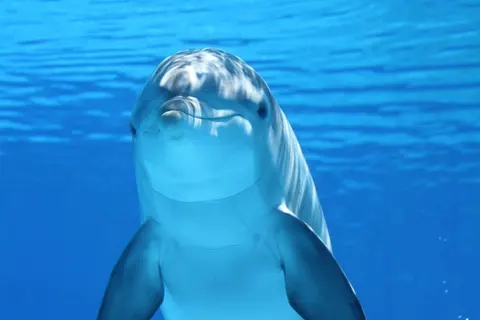
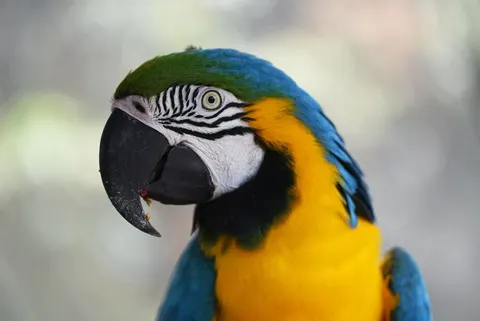
We already know that bats use sounds to argue over food, tell the sexes apart and call each other by name. Parrots and bonobo chimpanzees learn words and associate them with objects. Dolphins understand differences in word order, and bees communicate fully through sounds and movements. What will happen when we begin to “translate” their signals far more accurately?
Of Mice and Men
The Earth Species Project, or ESP, is a California startup working on various forms of decoding animal languages. Its ambition is to lift the language barrier between humans and animals for good. The researchers are searching for the interspecies Rosetta Stone across a wide palette of factors. They analyze the sounds animals exchange in different ecosystems, as well as the background noise. They work with more than 40 ecological and biological institutions to keep filling their ever-growing database, which is processed with the help of artificial intelligence.
The algorithms analyze “bioacoustic” sounds—those made by individual species—and “ecoacoustic” ones, which include everything recorded from an entire ecosystem. So far the greatest successes have come with the large inhabitants of the sea. The researchers can distinguish the sounds made by different whale populations and already understand the meaning of many of the signals.
Here we'll surely soon apply the possibilities that new technologies offer in translation as well. Large language models are increasingly skilled at translating from and into languages they haven't been specifically trained on. However anthropocentric it may be… couldn't we add animal sounds too? The experiments with whales show that it's entirely possible.
Will we manage the reverse? To dictate to our smartphone, “Bring me a beer,” have it translate that for the dog, and see our best friend come trotting back with two cans—one for himself?
Hardly. But we will find out whether beasts really have something like feelings… We have them; algorithms are getting better and better at pretending to have them. Interesting news is on its way from the meeting of technology and the living world. It will help us learn more about ourselves as well. As long as we learn to listen. To people and animals alike…