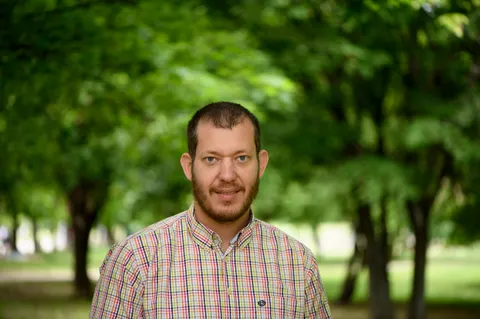
Fear of Technology = A Nation Left Behind
Elitsa Stoilova says digital literacy should become a national goal if we want to move forward. “Its absence leads to fear of technology = conservatism in adopting and using it = our nation falling behind in many directions. What is the future of illiterate nations?” she wrote to me. Our guest has traveled a colorful road: 11 years in journalism, then tourism, where she became… a hotel manager in the Mariana Islands in the Pacific, before finally dropping anchor in the IT world. She realized that much of the work in tourism is repetitive and can be done by algorithms, so she created the chatbot platform UMNI, long before another chatbot made the world notice how far artificial intelligence has come. But how is it that she is so optimistic about the road ahead? Our guest believes that if we play our cards right, AI is leading us to a wonderful future. What does playing our cards right depend on? And why is it sometimes worth leaving one of the most heavenly corners of the planet to chase your dreams? We look for important and unexpected answers in the lines that follow.
 02
How Do We Peek into the “Thoughts” of Artificial Intelligence?
“Work, professional life, the drive to achieve corporate success and positions—this has become the mass culture of our society worldwide. To this day, many people find the meaning of their lives this way. From now on, we will have to change that. We will have to search for meaning.” We find ourselves in a time when the chatbot is not just an assistant but also a “therapist.” Before we even know it well enough, before we have laid down the ethical frameworks. We are already seeing the first challenges this brings, and the real problems are still on their way. Donika Borimechkova is a psychologist and psychotherapist with more than 15 years of experience. This time we decided to invite artificial intelligence itself to a therapy session. Because, as Donika says, many of her clients already get advice from it before they meet her. We never found a method or an approach that would let us run such an experiment, so we decided to discuss the subject, lay the foundations and then invite each of you to give us ideas on how to continue. Here is how this conversation begins.
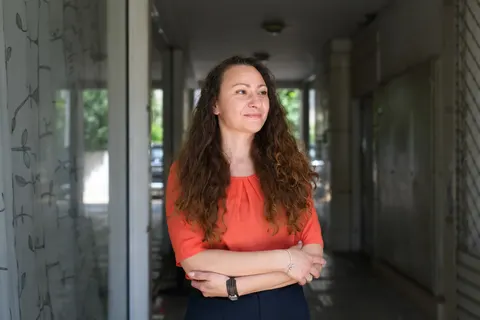 03
Come Talk to “Me”!
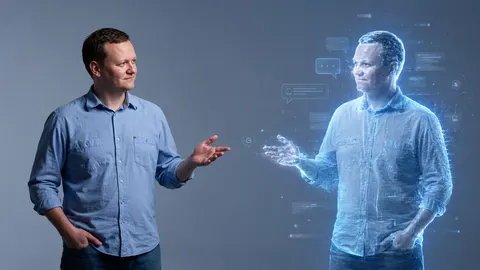
Allow me to introduce… “Georgi Karamanev,” a chatbot trained on every piece on this site and on my guest appearances. Let’s find out together what it can do—write to it! It will pop up on its own, and if it doesn’t, you’ll find it in the bottom right corner of every page.
 04
What I Learned from the Virtual “Georgi Karamanev”
Talking to yourself. In psychology, this is hardly considered a sign of good emotional health. But what if, besides talking to yourself, you set your virtual double free so that anyone can talk to him? What would people ask him that they would ask you? And what wouldn't they? Some of the experiments on this site are already bolder than the impossible and the unimaginable. And that is exactly what awaits you here. Two months ago, “Georgi” appeared on this page—my digital double, whom you can still meet today through the chat button in the bottom right corner of this site. Anyone was welcome to have a chat with him. From the very start, I had warned that I would be following the conversations so that we could bring the experiment to a fitting close with the lines that follow. In them, we'll look at what happened to the virtual “Georgi.” What did people ask him? Where did he cope and where did he fail? What does each of these conversations have to tell us? We take a peek into the conversations with the chatbot, and I'll leave most of the reflecting to you. And if you want to test his skills, he is still here, waiting for you. I admit, I definitely didn't anticipate even a fraction of the conversations “Georgi” had. Here's what I mean.
05(In)Human Resources: A Referee Calls the Match Between AI and People
Can an algorithm land a job? A fake candidate dreamed up by ChatGPT made it to two job interviews, so I asked Petar Dzhuganski, a former assistant referee with more than 250 professional football matches behind him and now head of recruitment at a large software company, to analyze the match between AI and humans. Is the software industry still letting newcomers in, are professions disappearing because of AI, and should workers from distant countries frighten us?
 06
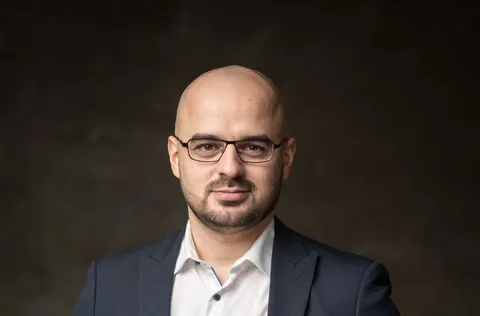
Should Robots Be Our Slaves?
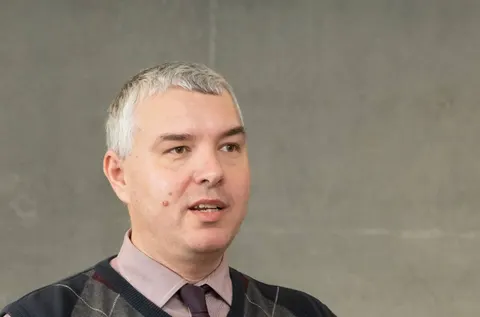
Robonomics is coming at full force, and those who adapt in time will gain the most from it. Prof. Stanislav Ivanov, a tourism scholar turned researcher of the economics of automation, talks about the exciting future, the big questions it raises, how Bulgarians already hand robots the same rights and duties we associate with slavery, and why an unconditional basic income is inevitable. Let us take a peek into the future together!
 07
Meet… Yourself?!
“Talking to yourself isn’t so bad. It gets bad when you start answering.” I am going to create a virtual double of… myself. What could we possibly have to talk about?
 08
The “New” Mother of ChatGPT
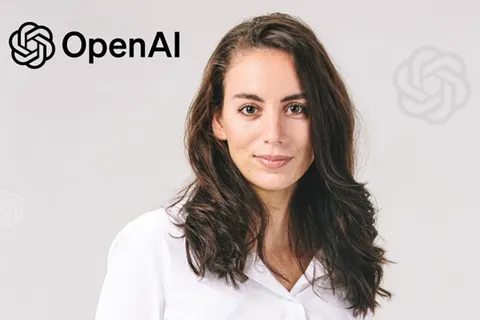
The upheaval at OpenAI outdid Game of Thrones for plot twists: Sam Altman was fired, chief technology officer Mira Murati took his place, and within days everything was back where it started. Amid the telenovela-style debates about who pulls the strings, one figure stayed in the shadows—the woman who briefly ended up at the helm. It is time to learn more about Mira Murati, because the future of the world may well depend on her decisions.
 09
“AI Today Is Redrawing the Boundaries of the Impossible”
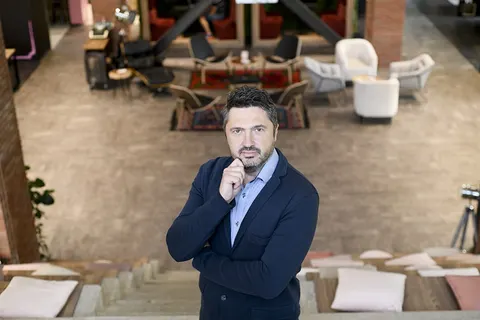
LivePerson… A live person? No, this one isn't alive—and that's exactly what makes it interesting. It's the name of an American company with a fascinating software project that relies on a serious team in Bulgaria. Alexander Raychev is the executive director of LivePerson and has years of experience as a manager in IT. From that vantage point, it's interesting to hear where he thinks we stand today with the much-talked-about artificial intelligence. How long will the algorithm remain distinguishable from a “live person”? Beyond all the hype, what are the optimistic and pessimistic scenarios for the development of this kind of technology?
 10
Atanas from Viber: The Bulgarian Connection
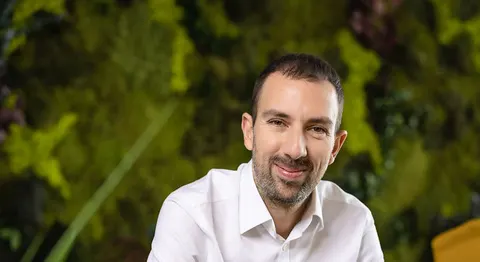
How does a communication system work when it is determined to grow without exploiting people's data? Atanas Raykov is a senior manager at Viber, and he is also the reason one of the platform's key offices in the region is located in Bulgaria. What does responsibility look like when you have more than a billion users, for some of whom the next conversation may be a matter of life and death? How can the business model of a modern communications giant leave users' personal data untouched? And what should we expect from online communication in the years ahead?
 11
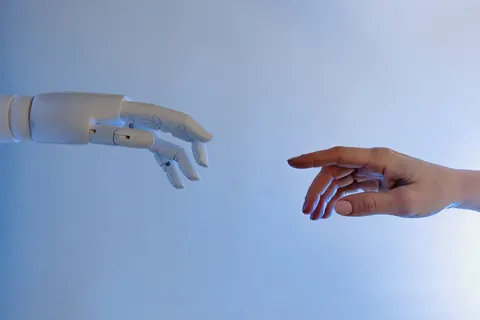
RoboGod: What Should Artificial Intelligence Believe In?
If one day we create a technology indistinguishable from a human, will it… believe in God? What will its God look like? Might it try to become God itself? Or… simply be God? Technology and religion have always had a complicated relationship. But will they find the road to the future and to the survival of the human species together?
 12
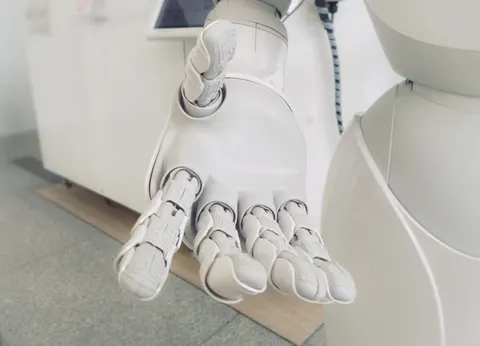
GPT-3: A Cozy Chat with Artificial Intelligence
GPT-3. Behind this rather dry computer acronym hides a highly promising technology that takes quite a decisive step forward in the way we perceive artificial intelligence. It is the most powerful new-generation language model, which appeared less than a year ago and showed that neural networks are now capable of creating meaningful, emotional texts, sometimes sounding downright like art. And they can even write… computer code on their own!
 13
Fake Hero
Miquela is smiling and fashionable. A long-legged, olive-skinned Latina coquette. Time magazine ranked her among the 25 most influential people online. Just one small detail… she doesn't actually exist. She is the most recognizable face among digital humans—a new phenomenon on the internet that deserves far more attention.
 14
“Stagnation in Our Education System Is Ruinous”
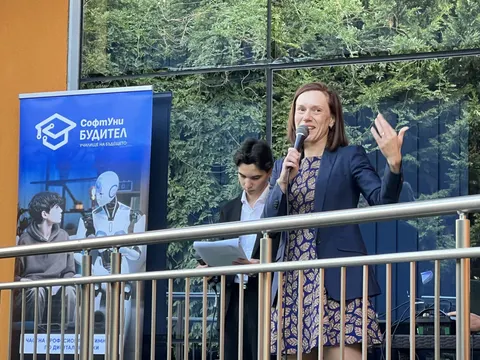
How can we be sure we are giving our children an education that will still be useful tomorrow? Evgenia Peeva, founder of Teach For Bulgaria and head of the SoftUni Buditel high school, on the skills that matter today, why we should stop obsessing over exam scores, and how to choose a school that prepares a child for life in a hyper-dynamic technological world.
 15
“Conflicts Arise Because We Don’t Bother to Listen to Each Other”
Hari Haralambiev teaches soft skills to people in IT. We sit down with him to talk about all the stereotypes surrounding programming and the people who do it. About hard and soft skills. About difficult conversations. About leadership and the road to success. About the struggles every team goes through. About the human side of an industry that has become so fashionable and so attractive in recent years: software.