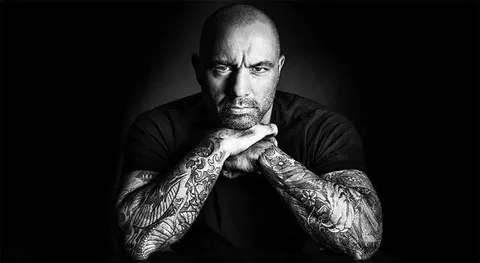
The Fake News Hunter
It is called Tanbih, it comes from Qatar, and it promises to rescue us elegantly from fake news and disinformation. We meet its creator, Dr. Preslav Nakov, a world-class specialist in natural language processing with artificial intelligence. How can an algorithm tell that a news story is fake… before it has even been written?!
 02
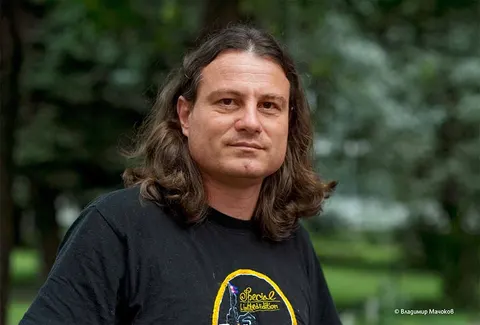
“Today, Even Reasonable Arguments Fail to Persuade”
Svetoslav Ivanov is a landmark journalist, reporter and host because he looks not only for what is topical but for what is meaningful and deep, for stories that can move people and show that making television can still be an art. What would he ask a perfect artificial intelligence, what are the greatest dangers such technologies pose to society, and why do people who think differently so often end up in an “online prison” today? And will we ever manage to create an algorithm that tells moving stories like Ivo Ivanov?
 03
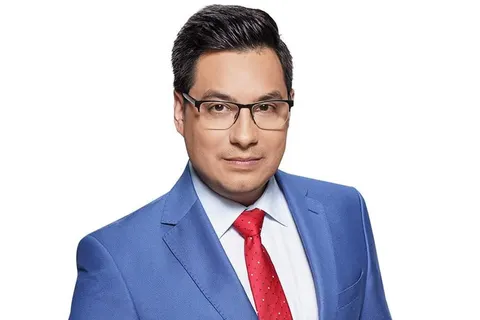
“Artificial Intelligence Will Simply Make Our Work More Pleasant”
Will ChatGPT's successors write the news for each of us, exactly the way we'd like it? Hristo Tomov, head of AI at the software company Dreamix and one of its founders, talks about personalized news, filter bubbles, fake news and the limits of large language models. How far has artificial intelligence come, and what does the future look like if it keeps developing at the same pace?
 04
The Deep Lie: Could Deepfake Technology Start a War?
Deepfake technology makes it possible to create a video starring real people that is nonetheless completely fake. Could it lead to war? And how did neural networks suddenly become capable of producing the perfect forgery?
 05
“And There Might Have Been No Mr. Rusev… That Is What History Is!”
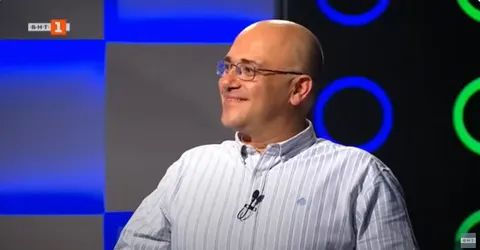
Why is it worth knowing the past better? Boris Rusev, who won an incredible 34 games on the quiz show Posledniyat pecheli (The Last One Wins) before walking away and returning to his true calling as a high school history teacher, may be the best person to answer. We talk about why history divides us more than it unites us, how to wake young people's interest in the past, what future historians will say about today's strange times, and whether Khan Krum really ordered thieves' hands to be cut off.
 06
Digital Stories Turns Two! Which Articles Did You Read the Most?
Digital Stories turns two today! Which of the 219 pieces published over that time were read the most? Topics well worth not missing, that much is certain… My heartfelt thanks to every one of: – More than 6,800 followers of Digital Stories on Facebook; – More than 3,600 followers on LinkedIn; – More than 500 people who subscribed to the mailing list; – More than 190,000 readers who visited the site. Over these two years the project: – Twice won the Technology and Innovation category of the most hotly contested journalism competition, the Web Report awards, and once the competition organized by the Bulgarian Association of Information Technologies. – Ran regular rubrics in Manager magazine and on bTV's business news. It was featured on bTV, BNT 1, BNT 2, Bulgarian National Radio, Darik Radio, BTA, Dir.bg, the magazines InGlobo and Osem, and many other media; – Most important of all! It drew attention to a range of topics that grow more important and pressing with every passing day. Thank you! Every read and every share matters!
 07
“People Don’t Trust Politicians. And Nothing Good Comes of That…”
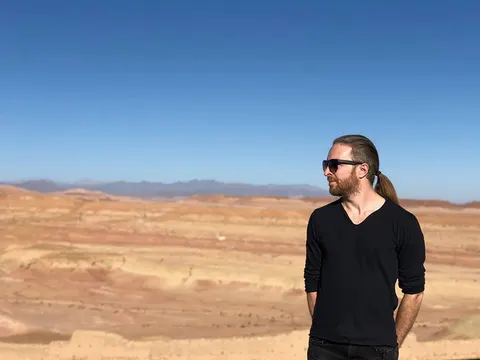
What place do social networks have in today’s politics? When do they help the process, and when do they turn toxic? Does artificial intelligence help or harm politics? What kind of people should take up this calling? And why… do you need to start renovating your home so you don’t lose all hope in politics? Ivo Bozhkov is the man who brought social networks into Bulgarian politics. Here is what he has to tell us after several years in a field that matters enormously to all our lives.
 08
“Today, Everyone Online Lies However They Please”
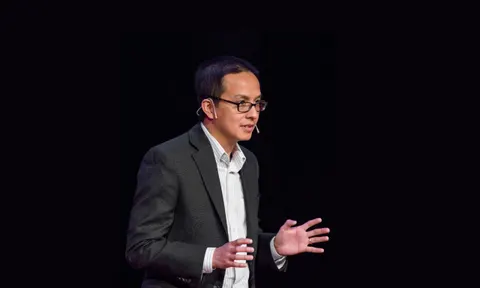
We meet Vu Nguyen—Vunyo, to his friends—again to chat about the present and future of journalism, about technology, and about the challenges and the bright sides of life in Bulgaria. A former journalist at The New York Times and a top-level IT specialist in the US, he and his wife decided to move back to Bulgaria after their son started calling the laptop “grandma”; he then won hearts on the Bulgarian edition of MasterChef and ran his own restaurant for a while. Today he is back in the world of information technology, but now here at home.
 09
GPT-3: A Cozy Chat with Artificial Intelligence
GPT-3. Behind this rather dry computer acronym hides a highly promising technology that takes quite a decisive step forward in the way we perceive artificial intelligence. It is the most powerful new-generation language model, which appeared less than a year ago and showed that neural networks are now capable of creating meaningful, emotional texts, sometimes sounding downright like art. And they can even write… computer code on their own!
 10
Do We Even Feel Like Dreaming Anymore?
Nikolay Tellalov offers some precious reflections in a slow interview about the stars and happiness, love and meaning, and the words someone has to say and write down. Have science fiction writers stopped dreaming, or has technology overtaken them? Is humanity still learning to walk, or has it hit a midlife crisis, and why don't today's young people rebel?
 11
Who Invented the Toaster? Nobody—It Never Happened
Alan MacMasters, the celebrated inventor of the toaster, made it onto the BBC, into the Daily Mirror and onto a British cooking show. The small detail is that he never existed: two students invented him to show how easily we trust what we read online. Wikipedia itself keeps a list of its longest-surviving hoaxes, and it reads like a lesson in how easily we can be misled.
 12
Graduating at 88: The Lessons of Dr. Shoilev
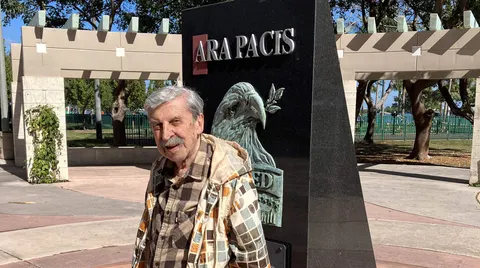
At 80, today's hero went along to keep an acquaintance company while she enrolled to study journalism—and on the spur of the moment decided to go back to the lecture hall himself. It turned into an eight-year adventure full of knowledge and stubborn study, and a few months ago, at 88, Petar Shoilev received his doctorate in journalism! How can anyone be so motivated, and find the strength to take on an entirely new field at that age and finish a PhD with highest honors? Here's how!
 13
The Wanderer Who Toppled a Government (Without Meaning To)
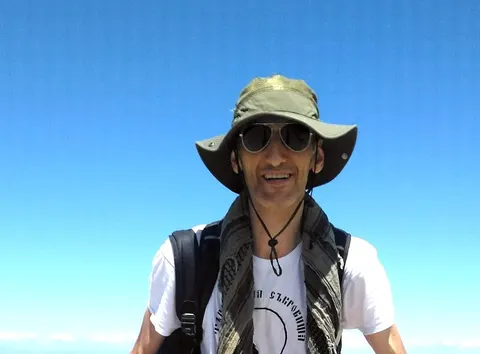
Can we change the world around us—our country, the world—simply by writing online about what moves us? We can, and here is the strongest proof I have ever come across. Meet Chergar, the legendary anonymous blogger whose satirical mystifications became part of Bulgaria's digital folklore, and one of whose texts ended up, entirely against his intentions, bringing down the Bulgarian government.
 14
Blockchain Democracy
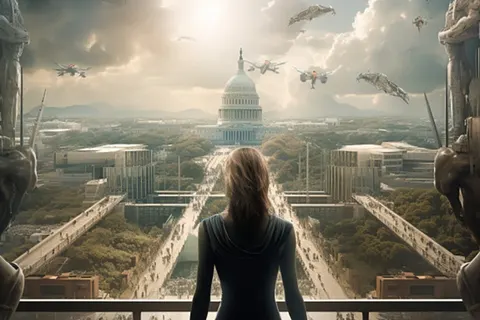
These days we talk about nothing but artificial intelligence, while another of the big technological trends is developing in the shadows… Is blockchain the next step in the way we organize society? And what does the idea have to do with the ancient oracles? Technology is changing a huge part of our lives. Yet in some areas it stays on the sidelines and never quite catches up. It is clear that when it comes to how we are governed and to democracy, there are problems, and the solutions we know are outdated and inadequate for today. Before long, artificial intelligence will probably enter the paradigm too, as has already been discussed. But in the meantime, shouldn't we try to change things ourselves, as people, with the help of the technologies we already have? This one could make electronic voting, such a contentious subject in our part of the world, completely transparent. And on the other hand, it holds the potential for a far more drastic change: blockchain democracy. A way of making the decisions that concern society in a very unexpected, yet logical way.
 15
Horned Joe and the New Journalism
$200,000,000. That, it turns out, is what the notorious Joe Rogan got for his deal with Spotify. The creator of the most successful podcast certainly paved the way for the whole genre. He is everyone’s favorite figure in the battle between anti-vaxxers and vaxxers, the “modern” and the “backward,” left and right, all those who envy him, are outraged by him or simply admire a strong persona. So who, in the end, is this seemingly simple-minded muscleman who has gathered so many eyeballs… and millions? How did it get to the point where even the White House grew indignant with his employers because of him? And how is his story connected to the future of journalism?