“Imagine Odysseus with a GPS among the Greek islands on his way to Ithaca. We are turning humanity's journey through time into a cruise. And from the deceptive rosy comfort zone to the digital concentration camp is only a step. So-called digitalization would be a very comic, even amusing chapter in the history of humanity, but, alas, it is not. It leads us straight into a world that is meaningless from a humane point of view.”
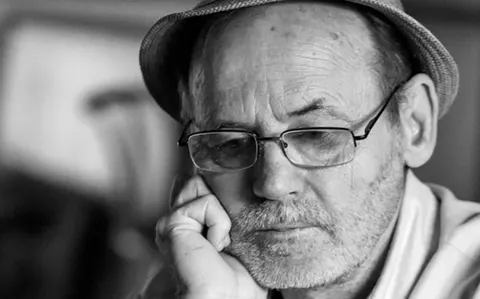
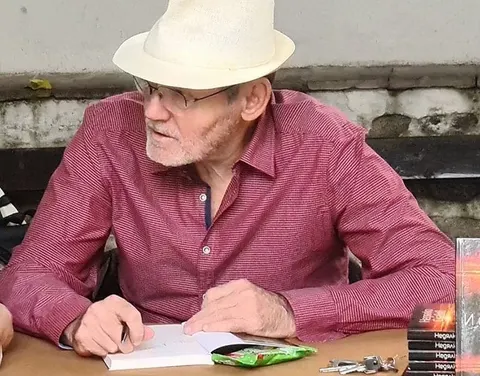
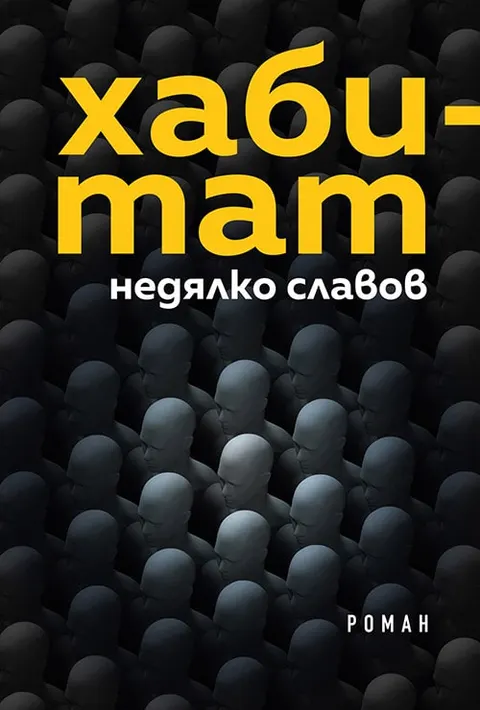
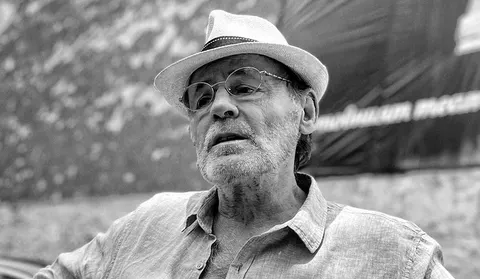
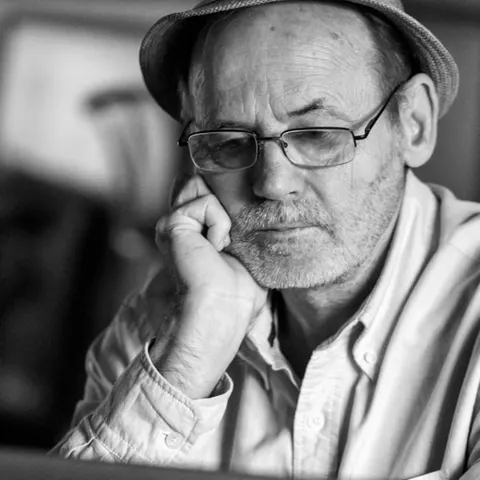
With these words from Nedyalko Slavov we begin our conversation about his latest novel, Habitat. A book of enormous significance and force, steeped in many of the big questions of our day whose answers I never stop seeking through Digital Stories.
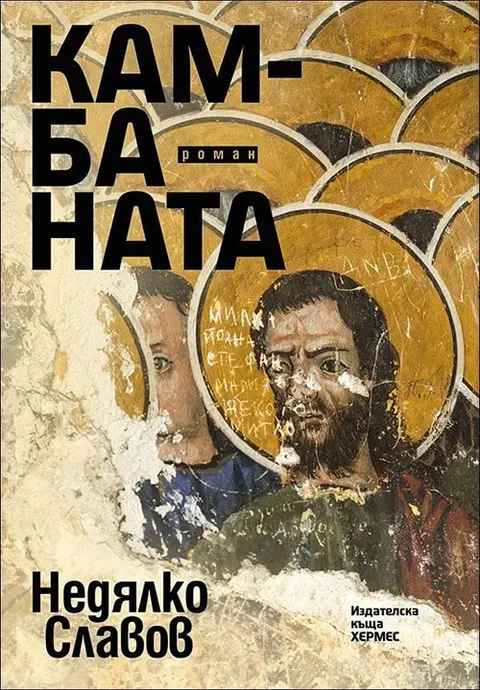
Nedyalko Slavov has won a number of national awards for poetry and prose and is the author of the novels Faustino, 432 Hertsa (432 Hertz) and Kambanata (The Bell).
His new work also borders on the epic. With his merciless writer's eye and his inimitable style, he shows us the ominously ticking explosive devices of the present day, the ones we never seem to have time for.
Will we learn to value our data, the most precious thing we have online today? What can save us from the spy agencies that social networks have become? Where is the battle for freedom being fought today, and do we still have a chance not to lose it?
“It all comes down to what you want to be tomorrow. Free will. Or a barcode in the digital concentration camp of a meaningless world.”
– Where is the line between freedom and total control? Have we crossed it for good?
– First, I want to say right at the outset that my answers to your questions express my point of view and nothing else. I am not lecturing, pointing fingers, explaining or suggesting anything to anyone.
Now to the question. For me, freedom is an inner state, which means it has no limits. But
total control is a deliberate and organized undertaking, which means it has limits
depending on how far it has been carried out. Total control, through the technical achievements of our civilization today, is the realized dream of a certain category of people with sick minds who have accompanied human society since time immemorial. These are creatures with deep inferiority complexes. Total control is the last and most pathological form of power.
– Has truth disappeared online?
– No. It cannot disappear. And if it did, that would mean we disappear too. A human being acquires value only when it shares itself with another human being through sensory, intellectual and emotional contact. Otherwise it remains in a permanent state of primordial loneliness. Communicating through technology only multiplies and sharpens that loneliness; it does not overcome it.
– Is digitalization dividing us on purpose, or did it just turn out that way?
– In and of itself, it is an entirely deliberate process of division. So there is nothing accidental about it.
– The focus in Habitat is on cameras, but they are only one of the many means used to watch us today. To my mind the purely digital ones matter more, the more insidious ones, such as what goes on in social networks. How are we being watched?
– To put it without a grain of paranoia: we are watched everywhere and in everything. And it will only intensify, from social networks through finance to health care. To put it figuratively,
we are like those birds that ornithologists ring with tracking bands.
Cameras are the most visible part of total control.
– And what is even stranger, at least to me, is that we are all aware of it. We leave behind a sea of data that makes us manipulable. We delegate more and more power to the very people who have the most to gain from using it against us. What drew you to the theme of digitalization?
– Some time ago I saw something I will never forget. A
swallows' nest had plastered over and blocked the surveillance camera at a friend's country house.
That metaphor unlocked the idea for the novel, for that battle in which Nature and God want to tear us away from the “ideas” of the Devil.
– What was the most frightening thing you learned as you dug deeper?
– The scale of the system of total control. They are everywhere already.
– Since technology dulls our senses and our collective strength, can individuals still change anything?
– Yes. Someone just has to cut off humanity's power for 24 hours.
– Alas, that sounds rather utopian… But perhaps the solutions are still in our hands, if we stand together? Are revolutions possible in the age of Facebook?
– Facebook's task is to build up social energy and then dissipate it. In other words, it too is a kind of revolution. That is the idea it was invented with. Revolutions and Facebook are essentially one and the same tool of backroom politics. But both revolutions and social networks will lose their power in the multipolar world of the future. They will simply disappear as instruments of manipulation and be replaced by others.
– And how did we even arrive at a world where important decisions are made by corporations bigger and more powerful than the strongest states?
– The usual way.
Through total lies, through total media conditioning, through ruthless financial instruments,
through corrupt governments and politicians, through the mental laziness of the population.
– Didn't this battle also run through the lost battle for truth, through the death of the media?
– The media are accomplices in paralyzing the truth.
– What are the greatest battles we must fight within ourselves today?
– To remain free.
– I too often stress that today's battle is for freedom, the freedom we are voluntarily giving up. Why do we do it so easily? Is it really reversible?
– It is done for the sake of the comfort zone. Our most animal instinct for physical survival, our natural greed and our sense of material security are used to reduce to zero the free will placed in us by the Creator. Whether it is reversible, time will tell. We won't have to wait much longer.
– Technology has split us into camps of fans warring over every next petty topic, which I also think is a powerful means of manipulating social energy. But could it have gone any other way? What can bring us back together, restore nuance, arguments, empathy?
– I don't trust this word “empathy.”
It was taken from the ancient Greeks, but it has been given another, laboratory meaning. It comes from structuralism in psychology, and its hidden emphasis is not on sharing the other person's feelings but on the dismantling of your own personality. I associate it more with entropy.
I am an Orthodox Christian. My word is a simple one. It is Compassion. Love for one's Neighbor. My parents and their parents, and those before them, were not empaths; they were loving, normal people. This word “empathy” is part of the great talking about nothing, of empty phrase-mongering.
– Which human feelings, qualities and actions are most missing in a world ruled by technology?
– All those that make us humane beings. They are simply becoming superfluous.
– You say you chose the term “habitat” partly because of the ongoing devolution of man. When did it begin, and when will it end?
– It begins with Darwinism, then Freudianism, and on through all the other “-isms” of the “scientific” contempt for man. And especially in art: a destructive campaign against the divine in us. From then until today, it has been the same exercise.
– And how did the philosophy of spying become part of our lives?
– Spying enters its most acute phase in totalitarian societies. That is when the little man suddenly becomes big, mediocrity becomes talent, and violence against free people becomes the spiteful, vengeful pastime of a handful of people eaten up by complexes. That is when informing and spying take on sinister proportions.
– In some way we all realize that, as Jaron Lanier says, social networks are in fact spy agencies.
– It's not a very hard conclusion to draw. Why, the very first question on Facebook is “What's on your mind?” And the services dutifully take notes.
– I think it's not so much the services as the corporations it depends on. Then again… we can hardly know anything, given the murky, opaque algorithms of all those who watch us. But let's turn to another big topic… Do you think the end of art is coming? Can algorithms bring it about, or people?
– They are leading us toward transhumanism. And there art will not be needed.
– But what will happen to literature?
– It has already happened. Obedient literature is being written en masse. That's what I call it. It is politically correct globalist drivel dressed up in literary fashions. It is promoted by politically correct critics in its service, awarded by the appropriate politically correct domestic and international juries with the appropriate politically correct prizes, and sent off for politically correct reading in the poultry farm of politically correct obedient readers.
– Is there any point to people without art? Without books?
– No.
Art is our only form of immortality, however brief.
It gives us the chance to live for a little while in parallel worlds.
– And without a connection to nature?
– No. We are an insignificant particle of its Whole. And of its unified Mind.
– Can we restore the dialogue between generations through technology? Or is it lost for good?
– The dialogue between generations lives in ordinary, normal human contact. It needs simple things: human body warmth, the reach of an embrace, the festive engagement of all the senses, the chain of kin, family traditions. In other words, no mediation by technique, technology and the like.
– Why should we teach children today not only how to work with computers, but with a hoe as well?
– Because
it is not fingers on a keyboard but fingers gripping the tools of labor that made us human.
– And what is the most important thing to teach artificial intelligence?
– Whatever we teach it, it will bear the marks of the imperfection of the human mind, because it is the mind's creation. It can never and will never touch the Mystery of the creation that made us, that is, our divine providence.
At one period in my life I was often in Heidelberg. The university there was founded eight years before 1393, when the dark Asian hordes swallowed up Tarnovgrad, the medieval Bulgarian capital, and Bulgaria was extinguished in utter darkness for five centuries. In other words, just as the lamps of the mind were being lit there, they were being put out here. One of the sights of that wondrous little town is the so-called Philosophenweg, or “Philosophers' Walk,” which climbs the slope above the river Neckar. It was a favorite of the great German philosophers, as well as of Heidelberg's lively student youth in search of romantic solitude.
I often climbed it too. I had heard of, but never managed to find, an old tavern at its foot with an inscription over the entrance: “Young man, the meaning of the philosophical height lies not in the height itself but in the path to it.”
I say this because God has ordained that humanity's journey to its philosophical height should be made through the Pure spirit and the Free will of people, not through digitalization, digitization, artificial intelligence and all the other charlatanries of total control.
– For whom does the bell toll today?
– For the one who hears it.
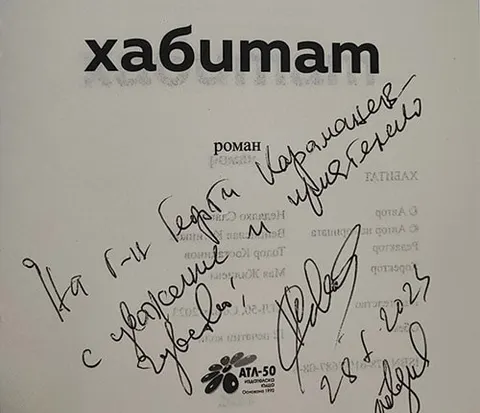
You can find Nedyalko Slavov's novel Habitat at the Greenwich bookstore in Sofia or order it from the author.