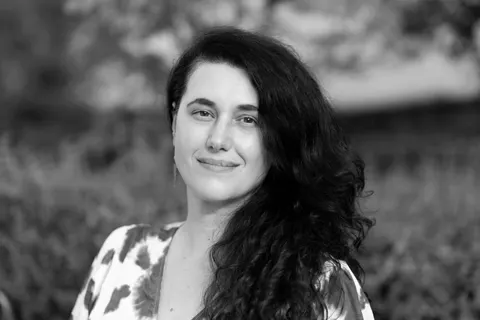
Elena Pavlova has been writing for as long as she can remember. Fans of gamebooks know her by the pen name Virgil Dreamond, the author of 25 of the masterful reads in this literary phenomenon.
She studied computer science and PR, gave up writing several times, and in recent years has returned with a series of well-loved, award-winning books for young and old.
Why can’t the writer wait for us to reach the technology that will read our minds? Where, in her view, has science fiction disappeared to today? What stories does she have to tell about the days of the gamebook phenomenon? And why did things so quickly reach the point where writers and translators in Bulgaria couldn’t afford even bread?
Having seen so much along her life’s and literary path, Elena Pavlova sits down with us to share her long-awaited digital stories.
– For me, gamebooks were an enormous treasure, and you were my favorite author. But today you still write books for teenagers… “young adult.” How have readers changed in a quarter of a century?
– The world changed before the readers did. The world we live in, although it’s the same one, is actually terribly different. Even the internet and the computer themselves, the fact that we’re talking online right now, means things have changed incredibly.
There used to be a gap of 40 to 50 years between generations with different ways of thinking; now it’s maybe 4 to 5 years. Even younger and older schoolchildren behave and react in completely different ways. We live in a completely different digital world.
The way children who grew up with a device in their hands think is completely different
from that of people before the digital age.
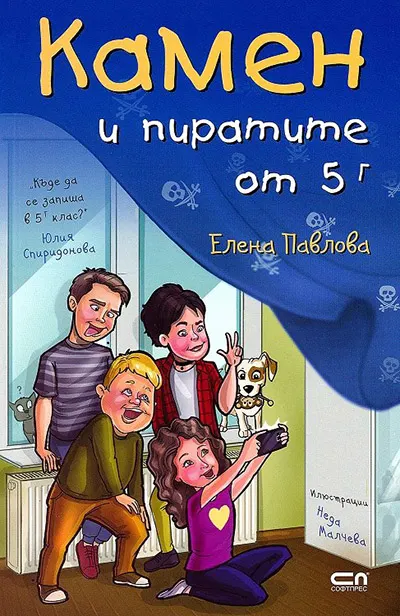
Accordingly, the way they take in information, the way you have to write for them, calls for a different approach. My book Kamen i piratite ot 5-i G (Kamen and the Pirates of Class 5G) was exactly that kind of experiment. Most children have no trouble following the many storylines running in parallel, “sliced” into little pieces, but the adults didn’t like it. Parents are the ones who buy the books—it was the same in the gamebook days—so my next books have a more moderate number of plotlines. But it was a good experiment.
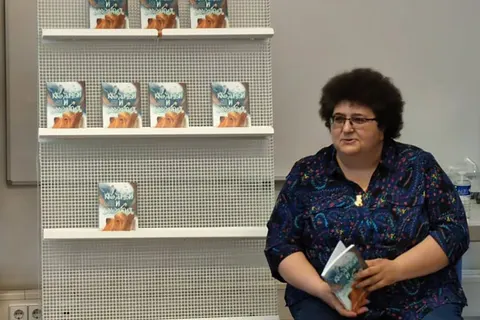
– In some way we all run into this fragmented thinking by now; I don’t even think it’s a generational phenomenon.
– Yes, I catch myself thinking differently too. I reason and write at the computer all day long, with social networks, with video clips. I’m addicted to the internet and digital culture, but the very way we perceive things is changing—the size of the blocks of information the brain takes in at once.
The face of the present era isn’t the page of a book or a textbook, but the screen, which usually runs in two or three lanes.
You’ve got news, messages, the main social media feed, countless tabs. Attention stays put much less, but it takes in more things.
– This is one of my big topics. We never quite make sense of what’s happening, because we keep running after the next fashionable thing. What does this fragmentation deprive us of?
– I’m not convinced it deprives us of anything. Rather, it changes us and makes the world different for us.
It ought to deprive us of the capacity for deeper concentration, but that’s not quite how it is, because it also makes thinking far more multipurpose. It lets you think about several different things at once, whereas the older generation—my parents, say—find it much harder to focus on two things. Today’s child can be at a concert, paying attention and enjoying it, while tapping away at something on the phone and reading on it.
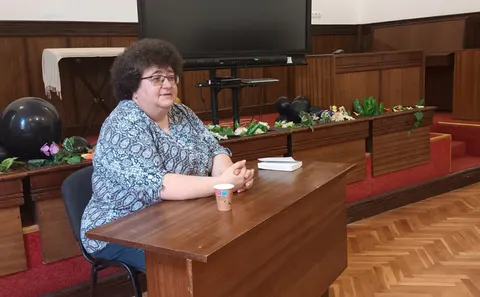
– Is there a way back to concentration? As Ivo Ivanov says, back to sitting down and reading 500 pages of Dostoevsky…
– We cut off the internet and that’s it? There’s no way that will happen. Things will probably settle down, but judging by all the forecasts for the future,
we’re more likely heading toward some kind of singularity.
Development keeps accelerating, and the digital future demands more and more adaptation from every human being. And more and more people are dropping out of the race, reaching their limit. Even I resisted installing Viber for a long time, because I didn’t want one more thing, one more app. I really am addicted to all sorts of gadgets, but I too am reaching the limit of adaptation.
– The singularity… As another of my guests, Nikolay Genov, put it, the arrival of such a future means the end of literature.
– I’m not convinced. More likely it will turn into some kind of cross-platform arts still to come. Maybe not the same literature, but I
am waiting with great impatience for the neural shunt that can feed information directly into your brain.
It could make it possible to write, to read minds, to create in four dimensions what you see the way you’d like it to be. Yes, it will kill the arts as they are now, make them completely different. Writing a book, shooting a film, theater—they’ll become archaic methods. But
in exchange you’ll have a whole different world with a whole different way of presenting art.
– Will we, though? Because mind reading may also mean the end of freedom. The moment it brings us every convenience, I think it will also take far too much from us.
– It depends. I’m not convinced it’s necessarily bad. Yes, as a species we tend to use discoveries for bad things—take facial recognition and the state’s ability to follow you everywhere. Or the fact that digital currency stops the flow of money and turns it into a flow of signals. It becomes necessary for you to identify yourself constantly, which is again a loss of freedom, and we’ve accepted it.
All of this changes both our way of life and freedom as a concept.
Wherever you have facial recognition, you’ll also have ways of evading it. Wherever you have digital currency, you’ll have digital crime.
When the first automobiles appeared, everyone was afraid they’d run us all over, yet today humanity drives those same “bad” cars and doesn’t use horses and carts…
– How do you explain the fact that fantasy has lately become more popular than science fiction?
– Science fiction after the mid-20th century was fashionable because of the scientific element. But now
science is developing so fast that the topics go stale before they’re written.
In June, Ian McDonald, the author of Luna, was a guest at Eurocon. He told us that when he set out to write the book—which, publication included, takes 4 to 5 years—it was known that a person couldn’t survive in lunar gravity for more than two years without the body losing vital substances, with no way back. A two-year limit within which people could return; otherwise they stayed there.
By the time he finished the book, it had been shown that nothing is actually clear and a person can spend 10 to 15 years there without serious harm to the body. And so the whole basis of the plot—the choice of staying or going back—falls away. That’s what’s happening to science fiction as a genre. We have photos of black holes, we listen to them merge, we know more about the Milky Way than we did 10 years ago. The universe is becoming incredibly different.
Science fiction used to try to translate science into the language of ordinary people and
at the same time gave scientists the chance to dream. Right now that simply can’t happen.
You have to be an incredible visionary to extract a scientifically credible future from this super-fast-developing science.
It’s natural for people to seek refuge in fantasy, where worlds can be utterly unscientific. It’s also a kind of escape from reality.
Besides, over the past 25 years literature has focused much more on the emotional side. It started playing with the reader’s feelings; the characters aren’t just vehicles for the author’s idea, but a way of interacting with the person behind the page. Making readers identify with the work, stirring emotions in them and living through them together.
People increasingly want to read fantasy, romance, contemporary novels. The modern world is worth describing with all its dynamic changes; there’s an awful lot of material for writers in the present day.
– But it’s sad that there are more and more discoveries in space, while we talk about them less and less.
– What’s sad for me is something else. Lots of people now believe we never set foot on the Moon, that the Earth is flat. That there’s some grand conspiracy of reptilians. That’s a natural result of the world developing so intensively and people being unable to keep up. But the moment you stop trusting science and start thinking that your personal opinion, or the opinion of the crowd, carries any weight, that’s probably the end of progress as such.
– And what if the Earth really is flat? But let’s go back from the future to the past, to the magic of gamebooks. How did you come to them?
– Back then I could afford it and bought every book that came out, and I was enchanted by gamebooks. I started with Ognena pustinya (Fiery Desert), soon there were more, and once I realized they were the work of Bulgarian authors, I decided to try my hand too.
We didn’t live in a digital world yet—I mailed a floppy disk with the text of Ledeno bezmalvie (Icy Silence).
Pleiada, the publisher, liked it, published it, and that’s how it all began…
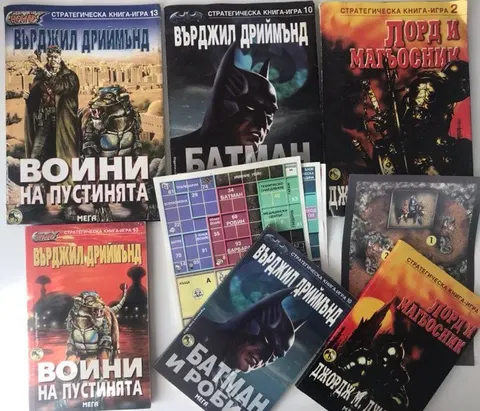
– And before you knew it, you’d written more than 25 books…
– Then Petar Stanimirov and I started a side project—not gamebooks, but thrillers.
In 1996 came the great hyperinflation that wrecked Bulgaria’s economy; within a week we were all millionaires with $1,000 at home. As a result, publishing took a blow from which, you could say, it hasn’t recovered to this day.
Before that, I think we lived in an optimistic world. People launched all sorts of ventures without stopping to think what would happen if they failed. Many got burned at that stage, but others survived and even grew. It was a kind of Petri dish for everyone who wanted to achieve something.
It was a wild time in publishing. On the one hand, houses published translated literature without rights; on the other, they took risks without knowing they’d sell a print run. That’s how the first translated gamebook came out, and that’s what fired up Lyubo Nikolov. Those were times when someone could come up with the idea: Bulgarian books don’t sell, but we can make some that people would like, and we’ll put a non-Bulgarian name on them.
Then Petar Stanimirov and Dimo, the publishers of Pleiada, fell out. Pepi split off, wanted to keep publishing gamebooks, and invited me to work with him.
After that we just… published. In retrospect, maybe it was a mistake to put out such an enormous number of gamebooks,
but it wasn’t just Mega’s doing. All the publishers tried to milk the market as much as they could.
– How do you explain the genre’s huge success? It remains a Bulgarian phenomenon…
– For me, the success came from the fact that there was a huge hole in children’s literature. There were the books from the Otechestvo publishing house for slightly older kids, and from 1990 to 1996 there was practically nothing else—even in English-speaking countries those were “lean” years. That hole had to be filled with something, and in Bulgaria it was filled by gamebooks. Around 2000 they began translating properly licensed books for young readers; before that there were only Karl May and Mayne Reid, who were already dated. I’m exaggerating, of course, but not by that much.
– Then came Harry Potter… Still, couldn’t gamebooks have evolved and carried on with their audience?
– The problem was that far too much was being published; the market couldn’t absorb three or four publishers churning out several books every month.
Besides, computer games back then were at a very similar level. They resembled visual novels, computerized gamebooks. And the pull of graphics that were great for their time, set against the paper book… The gaming clubs started appearing, and kids gathered to play Doom and Counter-Strike.
So how are you supposed to read books? I preferred the computer myself…
– I think there were still people to read them, but the books were gone. It was strange how they appeared and vanished. Were their authors really that good? Honestly, I’m afraid to open an old gamebook in case I’m disappointed.
– At least what I’ve reread, if I liked it back then, still seems good to me. Some certainly haven’t aged well, but then again the competition from computer games is gone. Games have gone in a completely different direction; today they compete with cinema, if anything.
The idea is for everything to become interactive. I like rereading the old gamebooks.
Whether they could be revived is a complicated question. The truth is that, at least in my view, the second wave exists mostly for fans of the first. And for their children. Yes, there are kids who pick up the torch—just as there are kids who like ABBA or the Beatles because their parents listen to them. Of course, quite a few young readers find gamebooks on their own and get hooked, but in no way can they match the number of fans from the pre-digital era.
– After the sunset of gamebooks, how did things go for you? I see a big gap during which you probably weren’t doing literature.
– I was translating, and I still do it very actively. At one point I stopped, because fees weren’t rising—if anything, they were falling. Quite a few publishers stopped paying regularly during yet another crisis.
You slave away like an idiot for 12 hours at the computer, you make some good books that might even sell, and… it turns out you’ve earned enough for a pack of cigarettes.
That’s no way to live, is it? You work yourself to death and end up begging the shopkeeper for a loaf of bread on credit. There were even publishers I worked with only if they paid the whole sum up front, because I wasn’t sure they’d pay otherwise. With two of them I broke off relations halfway through a book, literally.
– Didn’t you miss writing?
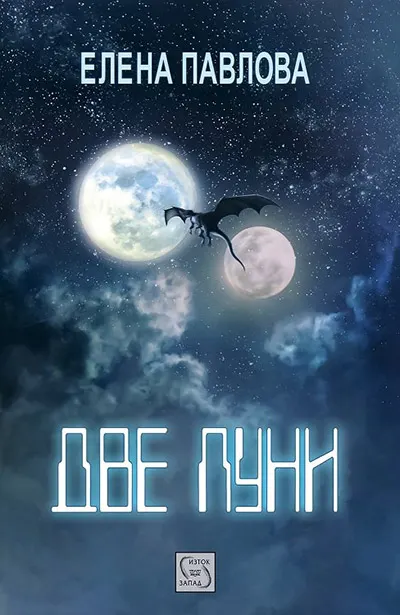
– Besides gamebooks, I never stopped writing standard fiction—horror and science fiction. In 2016 a collection came out, Dve luni (Two Moons), which contained the stories of the previous 20 years. And the ones that didn’t make it in, I gathered in the next collection, Belyazani lebedi (Marked Swans), the bad little brother of Two Moons.
Meanwhile, up to 2005, I published three novels, one of them a huge fantasy, of which I wrote two volumes. The first, under the pen name Elijah Jowett, sold very well; the second never made it to print. It was written, edited, and left waiting.
After that second volume I burned out on writing, and nearly 10 years of total pause followed.
Then, in 2013, Pepi Stanimirov invited me to do adaptations of Wagner, the four-volume The Ring of the Nibelung. I didn’t tell him I hadn’t finished anything in 10 years and was in a gigantic writer’s hole. And a miracle happened… the dam burst.
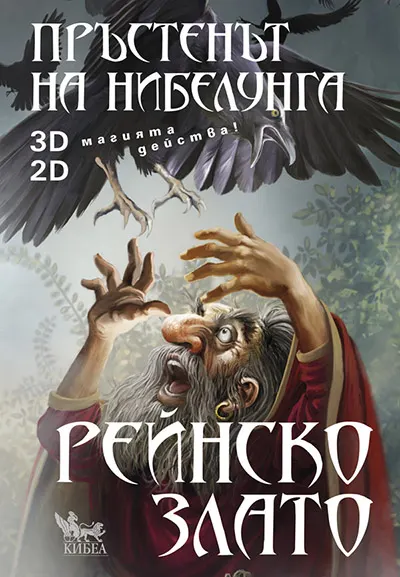
– And you switched genres sharply…
– It’s very strange, isn’t it? I started writing children’s literature. Plus, everything since then, except for two stories and Wagner, of course, is set in Bulgaria. Not that I want it that way; that’s just how the ideas come to me, in Bulgaria. I even have contemporary stories now… it makes me laugh, I always said I couldn’t write contemporary fiction, and look where things ended up…
Last year I published another story collection, Bez kitove (v lipsa na elektrosnabdyavane) (No Whales (In the Absence of Power Supply)). You can tell the author’s voice is mine, but it’s very different from before.
– I read that you studied computer systems. Why did you change direction so drastically?
– I’m the idiot who believed back then that teachers should preferably be smarter than you. And on the brink of the Transition, Bulgaria’s shift from communism, when you find yourself among the old party appointees at the Technical University of Sofia, you start asking yourself: “Wait, why am I here?”
I didn’t graduate. I felt there was nothing to learn from those people. Now I can look back, 35 years later, and tell myself it was a mistake. But I also had to choose. Gamebooks were being written, they brought in money, we had to eat. My father retired right then, and supporting the household was more important than finishing a degree.
– Did you feel like a star back then? I’ve seen the photos with sacks of letters from readers, and I know what impressive print runs we’re talking about…
– It was certainly nice, but I never managed to get a big head. Even now it feels a bit strange when someone says, “I’m your fan.” I understand they liked what they read… it warms my heart, but I don’t consider myself super great. I’m still the same.
– The fact is, you taught a whole generation to read.
– They were great times, really. It was a wonderful feeling to walk into the office and find a huge pile of letters like this, just poured out, that we’d spend two hours reading. I even have a small box kept at home, remnants of those days, but a superstar… I never saw myself as one.
Maybe if I had the same kind of success in today’s era—seeing readers directly, them liking things on Facebook—it would be different… I don’t know. It probably comes down to the type of person you are, after all.