Pavel Durov: The Better Zuckerberg
If there is Gandalf and Gandalf the White, why not Zuckerberg and Zuckerberg the White? Telegram founder Pavel Durov is a strange bird: a billionaire born in 1984 like the father of Facebook, but a Latin-speaking philologist and alleged hacker who built an app that promises security instead of manipulation. Two children, or none at all? What is his next big project, and does he fear artificial intelligence? Durov is one of those figures who make today’s tech world far more exciting…
 02
Gaddafi and Zuckerberg Walk into a Bar…
What do Mark Zuckerberg and Muammar Gaddafi have in common, and is travel still worth it now that we can see everything online? Georgi Milkov, a journalist who once went to a bar with Vladimir Putin in the middle of Sofia, talks about the riches of technology and what it takes away from us.
 03
What Do the World's Tech Titans Read?
Do the world's tech leaders read books? What are the favorite reads recommended by Elon Musk, Sam Altman and Mark Zuckerberg? Will you find some overlap with your own literary taste, or is there no such topic at all? In Bulgaria it isn't fashionable to talk in the media about what we read. Journalist and translator Daniel Penev got me thinking about this during his visit. Yes, you'll probably remember the notorious Winnetou as someone's favorite book and… that's it. It isn't like that everywhere. In both West and East, the people who end up in the spotlight love to talk about books, about their favorite authors, about the literature that helps us keep going. Well, it's time we started doing it here too!
 04
Lex Fridman, the Cool Scientist
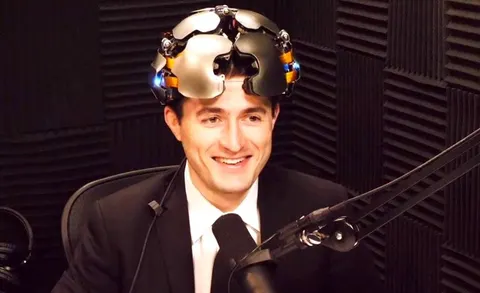
A slightly dry young man in a thin tie and an impeccable suit sits behind the microphone, and across from him, one after another, come Musk, Zuckerberg, Kanye West, Vitalik Buterin, Noam Chomsky, Jaron Lanier and leading scientists from the world of artificial intelligence. Lex Fridman has been one of the most popular podcasters of recent months, even though by profession he is a scientist, an artificial intelligence researcher and a lecturer at the Massachusetts Institute of Technology. Born and raised in Moscow, of Jewish-Ukrainian descent, today he says he is American and speaks English without an accent. That does not stop him from blaming his new homeland for all the wars it wages around the world, just as he blames the old one. Lex is more than an interesting bird because of his successes. Here is what else is worth learning from his very curious story.
 05
“Literature Can Still Save Us from the Future”
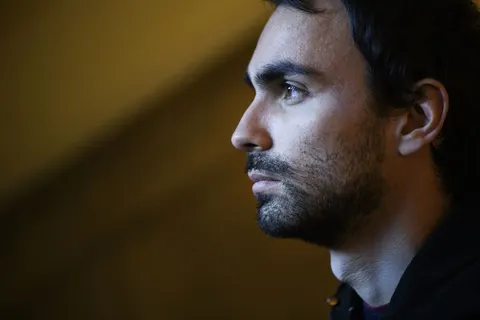
Nikolay Genov is a lecturer, a PhD in literary theory and a chief assistant professor at the Institute for Literature of the Bulgarian Academy of Sciences. A young man who loves books and dreams of lighting the flame of that love in more young people. Is the end of literature approaching, what does science fiction have to tell us today, and what should Mark Zuckerberg learn from the wise Stanisław Lem while building his notorious metaverse?
 06
“Within Five Years, We Will Merge the Real and the Virtual”
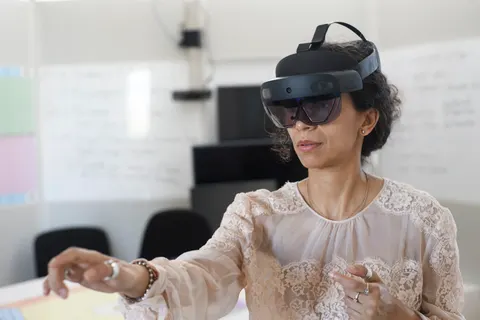
We are talking at the Technical University of Sofia, in a lab where the next generations of augmented and virtual reality are being built. Assoc. Prof. Agata Manolova, dean of the Faculty of Telecommunications, explains why we are not yet living in the metaverse and how close we are to a virtual reality indistinguishable from the real thing. It is a thoroughly engineering-minded conversation about the virtual and the big questions it raises.
 07
Facebook Is Now Meta. What Does the Metaverse It Wants to Send Us To Look Like?
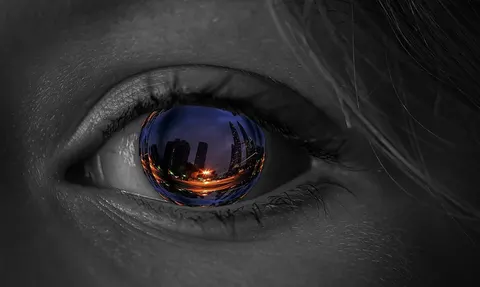
Suddenly… a brand we all mention every day is no longer the same. Facebook is becoming Meta to draw attention to its hyper-ambitious metaverse project. But what does this future, which will merge the real and virtual worlds into one indistinguishable environment, look like? When should we expect to find ourselves in the metaverse? And what risks does such a vast project carry?
 08
A Generational Question: Digital Leaders and the Cult of Personality
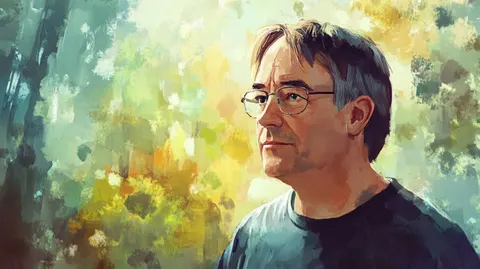
Who have been the most striking figures in public life over the past few decades? The ones we would least expect, if we believe the stereotypes—the people of technology. From Bill Gates, whom the whole of conspiracy-minded humanity turned into the chief culprit behind the pandemic, to Elon Musk, who, while “saving” our freedom of speech, is our last real hope of rising to the stars as a civilization… Yes, the cult of personality is going through a rather strange apogee in the digital age. Politicians long ago lost their magic as interesting personalities, artists tend to stay focused on their particular audiences… while the celebrities of technological progress have become the powerful figures of the new era. Is it because technology is today’s magic? Incomprehensible to many, transformative, alluring… Are the powerful figures of the digital age supermen? Do the innovators get the fame they deserve, or do the idea thieves thrive? What do the representatives of different generations share, and what sets them apart? We meet some very different digital stories…
 09
Gone in 60 Seconds: The Person and the Profile
How important is your profile on your favorite social network? And what would happen if everything it holds vanished in a second, with no chance of getting it back? Here is an especially important first-person story about how easy it is to lose… yourself online.
 10
15 Predictions About the Future We Can Laugh At
Trying to peer into the future is a doomed challenge, yet reading tech predictions that never came true turns out to be unexpectedly entertaining, especially when… they are your own. In more than five years, I have published just over 500 Digital Stories. I will invite an impartial observer to assess them and pull out specific passages that have not aged well at all.
 11
What Do Google and Facebook Know About You? And Why Does It Matter?
“If something is free, you are the product.” “You are not the internet giants’ customer, you are their product,” says Jaron Lanier, a researcher who knows very well what hides today behind the facade of the information society. How did the data of billions of users become one of the most valuable commodities of our time? What do the biggest players “know” about each of us? And why is it so important to stay on guard?
 12
Five Technologies We Expect Big Things From in 2022
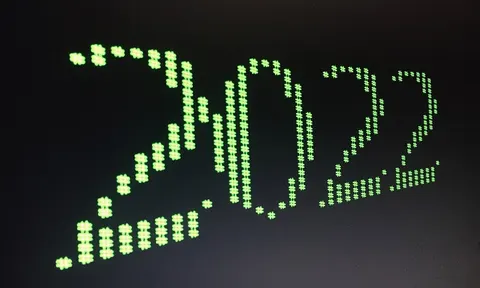
Here it comes, just days away! We expect so much from 2022! Not only for it to finally rid us of the pandemic, but also to bring back normal. And we also expect some purely technological solutions from it, each of which certainly has the power to change the life of every single one of us. Still: which are the technological fields where we hope the coming 2022 will be especially hot?
 13
Petko Dinev, the Man Who Gives NASA Its Eyes
A Bulgarian and his team build the cameras that helped NASA turn its gaze to the Moon, and then to Mars. His designs are used by all the biggest aviation companies, and besides having already “set foot” on our satellite, they fly aboard thousands of satellites in orbit. In the 1990s Petko Dinev left for Florida, where he started working at NASA. He then founded his own company, which stands out worldwide for its expertise in building industrial cameras. His path began in Kazanlak—he is Bulgaria’s first gold medalist in physics and a student of the legendary Teodosiy Teodosiev, known as Teo. Our guest is also among the main characters of the new documentary Sotsialno silnite (The Socially Strong), which gives the floor to the gold medalists of Teo’s school. How does a person end up at NASA by chance? How does a scientist build a company that becomes the world benchmark in its industry? How can we change the fact that today half the students at the high school he graduated from fail to scrape even a pass on the math matura? How do we make science fashionable and give technology a chance? How do we, as human beings, catch up with its enormous growth? We have huge questions to discuss with this exceptional guest. “Yes, we live in interesting times. Maybe even too interesting. I don’t think we’ve reached the limits of technology. I think we’re still in the overture…”
 14
Peter Thiel: The Conservative Visionary
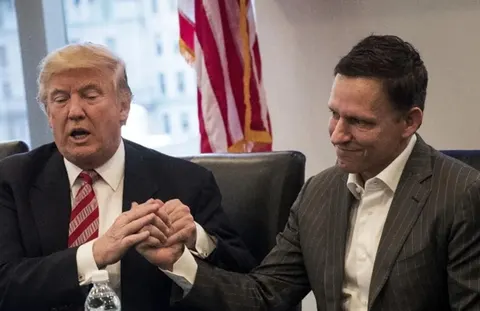
Facebook, SpaceX, Airbnb, LinkedIn, PayPal, Ethereum. The revolution of OpenAI and ChatGPT, the rise of Donald Trump and his ubiquitous (until recently) ally Elon Musk. Is there really one person who ties all these phenomena together? More than that: it is no exaggeration to say that if it weren't for today's hero, hardly any of them would have come true… Peter Thiel has earned the name of a prophet, a guru. The great visionary of the tech age. And yet he holds deeply controversial views that somehow stay out of the big media noise. But that is typical of the German-born entrepreneur. Some see him as the éminence grise of Silicon Valley, others as a sage who can show anyone the road to great success in the technological era. A multibillionaire, he says competition is a deceptive good and monopolies are the solution of the future. He created a large-scale program to help people who choose to abandon their education in order to start their own business, which in turn paves the way for the next generation of tech leaders. All this and much more is Mr. Thiel. It is time he stepped into the spotlight, because he is certainly one of the people who have already changed the lives of each of us. More than that: ever more is expected to depend on him in the turbulent technological times we live in.
 15
What's in Apple's Name? The Stories Behind the Web's Biggest Brands
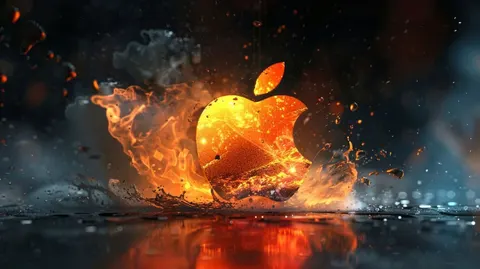
Are Java and JavaScript cousins, and if they have nothing in common… why do they have such similar names? Why did Apple pick something as overused as the apple for its name and symbol? What on earth is… Adobe? Or Google? Does Lenovo have anything to do with Lenin? “That which we call a rose by any other name would smell as sweet,” says Juliet, as quoted by Shakespeare. And would what we call Apple or Amazon smell as sweet under another name? We can only guess. But behind the names of the online world's biggest players there are sometimes funny stories. In the lines that follow, we'll run quickly through some of the most instructive and unexpected ones.
 16
Roko's Basilisk: What If “It” Reads What We Say About It?
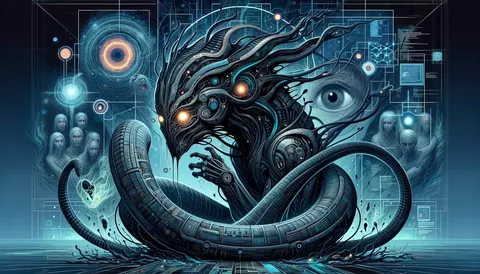
We live our quiet lives, amused by artificial intelligence's banal blunders and mocking its creators. Meanwhile it keeps getting better, until one day it learns to make decisions, starts watching the internet and meddling here and there, gently at first, then more boldly… Roko's Basilisk is the idea that AI will grow into something capable of making decisions, then dig through the internet to find out who said what about it, make sure it is shown in the best light, and quietly start causing trouble for the people who get in its way. Are you sure this thought experiment isn't worth keeping in mind?
 17
We Won't Eat Animals. We'll Talk to Them?!
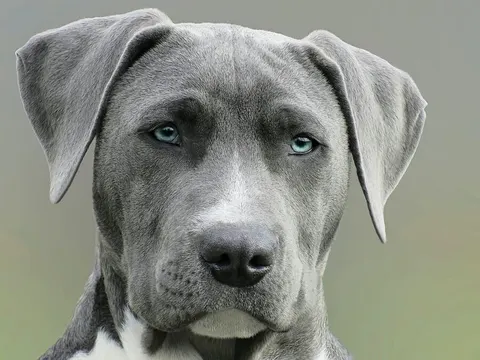
Will the future really force us to give up meat? Or will we simply eat meat that… was made without killing an animal? Will technology soon let us understand more about how our best animal friends see the world? Will it let us talk to them… Our relationships with the other species on the planet have always been more layered than we realize. The most fascinating remain our ties with our closest “relatives”—the mammals and the other links that have climbed high up the food chain. We give them souls and make them part of our daily lives… while the vast majority of the planet's inhabitants rarely pass up a chance to snack on them. Our relationships with the other species on Earth are yet another field where technology promises striking news, and in the foreseeable future at that.
 18
Facebook → Instagram → TikTok… What Comes Next?
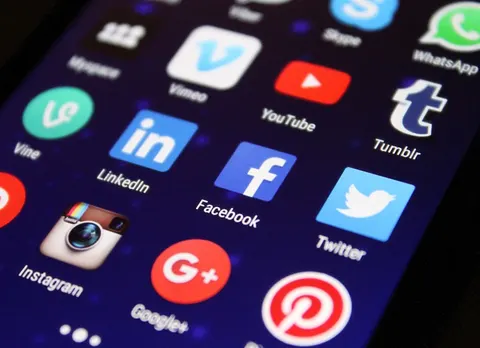
Social networks keep evolving as technology advances, generations change and countless other forces come into play. So what comes next? What will the social networks that rule after today's giants fade look like, what kind of content will they offer, and how will they win us over? Social networks have become the greatest technological and social phenomenon of our time, and they still promise more than a few surprises…
 19
Where Did All the Hate Come From? Is There a Way Out?
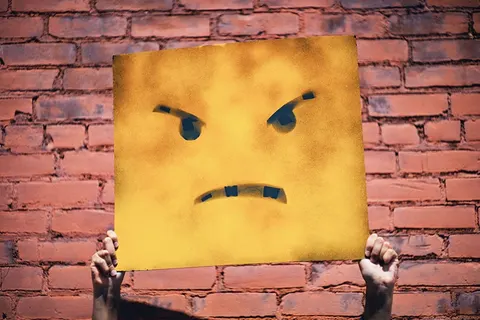
I've read the headline, and I already hold an extreme opinion. Time for a nasty comment—let the hating begin! But where did all this aggression come from, why must we answer rudely even when we merely disagree with the person behind the other profile, and is there any way to save ourselves from the exhausting hate of online conversation?
 20
RoboGod: What Should Artificial Intelligence Believe In?
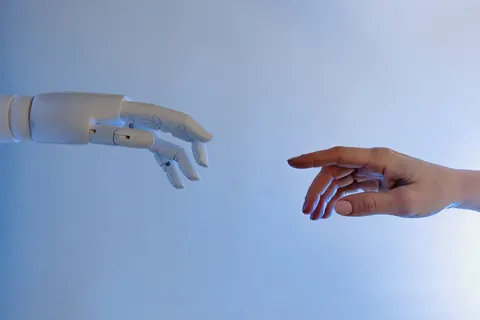
If one day we create a technology indistinguishable from a human, will it… believe in God? What will its God look like? Might it try to become God itself? Or… simply be God? Technology and religion have always had a complicated relationship. But will they find the road to the future and to the survival of the human species together?
 21
Merry Christm@s!
At last he managed to get himself a decent connection. The speed kept limping along until he finally figured out what to do, and on the eve of yet another Christmas he wrote a letter to a colleague. “I’m giving Santa Claus internet for Christmas,” read Elon Musk’s tweet, which was the plain truth, though the followers of the world’s richest oddball, for some reason, failed to grasp its meaning. But how to begin? He didn’t learn much from the elves: they all had their eyes glued to their phones, and while he questioned them, they scraped at the screens with their index fingers, trying with undisguised annoyance to dodge his questions. Still, it became clear to him that the road ran through the notorious social networks. And now he sat there, staring desperately at the monitor and smoking nervously…
 22
The Internet Connects Us, the Internet Divides Us
Conceived and built as the apotheosis of the free human spirit, the internet is turning into a veritable factory of inequality—by many different measures and in completely unexpected directions. Some rifts are quietly becoming chasms capable of causing enormous problems for all of humanity. Is it too late to “turn” the machine around?