Who have been the most striking figures in public life over the past few decades? The ones we would least expect, if we believe the stereotypes—the people of technology. From Bill Gates, whom the whole of conspiracy-minded humanity turned into the chief culprit behind the pandemic, to Elon Musk, who, while “saving” our freedom of speech, is our last real hope of rising to the stars as a civilization…
Yes, the cult of personality is going through a rather strange apogee in the digital age. Politicians long ago lost their magic as interesting personalities, artists tend to stay focused on their particular audiences… while the celebrities of technological progress have become the powerful figures of the new era.
Is it because technology is today’s magic? Incomprehensible to many, transformative, alluring… Are the powerful figures of the digital age supermen? Do the innovators get the fame they deserve, or do the idea thieves thrive? What do the representatives of different generations share, and what sets them apart? We meet some very different digital stories…
The Powers That Be
Here is how the stories that make up the essence of the digital age line up side by side.
We’ll talk briefly about the powers that be in the world of technology… and, more broadly, over the past few decades. From Bill Gates to SBF and Sam Altman. Don’t expect their horoscopes; we’re sorting them by generation, with all the caveats these groupings carry, the way they have taken hold in the Western world.
How has the image of the tech hero changed over the past few decades?
Bim, Bam, Boom
(Boomers, 1946–1964)
In the West, people born before the end of World War II are called the “Silent Generation.” The great tycoons of that time, however—Warren Buffett and Rupert Murdoch, for instance—don’t have much to do with technology. Things change quickly with the generation of “boomers” (from the baby boom), those born in the two decades after the war.
Some of today’s tech heroes just miss this list, but they are among the people known not so much for untold wealth as for their real technological contribution. Such are Dennis Ritchie (1941)—the creator of modern programming languages—and Gary Kildall (1942)—the man remembered by history for almost ending up in Bill Gates’s place, and for… ethical reasons, no less.
In 1945 came the incredible character John McAfee—the creator of the first antivirus program. Here, too, belongs Geoffrey Hinton (1947)—the technological pioneer to whom we owe much of the progress of today’s artificial intelligence (and who warned us about the dangers that come with it). Next come Apple co-founder Steve Wozniak (1950) and Robert Martin—“Uncle Bob”, the guru of modern programmers (1952).
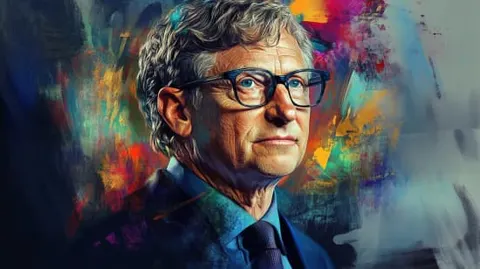
1955 is a symbolic year: that is when Bill Gates, Steve Jobs and Sir Tim Berners-Lee were born. So different, both in their fates and in their media images. Gates never managed to establish himself as the philanthropist he spent decades and billions of dollars trying to become, while the role of visionary and icon remained with the creator of Apple. And to them we add the scientist who made today’s internet possible (plus a few more strong members of the class, like Bruce Willis, Kevin Costner and Whoopi Goldberg). And James Gosling—the creator of the Java language.
We round off the list of boomers with Bill’s partner Paul Allen (1953), Jaron Lanier (1960)—the digital prophet who came to hate the internet—and Brendan Eich (1961)—the creator of JavaScript, the language that brought events into the browser. The last train for this generation is caught by the founders of Amazon, Jeff Bezos, and of Alibaba, Jack Ma (1964).
And so the digital leaders of this period are so different from one another, and so peculiar, that they are hard to generalize about. Because the prime years of this generation coincided with the time when the internet appeared to conquer the world, and computers became a necessity and part of everyday life.
A Bezos-lute Success
(Jeff Bezos, 1964)
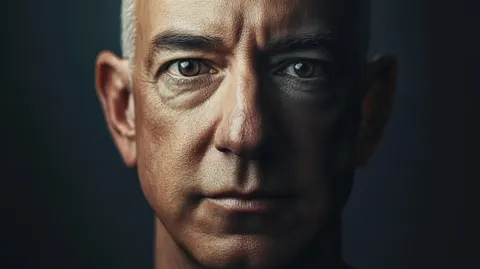
Bezos is the first earthling to officially own a three-digit number of billions of dollars. For a long time, the battle at the top of the rich list was fought precisely among the tech faces of the boomer generation.
Bezos is one of those who keep staying near the top regardless of trends. His fortune still exceeds the gross domestic product of quite a few countries… That didn’t change even after his noisy divorce, in which his ex-wife MacKenzie received 4 percent of Amazon’s shares, worth about $36 billion, making her the third-richest woman on the planet.
Unlike Gates and Jobs, he built his wealth not through innovation and technology but through a business model that turned out to be incredibly successful… at least as far as he was concerned. Because Amazon proved to be the main factor behind the bankruptcy of thousands of bookstores around the world. Books were only the beginning that made the brand popular; then it turned into an “everything store” and a role model for everyone else.
You may not have heard the wonderfully curious story that the future multibillionaire’s first delivery went to… Bulgaria? In 1995 Bezos admitted he hadn’t even imagined that the internet had reached our country. The customer chose to pay in cash, which at the time meant… two hundred-dollar bills stuffed inside a floppy disk. He also sent a separate message saying, “The money is in the floppy disk.” He was counting on our customs officers not knowing English and therefore not pocketing the two bills… and he turned out to be right.
He was born when his mother was just 17; a year later his parents split up, and Jeff himself bears the surname of his mother’s second husband. Mike Bezos, who adopted him, was an immigrant from Cuba and by profession… a circus performer, an acrobat. Yes, it’s fairly typical of successful boomers (and not only them) to have had a tough childhood.
You can’t say he lacks a sense of humor—in 2016 he played an alien in one of the Star Trek films.
It’s worth noting that he was among the first in the line of billionaires to turn their gaze to space. And that he is known for his not-so-great treatment of his numerous employees.
Gary, the Better Bill
(Gary Kildall, 1942)
He created the first operating system for personal computers. And, according to legend, he let slip the golden contract with IBM that could have given him the leading position in the software world—a position won instead by Bill Gates and Microsoft. Because he wanted to go flying in his plane instead of going to a meeting.
And although that legend isn’t true, he is undeniably a legend of the dawn of the computer age. He died at just 52 after a drunken brawl, in circumstances that remain unclear to this day. He left his mark on computer history not so much with that incredible chance at enormous wealth in the early years of computing. Rather with his forward-thinking ideas, which we use every day. And with the missed opportunity to become the better composite image of the creators at the dawn of the digital age…
“It was not a happy moment when I realized that computers are made to make money, not to make minds,” said Gary Kildall. He is among the pioneers of the modern computer world; even the most serious authorities acknowledge that he had the chance to become the man at the head of it all, to take up the baton at the dawn of the computer era.
For a long time he served in the military. He nearly ended up in Vietnam, but his officers decided he would be more valuable as a programmer—a profession that practically didn’t exist at the time.
Kildall was the first to write software for microprocessors, and then he created the pioneering operating system for them. The foundations he laid are used in practically every computer built from the dawn of the information age to this day.
Another amusing legend. There was a $200,000 reward for anyone who could find a secret command planted in MS-DOS by Kildall, one that would prove the truth about the copyright to the first operating system. The prize was offered in 2012 by legal consultant Bob Zeidman and, alas, was never claimed.
His path crossed Bill Gates’s many times. At a tech conference Gary said that operating systems were a huge market with room for many companies, while today’s lord of the chips replied: “No! There will only ever be one company there.” After Kildall’s death, Gates wrote that Gary was “one of the original pioneers of the PC revolution. A very creative computer scientist who did excellent work.”
“He is divisive. He is manipulative. He has taken much from me and the industry,” Gary, for his part, wrote about Bill in his memoirs. Would the idealist have been the more likable version of Bill Gates? History has no “ifs,” but there is always room for reflection…
The X-Files
(Generation X, 1965–1979)
And so the second generation of digital leaders is just as colorful and motley, with divergent careers and impressive stories.
Of course, we can’t help but begin with the richest man in history—Elon Musk (1971)—about whom there isn’t much left to say, since so much has already been said (still, for the sake of curious coincidences: his “classmates” include Julian Assange, Tupac Shakur, Snoop Dogg and Lance Armstrong).
What’s interesting here is how many of the digital leaders who greeted the rise of the internet at the turn of the millennium were born within just a few years of one another. 1973 is the birth year of Google’s founders Larry Page and Sergey Brin, and of the man to whom we owe Slack—Stewart Butterfield. Just a year older is today’s lord of Google—Sundar Pichai.
This group also includes the current head of Microsoft, Satya Nadella (1967). At the tail end of Generation X we see Twitter founder Jack Dorsey (1976) and… a man whose real name we don’t know, though we do know his age. The mythical creator of bitcoin, Satoshi Nakamoto, was born in 1975.
Quite a motley crew, wouldn’t you say? And yet, from the point of view of the cult of personality, it seems that everyone in this generation stands, more or less, in the shadow of the creator of Tesla. In his role as something between god and jester, provocateur and revolutionary, and so many other contradictions.
There are plenty of parallels to be drawn between Musk and… Thomas Edison. Researcher John Gantz calls the phenomenon “bossism”—a person who has landed in a high financial position is expected practically to steer societies and nations. In part this is also because the wealthy class used to stand much further outside media attention than it does in the age of technology.
According to economist Prof. Paul Krugman, however, many people are thereby putting on a pedestal a man who is “a thin-skinned egomaniac plutocrat displaying his insecurities in public.”
Will there be more such cases in times when the rich keep getting richer, and more and more often do so through technology?
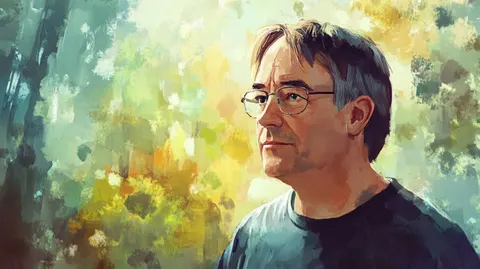
Linus the Lionheart
(Linus Torvalds, 1969)
Linus. Even if you have no interest in technology, it’s bound to sound familiar… Linux. The operating system really is named (almost by accident) after its creator. Linus Torvalds is one of the good heroes of the information age. The people who built today’s internet without being tempted to turn their skills into billion-dollar fortunes and monopolistic projects that quickly take on ugly, manipulative hues.
He first sat down at a keyboard at just 10. He was lucky that his grandfather had bought the supermachine of the day, the Commodore VIC-20 (with a 1-megahertz processor and 5 kilobytes of RAM). He found it so fascinating that a few years later he was already studying computer science at the University of Helsinki.
In August 1991 he bought his first personal computer. He installed the Minix operating system from a floppy disk and didn’t like it. It didn’t seem to work well, the more polished versions cost money he couldn’t afford, and so he decided… to make an operating system himself.
A few weeks later he posted a message on an online forum saying the prototype was ready. Anyone who wanted could download it for free, and it would be great if they shared their impressions afterward. And something more, unheard of until then: Linus shared the complete computer code of his project, down to the last line. In doing so, he set off two revolutions in the computer world at once. In effect, the era of open-source software was born—one of the most meaningful directions in creating programs. And for the first time, users got a high-quality, lightweight operating system that anyone could use however they saw fit.
While working on Linux, its creator ran into an annoying problem. More and more developers were gradually joining in, which caused quite a few difficulties. That is how his other great contribution came about. Today Git is in every software project in the world, without the slightest exaggeration. The system is, once again, open source and makes programmers’ lives many times easier.
What does Linus do today? His fortune is estimated at $150 million. And his main occupation is looking after the Linux kernel. Today Facebook, Google and Wikipedia rely heavily on this operating system, and of the world’s top 500 supercomputers, the number running Linux is… 500.
The Story of an Accidental Revolutionary. That is what Linus calls the book in which, together with David Diamond, he tells the story of his two great projects. And its first words are: “Just for fun…”
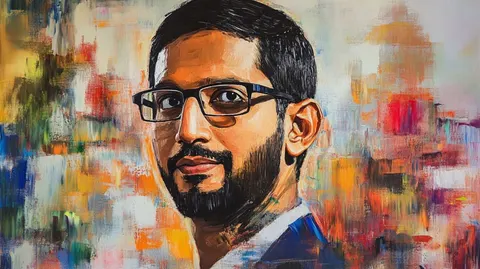
Slumdog Millionaire
(Sundar Pichai, 1972)
Google’s founders Larry Page and Sergey Brin weren’t particularly inclined toward media fame either, but their successor today is practically unknown to the public. And that somehow fits perfectly with the image of a company that conquers huge markets and vast fields of attention without aggressively imposing itself.
He rarely speaks to the media, and even more rarely in a way that sticks. Sundararajan Pichai was born on June 10, 1972, in Chennai, the capital of the state of Tamil Nadu. The family wasn’t among the poorest—his father was an electrical engineer at a British company and his mother worked as a stenographer. They lived in a modest home, where he and his brother slept in the living room. It was a great celebration when they managed to buy a refrigerator. And when they got a telephone, they were the first in the neighborhood to have such a luxury, and many neighbors came over to make calls from their home.
He graduated in metallurgy in 1995, stood out for his grades and left for a master’s degree at Stanford, where for the first time he had regular access to a computer. Once again his focus was engineering and materials science. He liked the United States and decided to stay.
He changed direction sharply and completed an MBA, then spent several years in management at a large consulting firm before the time came for his current employer.
His first interview fell on… April 1, and one of the topics the conversation turned to was the future big project, Google Mail. Pichai, however, hadn’t heard of it and decided it was an April Fools’ joke. He replied that such a program couldn’t exist. His future employers, however, knew what they were looking for, and described him as “the candidate of intellectual humility.”
He joined in 2004 and first headed product management and development. He was definitely lucky to land in the right place at the perfect time. Then he climbed the ladder slowly but surely, coordinating some of the key projects, before Brin and Page entrusted him with the most important role.
Unlike at other big modern companies, the man at the top is an employee, not an owner. Sundar is simply a hired hand… with an impressive income. In 2020 his annual salary was $2 million, with about $5 million more in bonuses. Several times he was invited to take the top jobs at Twitter and Microsoft, but he stayed loyal to his current employer.
“There may be things about technology that frustrate you, and others that make you impatient,” he said in a commencement speech to graduating students. “Don’t lose that impatience. It will create the next technology revolution. And it will allow you to build things my generation couldn’t even dream of.” A bit like Louis Armstrong, wouldn’t you say?
The Babies of the Century
(Millennials, 1980–1996)
And so we come to the modern faces of recent years, the millennials, those who greeted the new millennium as young people or children old enough to know it. The boundaries of this generation are more arbitrary—many limit it to the 1980s—but either way, that is when many of today’s digital leaders were born, whom we can once again link to the cult of personality.
Symbolically or not, the decade begins with the only Bulgarian name that has a place on such a list, and with not-so-positive associations at that. In 1980 Ruja Ignatova was born—the Cryptoqueen behind the OneCoin scheme, who turned out to be a darker version of Cinderella and is now wanted all over the world.
1983 must have been a rebellious year, because that is when Tristan Harris—“the closest thing Silicon Valley has to a conscience”—and Edward Snowden were born. Oh, and Zhang Yiming, the creator of TikTok.
Since I belong to the same year as the next batch of people, I can say that those of us born in 1984 are quite a motley lot. We start with the undisputed big star of the generation, the man who has changed all our lives the most, Mark Zuckerberg. Also here are Jason Citron—the creator of the new, modern network Discord—and Matt Mullenweg, to whom we owe WordPress and the chance for anyone to have a decent website of their own.
We must also add Sam Altman (1985), the man who led the latest revolution in the world of artificial intelligence with the famous ChatGPT.
The list of millennials is completed by the creator of Telegram, Pavel Durov (1984 again), and Patrick (1988) and John (1990) Collison, who, thanks to their financial project Stripe, were for a long time the youngest billionaires.
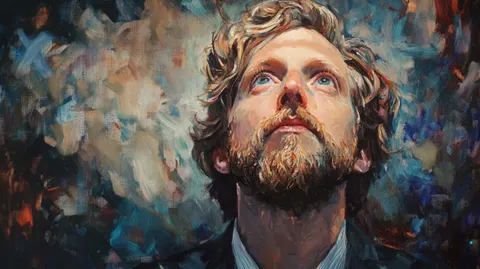
The Matt Who Gave Us Back the Internet
(Matt Mullenweg, 1984)
Today WordPress carries on its shoulders… a third of the world’s websites! People keep choosing it because in its basic form you don’t even need to know how to program. The system is easy, intuitive and time-tested.
Its creator, Matthew Charles Mullenweg, born on January 11, 1984, is an interesting bird. Programming became his main field, but he is anything but the typical computer-absorbed type. He’s into cooking, photography, writing and good music. At school he specialized in saxophone, and his university degree is in political science.
2003: Matt is a freshman at the University of Houston. He decides to start a blog, choosing the b2/cafelog platform, to show his classmates photos from a trip to Washington. The platform is far from perfect; Matt needs a few small, specific improvements so he can upload the pictures. So he tries to contact the people behind the project… and hits a wall.
The platform’s creator has vanished, and Matt decides to seek advice on a popular programming forum. Days go by, and only one comment appears below. A certain Mike Little writes: “If you’re serious about forking b2, I would be interested in contributing.”
Matt doesn’t think twice, and the two start their own venture. The project was launched right on April 1, a date also celebrated as WordPress’s birthday. Matt and Mike became an iron duo, working from opposite sides of the Atlantic. Mike was a British programmer with 20 years’ experience who successfully balanced the student’s youthful enthusiasm.
Later Matt founded the software company Automattic, which today has almost 2,000 employees. Long before other firms were forced to switch to remote work, he built it in as the model.
Today his fortune is estimated at $400 million. His entrepreneurial spirit doesn’t get in the way of working for the common good—somehow it complements it. His first business was cleaning windows; at school he assembled computers.
A stylish touch by WordPress’s creators is that every new version of the platform is named after a jazz musician the developers love; the first, from January 2004, bears the name of Miles Davis. With each new version the creators also release a playlist of their favorite performances by the chosen jazzman.
“Actually, a common trait of successful people is that they are voracious readers,” Matt says. “Technology closes the gap between what a person can imagine and what they can do. As a result, it creates a level playing field like never before in human history.”
And also: “Technology is best when it brings people together.”

Meta Man
(Mark Zuckerberg, 1984)
I don’t know about you, but I’ll remember this figure not as the innovator who created the most successful online platform and changed the way we communicate. Rather as the awkward young man constantly forced to justify himself for one thing or another.
Not that he has nothing to justify—Facebook has certainly given us a lot, but taken a lot too. And yet it’s impressive how Mark Zuckerberg not only created such an enormous project but also managed to run it for two decades. Without ever stopping its growth, turning it into a mammoth unmatched by anything else in influence and development.
And yet today no one could accuse him of a cult of personality. Whatever we may say, charisma always remains part of the magic cocktail of popularity, and he… well, has none. None of Jobs’s magic or Musk’s madness.
He was born in New York; his father is a dentist and his mother a physician. He has three sisters. It all began while Mark was studying computer science at Harvard… and ended up as a project with over 3 billion monthly active users! Who says miracles don’t happen today, or that one good (maybe) idea can’t change the world?
He took the helm of his company at just 19. It started with a little project called Facemash, which Mark created to make communicating with his classmates more fun—swapping photos and rating who was hotter. Rumors that the idea wasn’t originally his date from that period. Either way, the project soon grew and got the name we still know it by.
The platform appeared in 2004; by the end of the year it already had 1 million users and $500,000 in investment. How events unfolded after that, we all know.
Yes, there have been scandals, such as the data leak in the Cambridge Analytica affair. The metaverse he bet on looks dismal for the moment. But none of this changes the fact that the still-young man has a three-digit number of billions of dollars and never leaves the world’s top ten richest. While remaining strange and often incomprehensible.
For example, for a long time he declared that he ate only meat from animals he had killed himself, because he considered it honest. He likes running. In 2016 he set himself the goal of running 365 miles—a mile a day on average—and he managed it. He goes around supposedly casually dressed in a T-shirt… which, however, is specially made for him and costs around $400.
Unlike most modern tech gurus, he is still with his college sweetheart, Priscilla Chan, a pediatrician by profession and a Buddhist by faith. She is also presented as a philanthropist, one of the biggest donors to various causes. They have three daughters—Maxima, August and Aurelia. I’d like to end with a beautiful, meaningful quote of his, but… I couldn’t find one. Not even in his recent appearance on Joe Rogan’s show, where once again… he was justifying himself. This time over the way fake news gets flagged.
Z, Sweet as Honey
(Generation Z, 1997–2010)
And so we reach the newest young people. Here, alas, it’s still too early to talk about impressive personalities. Which is telling about the times we live in—if in 2007 Zuckerberg became the youngest billionaire at just 23, today, of the 2,668 billionaires on the Forbes world list, only twelve are under 30, and many of them come from entirely different sectors or inherited their wealth.
Or perhaps Mark is more of an exception. Musk, for instance, amassed his first billion dollars after 40, and Oracle founder Larry Ellison did it at 49. The youngest tech leaders haven’t arrived yet, and to send you off with two characteristic stories, I have to stretch the boundaries of the generation a little—according to some, it began in 1992.
I leave the patterns to you… and the expectations too. And what lies ahead from the powerful personalities of Generation Alpha, those born after 2010? Or Generation Beta, whose start is considered to be 2025…
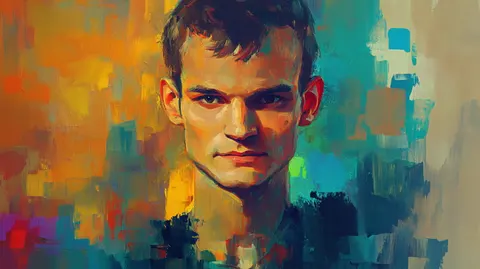
The Boy Who Talks to the Blockchain
(Vitalik Buterin, 1994)
He is criminally young, skinny, introverted and a billionaire. And, more importantly, Vitalik Buterin made a promising technological revolution possible. He didn’t just create ether, the second most popular cryptocurrency after bitcoin, but something more—the largest blockchain platform. The first mass solution that made it possible for the blockchain to hold not just records of transactions, but entire small programs known as “smart contracts.”
Thanks to Buterin’s project, the possibilities of blockchain are now accessible as never before and limited only by programmers’ imagination.
The first version of Ethereum came to life in 2013, when Vitalik was 19. In May 2021, by then 27, he was officially declared a billionaire by Forbes—the youngest at the time—with a fortune of $1.4 billion.
He was born on January 31, 1994, in Kolomna, outside Moscow. At the time his mother, Natalia, was studying to become an economic analyst, and his father, Dmitry, was finishing a degree in computer science. Dmitry soon started working for an American computer firm, and thanks to his profession the family emigrated to Canada.
Dmitry gave his son his first computer when he was just 4. At 7 Vitalik was already creating his own virtual fairy-tale world populated by bunnies. At 10 he had a good command of the difficult programming language C++ and was working on amateur but polished computer games.
Having decided early on that blockchain had the power to change the world, at 17 Buterin was already co-founder and editor of Bitcoin Magazine. He took on the venture hoping to earn some money to buy bitcoins. He found it so fascinating that there was no time left for studying. He dropped out of university, like many heroes of the computer world.
A curious episode. The developers of the Shiba Inu cryptocurrency decided to give him, as thanks for his merits, 505 trillion coins with a market capitalization of $6.5 billion, about 10 percent of Bulgaria’s GDP. He officially thanked them for the gift but… then sent it to a nonexistent address, and the money simply vanished. He said the reason was security concerns and a wish to avoid speculation in subsequent transactions.
Little is known about his private life; there’s no word of a girlfriend. Buterin loves talking to the media for hours about blockchain and smart contracts. His personal website has no photo, but he publishes plenty of reflections, including on philosophy.
“The revolution the internet made can happen again,” he is convinced. “Human relationships can be turned upside down by removing the middleman not just from money transfers, as bitcoin allowed, but from every other sphere of our lives…”
The Fallen Star
(SBF, or Sam Bankman-Fried, 1992)
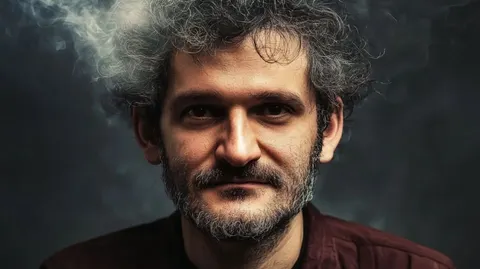
This story is incredible proof of how fleeting fame is. And of how gullible people remain, even in the most technological of times. At the start of 2022, curly-haired Sam shone as a media hero, a celebrity, a sought-after interlocutor and… a multibillionaire, with a fortune of $22.5 billion! By the end of the year he was a laughingstock, the media’s favorite antihero, one of the main reasons blockchain technology sank into yet another winter.
Sam called himself SBF, by analogy with the company he co-founded—the crypto exchange FTX. Curiously, the other co-founder and tech lead, Gary Wang, bears no less blame for the incredible crash, yet he was spared the media wave that engulfed the ill-fated Sam.
It sounds like a fairy tale, and sooner or later Hollywood will give it its due. The crypto exchange in the Bahamas suddenly turned out to be a colossus with feet of clay; it emerged that Sam and his colleagues had boldly falsified documents to hide how badly the company was doing financially. (Meanwhile, from the outside it looked amazing—it paid $135 million just to have the Miami Heat basketball team’s arena named after it.) The company was valued at $32 billion… which all but vanished, quite literally, overnight.
And suddenly, when the tower collapsed, everyone’s eyes opened to how awful Sam was. It came out that while he was persuading investors to put their money into his venture, he had been calmly playing League of Legends on his computer. And, it turns out, he was mediocre even at the game.
Except it also came out that the investors had been positively impressed by this. Sam seemed much cooler and more down-to-earth to them when he accidentally showed the game window during a tense meeting. That meeting ended with a $200 million investment.
The collapse began on November 2, 2022, when it emerged that Sam’s company Alameda Research held $14.6 billion of its capital in… the cryptocurrency FTT, created by his own exchange, FTX. It quickly became clear that something was wrong; FTT lost a huge chunk of its market value—coins worth $70 fell to $4, a crash of almost 95 percent.
Everyone realized what was happening—that there was nothing behind Sam’s flourishing empire—and they began panic-dumping their assets in the company. It got to the point where even its main global competitor, Binance, tried to limit the damage, knowing it would hit the entire industry. But nothing could be done anymore; the company simply collapsed.
Today there is talk of bankruptcy and a series of lawsuits. Yet months earlier he was being flattered by politicians at the very highest level—Sam was among the biggest donors to the Democrats’ midterm election campaign.
“30-year-old crypto billionaire wants to give away his fortune,” read a Bloomberg headline a month before the collapse. And inside it went on: “Sam Bankman-Fried drives a Corolla, sleeps on a beanbag, and his life philosophy is akin to Robin Hood’s.” Well, they were certainly right about the comparison, at least. At least the first half of it—taking from the rich. He just never quite managed the second.
Does society create strong personalities, or is it the other way around? Are they a product of history, or its makers? We await the answers from the generations to come…