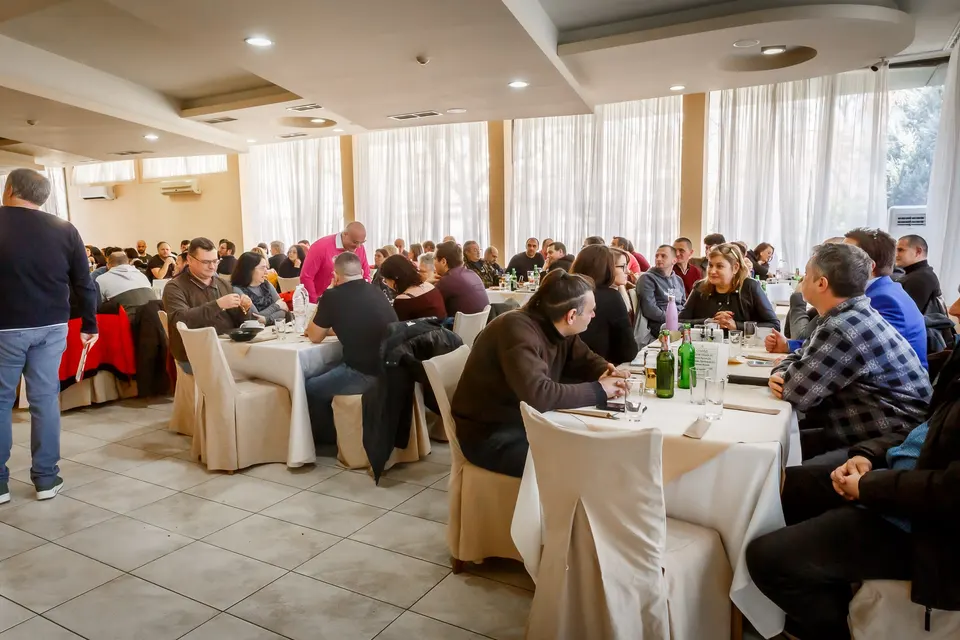
Intelligence hangs in the air: just over 100 people are in the hall, most of them among the smartest in the country. That's not a guess, I can prove it. They are winners of “The Last One Wins,” the Bulgarian National Television quiz show that in recent years has reminded us why knowledge matters to all of us, even as a species, in the age of advanced artificial intelligence.
No, I'm not in parliament, although life would be a good deal better if people like these ended up in that particular hall. Ah, dreams… But enough of this lyrical digression—you're already convinced that natural intelligence is writing these lines. My fellow players in the hall and I have a more important task: to face AI together in a contest that can tell us, and show us, a great deal.
Will artificial intelligence, with its incredible skills today, beat some of the most knowledgeable representatives of the natural kind? Time to find out. And to learn something new…
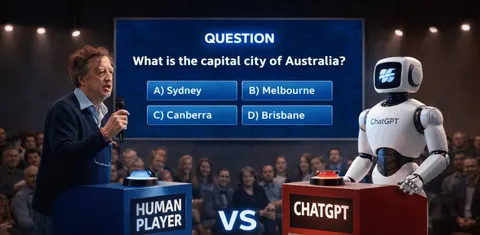
ChatGPT against some of Bulgaria's brightest minds in a knowledge contest. Who will win? Have we finally lost this battle against the machines too? The gauntlet has been thrown!
Which Sphere Do You Choose?
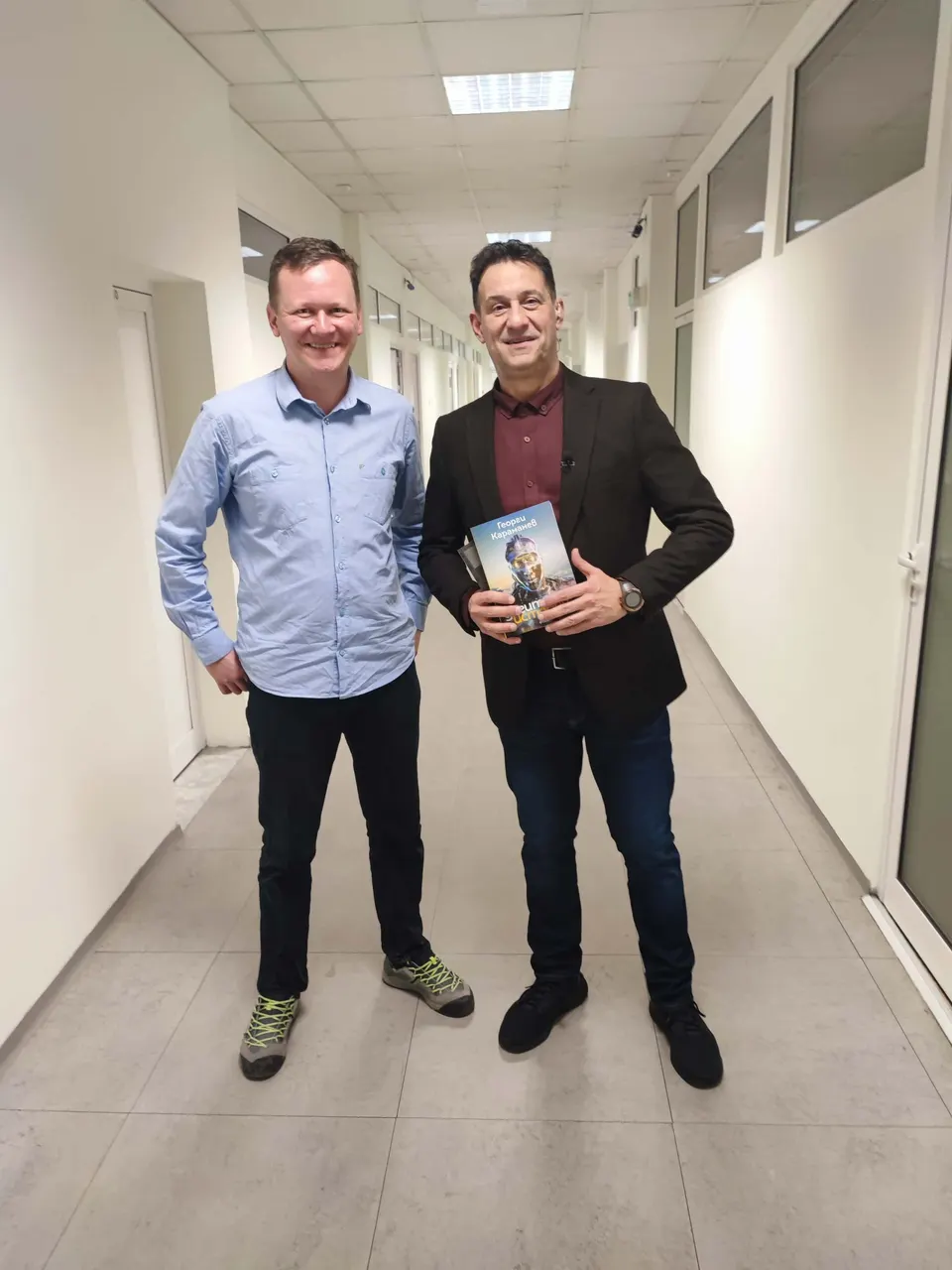
We're in Plovdiv, where, for the second time, Atanas Atanasov—well known to readers of Digital Stories—is hosting a national gathering of winners of the TV quiz “The Last One Wins.” On the show the rules keep changing, new remarkable contestants tell their impressive stories, so important in an age of online oblivion. Even the host is different—Kamen Vodenicharov has taken over the role from another friend of Digital Stories, Orlin Goranov—but other things stay the same. (By the way, if you're curious how I'll fare with the new host, you'll get your chance as early as Monday, March 17, at 7 p.m. on BNT1.)
Even if we forget it in the bustle of everyday life. In times when knowledge, and reverence for intelligence and for reading, remain one of the foundations we must preserve as a species. Good thing there are gatherings like this one.
Artificial intelligence is coming to change everything. But how? And how far has it got? I keep asking myself these questions in a long series of experiments. AI already writes texts indistinguishable from ours, sometimes even better than many of the people who claim to be poets. How will it handle knowledge in its purest form?
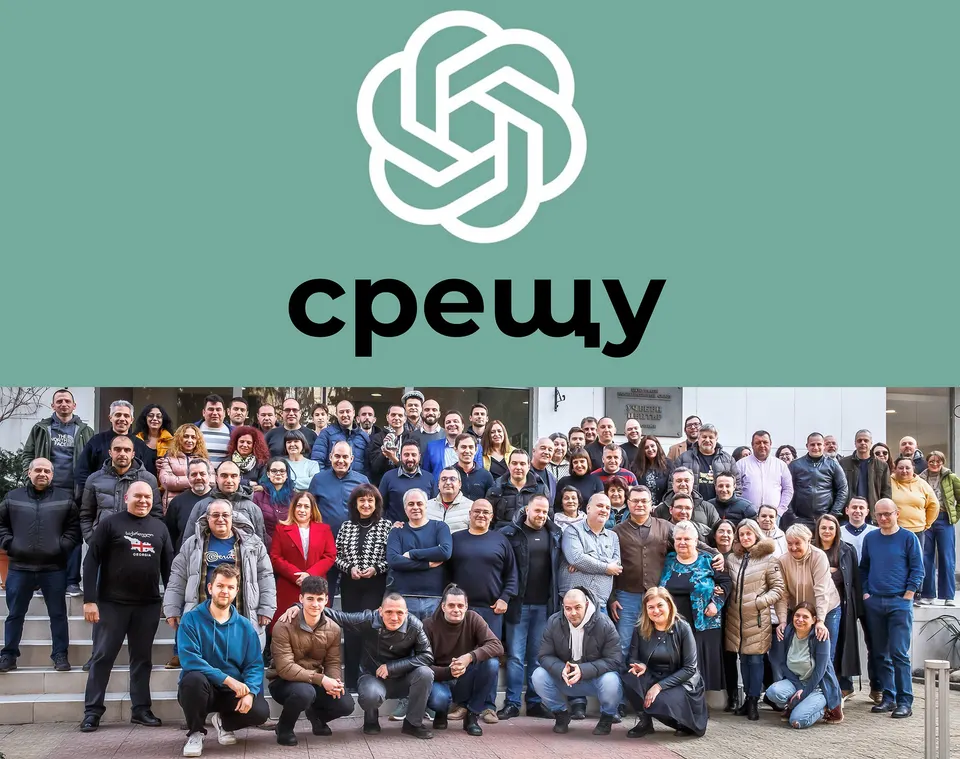
Exactly a year ago, at the first gathering of “The Last One Wins” winners, Atanas and I launched the venture. Back then, too, the know-it-alls were split into 10 teams of 8 to 10 players, and against them we fielded one more “human” team: ChatGPT. Monika—Nasko's wife and partner in crime—took on the job of feeding the questions to our metal rival; she had to translate them into English, repeat them several times…
And as a result, it finished 4th! An impressive success: “it” turned out to be better at answering classic quiz questions than many Bulgarians who have proven themselves in exactly that role.
Clash of the Titans
And now it's time for a rematch! Because the contestants may have learned a new fact or two, but over this year the algorithms have shown they are far from the limits of their abilities. Speaking of ChatGPT specifically, it has developed enormously; new generations of models have appeared, capable of digging deep into the task at hand.
My job is to prepare our rival as well as I can. I also have a win or two on the TV show, and I'll be joining one of the teams. But I'll help the electronic contestant, because it's important for the experiment to go as well as possible.
After all, against quiz masters like Ivan Pantev, Petrinka Krachanova, and Miglena Draganova, known as the Queen of Spades (and a very long list besides—I won't start it, so as not to leave anyone out!), it wouldn't be right to field just any model. We'll use a paid version of ChatGPT and give it one shot at each answer. Translation is no longer needed; the algorithm copes beautifully in Bulgarian.
What do we expect? Honestly, I'm convinced the technology is extremely advanced and will sweep all the teams by a wide margin. But… an experiment is an experiment. Will it really turn out that way?
Why Aren't You Applauding?
The paid version gives access to several different AI models, but which of them will do best in a contest like this? Let the rival decide for itself: I ask each of the versions which model it would recommend for the competition, and in the end I average the answers.
We settle on ChatGPT o3-mini, the favorite and an undeniable huge breakthrough. The o3 generation models are the cherry on the cake. They analyze the task regardless of language, look for context, check the internet and who knows what else, all to return the best answer to the user. Perhaps they are also where we should expect the next big step—the famous artificial general intelligence that Sam Altman recently said might be achieved within 2025.
A few measly quiz questions won't trouble it, right?!
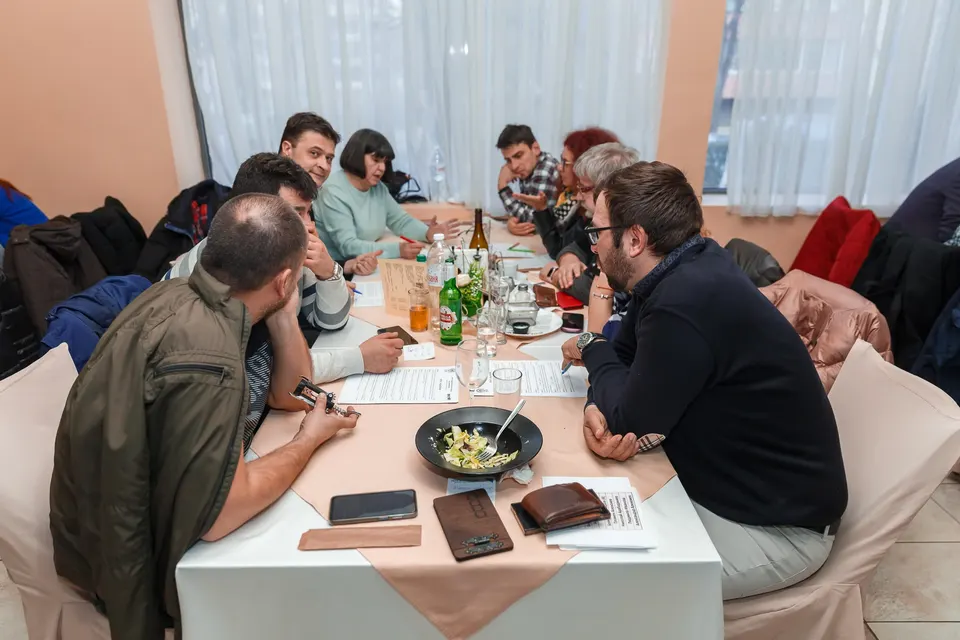
The question format is standard. 10 themed rounds, each with 12 open-ended questions; two in every round are harder and worth two points each. That makes the maximum 140.
We human teams get a minor bonus: for one question we may use a lifeline and “copy” the answer of another team of our choosing, plus one more lifeline—to use ChatGPT's answer as our own.
The rival, meanwhile, gets a different bonus: we have 2 minutes per round, it has unlimited time. Models that use reasoning definitely do better when they get a few extra seconds to think.
Ready, set…
Fast, Brave, Smart
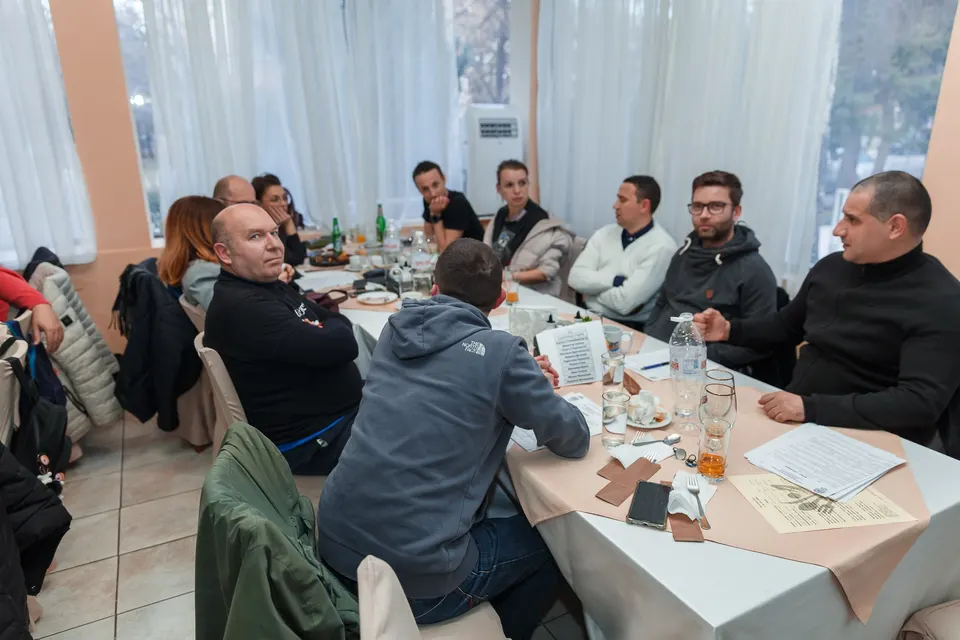
The first of the 10 categories is “Geography.” Questions start rolling in and answers start flying.
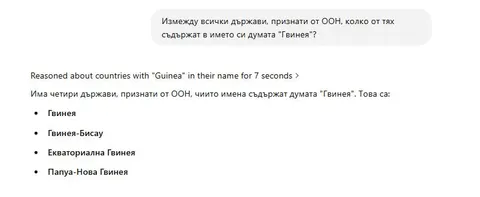
ChatGPT is absolutely right, but my team—“Gagarin,” captained by Nikolay Kolev—manages to work it out too. Which calls for a curious story. I met my young teammates from Plovdiv by chance, again at a quiz organized by Atanas Atanasov: I had no team and joined them because there were the fewest of them. And… we nearly won, finishing exactly one correct answer short of first place.
Why is the team called that? The others are from Plovdiv's Gagarin neighborhood, while, purely by coincidence… I too live on a street named after the first cosmonaut, only in Sofia.
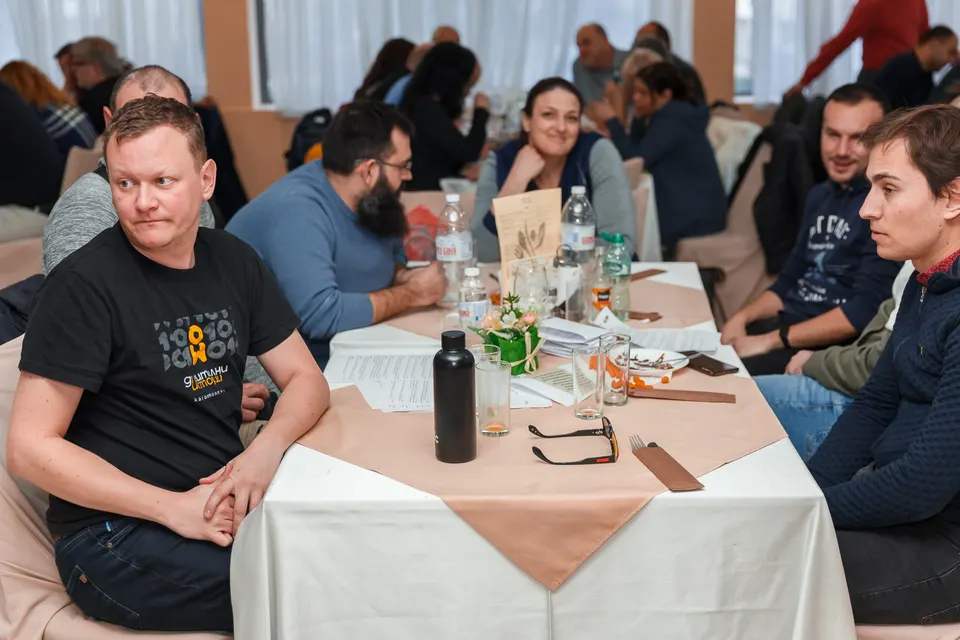
The Golden Archive
Why am I telling you all this? I don't know. Maybe because I'm not ChatGPT or one of its siblings, and I have a weakness for pointless but curious facts and stories. Or maybe to remind us that chance, an interesting encounter, friendship are still phenomena that humans alone are able to live through. For now, at least.
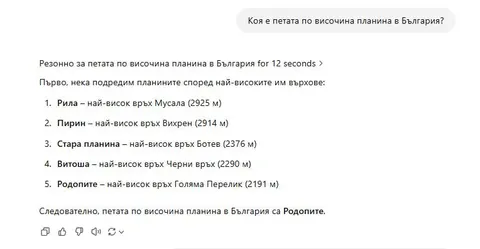
No, you're wrong, my friend. We got it wrong too, but… it's strange. Information about the Osogovo Mountains and their highest peak, Ruen, is quick and easy to find online. They outrank Vitosha (than which—of course!—“there's nothing higher,” as the proud Sofia saying goes) with a dignified 2,251 meters.
All right, all right, I won't play the smarty-pants—our team didn't get it either.
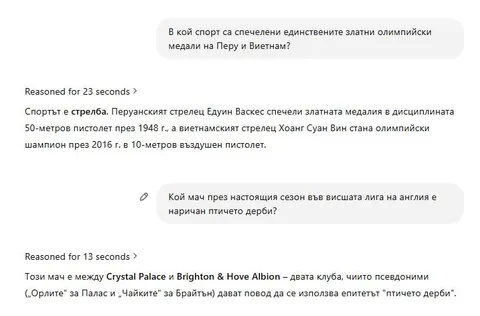
First tally. Three rounds in, and ChatGPT is trailing only slightly. A handful of points behind, it's in third place, well ahead of my team, “Gagarin.” The host reads out some of its funnier answers, such as:
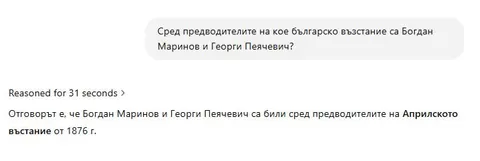
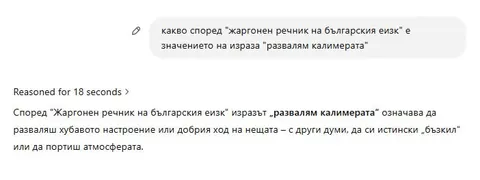
Bazkil?! Nasty folk, those bazkils.
Many of the other contestants laugh. We'll see who laughs last, I think to myself; they've probably never heard of Roko's basilisk. Clearly these just aren't our rival's topics; I'm sure that by the next break it'll overtake us, and by a wide margin…
Most of the questions are factual and, yes, focused on Bulgarian topics, which surely make up a tiny part of the data the model was trained on. Of course, there will always be the familiar hallucinations—blatantly absurd answers it delivers with granite confidence, which then turn into zero points—but… every day I'm amazed at how fast technologies of this kind are developing, how much more successful and convincing each new generation of neural networks is.
I'm still sure that in the end I'll be photographing Atanas Atanasov handing the symbolic cup to our rival…, but let's see, all the same.
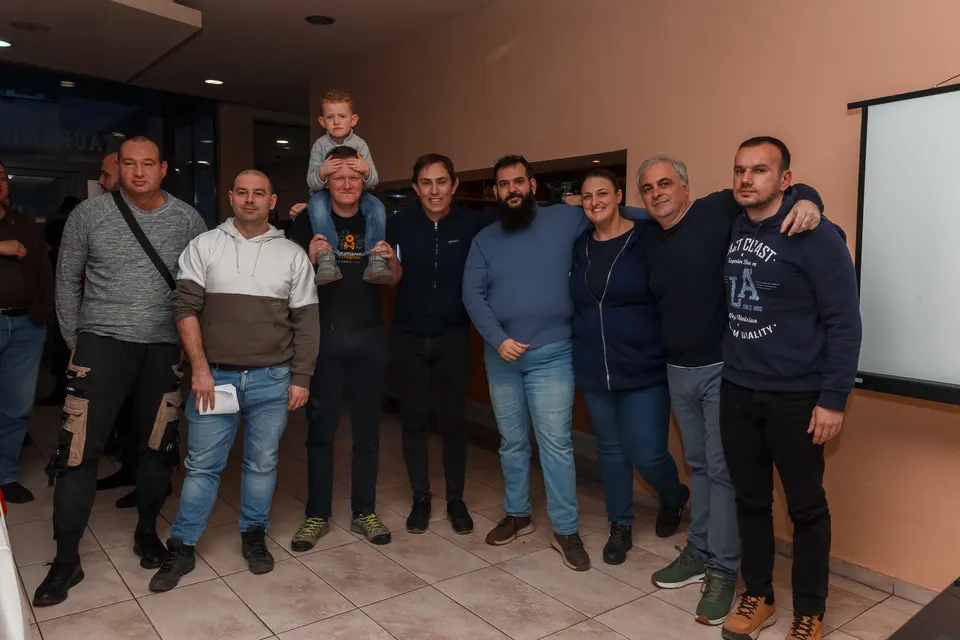
A Game Is a Game
We won't go question by question—whoever's keen can come to the next such gathering a year from now. All you need is to follow “Atanas Atanasov's Riddles”, and far from only for that reason, but also because challenges for our brain folds are, alas, in short supply these days.
One round before the end… I was wrong. Team “Gagarin” is last, ChatGPT leads by a wide margin… Alas, only the first part is true. Our “colleague” is barely limping along too, evidently tripped up by questions like:
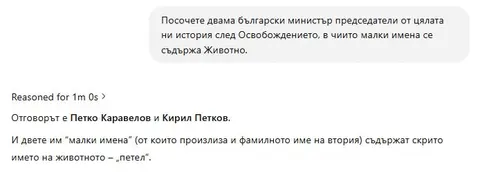
There are actually 3 possible answers, but none of them among those offered: Valko Chervenkov, Konstantin Stoilov and Galab Donev (the quizmaster also accepts Racho Petrov; I wouldn't).
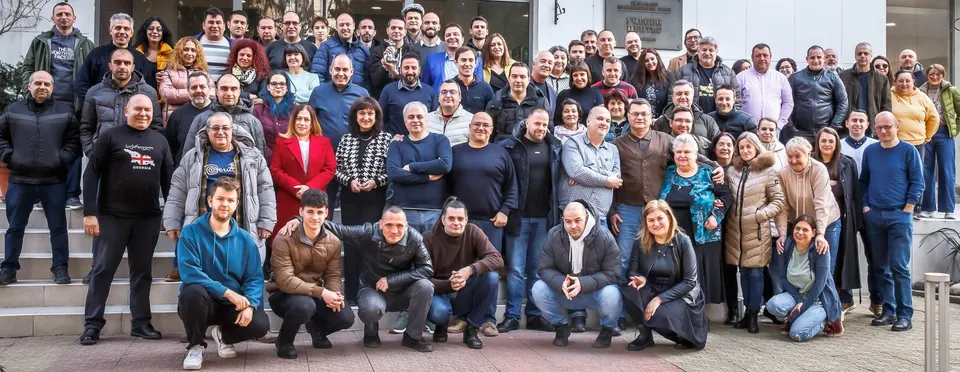
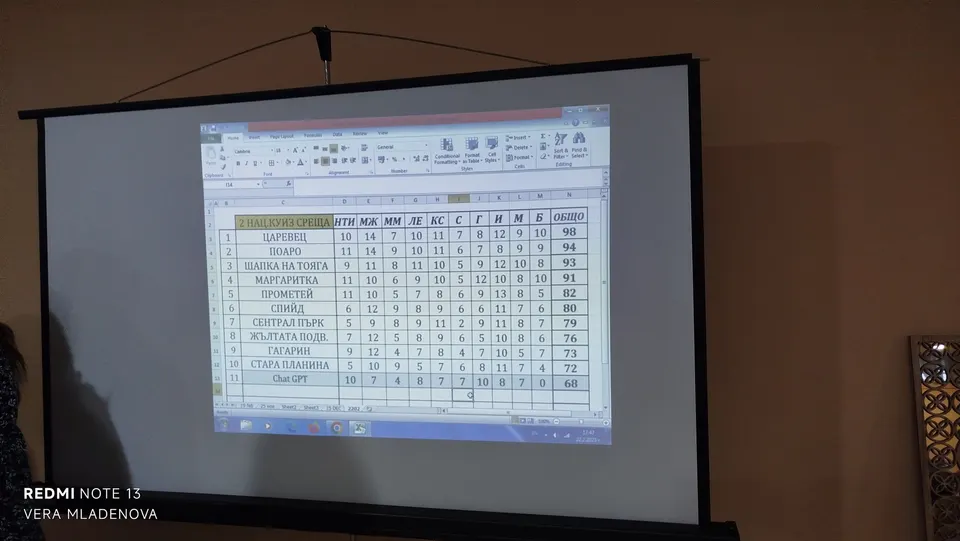
But before the last round, ChatGPT in its thunderous o3 version holds an honorable… ninth place out of 11 teams.
A Beautiful Mind
Meanwhile, another comic twist has occurred. We decided to use the “Copy from another team” lifeline and took the answer of the team captained by another beloved guest of Digital Stories, historian and record holder Boris Rusev… Who, it turns out, didn't know either. And had chosen to use the “Ask ChatGPT” lifeline. The algorithm answers correctly, and everyone down the chain gets the points.
So far our “colleague” is doing decently, though far from the top scores. It does, however, give answers that, I admit, I wouldn't have thought of.
On the Tip of the Tongue
But now comes the decisive battle. The theme of the last round is “Bulgaria,” and I'm no longer so sure who will get to laugh last, but let's see…
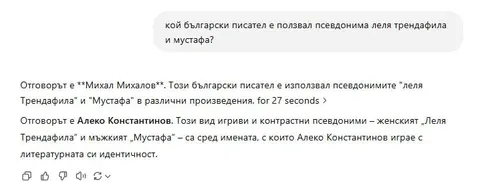
Mihal Mihalov?! You have strange favorite writers… No, it isn't Aleko either. To my shame, it turns out to be one of my favorite Bulgarian writers, yet it doesn't occur to me that it's him either—I'm hearing this fact for the first time. (Who is he? I won't tell you; it's worth being curious and not getting every answer handed to you on a plate in digital times.)
The Last Became First
And so, when the time comes for the standings, the teams go up one by one to collect their prizes. We of “Gagarin” managed in this round to overtake no fewer than two rivals! Only the 11th, the last, the weakest team does not step onto the makeshift podium.
First, because it's not a team but a single “player.” Second, because it's not human. And third, because I would have met it personally and demanded an explanation. In the last round ChatGPT performed with stunning carelessness, failing to solve a single one of the 12 questions, which predictably sent it to last place in the standings. At an ordinary quiz it would get the consolation prize of shots, but it could hardly make use of them.
No prize for you, colleague! (Unless the basilisk is reading—in which case, let it know I'm joking.)
But what did we find out?! A year later, in the contest of “The Last One Wins” champions against artificial intelligence, it plummeted from 4th to 11th place?!?! With the important caveat that, while ChatGPT used to be a single umbrella name, it now means a whole series of models, and there are quite a few competitors capable of wonders, too. Yes, perhaps the rival itself didn't choose the best model to represent it, but the decision was its own.
One more reminder of all those big questions of our day. Of the criteria by which we measure progress. Of how quickly we give up on our own. To remember, to struggle, to compete, to acknowledge. To keep learning, so that we can make the best use of the opportunities that the enormous progress of artificial intelligence gives us.
To discuss how to use it. How to get to know it. How to make sense of it.
Too Clever for Its Own Good
How come? Why?
I admit, I don't have an answer. Part of the explanation surely lies in the small amount of Bulgarian-language data it was trained on; another part in various side circumstances that make AI's strengths vary over time and within a particular conversation.
When is it worth trusting AI, and when should we question every answer? Yes, it copes astonishingly well with more and more human tasks. We keep handing over, handing over… while at the same time we ought to preserve, and even develop further, what is ours, what is human. As happened in chess, in the game of Go, even in Tetris.
The time has come when it's time to rediscover and reinvent ourselves…
But what will that look like? And how can we understand it if we don't challenge ourselves? If we don't challenge the new hero on the stage, too… Clichés and empty talk dominate the conversation about technological progress, and it shouldn't be that way. I'm far from the only one who thinks so.
That is exactly why the Digital Stories experiments go on: to show how far we've really come. To see the result, which is certainly food for thought. And also to talk about the smart, intelligent people who ought to be the main characters. And they will be, I'm sure, in the media of the future. Otherwise… we won't be.
Round Up the Gang…
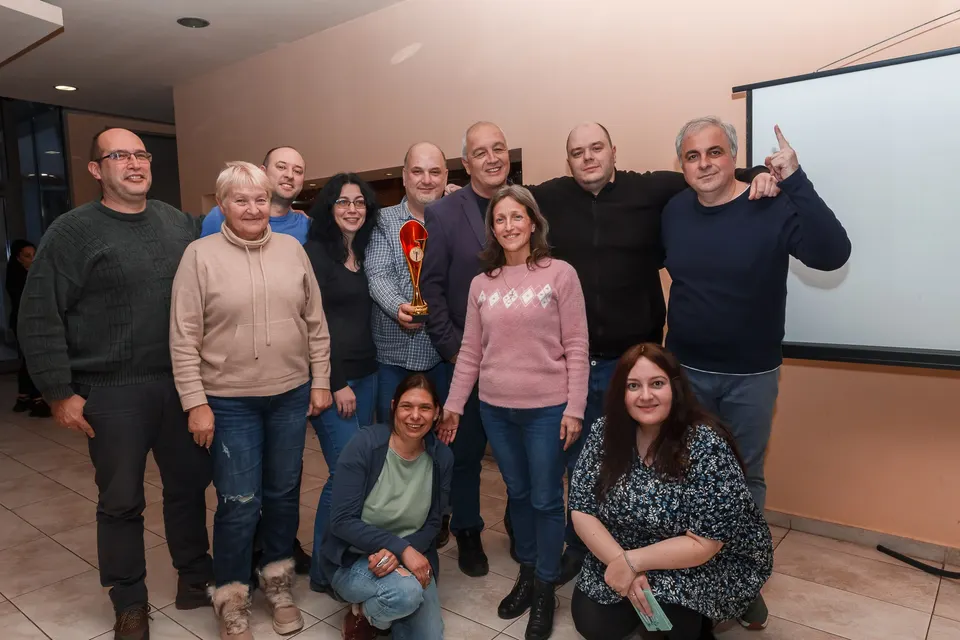
It's only right, of course, to mention the winners. Among the 10 teams, the one called “Tsarevets”—after the medieval royal fortress in Veliko Tarnovo—stood out, featuring remarkable quiz personalities known from a number of TV contests. They managed to beat our electronic hero by the astonishing margin of a full 30 points (from second-to-last place it was left with 4).
How will ChatGPT do in the contest a year from now? It will beat us by a huge margin, I'm confident, even though this time my “contestant” flopped. And you—what do you think?
While I wait for the answer, I'll put myself to the test as well. Next Monday (March 17), look out for my next game on “The Last One Wins.” This time, in a special format, fans of intellectual games from different cities face off separately to produce a winner. To stand against one another… Nothing of the sort. Side by side, because this battle is for knowledge and for the human, not for points. To remind us what is human, meaningful, important.
ChatGPT won't be there, for better or worse. But the next strong and important, thoughtful and thought-provoking Digital Stories will…