Have a child and never come across these unmistakable illustrations that make you smile and calm you down? Hardly.
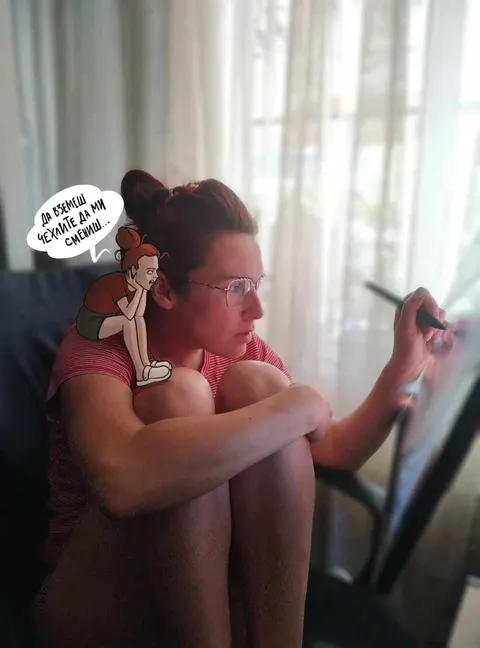
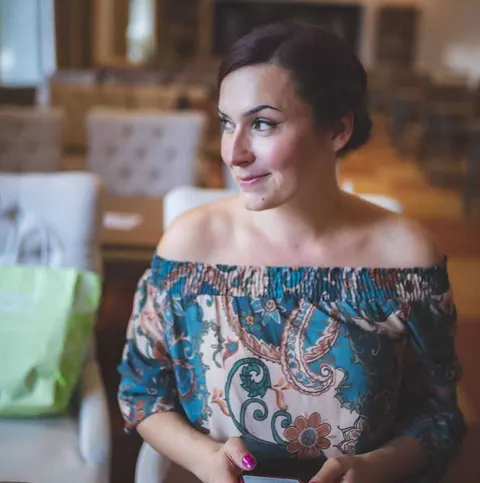
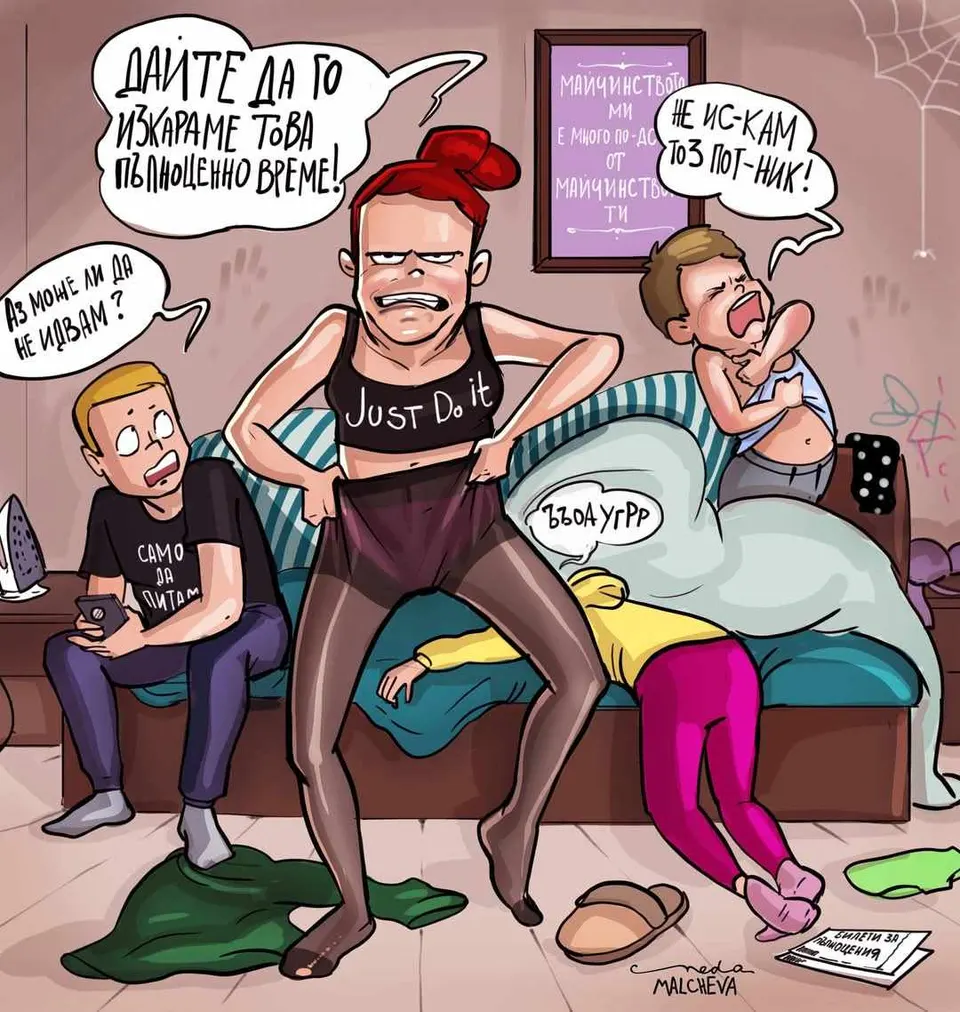
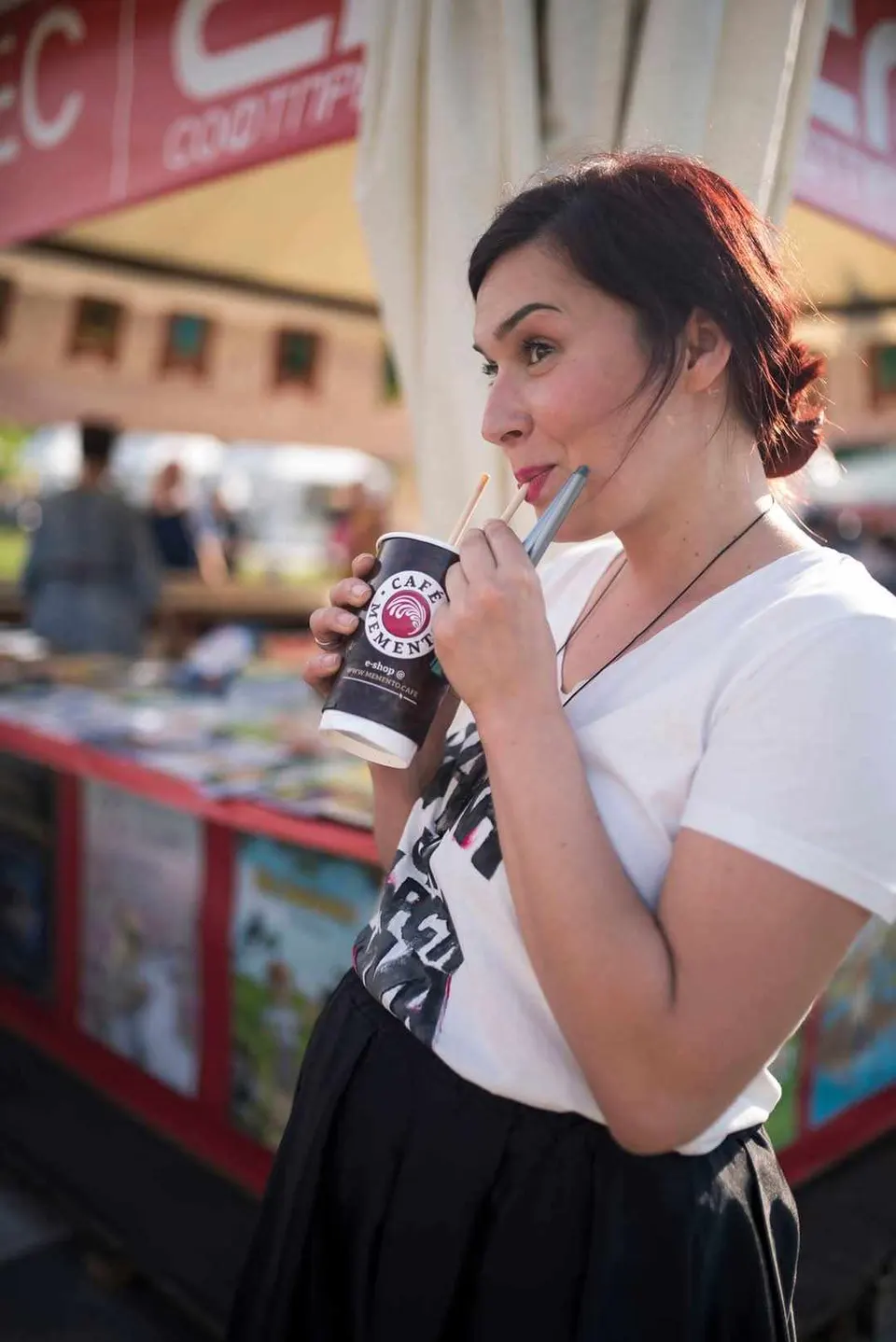
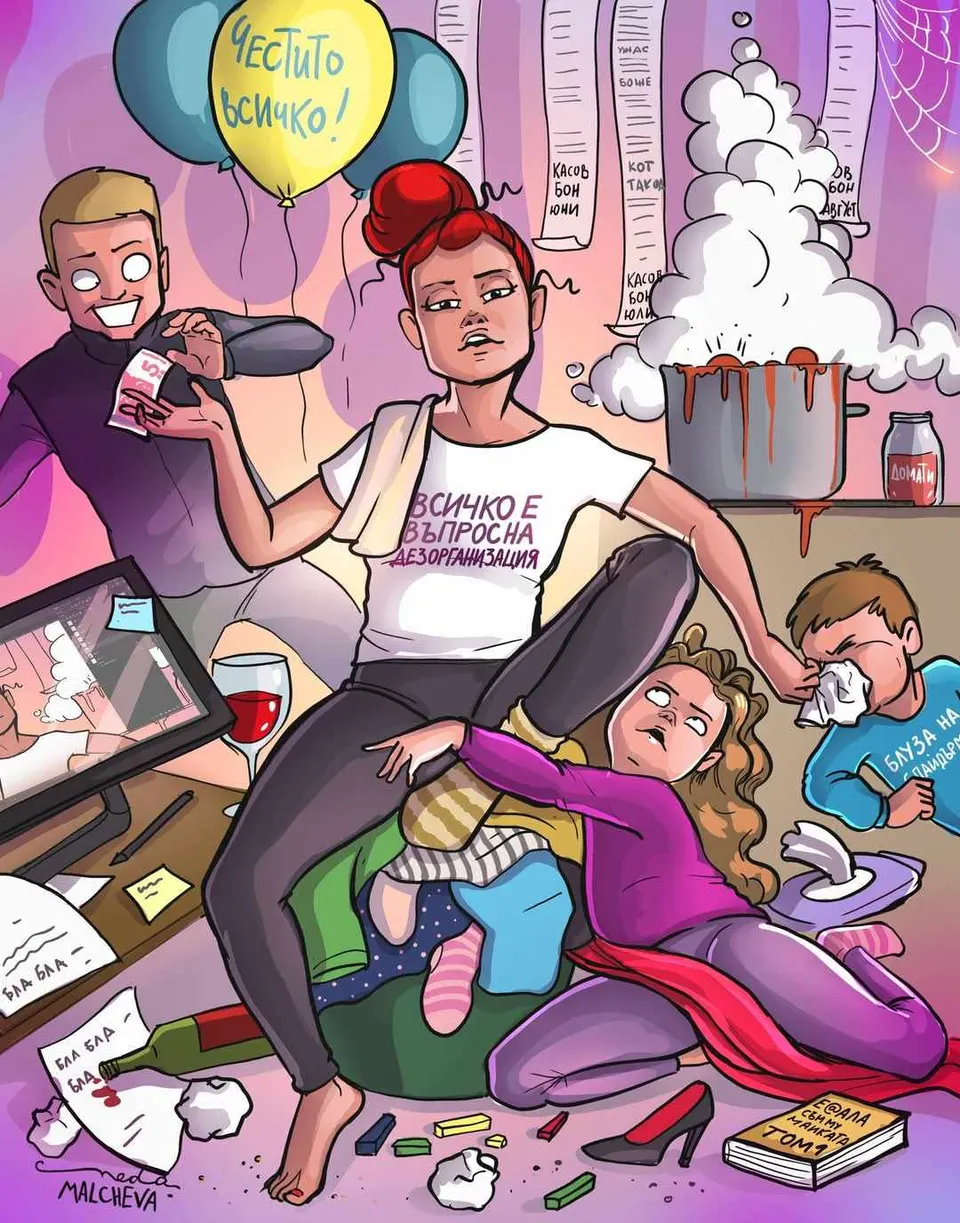
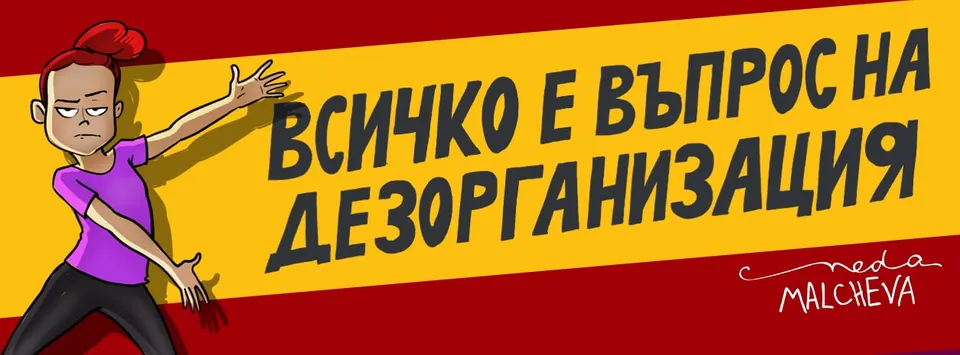
Neda Malcheva has been chronicling the joys and woes of motherhood in her cartoons for 13 years. We love them, I think, not only because they are talented, original, stylish and funny, but because they feel close to home. Because many of us who became parents during those years have been rethinking our everyday lives alongside “cartoon Neda,” her directness, her charming way of talking and her three kids.
Until recently she ran Kartinka (Little Picture), an art school for children, and she lives in Marten, a small town on the Danube near Ruse… That adds up to at least three topics on which we will hear her intriguing point of view. Art, parenting, and the challenges of parenting when it plays out online. The mad race and the calm of the countryside. The hardships no one prepares us for, and the problems created by the flawless image influencers project.
The Digital Children series continues. I am looking for the important points of view and the useful advice that can help us as parents and as adults. Your opinion matters too! Take part in the survey, and let’s draw the picture of parenthood in digital times together.
– In your illustrations, family life often looks like a war.
– Because it is a war. I show everything as it is, except that in real life my eldest, a teenager, keeps a bit more to himself. But when he does turn up, he’s exactly like in the cartoons, with some dumb question like, “Can I get a scooter?” Yes, it’s a war.
– But there are plenty of warm moments too, satisfaction, successes…
– Of course, I’ve drawn those as well. Only nobody reacts to them.
When people recognize themselves like that, they clearly need to share something.
So many people write, “Hey, that’s so true,” “My kid does exactly that.” We’re all walking the same road.
– How are our challenges as parents different from those our parents’ generation faced? Naturally, the first thing I think of is technology.
– Technology brings a lot of opportunities, but a lot of stress along with them.
We’ve become overcrowded, the world has become a bit more dangerous. You probably wandered the streets of Sofia on your own at seven or eight, and now you wouldn’t let your kids out.
I recently had an argument with my father, who is still living in 1992. My younger kids are just kids, constantly shouting, bawling, shoving each other, and he says:
“You weren’t like that.” And actually, we weren’t.
Back then my mother had a calm, settled maternity leave.
Both my parents are teachers. After graduating they were given jobs; my mother was even a headmistress. During her maternity leave my father went to work, came home for lunch, they had their own home, and they had grandparents close at hand. My mother was calm, and so was he. He didn’t have three businesses and 15 loans.
A parent’s calm, their state of mind, reflects on the child.
It reflects even during pregnancy. In my case there wasn’t much choice; from birth number one to number three I never stopped. Nothing was calm, sadly, and it isn’t just me, I see it everywhere.
– Life keeps speeding up, while the next technologies arrive to speed it up even more.
– Is there anywhere left to speed up to? The other day I was thinking how much I miss the good old computer games. I used to wonder how to pull my son away from them when he was little, but at least they gave him something. Now it’s TikTok.
In games you think, you’re constantly doing something, but here… information just trickles past your eyes in a hurry, condensed, abbreviated, organized, arranged…
That’s why they’re in such a rush, why they have no patience, why they want everything to happen right away. That’s how it’s served to them.
– You’re lucky to live in the countryside, where things can still return to their normal course. Right now I think the smartest thing I’ve done, after having my two kids, is to get them a house in a village, where at least in summer they can touch what we had back then.
– Let me tell you how the “digital life” of my kids goes in Marten. I don’t restrict them, I won’t say “no phone today,” there’s no need. In summer we go out into the yard, there are neighbors’ kids, one of mine will come in for half an hour to eat and get glued to the tablet. But I
know he’ll drop it the moment he sees the other kids are out again.
That’s how it is with us. No traffic lights, no traffic. My four-and-a-half-year-old goes next door to call the neighbor’s boy out to play. No problem at all; I know where they are and I’m at ease.
Sometimes I honestly wonder what century I’m living in.
The contrast is brutal! We’re in a very old village house, we’re slowly fixing it up, but it still has its henhouse, its vegetable garden. In many ways it’s as if I’m living in the eighties, and the next moment I have to think about the tablet.
As far as possible, there’s no stress in this wonderful place, and still I’m stressed. I can only guess what it’s like in central Sofia.
– But that’s yet another thing we owe to technology—that you can live there and work fully.
– Absolutely! I think technology will race ahead very fast.
We’ll struggle to evolve, but the kids will find a way to live full lives with it, or at least I hope so.
Me, I can’t, I’m obsessed with this phone, I can feel it turning me into a zombie as I scroll. I’m constantly on my phone, I can’t read books anymore, though I try. My concentration is slipping away. And they never had any to begin with.
– How is cartoon Neda different from you?
– I’m a very positive person. And she’s a bit of a… sourpuss. Maybe people think I’m always grumpy, but she’s my dark side. Thanks to her I let out a lot of negativity. But I also believe she brings a lot of positivity.
– When you were a guest on Georgi Nenov’s Superhuman, you mentioned that she puts some people off having kids and convinces others. Can anyone be ready for the moment they become a parent?
– No. I think of myself as young, although 15 years have passed since my first birth… What a difference 15 years make! I had no idea at all what being a parent meant. There’s so much more information now, but the problem is that much of it is wildly exaggerated and sometimes gives young mothers the wrong idea. And no wonder so many people lose it, because they can’t always achieve what they see on their screens.
Female influencers create illusions on so many topics.
– And that’s to be expected, because that’s how the algorithms work…
– But it’s too much. You give birth to four kids and everything around you is calm, pure bliss, an idyll.
She’s pretty, all done up, the baby is clean and smiling.
When I was about to have my third, we were telling each other, “Oh, it’ll be lovely! We’ll manage…”
Oh my God! Only now, four years later, am I just about coming back to life.
– With kids, one plus one is much more than two, I can tell you from personal experience. I can only imagine that two plus one approaches infinity…
– It’s an adventure. There are upsides too, of course, depending on the age gap. It’s always hard while the third is a baby, but once it grows up a little… You can say, “Go to your big brother, to your big sister.” At some point they really do start helping.
– What’s the most important thing that would have helped you, but that you had no way of learning when you became a mother?
– Not to be swayed by other people’s opinions. My mother, my mother-in-law, all my relatives told me things that had been drilled into them by their own mothers.
Do what you want and what you feel! Listen to yourself, not to others, not to some influencer!
I still worry about “what people will say” when they see two kids playing in a puddle. Meanwhile they’re having the time of their lives and just being kids. As long as some sour old auntie doesn’t walk by.
And also that there are no rules. Nothing is right and nothing is wrong. I wish I’d known that I would cope.
– I understand completely—for every single thing to do with kids you get contradictory advice within minutes. And if you don’t manage on your own, if you don’t let your instincts take over…
– I hope mothers will learn. I think it’s talked about more now.
– But how did we get to the point where influencers decide how we raise our children? Shouldn’t there be other authorities?
– That’s what the younger generations are used to. I once had a very controversial post about quality time. I was fed up with everyone going on about it, with having to listen to it.
Picture a silhouette, a video by an influencer: two kids playing on the beach, music to slit your wrists to. Then the text starts: how one day they’ll grow up, and it won’t matter one bit that you worked yourself to the bone so those kids could go on vacation.
What is quality time, let’s be honest? It very rarely turns out like in those videos.
For me, a mother needs to have quality time for herself as well. And kids need time on their own too; that’s how they become individuals.
But you watch and they make you feel guilty that you’re not raising those kids properly. You fight with your inner self. These influencers may be right about themselves, but mothers are definitely being bombarded with a lot of lies.
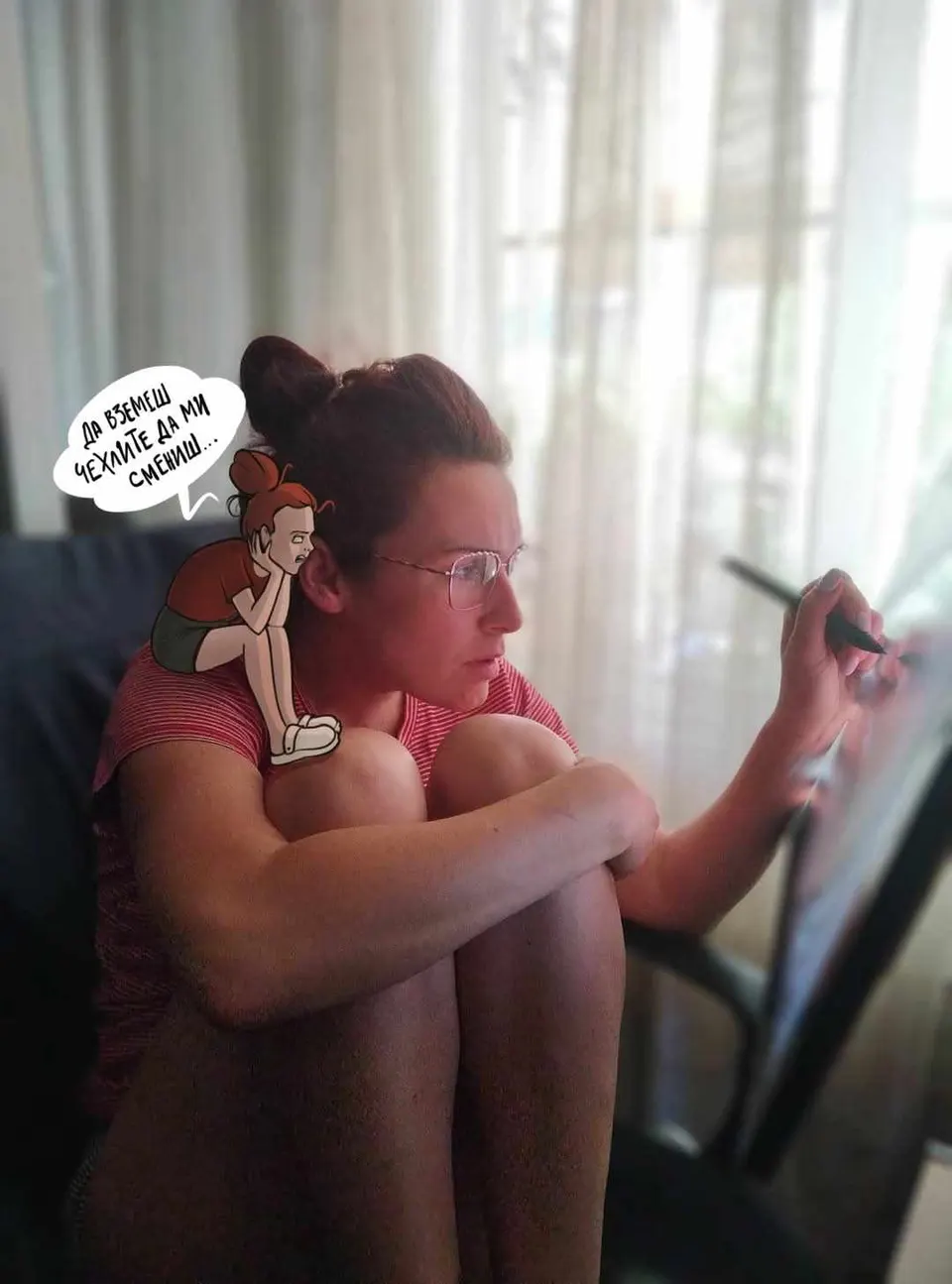
– At the same time, I also see people who don’t spend that quality time with their kids. Fathers, for example, who don’t stop to think that only once or a few times in their life will they have a baby, and that it’s interesting, exciting and meaningful. Just as it’s also hard, exhausting and challenging, but maybe that’s part of the bigger problem of always taking the easy way.
– We’re talking about the extremes. An ordinary mom who stays at home with her kids, as I do, doesn’t need to be told she’s not doing something the way she should. That she doesn’t take them to the park every day. I went through a hard period, I was burned out, I didn’t feel like going for walks at all. I kept running into those perfect videos and it was killing me. My kids were a burden to me. Why shouldn’t I be able to admit that to people? Why is it a problem that parenting weighs on me? Well, it is heavy.
This is where the question of psychological help and support for mothers comes in. Probably for fathers too, I don’t know. But it’s rarer, because you don’t go on maternity leave. You don’t go through the stress of being torn suddenly from your own world, from your old life. All of a sudden someone yanks you into a completely different world. They cut you off from everything and lock you in. Even going to the store becomes a problem.
– What do you want your kids to become when they grow up?
– If you’d asked me a few years ago, I’d have said “good.” Now I want them to be independent, to be fighters.
To try everything. To see the world. I don’t want them to be guided by rules.
By authorities, by stereotypes. I want them to be free people. To admit that they don’t like something, that they don’t want to do it. Not to be like my generation, which grew up by the rules.
I want them to be citizens of the world. If they ever stay on to live in the village, I’ll come back from wherever I am and drag them out of there. Then, if they want, they can come back, no problem. The village is a wonderful place to live for middle-aged people who’ve seen it all and have kids.
– Is it getting harder today to teach children to draw, to get them into art?
– Yes, it’s very hard; I gave up. I had a school, but I surrendered quickly. Back when I was a kid, we were sent to learn to draw once they saw we had talent. “This child is going to amount to something, let’s send her to the greatest artist around.”
And now
parents push their kids into everything to make up for the sterile environment they live in.
That’s one thing—I was brought kids who had no interest. And the other is that kids have access to YouTube and TikTok from a very young age. Have you seen the clips? Artists who draw on tablets are hugely popular. You watch and think, “Oh, that’s really easy.” And they rush, they think we should start with little stars, little eyebrows. It doesn’t work like that. Drawing has its fundamentals, very boring, nasty ones, but you have to go through them.
A kid comes to me and says, “I’ll grab the tablet and start drawing pretty colorful things.” And I tell them, “No, now you’ll draw a cube, perspective.” They don’t even make an effort, because it’s gray and dull to them; they want their cool, colorful stuff.
Besides, tablets do what worries me about artificial intelligence too—they relieve your hand of its duties. They give you conveniences, ready-made brushes…
Honestly, everything’s going to hell, that’s what I think.
– What has kept you publishing your cartoons for 13 years now?
– Once you start, it’s very addictive… For the past year it has brought me some returns; before that it didn’t. It brought me a certain popularity that led clients to me; I was a freelancer.
These are little steps I’ve climbed. At first I started as a joke, let’s give it a try. They were like consolation drawings after work. Because it’s very draining to take on other people’s ideas, especially when it comes to art.
Then the popularity started to pile up, and that’s when vanity starts gnawing at you a little. Let’s try going higher… And in the end you monetize it, though I was very stubborn about that. I’ve been offered sponsored posts, and I still resist. Very rarely will I post something, and it has to be, say, UNICEF; I spoke up for vaccines. I launched a vaccine initiative, but I was afraid to be more outspoken, so as not to get spat on and face people’s anger. I felt that for so many years I’d been posting content meant to please everyone… Then I asked myself, “Why?” And I just came alive.
– So thanks to social media you can reach so many people…
– That’s exactly the thing that brings me back and calms me down. I’m afraid of technology, and at the same time I keep going back many years. When I bought my first tablet, my father was deeply offended. Because for him it was a big novelty, and we humans are distrustful of new things. If you go to buy cheese, you’ll buy what you’ve always bought and be suspicious of the new brand.
I started drawing digitally, and my father was very cross that I’d thrown away the pencil and paper—how could I do such a thing, what was all this new nonsense. Quite the opposite: it’s still the same work, just with a different tool.
I go back to these things whenever I wonder whether AI will put me out on the street.
– Why do you think motherhood is such a big topic online?
– I still can’t find the answer. Maybe because you’re absorbed in something you’re open to—the child. For me,
children are mirrors of our complexes, of our fears.
It’s something new for you, and you start taking an interest in its health, its upbringing, its clothes, in how to present yourself to the world with this child.
Then there’s something else. The moment when a mother is so absorbed in this child that she forgets how completely down she’s become. And maybe that’s exactly where the moment came for my little things. I started 13 years ago, when it wasn’t fashionable at all for mothers to show themselves in their true light. Now it’s become fashionable to look “real”—ugly, with a face mask, a hole in your leggings, messy hair. Back then it was strange and unusual; the image of perfect motherhood was far more dominant.
That’s why I think everything to do with motherhood is so successful. Mothers are constantly searching for information, because it’s hard for them and they don’t know what they’re doing.
– Fatherhood isn’t easy either, yet it’s such a rare topic online.
– Yes, I wonder why. I think, first, because we still can’t let go of the idea of the woman who runs the house and the kids. Also, judging by myself, women, mothers, can’t delegate. Hand the responsibility to someone else. It’s very hard; hats off to everyone who manages it.
We’ve kind of embraced the role of “Don’t you interfere”
as a society. But I don’t know why no such community has formed among fathers.
– You mentioned that you’re frightened by the world artificial intelligence is leading us toward. Why?
– I’m trying to accept it, rather, the way people used to accept the novelties of their day—airplanes, cars. I decided that maybe I’m wrong somewhere and just distrust something new. But part of this thing still scares me a lot.
– Me too. That’s why this site exists…
– I recently started paying for ChatGPT. I have an online store where I check orders, and I wanted to see which T-shirts had been ordered that day. You feed it an Excel file, ask for the exact count and it pulls it out for you. Fine, I was wasting my time on things it can help me with. But I feel something isn’t right.
when I use it, I
lose a little piece of myself. It can’t take that piece from me, because I’ve developed it. But from young people?
– But what is it that they’ll lose?
– The desire to make an effort.
– You and I won’t lose it. I keep writing my articles myself.
– I’ll never give that up. I try it out of curiosity. I’m writing my second book now, and I asked it for a text developing the theme of the garden slug. I’ve brought him to life as a character; his name is Nayden. And I explain to it, “I want you to write me something funny about Nayden the garden slug as a real person—what would he look like?” It didn’t impress me with anything I couldn’t have written many times better myself.
But I recently heard a phrase I agree with. That a smart person using AI will always be smart, and a simple one will stay simple. Is that so?!…
If you have ideas about other important aspects, they are always welcome here too.
So far in the Digital Children series:
-
Survey—children and parents in times of technology. Your opinion on the subject matters!
-
Why does a programmer advise parents on how to go offline? – Alexandrina Georgieva of Offline Kids
-
What should tomorrow’s education look like? How do we choose the best teacher? – Evgenia Peeva.
If you have ideas about other important aspects of this topic, I’d be glad if you shared them here.