“An Era Is Coming in Which We Will Have to Reinvent Ourselves”
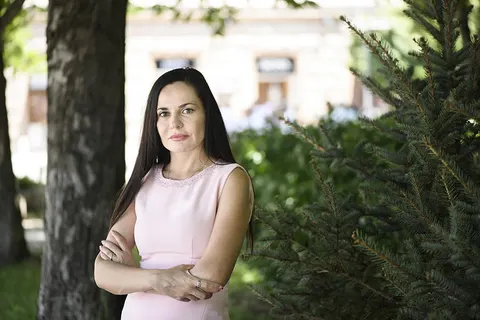
What will tomorrow look like? Why is “the era in which we will have to reinvent ourselves” approaching? What is worth teaching today’s children so they are ready for the future? Which professions will survive? And how do we find those ever scarcer skills that are worth helping them develop? Assoc. Prof. Mariana Todorova is a pioneer of Bulgarian futurology in its modern form. It has become a tradition for her to be my guest at the start of every year with forecasts that unmistakably come true. “We are returning to that most primal human quality of critical thinking, reasoning and debate.” “It is only a matter of time before most of the tasks we perform are taken over by artificial intelligence. We will live in permanent change, and at some point we won’t be able to catch up. As humanity, we could respond only through a global political consensus in which we decide that, even though the technology can do almost everything, people stay. But such a philosophy is deeply anti-capitalist, and imposing it would take either some boundless humanism or a dictatorship.” Can we be ready for the future?
 02
“Is There Any Part of Our Lives AI Won’t Change?”
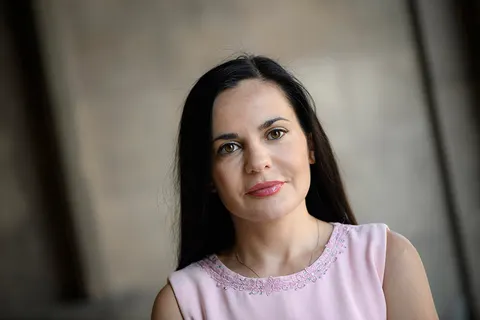
Why are we so unprepared for the great changes technology is bringing us? Can we catch up? What are the most important pieces of news to expect in the new year, 2024? Why is the revolution in every area of our lives irreversible and even closer than expected, with the full force of scientific argument behind it? Why is it important to shake off the petty concerns of the day as soon as possible and, faced with enormous challenges, come together? Assoc. Prof. Mariana Todorova is a futurologist at the Institute of Philosophy and Sociology of the Bulgarian Academy of Sciences. “Within just 5 years, technologies based on artificial intelligence will enter every field. They will be around us from birth to death,” she said in our conversation in 2022. And in the first days of 2024 she is even more categorical: “Now it is 100 percent certain. I think there are 2-3 years left, and that depends on how prepared we are, not on what the technologies themselves can do. If you can think of a field that won’t be heavily affected by artificial intelligence, challenge me, so I can prove you wrong…” How do we prepare for that future?
 03
“A Complex and Difficult Year Lies Ahead”
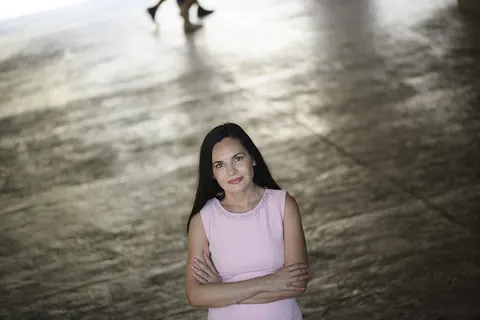
No, there's no astrology here, just pure science. How many scientists do you know who can predict the future with 85 percent accuracy? I know just one, and the verdict isn't only mine, but ChatGPT's too, from a particularly telling experiment. Assoc. Prof. Mariana Todorova returns for what has become a traditional Digital Stories interview at the start of each year. The futurologist always gives us important things to think about, so there's no need for a long introduction. Let's peek into the future together!
 04
“Within Five Years, AI Will Change Every Area of Our Lives”
Will AI-driven technologies really reach every area of human life within just five years, and are we already too late with ethical rules for them? Assoc. Prof. Mariana Todorova, a futurologist at the Institute of Philosophy and Sociology of the Bulgarian Academy of Sciences, makes predictions bolder than most science fiction. “Within just five years, technologies based on artificial intelligence will enter every field. They will be around us from our birth to our death.”
 05
Did We Get the Future Right? (An Experiment)
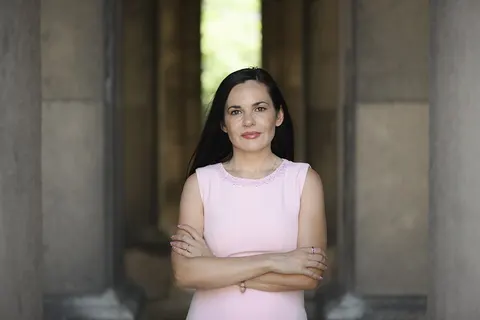
It is a Digital Stories tradition that every year begins with a visit from futurologist Assoc. Prof. Mariana Todorova. First, though, just hours after we rang in the new year, I have an especially interesting experiment for you. Have her predictions from our conversations so far come true, and to what extent? Can we check what has happened in the meantime, and whether it confirmed or refuted the futurologist’s words? How can we do it impartially? I will pick 20 specific quotes from the interviews and find an unemotional analyst to grade them. The results are astonishingly interesting!
 06
Who's Speaking—a Human or an Algorithm?
It's no news that AI generates images and texts that (we checked!) cannot be told apart from those made by humans. Video still seems to lag behind, but… Can you imagine a voice indistinguishable from a human one reading the news, or calling you on the phone with no chance of you telling the difference—not a cloned voice, but an entirely artificial one, in pure Bulgarian, a language almost impossible for non-native speakers? It's time for a resonant Digital Story, and a challenge awaits you afterward…
 07
Hedgehogs Are Born Without AI
What kind of world will today's children live in? What is worth learning today, and what would be a waste of time, effort and money? When and how should we introduce them to technology so that both sides get to know each other without anyone getting hurt? And when should we “introduce” them to artificial intelligence? I will look for the answers to these and other important questions about children and technology. A long series of children's Digital Stories begins. Here is why I believe it is vital to dig deeper into these enormous topics:
 08
“AI Is Everyone’s Big Chance to Climb Their Own Everest”
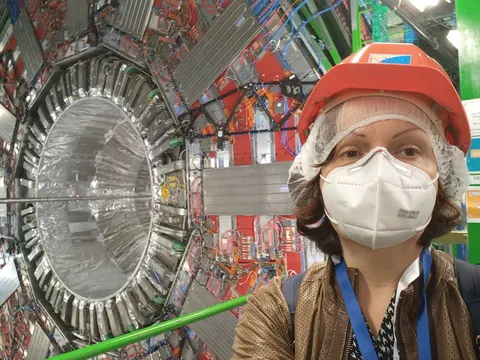
“The world stands at the Rubicon. We will live alongside smart machines, a new and different world awaits us, but are we ready for it?” That question, the very reason Digital Stories exists, is posed on the cover of her new book by today’s guest, Petya Minkova. In The Transition from the Digital Age to the Hybrid Civilization, she traces the long road from the first computers to a future of superpowerful artificial intelligence. And while the answer to whether we are ready is clear, there are so many other important questions we will discuss in the lines below! Do we have any future other than as a hybrid civilization of humans and technology? What does our survival depend on, and what will our daily lives look like once this transition hits with full force? Why is AI far more than a danger—why is it also a chance for each of us to climb our own personal Everest?
 09
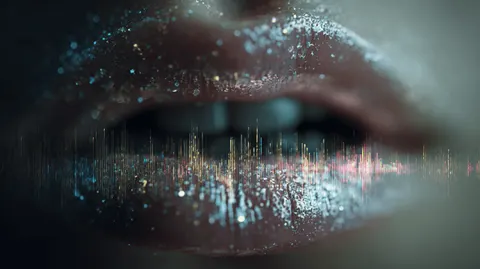
Can We Tell a Generated Voice from a Human One? The Answer Is Clear
Can you tell a human voice from one generated by algorithms? 2,036 people took part in the Digital Stories experiment looking for the answer to this question, along with many other important nuances. The result, in my view, is unambiguous…
 10
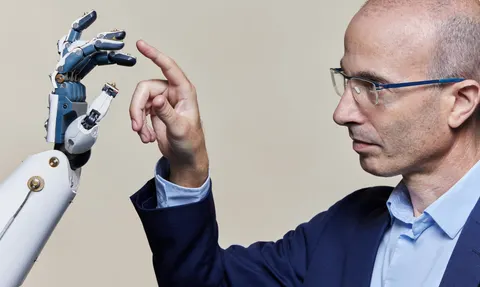
Yuval Noah Harari: Prophet of a New Age
Yuval Noah Harari's name comes up again and again in conversations about the future: the historian and futurist who untangles the threads of humanity's past and poses the big questions of tomorrow. How did a history professor become the favorite author of Bill Gates, Barack Obama, Mark Zuckerberg and Bill Clinton while staying popular, translated, read and debated? A colorful figure beyond the stereotypes, and, to my mind, a valuable and powerful voice warning us about the immediate dangers we face as a species.
 11
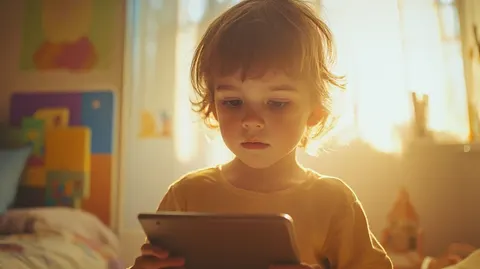
How Do We Introduce Our Children to Technology? (A Survey)
What kind of world will our children live in? And how do we introduce them to technology in the best possible way? I have two kids, and this site exists because these questions won't leave me in peace. And there are so many other important questions that it is time we found answers to. Let's talk them over, then go looking for the answers. Let's paint a picture together of digital parenting today and the way it looks toward the future. The survey is aimed at parents of children aged 0 to 11 (and at grandparents and anyone else who has children in their life). Teenagers' issues are extremely important too, and their moment will come. The survey is anonymous, and you can answer whichever questions you choose. You can also enter a prize draw for hand-picked books and T-shirts with the Digital Stories logo. Responses are being collected until February 28, and you can expect the results in early March. This survey opens a series of important Digital Stories about children and technology. We'll talk about motherhood and fatherhood today, about the changes in education, about the professions of the future. I've invited remarkable guests from whom every parent (myself included) has a great deal to learn. Heartfelt thanks for every response and every share!
 12
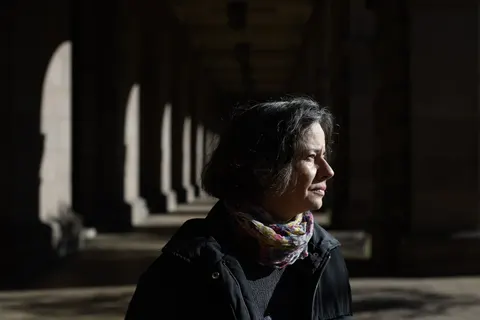
“The Epidemic of Ignorance Will Only Spread”
“Our inability to strike up a meaningful dialogue has left hundreds of thousands of people socially isolated. Some fall ill and die simply because they lack real human contact. I believe artificial intelligence will deepen this trend, because it will fool people into thinking they are talking to a friend, to someone they have lost, or to someone who refuses to hear them. And so we find ourselves in a world where we can supposedly talk to each other. But behind this apparent palette of viewpoints, of words, of word salad, including self-absorbed academic speeches, sit frightened, disillusioned people, impoverished intellectually and emotionally. To me, that is the great horror of our time.” Our conversation with the writer Silvia Tomova began with poetry and went on to education, history, the epidemic of ignorance and the long-overdue need for a social awakening. Against this backdrop, technology remained a constant companion, changing each of these subjects from the ground up. A journalist and special education specialist by training, she publishes essays, short stories and novels. The winner of numerous awards and the author of five novels and three short story collections, Silvia often peers into the past as well as into the big questions of today. She is not afraid to break out of clichés and to challenge the mainstream, both in literature and in public life. And so we meet for an important conversation that has come at just the right time.
 13
What Should the Next Digital Story Be?
Can you think of a story that deserves to be told? Let me know, and if your idea becomes a piece here, you'll get a personal gift. Digital Stories turns three today! It's time to take stock of what has been achieved so far, time for you to have your say, and finally, time… for some unexpected news.
 14
Tetris: The Human Who Never Stops Outdoing Himself
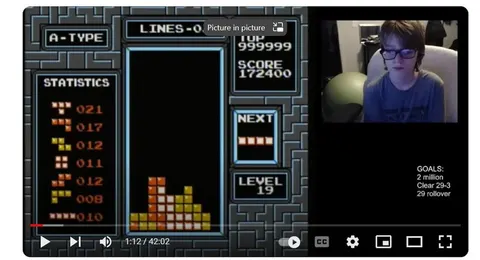
“I’m going to pass out, I can’t feel my hands…” Blue Scuti mutters, before he realizes he has fulfilled a dream that seemed impossible. Almost four decades on, he has beaten, one way or another, the game we have all played. Sitting in front of a retro cathode-ray-tube TV, found after countless difficulties, clicking the buttons of a retro controller for 42 minutes straight at more than 20 taps per second… the teenager reminded us that there is no limit to what a human can do. But how can you beat a game that has no end? And why are this success and the road to it such important news for humans as a species? News about our ability, through cooperation and talent, to keep moving forward… To create, to make things, to find meaning. To give birth to stories. Tetris is a legend that passes through the generations to give birth to new legends. A week ago we took a stroll through the history of the game that came out of a Soviet laboratory during the Cold War. Today we will look at a brand-new record that has so much to tell us about ourselves.
 15
Tang Ping: Lying Down in Order to Stand Up
Several generations of Chinese grew up with the “ideal” of “9-9-6”: you work without a break from 9 a.m. to 9 p.m., six days a week. It is the only way to survive the fierce competition and keep climbing the ladder. But the end of endless grinding may be in sight. “Tang ping” and “bai lan” are the two names of a movement gaining strength among young Chinese: lie down and think about life; relax instead of throwing all your strength into meaningless toil. Are the beatniks of our time coming from China? Will people in the East learn to idle? When can laziness become a constructive force? And shouldn't we all follow their example and prepare for our own future this way? The Chinese are learning to be lazy, and so inspiringly that you want to grab the quilt at once… Let's lie down!
 16
Digital Stories Turns Two! Which Articles Did You Read the Most?
Digital Stories turns two today! Which of the 219 pieces published over that time were read the most? Topics well worth not missing, that much is certain… My heartfelt thanks to every one of: – More than 6,800 followers of Digital Stories on Facebook; – More than 3,600 followers on LinkedIn; – More than 500 people who subscribed to the mailing list; – More than 190,000 readers who visited the site. Over these two years the project: – Twice won the Technology and Innovation category of the most hotly contested journalism competition, the Web Report awards, and once the competition organized by the Bulgarian Association of Information Technologies. – Ran regular rubrics in Manager magazine and on bTV's business news. It was featured on bTV, BNT 1, BNT 2, Bulgarian National Radio, Darik Radio, BTA, Dir.bg, the magazines InGlobo and Osem, and many other media; – Most important of all! It drew attention to a range of topics that grow more important and pressing with every passing day. Thank you! Every read and every share matters!
 17
A Future Without Crime, or a Digital Concentration Camp?
Algorithms, it turns out, can already predict when and where a crime will happen. Countless lives could be saved this way. Humanity could be forced to bid farewell to that age-old dark side of its own—crime. And what about the justice system? In China, some verdicts are already officially decided by artificial intelligence, and its rulings are challenged only when there is serious evidence. Does this mean the end of judicial errors, legal tricks, the imperfections of the field? Will we put John Grisham out of work? Or will we end up in the terrible final scene of a famous novel—a man and a woman are talking when a steely voice behind them says, “You are the dead”? If every crime can be predicted or justly punished, will our lives become incredibly peaceful? Or will we find ourselves in an over-controlled global concentration camp?
 18
GPT-4 Is Coming, and It Promises to Change Everything
In the much-hyped world of artificial intelligence, there is hardly an algorithm more famous than GPT-3. It showed that AI is capable of miracles in a great many fields. And now the next generation is on its way. Although it is running late compared to the original expectations, GPT-4 is expected to be unveiled very soon. Can we get even more out of it? How does it differ from its predecessor? In which fields do we expect it to work wonders?