“The World Is Too Wonderful for Us to Finish Inventing It Virtually”
“People put up hearts, declare their love and shower each other with friendship very easily and very willingly. It couldn’t happen in such quantities in reality, because there it takes far more real effort.” “I think that when you cause someone pain, some of it sticks to you too. Online we’re robbed of that—and yes, I say ‘robbed’ on purpose. Feeling someone else’s pain is a sign that you’re alive.” Petya Kokudeva is a silver-tongued master of words who can tell a deep story in a handful of sentences. And, impossible as it sounds, she does it not only for adults but for children too. She is one of those people who never stop traveling—both creatively and physically. A writer with many awards for children’s books and travel writing, Petya is a citizen of the world who knows what to ask of it. We talk about the road—the one across the world, the one down the feed and the one toward ourselves. The road of each of us, and of all of us as a civilization, along the steep slopes of today, in the light and shadows of technology. What awaits us around the bend?
 362
Divide and Rule, Online
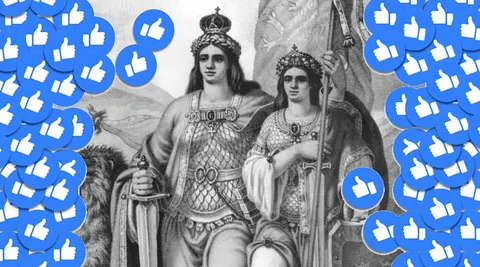
Could any of the most meaningful events in our history, whose undisputed benchmark is the Unification, have happened in the age of social media? In a time when the online world shapes our consciousness even more than our offline being does, is it really worth repeating the famous line “Unity makes strength”?
 363
“Building Software Is a Team Sport. The Team Is Stronger Than the Individual”
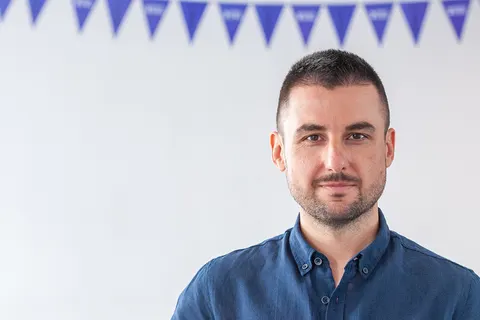
How long will programmers stay this much in demand in Bulgaria, and what does the future hold for this attractive sector? Veli Pehlivanov, a cofounder of Resolute Software, talks about what sets Bulgarian IT specialists apart and whether a career in programming is still worth pursuing. With colleagues and kindred spirits he built a software consultancy that wants to offer a model of its own and already works with clients on four continents.
 364
Strazha: Young People Standing Guard Over Democracy
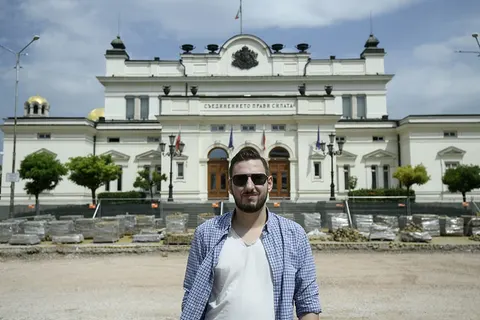
Strazha.bg is a meaningful venture by young people unburdened by prejudice. In just a year the platform has drawn serious interest and keeps offering more and more possibilities—reminders that politics is not just the people on television, but all of us. Thanks to the project, we can see what the person we ourselves sent (or plan to send) to the National Assembly, Bulgaria's parliament, said and how they voted at any moment. We can check whether they keep their word and deserve our trust. We can search a vast database of payments made by every state institution over the past 16 years. “Democracy is not just a slogan!” reads the motto of this venture. Not only its existence, but also how effectively it works depends on all of us. And now we have a valuable weapon with which anyone can put it into practice. We meet the platform's creator, Blagoslav Mihaylov, to talk about the meaning of democracy and the way young people see it, and to look for what we need to build a meaningful and competent political class.
 365
“Is There Such a Thing as Useless Knowledge? I Don’t Think So”
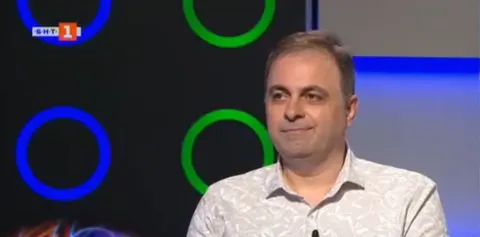
Is there such a thing as useless knowledge, what good can it do us to know the capital of CHAD, and can general culture become a value again? Atanas Atanasov made a long and unforgettable stay in the homes of the people who watch The Last One Wins, the quiz show hosted by Orlin Goranov on BNT 1, where he equaled the record of 18 consecutive wins and left an impressive mark with his knowledge in countless fields, his quick mind and his friendly manner. We talk about the facts worth knowing and the challenges worth throwing at our brains now and then to protect them from the bombardment of information amid a deficit of knowledge and the devaluation of general culture—and at the end, a prize question awaits you that will make you think hard…
 366
The Internet of Forgetting
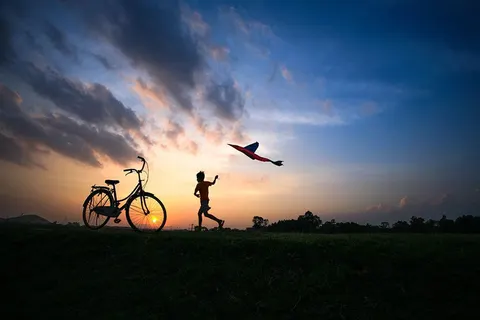
Do you know the capital of Madagascar? Who cares—if for some reason you ever need it, the omnipresent Google will tell you everything about it in three seconds. Not so long ago we all “carried” the phone numbers of family and friends in our heads. The web has forever changed our relationship with knowledge. Storing facts is no longer a priority for our brains; today the ability to find what you need quickly and accurately has replaced actually knowing. What challenges does this shift create? Why does it bring both serious opportunities and countless risks? Is it changing us even… as a species?
 367
Voyager, Delyo the Outlaw and an Immortal Humanity
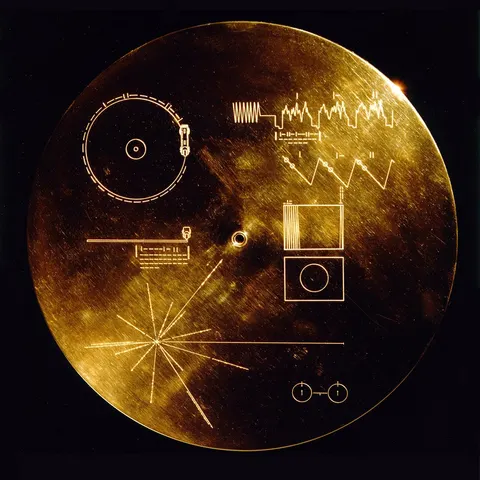
If you met an alien, how would you introduce today's humanity? The story of the Voyager project is incredible. It is the first and last large-scale attempt by our civilization to introduce itself: to gather everything most important that defines it and present it in a form that other species could decipher. And to do it with technology that today, almost half a century later, seems primitive to us. We all know about Valya Balkanska's song in space, but what else have you heard about Voyager, the space traveler drifting among the stars that may be the last witness to humanity's existence? And how exactly are aliens supposed to understand what we have to tell them? Liftoff!
 368
Sofia Opens the Door Between Generations
Eighteen-year-old Sofia Simeonova steps into the homes of her peers with her camera to show their most personal place—their own room. Her only condition is that it must not be tidied up for the photos, but look the way it does every day. “Almost every child subconsciously sees their room as the safest place. That is where they express their innermost thoughts and hopes most purely,” says Sofia. With her exhibition The Room in You, she quite literally opens the door between generations. So what does the most personal space of young people look like today?
 369
“The Problem Is That We Became Godlike in Our Heads”
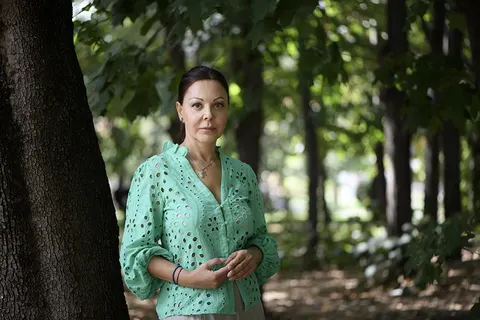
“Suddenly it became clear just how far apart people had actually drifted.” Why did empathy fall victim to our capture by social media, and how do we get it back? Why have selfishness and the drive for self-sufficiency become the main obstacle to our happiness? Ani Vladimirova is a psychologist with a long and colorful career and an always interesting point of view. Known from numerous television projects, she also created Bulgaria’s first website for online therapy, back in 2003. We meet to talk about the big challenges facing the “little” person. About the imperceptible changes technology has brought us. About how it made us feel godlike, even though we are still the same fragile, vulnerable creatures. About the instincts that will one day make us value information again.
 370
Luddites, Long May They Live
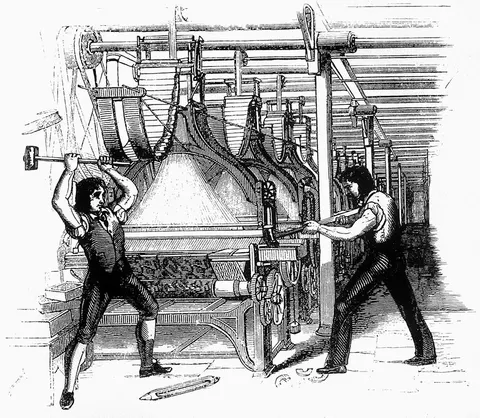
The Luddites were a British movement that rose up against the machines two centuries ago. Workers fighting for rights that had fallen victim to automation caused such chaos that Britain had to send more soldiers against them than against Napoleon's army. Technological progress is often frightening. Today, the Western world calls people who worry about the future brought by the supposedly limitless possibilities of computers “Luddites.” In that sense, we all are, or at least it is good to be, Luddites to some degree. What does the history of the skeptics' battle against technology look like, and was it always doomed? What changes if we look at it from the vantage point of today and the questions our time raises?
 371
“Selfishness Is the Entrepreneur’s Enemy”
1,000,000,000: that is how many visits a month the websites looked after by today’s guest and his team receive. Mario Peshev is an impressive figure for his story, for his successes and, above all, for his outlook on the world. WordPress made it possible for anyone today to have a dignified place of their own on the web, and Mario wrote “pieces” of the code used by every one of the hundreds of millions of sites built on the platform; his company DevriX is among the 20 most sought-after WordPress agencies in the world. What is it like to own your own “little piece of code” in WordPress, what changes when an enthusiast suddenly finds himself at the head of 50 people, what does the future of the digital world look like to Mario, and… will his beard still be his trademark a decade from now?
 372
WordPress: The Matt Who Set the Internet to Jazz
In 2003, 19-year-old Matt Mullenweg found out firsthand that necessity is the mother of invention. He was using a free blogging platform and needed a little help, but there was no one to give it. The result, born on April 1 and no joke at all, was WordPress, the open-source platform that lets anyone build a good-looking site with minimal effort. Today WordPress carries on its shoulders… a third of the world's web pages! But what does jazz have to do with any of it? This story from two decades ago is as meaningful as it is full of colorful details.
 373
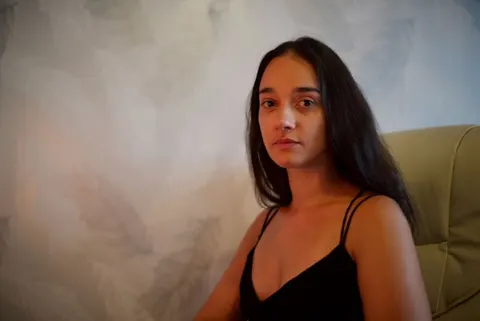
“The Problem Is People, Not the Law”
Is our data really protected online? What rules should we follow to avoid unpleasant surprises? How can we be sure we aren't infringing anyone's copyright, and what should we do if someone infringes ours? And who will own the rights to the “works” of artificial intelligence? The law takes up an enormous amount of room in the online world too. We rarely think about it, yet the field is extremely important. Hristina Bogia holds a doctorate in law and specialized in all the important questions that technology raises for legal science. A few years ago, disillusioned with the system, she decided to change careers and moved into the software industry. Together, we'll look for answers to all of these questions. We'll head for the places where technology, the law and the rights of each of us intersect. We'll go over plenty of everyday advice that can help any user. And, last but not least, we'll get the perspective of a thoughtful young person with a distinctive view on a topic that is always current in Bulgaria: a court system that doesn't work.
 374
This Site Uses Cookies… So How Should We Answer?
We see the question in the headline every single day. But how should we answer it? Which cookies should we accept and which not? Does our decision matter, and can we change it? And what are these notorious cookies anyway? GDPR. We've all heard of it, and I'm convinced it must be an abbreviation of some Latin curse; if it isn't, it deserves to be adopted into Latin in the language's next release. While every tiny website is forced by law to obey the infamous regulation to the letter, the pages of the giant companies where we spend hours every day show it to us once and that's that. How did we get here? Is it worth reading the questions every site asks us about cookies? Are there more sensible solutions?
 375
Anna Around the World
The idea of digital nomadism isn't new, but it has never been as accessible as it is today. This inspiring story proves it. Anna is a traveler by spirit and by calling: she has set out to visit every country on the planet, has already been to more than a third of them, and travels not only for the meaning of it but for the stories of entrepreneurs she gathers along the way, so that they might help someone else.
 376
The Slack Revolution: A $27,700,000,000 Lesson
Stewart Butterfield is the man with the most reason to buy everyone a round for the way the pandemic changed our lives. Never heard of him? He's well worth knowing: the father of Slack has an instructive story that runs through the different eras of the internet to remind us that even when life is going well… sometimes the stunning success you've spent so long preparing for finally arrives. And do you know his secret? It lies in the conclusions he drew from the failure of one of his computer games, a full 30 years earlier…
 377
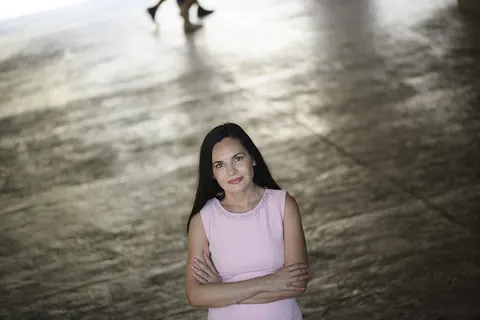
“Within Five Years, AI Will Change Every Area of Our Lives”
Will AI-driven technologies really reach every area of human life within just five years, and are we already too late with ethical rules for them? Assoc. Prof. Mariana Todorova, a futurologist at the Institute of Philosophy and Sociology of the Bulgarian Academy of Sciences, makes predictions bolder than most science fiction. “Within just five years, technologies based on artificial intelligence will enter every field. They will be around us from our birth to our death.”
 378
Geoffrey, the Man Who Gave the Computer a Brain
Neural networks, artificial intelligence… we repeat these terms every day without stopping to think how closely they are tied to the idea of software that mimics the human brain. That is no accident; the association is logical. The first person not only to think of it but to put it into practice is today's hero, one of the greatest scientists of our time. We owe Geoffrey Hinton a huge share of the progress we see today in the ever-so-topical field of artificial intelligence.
 379
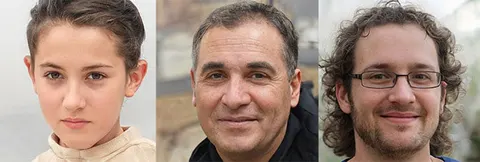
GAN: AI Has Started Making Up… People
Take a good look at these faces. You will never meet these people in real life, because… they don’t exist! The images were “made up” by an algorithm called GAN, which lets artificial intelligence create new images based on the data it is fed. Two neural networks compete in the good old plot of good cop, bad cop: the first tries to imitate the target, and the second judges when it has succeeded.
 380
“A World Is Coming in Which Our Thinking Is Riddled with Gaping Holes”
“To write well today, the writer must not always be thinking of the reader,” says Rayko Baychev. He is a rare phenomenon these days: a writing journalist who knows how to say what needs saying with exactly the right words, in a way no one can imitate. “The fear of missing out has something in common with gambling, too. It is well known that a devious idea went into the design of the newsfeed: that scrolling through social media should mirror the way the mind falls into a feverish frenzy as it follows the fast-spinning symbols on a slot machine screen and waits for them to land on a winning ‘status.’ For your political views to line up with other people’s, the way cherries, lemons and gold bars line up on a trembling payline.” What might the future of how we get our news, how we read and how we write look like through a journalist’s eyes?