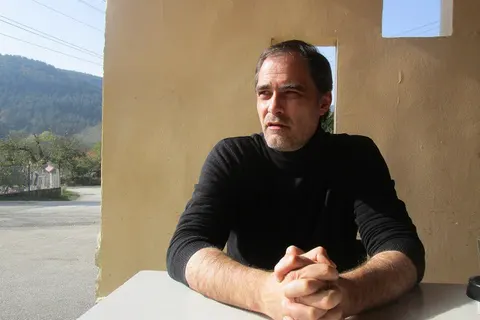
Technology Can Already Read Minds. Is This the End of Freedom?
Technology can already “translate” brain signals into readable data, and the first breakthroughs are here. Swept up in the progress of artificial intelligence and the notorious GPT, we may miss a huge leap when it comes to the natural kind. Prof. Nita Farahany, a scientist and legal scholar with vast experience, is drawing attention to it. “Today there are already companies capable of decoding brainwaves,” she told the world forum in Davos at the start of the year. Are we ready for the moment when someone reads our thoughts? Will it lead to total control, or make our lives more comfortable and meaningful?
 02
The Internet of Forgetting
Do you know the capital of Madagascar? Who cares—if for some reason you ever need it, the omnipresent Google will tell you everything about it in three seconds. Not so long ago we all “carried” the phone numbers of family and friends in our heads. The web has forever changed our relationship with knowledge. Storing facts is no longer a priority for our brains; today the ability to find what you need quickly and accurately has replaced actually knowing. What challenges does this shift create? Why does it bring both serious opportunities and countless risks? Is it changing us even… as a species?
 03
“Within Five Years, AI Will Change Every Area of Our Lives”
Will AI-driven technologies really reach every area of human life within just five years, and are we already too late with ethical rules for them? Assoc. Prof. Mariana Todorova, a futurologist at the Institute of Philosophy and Sociology of the Bulgarian Academy of Sciences, makes predictions bolder than most science fiction. “Within just five years, technologies based on artificial intelligence will enter every field. They will be around us from our birth to our death.”
 04
Facebook Is Now Meta. What Does the Metaverse It Wants to Send Us To Look Like?
Suddenly… a brand we all mention every day is no longer the same. Facebook is becoming Meta to draw attention to its hyper-ambitious metaverse project. But what does this future, which will merge the real and virtual worlds into one indistinguishable environment, look like? When should we expect to find ourselves in the metaverse? And what risks does such a vast project carry?
 05
What If One Day We Defeat Death?
Do you think machines and artificial intelligence could make us… immortal? What price might we end up paying? What awaits us afterward? Where is the line between the possible, even the near future, and fantasy? Each of you has your own answers. And yet there are plenty of projects and ideas on the subject that give us reason to think about it more seriously.
 06
When Musk Puts a Chip in Our Brains…
“It’s very important that artificial intelligence not be ‘other.’ It must be ‘us.’ That’s the only way we survive,” says Elon Musk. To get there, he has launched Neuralink, an ultra-ambitious project whose goal is for us to merge with machines: a tiny chip in the brain that makes us part of the global network. Is this fantasy, or the only chance for the human species to survive?
 07
“AI Is Testing What Kind of People We Really Are”
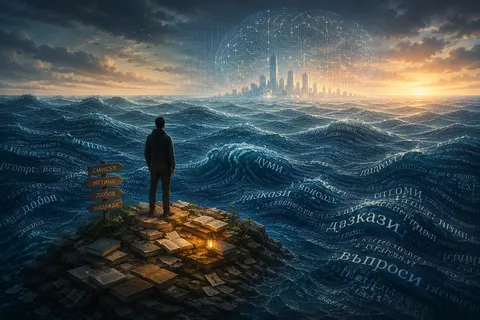
This is a conversation about words: about language and the new path it will take with the astonishing progress of artificial intelligence, progress that came through language itself. Nikolay Tellalov is a favorite guest of Digital Stories. Five years ago he and I did the site's very first experiment, an interview in short stories, and this time we talk about everything that has happened since, with technology, with words and with all of us.
 08
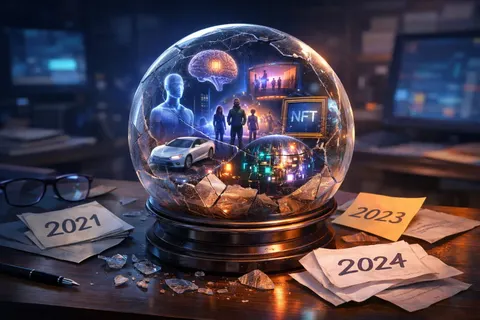
15 Predictions About the Future We Can Laugh At
Trying to peer into the future is a doomed challenge, yet reading tech predictions that never came true turns out to be unexpectedly entertaining, especially when… they are your own. In more than five years, I have published just over 500 Digital Stories. I will invite an impartial observer to assess them and pull out specific passages that have not aged well at all.
 09
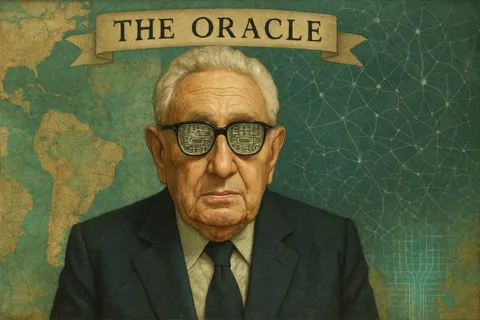
How Henry Kissinger Foresaw the Future
“There are two ways to make sense of the present situation. The first is by projecting from the familiar. Until now, the most transformative technologies created by humanity have served to refine or amplify our bodily capabilities. (…) Is AI simply one more extension of human capabilities? The second way of making sense of it assumes that this time the situation is different—that AI possesses unique qualities that cannot be reduced to an upgrade of human abilities. Within a few decades, through engineering, an analogue will be created of what evolution has been building over millennia—namely the human brain: the last organ left to be reproduced or reimagined inorganically.” We are not simply living in dynamic times in which we humans fail to keep up with technological progress. We have reached a moment when technology itself is making us start over. We have to redefine many of the concepts and systems that make up our lives—from democracy and capitalism to art and creativity. That's not me telling you this, but good old Henry Kissinger, who, on top of everything, is sending his messages about the future and artificial intelligence… from the beyond. The final work of one of the defining figures of the 20th century has recently come out in Bulgarian—the work of the man to whom we largely owe the fact that the Cold War stayed cold instead of turning into World War III. Genesis: Artificial Intelligence, Hope, and the Human Spirit gathers Kissinger's crucial views on the future we are already living in. Here are 14 of its highlights; may they finally spark the overdue public conversation about the future of humanity in the age of advanced technology and artificial intelligence.
 10
Which Predictions for 2025 Came True—and What Lies Ahead?
In 2015, seven leading futurists laid out their expectations for the decade ahead. In a few hours we will welcome that very 2025, so we can now judge how well they did in the dynamic and turbulent first quarter of the 21st century. Then comes the more interesting part: a look at what the same futurists expect today, especially the ones who turned out to be right, and what the coming years hold according to the people who called the last decade.
 11
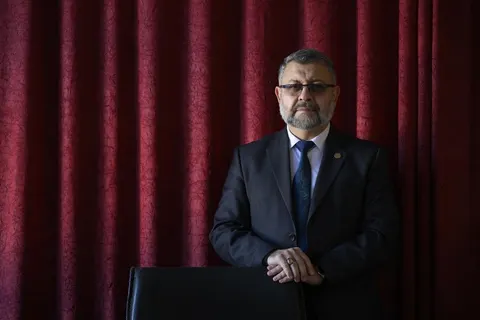
“We Are in a Deep Ethical Crisis. It's Time for a Restart!”
Can religion help us with the ethical norms we build into artificial intelligence? Why, at a time when faith is talked about less and less, do wars still get fought over it? Birali Birali, until recently Bulgaria's deputy grand mufti, takes on questions that are both urgent and eternal.
 12
32 Digital Stories Between Two Covers: What Lies Ahead?
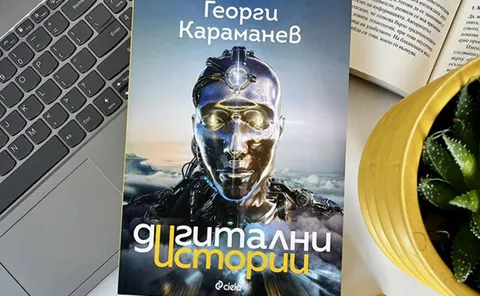
The book Digital Stories brings together 8 big questions of our time and 32 stories in search of the answers. You may have read some of them on this site, and here you will find them updated and enriched; others were written especially for the book. Perhaps you have already drawn back the curtain of the cover? Then I would be absolutely delighted to read your thoughts here. If not, here is what awaits you behind it!
 13
FM-2030: The Man Who Refuses to Die
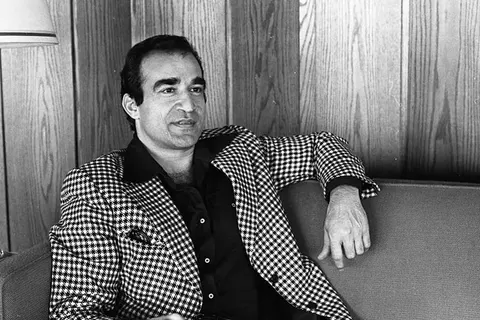
Left or right? Up! He believed that when 2030 came, he would wake from the ice to celebrate his 100th birthday. He was convinced that by then we would have reached the heavens, settled other planets, put our petty squabbles behind us and, lifted on the wings of technology, marched onward in human evolution. Was FM-2030 right? Could the sharp-shooting basketball player still surprise us with a three-pointer of a prediction? If so, in just seven years we will be able to discuss the details with the man himself. If he really is revived, the forgotten creator of transhumanism, who picked a name like a radio station's, will surely have a lot to tell us… If not, he will become just another dreamer who overestimated humanity and ran ahead of his time.
 14
Steve Jobs Is Risen!
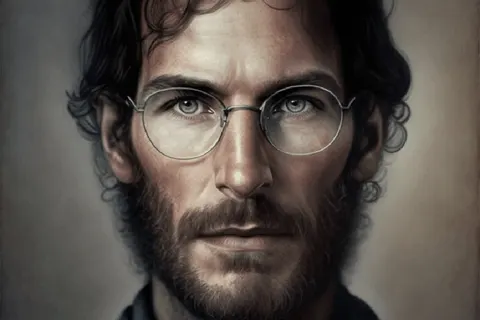
Did you catch Steve Jobs as a guest on Joe Rogan’s podcast a month ago? Oh, it was fascinating. “Computers have the power to be 1,000 times more important than they are today. I throw my computer out the window every few years just to make sure it works.” Steve was in his signature form, visionary and funny, as he told some truly curious stories from the history of Apple. But wait… didn’t Steve Jobs pass away? So what? The interview is perfectly real. It was generated by artificial intelligence. What’s the big deal, it’s interesting, isn’t it? Want to chat with Einstein? No problem, technology makes even that possible. Are we ready for the moment when computers can imitate us so well that we won’t be able to tell ourselves apart? How is it possible, and is it right, to try to “resurrect” people by creating, one way or another, copies of them that are indistinguishable from the original?
 15
Singularity: When Computers Become “Smarter” Than Us
Computers keep getting faster and more sophisticated, and at some point they will move beyond our ability to judge them. That point is called the “technological singularity,” and according to Ray Kurzweil, the researcher who popularized it, it will arrive in 2045. Some consider him a brilliant forecaster, others a charlatan. Either way, it is worth asking whether, at such a moment, artificial intelligence will help us solve humanity’s eternal problems—or enslave us…
 16
“Empathy Will Save the World”
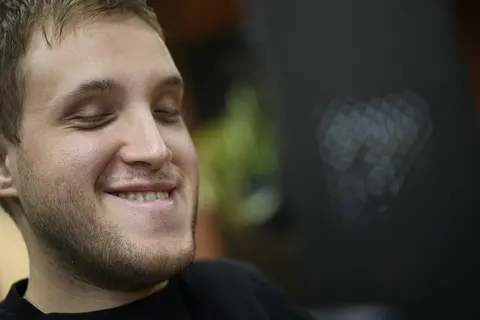
Kris is the strongest person I know. This time we talk about literature and the media, two of the most important universes in his life. About the obstacles people with disabilities face and their encounter with society. And about how the rest of us should treat them without offending or hurting them.
 17
Svetlin Nakov: Today, the Fight for Freedom Is Fought in the Digital World
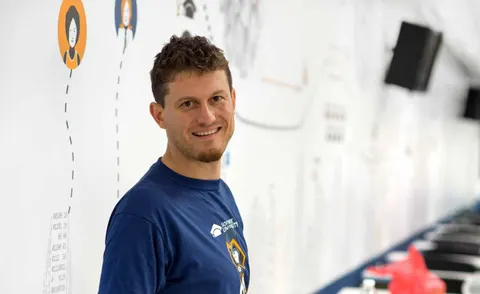
Svetlin Nakov, the founder of SoftUni, can talk about today's (and tomorrow's) computer world for hours. Engagingly and knowledgeably, with a sense of humor and real insight. Here is what he has to tell us.
 18
An Interview in… Short Stories?
Our guest in the Digital Stories Interviews section has a talent for reading the future. Nikolay Tellalov is a beloved writer, and although he has long been an interpreter and connoisseur of technology, he lives at a healthy distance from it. Here is what he has to say in… short stories: digital stories, miniatures that say a great deal in an infinitely small space.