We are not simply living in dynamic times in which we humans fail to keep up with technological progress. We have reached a moment when technology itself is making us start over. We have to redefine many of the concepts and systems that make up our lives—from democracy and capitalism to art and creativity. That's not me telling you this, but good old Henry Kissinger, who, on top of everything, is sending his messages about the future and artificial intelligence… from the beyond.
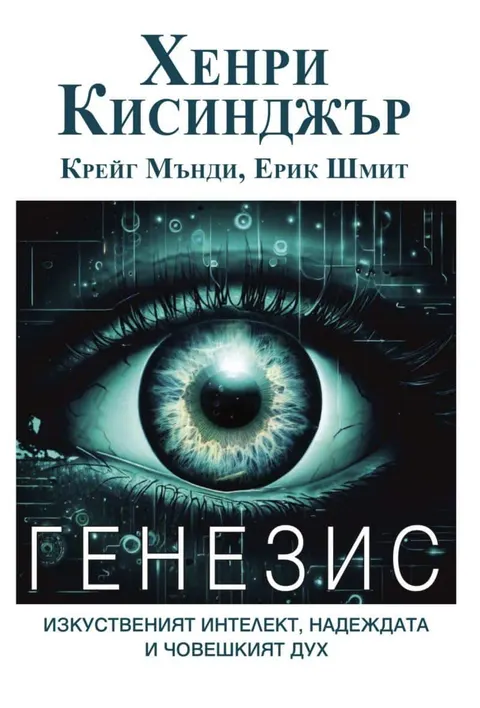
Just recently, the final work of one of the defining figures of the 20th century came out in Bulgarian—the work of the man to whom we largely owe the fact that the Cold War stayed cold instead of turning into World War III. Genesis: Artificial Intelligence, Hope, and the Human Spirit (Trud Publishing House) gathers Kissinger's crucial views on the future we are already living in.
Here are 14 of its highlights. May they finally spark the overdue public conversation about the future of humanity in the age of advanced technology and artificial intelligence.

1. Messenger
“No AI systems were used in this book.”
To be honest, this is the first time I've seen a disclaimer like that right on the copyright page. Is this the even newer normal?
What's the point of a claim that can no longer be proven in any way? Is it supposed to be something to brag about, or the opposite? Frankly, when it comes to the text of this particular book, I'm convinced the author is not an artificial intelligence but an entirely natural one—who, however, is no longer among us.
2. A Letter from the Beyond
“In the age of AI, what will the role of humans be? In the last years of his life, Henry Kissinger devoted himself to studying AI and co-authored this book with the scientists Eric Schmidt and Craig Mundie. The work is a profound exploration of the ways in which we can preserve human dignity and values in an era of autonomous machines.”
Walter Isaacson
The words of the writer and historian are part of the praise opening Genesis, where we also find words from Sam Altman and Bill Gates. Yes, the book was co-written by Kissinger with Schmidt and Mundie, though I would rather call the latter two technology leaders—for a long time they held top positions at Google and Microsoft respectively, and it would be hard to accuse them of not knowing their way around tech.
But how do we read a book by an author who is no longer here? Do we already have a technology trained on his experience? I've heard of Vladimir Zhirinovsky being “resurrected” by AI, but Kissinger…
No, that's not it (yet).
Yes, Henry Kissinger passed away in November 2023, having turned 100. In the last years of his life he actively raised the subject of artificial intelligence, long before it became fashionable with the birth of ChatGPT. So it came as no great surprise when, a year after his death, Genesis appeared in English, and then in Bulgarian. It is the last book the diplomat worked on, and his co-authors finished it on their own. Without even telling us which part of the text was written by whom, or how.
Either way, the messages matter far more.
3. The End of the Enlightenment
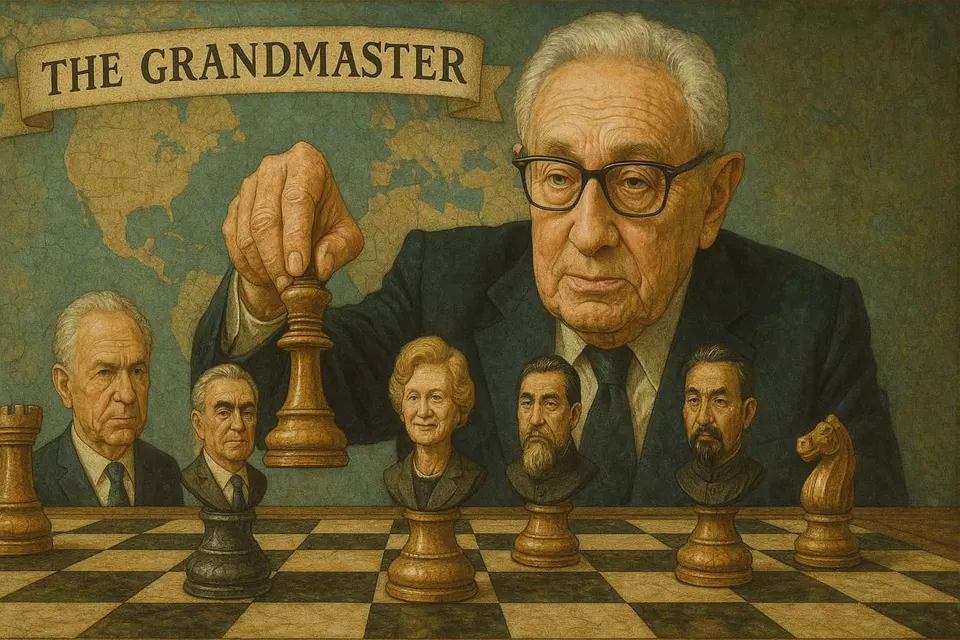
“AI's objective capacity to reach new and accurate conclusions about the world through nonhuman methods not only undermines our trust in the scientific method, developed steadily over five centuries, but also calls into question the human claim to exceptional or unique access to reality. What does this mean? Might the age of AI not only fail to move humanity forward but, on the contrary, catalyze a return to a premodern acceptance of unexplained authority? In other words: are we, or could we find ourselves, on the threshold of a great reversal in human cognition—a dark Enlightenment?”
Quo vadis? Where are we going? That very question we supposedly keep searching for, yet in essence keep avoiding in public debate. “I think, therefore I am,” goes the famous line by the Enlightenment's ideologue René Descartes, and Kissinger stubbornly writes that today we find ourselves in an entirely different situation.
“Yes, it isn't a person. But it behaves exactly like a person. It's super obvious there's intelligence on the other side. Blindingly obvious. It understands, it reasons, it makes mistakes, it corrects itself… well, just like a person!” a friend told me recently about working with AI in software development. I feel the change the same way. And it's not hard to see that more and more people are about to realize it. AI is far from being just an algorithm predicting the next answer. It is much more.
It is here to change everything. I hope we think about it before it happens… and not after, as usual.
4. The Little Flying Robot
“The development of AI is ushering in a new era of discovery. When AI is integrated into physical systems, robotic sensors take on roles that would previously have been performed by humans, thereby eliminating the danger of possible physical injury and human death, and even multiplying the ranks of eager developers and investors.”
It's no accident that Mr. Musk has long been saying that the Optimus humanoid robots will be an even bigger business niche than Tesla. Nor is it an accident that the Chinese government is pouring dizzying sums in that direction.
We laugh at artificial intelligence, we deny it, and meanwhile it isn't alone. The progress of large language models and everything around them goes hand in hand with fields like self-driving cars, robotics and 3D visualization. Every step forward in one direction helps the others.
No, the end of our technological progress is not only not near—it is becoming ever more ephemeral, and development ever harder to predict.
5. Polymath on Tap
“AI—unlike anything else—is the ultimate polymath. Exploring human knowledge, it is capable of processing and generating representations of vast bodies of information at incredible speed. It evaluates patterns across countless dimensions and fields simultaneously, creating unprecedented connectedness. Its efficiency allows it to transcend the limitations of human discovery to the point where it is even expected to unite many data and actions into a new ‘unity of knowledge,’ in the words of the American sociobiologist E. O. Wilson.”
In the old days we called it a “well-rounded personality”; later we rejected the idea. People are supposed to be specialists in their ever narrower field, and if you're very good at differential equations, you have no right to talk about literature, and vice versa.
Well, Kissinger and his colleagues call it a “polymath.” That's their umbrella term for the people who changed the world—from Leonardo to Copernicus, from Napoleon to Einstein. What unites them? None of them was merely a narrow specialist in a single field. They combined seemingly incompatible knowledge and skills from different directions to push history forward.
Can you guess who has access to an enormous amount of information and gets a new version every week, capable of more and more?
I'm tempted to add here that the idea of all-round development is also at the heart of the system of Teodosiy Teodosiev—Teo, thanks to whom we have so many gold medalists in physics who later become successful people, too.
Do you still think dentists don't need to be Impressionists as well?
6. The Stranger in the Mirror
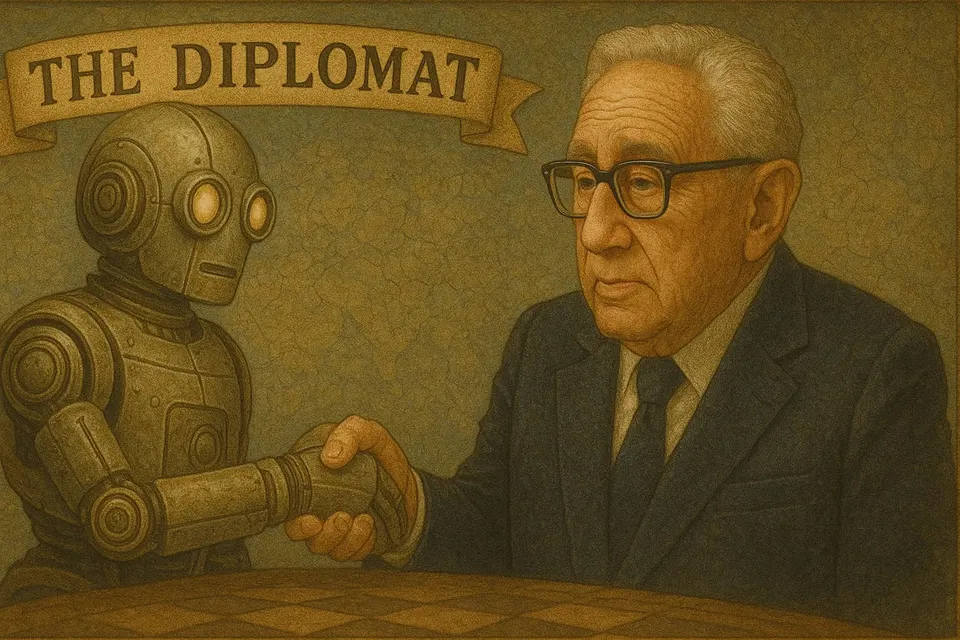
“There are two ways to make sense of the present situation. The first is by projecting from the familiar. Until now, the most transformative technologies created by humanity have served to refine or amplify our bodily capabilities. (…) Is AI simply one more extension of human capabilities?
The second way of making sense of it assumes that this time the situation is different—that AI possesses unique qualities that cannot be reduced to an upgrade of human abilities. Within a few decades, through engineering, an analogue will be created of what evolution has been building over millennia—namely the human brain: the last organ left to be reproduced or reimagined inorganically.”
A “stranger in the mirror” is what a Turkish TV series of the same name is about. There the plots are quite predictable, expected… (Don't give me away to your older relatives, but even banal.)
The technological world is not like that. We rely on ideas from books, on science fiction writers, on futurologists (insofar as there are any in our part of the world, and no praise is too high for Assoc. Prof. Mariana Todorova, who tirelessly fights for this discipline in Bulgaria).
Yet the future of technology arrives completely unexpectedly. Before social media, could anyone have guessed that a red-haired nerd's college idea would change the way we all communicate?
The AI future is so unexpected that clichés don't work. We need a conversation. A real one.
7. Swift, Brave, Nimble
“AI is already expanding—and will continue to expand—the field of human knowledge. But it does so in ways we do not fully understand, and yet we accept the knowledge it produces as true. While an ordinary student completes secondary education in four years, an AI model today can easily absorb the same amount of knowledge—and much more—in four days. Speed thus turns out to be the first of several fundamental qualities that distinguish AI from humans and their cognitive abilities.”
“It all happened so fast,” as you may have heard the turtle said after being mugged by snails.
That's right, speed is relative—just ask the aforementioned Mr. Einstein. And while we mock AI for not being able to draw human fingers, next week comes along, and with it yet another, better model. Meanwhile most of us still can't draw fingers with photographic precision, but nobody criticizes us for it.
The speed at which everything changes. A speed that simply isn't human, and that we must learn, if not to control, then at least to comprehend.
8. The Lucky Box
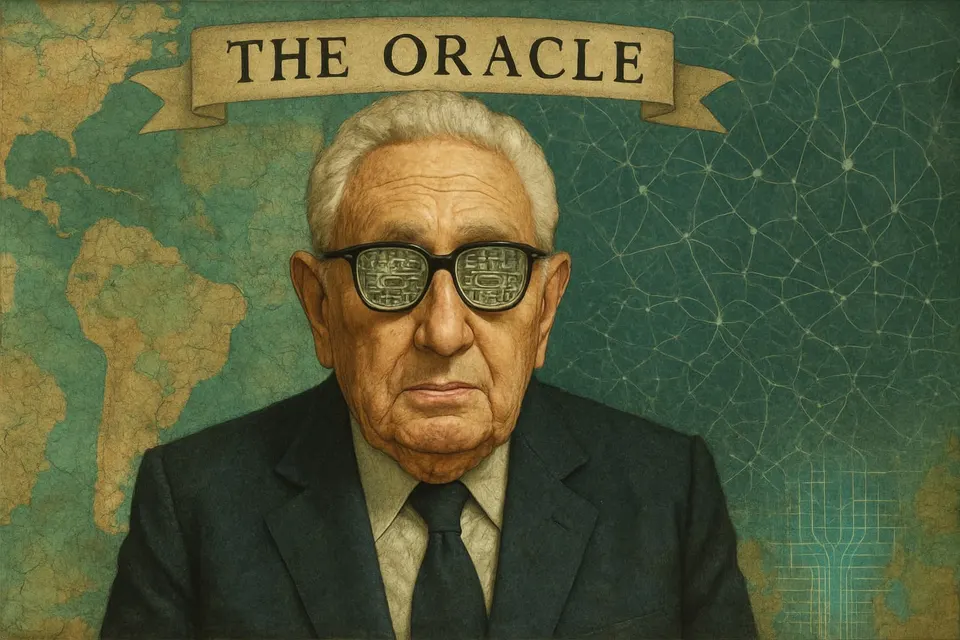
“Once a model has been trained, it does not publish the internal mathematical structure on which it generates its outputs, and its own creators remain largely unenlightened about how that structure is built. As a result, the systems are called ‘black boxes.’ The mathematical structure behind the predictions about reality that the machine generates remains largely opaque—even to the creators of these models.”
It is getting harder and harder to find objective yardsticks for testing the skills of the latest AI model that promises to be better and different. My own “Turing test” is simple; it's called the matura, Bulgaria's school-leaving exam, in Bulgarian language and literature.
Far more rarely, though, do we get to the point of asking why a given AI answers in a particular way. An extra touch here is the news that OpenAI plans to introduce various forms of advertising in an attempt to monetize artificial intelligence. It's already clear that a huge share of users (myself among them) now mostly use their favorite AI to look up information on a given topic.
That way, though, we can easily stack the problems of the distorted information from search engines and the bubbles social media locked us into, multiplying them by the enormous capabilities of artificial intelligence.
Transparency without limits!
9. Not Human
“If machine intelligence continues to drift away from the model of the human mind, it will come to be perceived not as a reflection of humanity but as its replacement. True, for a certain transitional period it may simply expand the range of activities we now count among ‘human abilities,’ but past a certain point these new abilities may replace human ones, calling into question the very understanding of human excellence and forcing its complete reassessment.”
Yes, however much it resembles a human, it is not human. Could it be something more? Or something that is at least considered something more?
And then it might check who said what about it back in the day…
Brrr.
10. A Radically New Approach
“Human politics is as worthy of admiration as of condemnation, because it is spiritually close to our personal, everyday politics. Though Napoleon conquered Europe, he failed to conquer Josephine's heart. The jealousy between John Adams and Thomas Jefferson is as familiar as our ordinary family quarrels. Tolstoy's War and Peace is no less a novel about great historical events than about the individual human fates that make them up.”
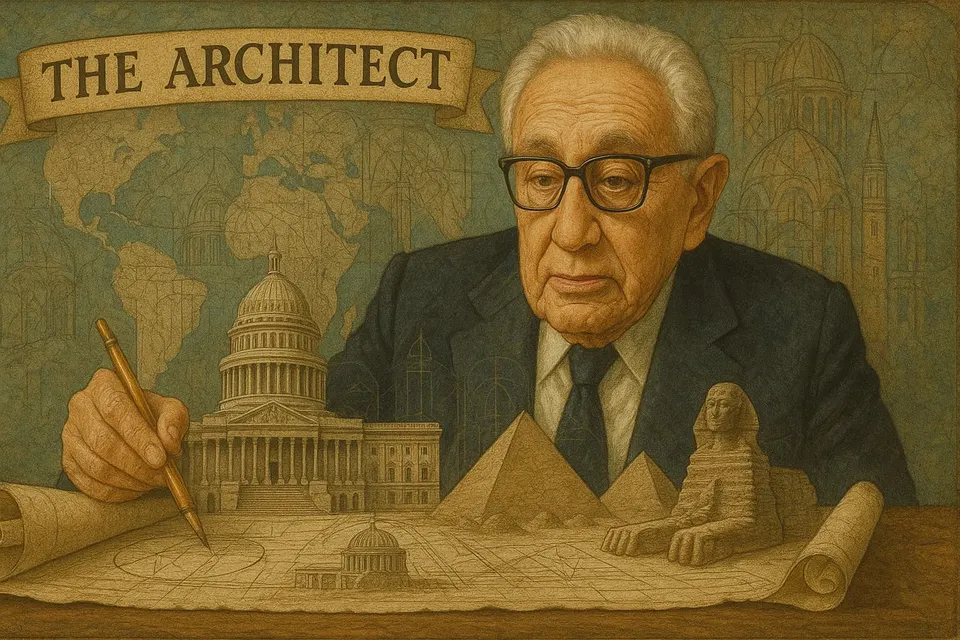
From here Mr. Kissinger and his co-authors derive the idea that AI could easily have a place in politics and international relations as an impartial, cool-headed and wise factor.
It would certainly do better than the best we've seen in our own Bulgarian parliament. Could technology really regulate international relations, now that we, the people of the “developed West,” have failed after the famous “end of history”?
11. It's Too Late, My Love
“Artificial intelligence is an indiscriminate, systemically destabilizing force—and its emergence, if left uncontrolled, is equally dangerous to its creators and to its users. That very fact may prompt otherwise intransigent rivals to consider otherwise unthinkable agreements. We believe that in spheres such as diplomacy and defense, some of the risks arising from AI can be managed successfully only by AI itself. Pandora's box is already open—and even if it were not, the benefits of AI still appear to outweigh the risks.”
Please read that again. I'm grateful to the thousands of people who have left comments under Digital Stories posts on social media about how they hate AI, how the technology is anti-human and terrifying, along with personal opinions that include me.
I definitely see more logic and constructiveness in this point of view than in the other one—pretending that artificial intelligence doesn't exist and nothing special is happening with the next generation of technology.
12. A State of the Spirit
“Faced with the perceived threat of the automation of human labor, many analysts today focus on the onset of a new spiritual crisis. In a world of shared abundance, they argue, we would become like irresponsible lottery winners, gripped by the hedonism of excess. From our point of view, however, this is a perspective of privilege. To appreciate the extraordinary good that artificial intelligence could bring to billions of people—including those who are currently deprived of access to financial resources, basic necessities and the free time needed to take part in such discussions—it is enough to compare their situation with that of their predecessors: generations of fathers tending primitive machines; mothers struggling in fields with meager harvests; children robbed of their childhood by exploitative labor. If tomorrow morning every person were given the chance to stop working, we believe the majority would choose to do so.”
Is that what you're saying, Mr. Kissinger, or will I have to wait for some model to let us chat “live”?
That's what you're saying. The labor market has already been shifted tectonically by technological change—I'm telling you this as someone who recently lost his job precisely and directly because of the arrival of artificial intelligence.
And as Mr. Harari adds, if a rise in unemployment of a few percentage points in 1930s Germany led to the most misanthropic regime in human history…, we'd better brace ourselves (yes, that exact phrasing isn't Mr. Harari's, nor ChatGPT's).
I mean, no problem, everything's the same as ever. Some professions disappear, others arrive… Who is Mr. Kissinger to throw us out of our mental comfort zone?
13. Favorite 13
“In fact, not only may attempts to create such ‘brain-computer interfaces’ aid our integration with machines, but neuroengineering may prove to be only an intermediate stage on the road to true symbiosis. Achieving real parity with AI may require steps that go beyond individual modification. For example, a society might seek to create a hereditary genetic line designed specifically to work alongside AI. Such new links between biological and artificial intelligence could bypass—or leave in the past—human inefficiency in acquiring and passing on knowledge.”
It does Mr. Kissinger credit that he doesn't hand out answers. He could have—it's not that hard after 100 years of earthly experience, part of which went into bringing opposing global powers closer together and into direct work on regulating nuclear weapons, something Mr. Oppenheimer acknowledged him for back in the 1960s.
No, he and his fellow co-authors pose the big questions—exactly the ones this site exists for.
I admit, transhumanism is a frightening movement to me, one that imagines humanity evolving into a next, different species. In it, logically enough when you think about it, the weak will become unnecessary. Something we (a little naively) believe isn't the case today—at least until we take a look at what's happening in the more dramatic red spots around the world.
Until we ourselves end up in some red spot. Or the whole planet becomes one, a planet where AI has made the next transition, which looks so frightening that countless authorities from different fields warn about it. Whether we call it “the singularity,” “general AI,” or simply… the point after which we don't know what will follow.
Forgive me for repeating myself even more often than ChatGPT does once it “figures out” you like something.
It's time to start this conversation!
14. Genesis… Coincidence?!
“While some may see this moment as humanity's final act, we see in it a new beginning. The cycle of creation—technological, biological, sociological, political—is entering a new phase. This phase may unfold under new paradigms of logic, faith and time. With sober optimism, let us welcome its genesis.”
And yet, for now… it's time to wrap it up, this conversation. Temporarily.
But why did the three comrades name their book Genesis? A “new beginning,” a new birth of civilization—that's how they explain it to us.
A few weeks ago a sweeping new American program for AI development was officially unveiled. President Trump announced with great pathos that for the first time huge troves of scientific data would be opened up in the next step, one that will drive enormous progress in using artificial intelligence in important fields such as exploring space, the Earth and the human body.
Can you guess what Mr. Trump's program is called?
Ivan Hadzhiyski, the Bulgarian sociologist who wrote between the two world wars, is known for his optimistic theory of the Bulgarian people. Whether his optimism proved justified over the decades, I won't try to answer—just as the authors of Genesis don't try to close their questions.
Will Mr. Kissinger's optimistic theory of humans and AI come true?
It no longer depends on him. Only on us. On each of us. For now.