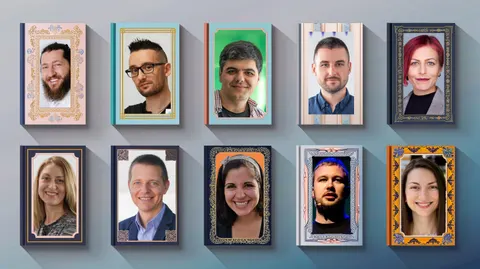
A successful entrepreneur, visionary and philanthropist. A professor of computer science in Canada. A Frenchman who has lived in Sofia since 2008 and makes games. A team lead who also takes hiking groups out as a mountain guide.
What could their favorite books be?
What do Tenko Nikolov, Julita Vasileva, Adrien Bachi and Boyan Sheytanov have in common? They are four of the people I invited to recommend their favorite reads to all of us.
For the third year in a row (after 2024 and 2025), on the eve of the Day of the Buditeli—November 1, when Bulgaria honors the enlighteners of its National Revival—I invited Bulgarian IT figures who have impressed me to talk about their favorite books. No limits on genre or language, on whether it’s fiction or whether it has been translated into Bulgarian—just up to three favorite books that more people ought to read.
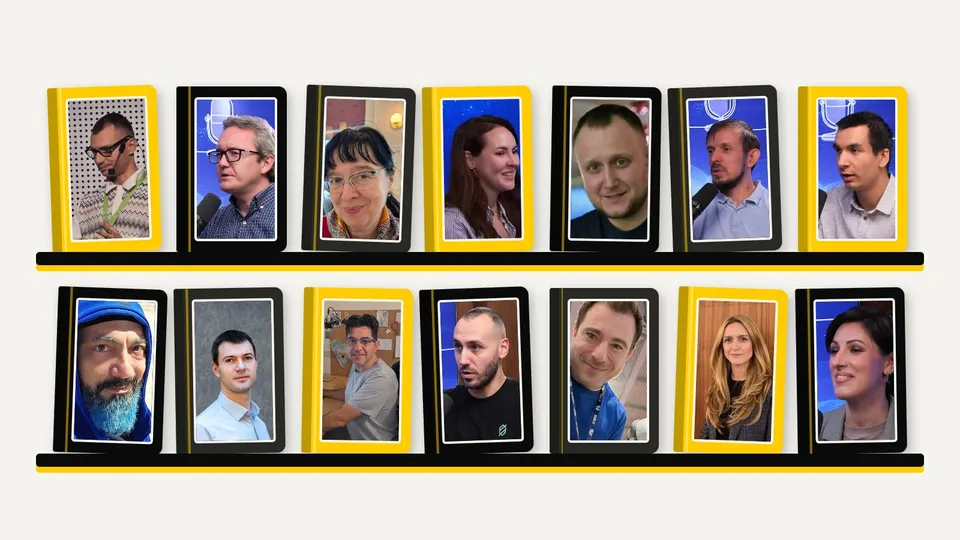
The result is once again extraordinarily interesting. What awaits you is yet another incredibly colorful palette, ready to smash every cliché. I invited 20 people and received no fewer than 14 replies. I truly believe that today, more than ever, you are what you read. Here are the unexpected recommendations, in the order I received them.
1. Everybody Go Surfing!
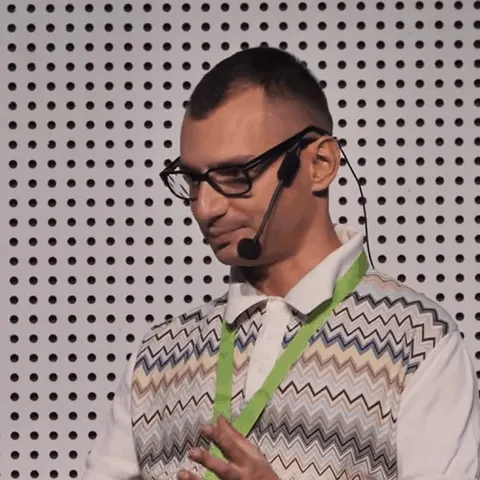
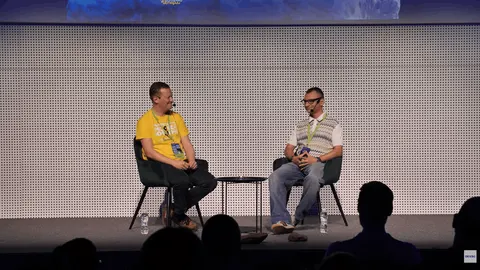
Tenko Nikolov is a successful entrepreneur, visionary and philanthropist, part of the leadership team of the global technology giant SiteGround and of the Za Primer (“Set an Example”) Foundation. He was my conversation partner at the DEV.BG Leadership Agora at Sofia Tech Park. It turned into an unforgettable Digital Story in which he admits that he dreams of his children wanting to stay in Bulgaria. This year he was the first to send in his book recommendations.
 Why We Sleep, Matthew WalkerWhy?
For many years I thought of sleep as something you sacrifice for the sake of work—I’m sure I’m not the only one in our industry. This book explained to me why that is the worst deal a person can make. It reads like a thriller, and since reading it I look at my alarm clock with different eyes.
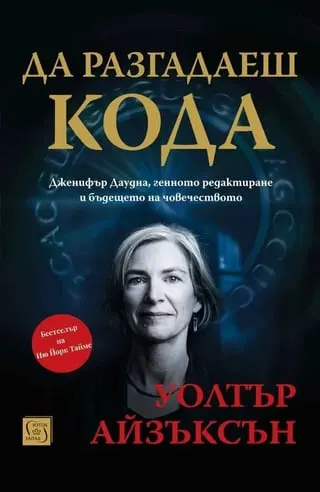 The Code Breaker, Walter IsaacsonWhy?
The story of how Jennifer Doudna and her team arrived at CRISPR—a technology that is changing biology the way software changed everything else. Isaacson tells the story of science as if it were a startup: with competition, intrigue, failures and breakthroughs. If you’re curious how truly big ideas are born, this book is a must.
 Let My People Go Surfing, Yvon ChouinardWhy?
The founder of Patagonia proves that you can build a successful company without betraying your principles and without turning your people into machines. Many of the things I believe about SiteGround I found formulated here—only better. A book for anyone who wants to do business and still be able to look at themselves in the mirror.
The book recommendations for the Day of the Buditeli begin… with a book about sleep. And from a man who worked around the clock in SiteGround’s early years and today looks at his alarm clock with different eyes. Walter Isaacson, meanwhile, appears in the series for the second time—in 2024 Viktor Botev recommended his biography of Steve Jobs, and “The Code Breaker” came out in Bulgarian only this May.
2. People, Paths and Algorithms

Vasil Popovski is co-founder and chief technology officer of Ensō Money, a Sofia fintech startup building a personal financial assistant powered by AI. Before that he was vice president of engineering at Alcatraz AI and a senior director at VMware, and Connecto.ai, the chatbot startup he co-founded in 2017, was bought by Leanplum just a year and a half later.
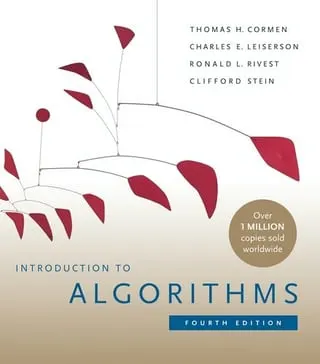 Introduction to Algorithms, Thomas H. Cormen, Charles E. Leiserson, Ronald L. Rivest, Clifford Steinnot published in BulgarianWhy?
Why: well, in the age of AI, to stay relevant you need at least some idea of how things work. This is literally the bible when it comes to algorithms and data structures.
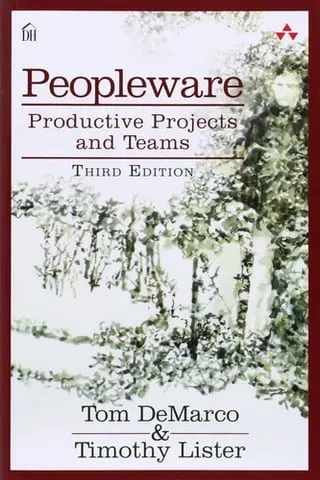 Peopleware, Tom DeMarco, Timothy Listernot published in BulgarianWhy?
Why: well, because you always work with people. This book is very old, but its advice will stay relevant for many years to come—hard skills alone stopped being enough a long time ago.
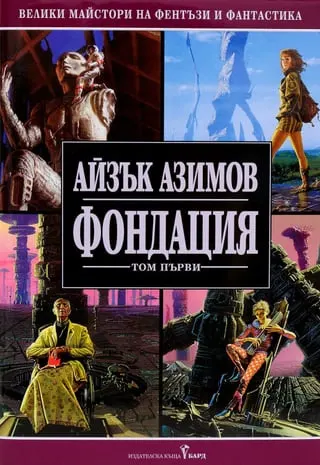 Foundation, Isaac AsimovWhy?
Why: Asimov is Asimov. It weaves together a great deal of politics with science fiction and the fall of empires in a fascinating way. I think it can be very relevant to how small companies that move smartly and quickly can compete with the big ones—and beat them.
No fewer than two books without a Bulgarian translation… I hope there are people from leading Bulgarian publishers reading this who might fill the gap.
Combine the algorithms of the first book with the people of the second and you get Hari Seldon’s psychohistory from the third—mathematics that predicts how vast masses of people will behave. And “Foundation” really does turn out to be a priceless read that we often find among IT leaders’ recommendations.
3. The Bulgarian Neighbor
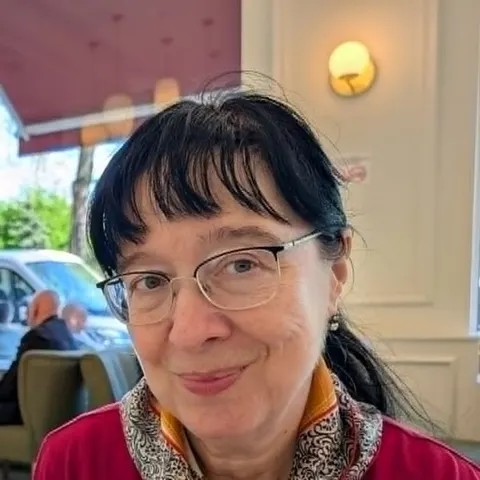
Prof. Julita Vasileva is a professor of computer science at the University of Saskatchewan in Canada, where she has worked since 1997. She studies persuasive technologies and AI in education, and her work has more than 16,000 citations on Google Scholar. She recently won approval for a five-year project on “cognitive shields” meant to make people think critically about what AI gives them.
 Time Shelter, Georgi Gospodinov
 The Gardener and Death, Georgi Gospodinov
 Ruskiyat sased (The Russian Neighbor), Mihail Veshim
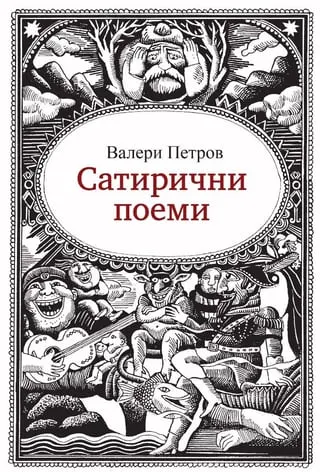 Satirichni poemi (Satirical Poems), Valeri Petrov
Julita on her favoritesGospodinov, Pavlov, Veshim, Valeri Petrov and the humoristsWhy?
I don’t have much time for reading, but I have a lot of favorite books. Mostly I read in Bulgarian, by Bulgarian authors.
By Georgi Gospodinov—“Time Shelter” and “The Gardener and Death” are magnificent books, world-class! I love poetry by rarely published poets—above all Konstantin Pavlov. By Mihail Veshim—“The Russian Neighbor” is a magnificent novel. Among the English-language authors: Jerome K. Jerome—anything at all by him, Mark Twain, Wodehouse. I love their humor.
Oh, and Valeri Petrov too. I know his satirical poems by heart: “Reportazh za trite hash” (Report on the Three Hash), “Balada za kontraadmirala” (Ballad of the Rear Admiral), “Hozhdenie po bukvite” (A Journey Through the Letters), “Pesnichka za pazachite na fara” (A Little Song for the Lighthouse Keepers)...
Last year I asked in a headline “Will There Be a Bulgarian Author?”, and now Prof. Vasileva, who has been working in Canada for nearly 30 years, writes to me that she reads “mostly in Bulgarian, by Bulgarian authors.” Ah, and here is Valeri Petrov! Such colorful recommendations from across the ocean, and for Bulgarian authors, no less… And you—do you have any gaps in this list?
4. The Courage to Stay Yourself
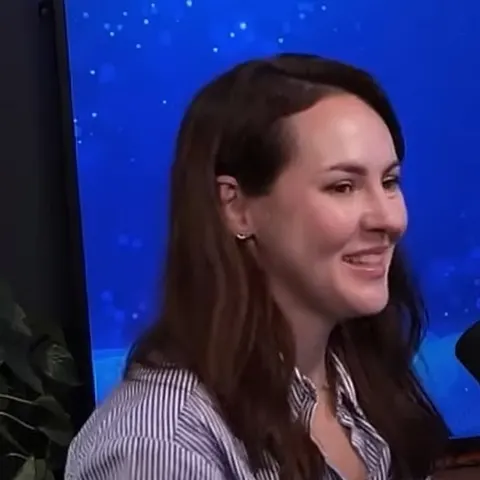
Sara Koteva is an HR manager responsible for employer branding at Iris.ai, the Norwegian-Bulgarian artificial intelligence company. An organizational psychologist by training (with a master’s in work and organizational psychology from Sofia University), she has worked in human resources for more than 10 years.
 Games People Play, Eric BerneWhy?
This book reveals the recurring and often unconscious patterns that shape our social interactions, and it stresses how important it is to recognize our own patterns of behavior so that we can get out of destructive relationships and situations.
It gives us a language for recognizing recurring patterns in communication—why we slip into certain roles, why some conflicts keep repeating, and how we ourselves contribute to them. It’s useful for greater awareness in relationships, at work and in the way we communicate.
By understanding the “games” we play, the roles we step into and the emotional needs behind our behavior, we can begin to communicate more authentically, build healthier relationships and live more consciously.
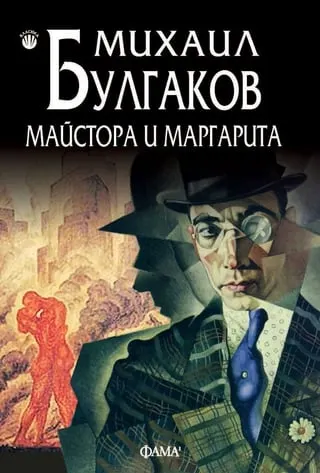 The Master and Margarita, Mikhail BulgakovRussian original: Master i MargaritaWhy?
A novel about love, freedom, truth and the price we sometimes pay when we refuse to bow to society’s expectations. By interweaving reality, satire and fantasy, Bulgakov questions the boundaries between good and evil and shows that they are not always as clear as they seem.
The story is a reminder of the power of love and creativity, of the courage to stay true to yourself, and of the fact that truth can be suppressed but never entirely destroyed.
It offers no ready-made answers; instead it provokes questions about good and evil, truth and fear, freedom and conformity, love and personal choice. It makes us look beyond the obvious and accept that people and moral situations are rarely simply “black” or “white.”
Bulgakov—wonderful, definitely one of my favorite books (if we’re not friends on Goodreads yet, fix that here!). It also happens to be one of Jack Dorsey’s favorites, which I wrote about in the piece on the favorite books of the world’s IT leaders (where you can also add… Bill Gates as a friend).
The first book, I confess, I haven’t read, and I will definitely make time for it very soon. And I fully agree with Sara’s conclusion that black-and-white answers rarely do the job.
5. The Tiger Ate the Banitsa
Martin Chaov is a software architect with more than 15 years of experience in the IT world. Today he heads software architecture at DraftKings in Sofia, responsible for a distributed system that works in near real time with terabytes of data. He is a regular speaker at industry events: he spoke at JSTalks ten years in a row and often appears at the events of our friends at DEV.BG.
Foundation, Isaac AsimovWhy?
What has been… shall not endure. The ten-thousand-year Galactic Empire is falling apart! The book spans a full 1,000 years and lays out the accumulated consequences of decisions made over time. Hari Seldon charts the path events must follow to keep the damage under maximum control and shorten the chaos of the government’s collapse. Somehow it reminds me of decomposing a 15-year-old monolith some ten years ago :)
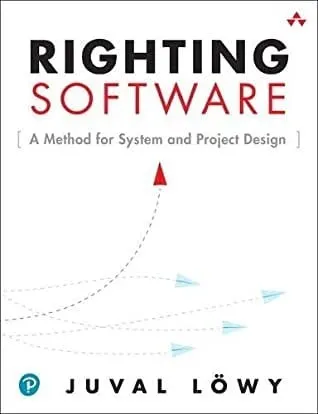 Righting Software, Juval Löwynot published in BulgarianWhy?
Now this here ain’t no reading… But for those who try—it has two main parts: Software Design and Project Design. Planning the project, the resources, the time, the cost, and assessing whether it even makes sense to start it at all—these are the topics the book covers.
It demands attention, notes and sometimes going back. It’s not something you read in passing. A different look at the work of the software architect and his place in the organization.
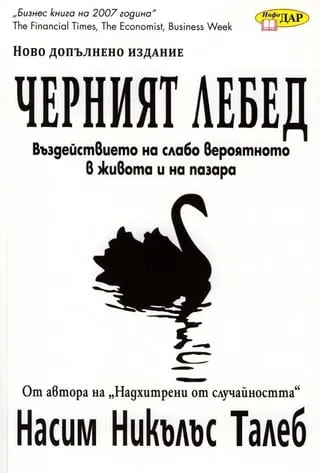 The Black Swan, Nassim Nicholas TalebWhy?
We’ve calculated everything down to the millimeter, and BAM—a tiger ate the banitsa?! It’s a collection of stories like that: how nobody believed black swans existed, how the casino accounted for every variable except the effect of the floor show, 99 heads out of 100 tosses, and so on. These stories made me wonder how confident I can really be in my plans, especially since after every surprise there’s always someone to explain how you could have seen it coming. In my profession I often work with assumptions that over time start being treated as facts, and this book motivated me to revisit them deliberately and periodically.
Warning: may cause analysis paralysis!
“Now this here ain’t no reading” is a more than charismatic pitch for a book on software architecture, but since Martin recommends it, it is definitely worth it… unless we’re just going to surrender to AI in our modest IT industry. Two years ago I recommended Uncle Bob’s “Clean Code” as the book that shaped me most as a software engineer. Martin, for his part, has a whole DEV.BG talk on the cost of clean code, so I’m noting it down—maybe I too will “revisit an assumption” or two.
“Foundation” is here again—twice among the first five recommendations I received. Isn’t it time for a reread?
6. Three a Day Before Bed
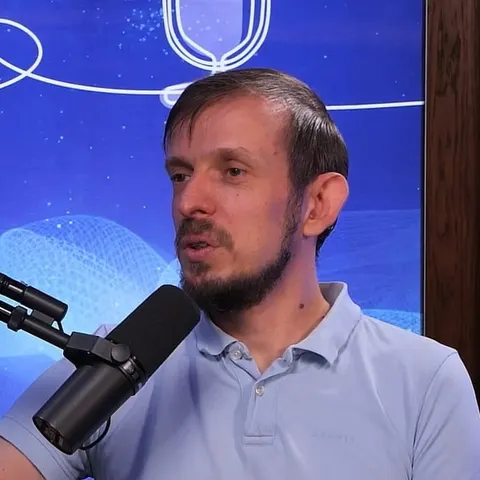
Boyan Sheytanov is a team lead at the software company Astea Solutions with more than 18 years in the IT industry. But he is also a certified mountain guide and a father. He has been a programmer, a business analyst and an account manager, and he always manages to find unexpected parallels. Worth noting… one of his poems also made it into the anthology Apollo ex Machina.
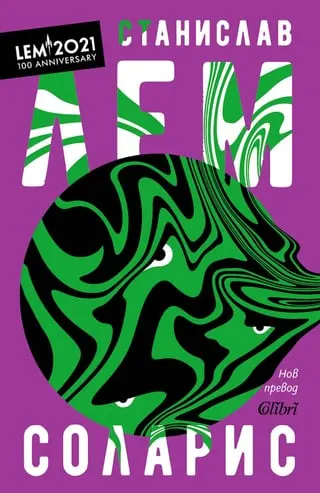 Solaris, Stanisław LemWhy?
As a teenager I got hooked on science fiction from the second half of the 20th century. Authors like Isaac Asimov, Arkady and Boris Strugatsky and Stanisław Lem, with their deeply philosophical works, broadened the horizons of my thinking enormously. Out of all my favorites I chose to recommend “Solaris,” because it challenged me to rethink my understanding of “intelligence”—a topic especially relevant today.
 Kniga za nas (A Book About Us), Maria DonevaWhy?
For many years I avoided poetry. I found it boring, hard to understand and up in the clouds. I discovered Maria Doneva through her wonderful rhymed translations of children’s books, and later I got to know her work for adults. Her collection “A Book About Us” sits on the shelf above the couch at home, and I often open it in the evening after an exhausting day. Human, light and yet deep—that’s what her poems are like. I recommend three a day, before bed.
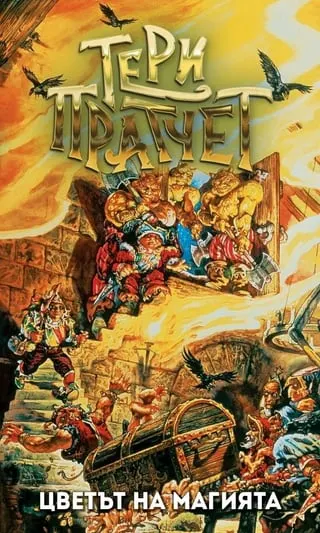 The Colour of Magic, Terry PratchettWhy?
There are books that suck you in, chew you up, spit you out, leave you speechless and turn your idea of the world upside down. Terry Pratchett’s are not among them. Discworld makes you laugh out loud, forget your problems and remember that sometimes reading can be pure and simple fun. “The Colour of Magic” is the first book in the series, but you won’t go wrong if you pick any other Discworld book.
“I recommend three a day, before bed”—that sounds wonderful! A second poet on this year’s list of recommendations, and a contemporary one at that—after Konstantin Pavlov comes Maria Doneva!
“Solaris” and the question of what intelligence is—I’d be hard pressed to find a more fitting book for a year in which we argue every day about whether machines think. Let me remind you that it is also a favorite of Tekla Aleksieva, with whom I discussed whether Lem’s planet resembles today’s internet.
7. Sunny Pages
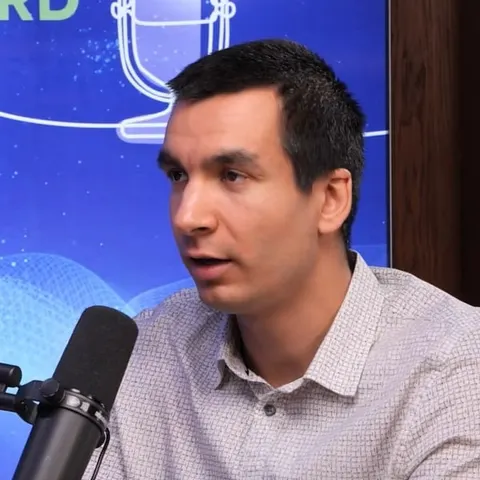
Filip Slanchev heads the quality assurance (QA) department at Milestone Systems Bulgaria. This is the Sofia development center of the Danish company that makes video management and video surveillance software. He started out in IT as a programmer and by now has long and colorful experience.
 Think and Grow Rich, Napoleon HillWhy?
I’m starting with this book because for me it was never just about money, despite its title. I read it early in my journey, and it gave me something fundamental—discipline of the mind and an understanding of the power of focused intention. In my career it taught me to see obstacles not as the end of the road but as an engineering problem to be solved. It gave me the psychological resilience to set ambitious goals, structure the steps to reach them and not give up at the first failures.
 Drive, Daniel H. PinkWhy?
This book completely changed the way I look at leadership and working with people. In the IT sector we often try to solve problems with external incentives (the carrot and the stick), but Pink shows scientifically why that doesn’t work for complex and creative tasks. When I started applying the principles of autonomy, mastery and purpose in my teams, the results were tangible. The book helped me stop micromanaging and focus on building an environment in which people themselves want to give their best, because they see meaning in it.
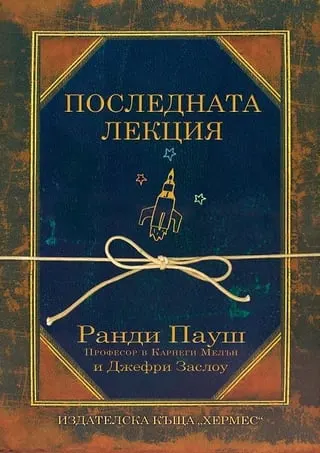 The Last Lecture, Randy Pausch with Jeffrey ZaslowWhy?
This is the book I return to in my mind every time I feel I’m losing my balance or overloading myself with trivial issues. Written by a computer science professor with a terminal diagnosis, it gave me a brutally honest perspective on the time we have. Professionally, it helps me separate the truly important from the merely “urgent.” Personally, it reminds me that our most precious resource is the attention we give to the people around us, and that the walls in front of us exist only to show us how badly we want something.
Napoleon Hill and Daniel Pink sit quite fittingly side by side: the first promises wealth right in the title, and the second explains why rewards don’t help with complex, creative work. Filip takes the same thing from both—an obstacle is a problem to be solved, and the people on a team aren’t driven by carrot and stick. Randy Pausch’s walls, which are there to show how badly we want something, sound to me like a good description of a failing test. Here are recommendations from the world of nonfiction that clearly sound lived through.
8. The French Connection

Adrien Bachi is a Frenchman of Italian descent who has lived in Sofia since June 2008. He is co-founder and CEO of the independent gaming studio ChibiPhoenix, which has reached more than $100 million in sales without outside funding. He is recognizable by his blue beard, a deliberate personal brand.
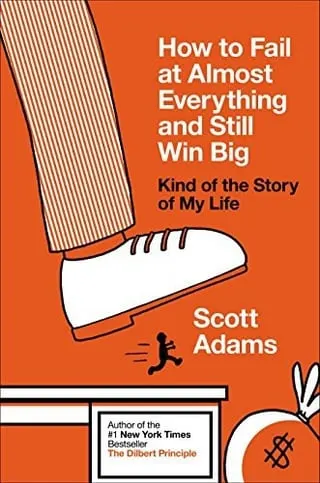

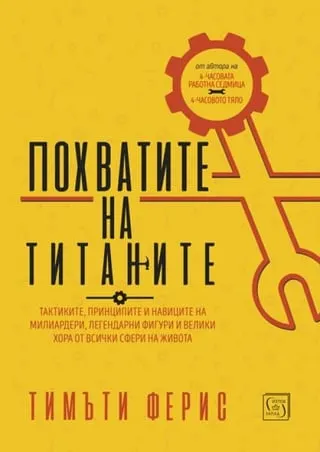
Adrien sent me three titles that say enough even without explanation. Read together, though, they say quite a lot: Scott Adams writes about the failures that come before the big win, Covey about habits, and Tim Ferriss collects the tactics of the successful. It sounds almost like a summary of his own path.
“The 7 Habits of Highly Effective People” enters the series for the third time—it was previously recommended by Vesko Kolev and Svetoslav Dimov.
9. Prisoners of the System
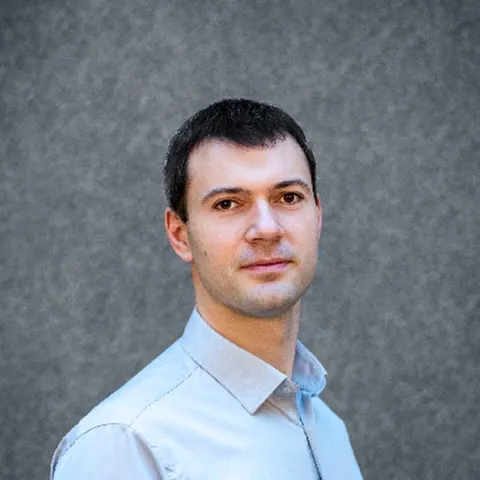
Krasimir Baylov is co-founder and managing partner at Intway, a Sofia software company providing IT services and consulting. An engineering manager and software architect with more than 15 years of experience at Dell and on projects for IBM, SAP and Boeing, he advises startups as a fractional CTO, teaches at Sofia University and is finishing a PhD on self-adaptive systems.
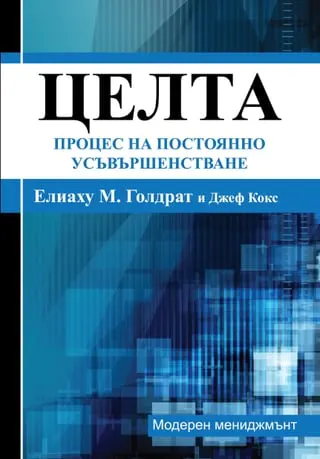 The Goal, Eliyahu M. Goldratt and Jeff CoxWhy?
The book describes the concept of the “Theory of Constraints.” It is a fundamental theory that applies to every management activity. It helps us understand where the slow spots (the bottlenecks) are in our process and how to address them. This book has helped me enormously in my professional work as a manager. It has also helped me a lot in everyday life, even with small tasks. Its only drawback is that once you’ve read it, you start seeing a lot of things that could be improved—lines in stores, dealing with the state administration, construction work, public transport and traffic jams in the streets…
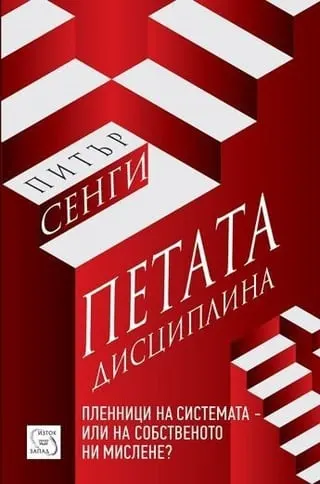 The Fifth Discipline, Peter M. SengeWhy?
Another fundamental book on management and on building learning organizations. It has many practical examples that explain why we can or can’t change an organization. One of the fundamental concepts is “the system.” Many people think they work in isolation, but in fact they are part of a system, and that system is what has a huge influence on the end result. Addressing a local problem usually won’t produce results unless it is solved at the level of the system. The book is extremely useful for people who build teams and entire companies.
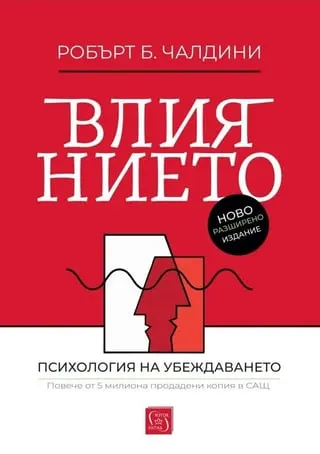 Influence, Robert B. CialdiniWhy?
One of the fundamental books in marketing. It describes very well the techniques with which we can influence the decisions we make—or others can influence them. The book offers many practical examples that examine human psychology and explain why we react in a certain way in specific situations. It has an extremely wide range of applications—besides marketing, also in sales, management and communicating with people (even small children)…
So, be careful: “The Goal” apparently doesn’t do you much good if you’re often surrounded by chaos. But here are three more books that can make us more aware people and better professionals.
10. The Sausage Is the Movies
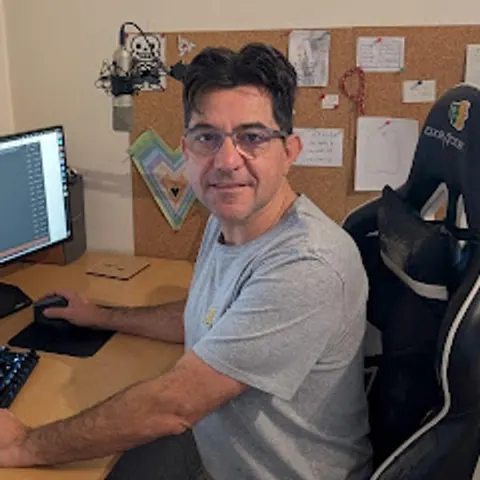
Konstantin Vasilev (Kiv) has a technology background in software for travel and hospitality. He is a former vice president of technology at Sciant, where he designed systems for online travel agencies at petabyte scale. Since February 2024 he has co-hosted, with Nikola Tulechki, the podcast “Agent 001” on Ratio, about the intersections of technology and society.
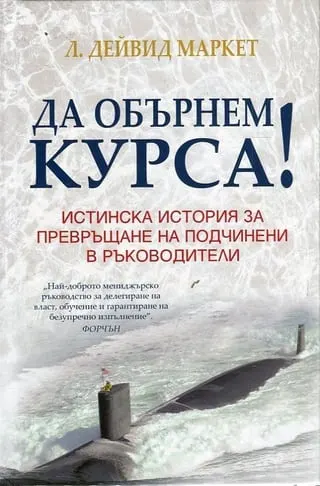 Turn the Ship Around!, L. David MarquetTurn the Ship Around! A True Story of Turning Followers into LeadersWhy?
A book about leading people. Written by a military man, it later became hugely popular as a management book. The book is a guide to building stable, self-correcting organizations by pushing decisions down to the lowest levels of the organization, where people know the nature of the problems best. Turning the people in an organization from mere executors who report and wait for orders into active, responsible leaders in their own areas is the central idea of the book.
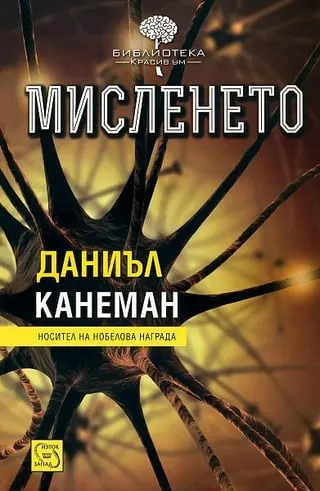 Thinking, Fast and Slow, Daniel KahnemanWhy?
A book about how we think and the differences between fast, intuitive decisions and slow, well-considered ones. It will be useful both for analyzing your own thinking and for improving your decision-making. Besides your own, you’ll understand much better the thinking and decisions of the people around you, which will help you understand them… and manipulate them effectively.
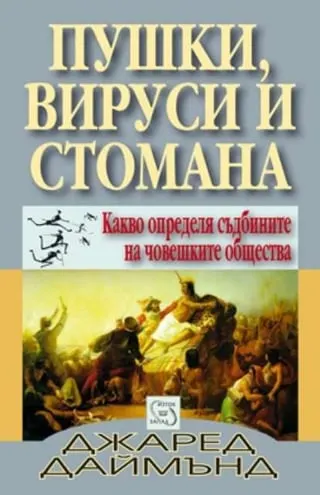 Guns, Germs, and Steel, Jared DiamondWhy?
Mainly a history book covering the last 13,000 years. Its focus is tracing how Eurasian civilization colonized and subjugated practically the entire rest of the world, and how this had nothing to do with intelligence or genetic superiority. What the reasons were, if not those—read it and you’ll find out.
 Save the Cat! The Last Book on Screenwriting You'll Ever Need, Blake Snydernot published in BulgarianWhy?
A book for those who want to understand how the sausage is made, even at the risk of never enjoying it again. But the sausage is the movies. If it seems to you that “all movies are the same,” after reading it you’ll say, “well, I was right.”
A submarine, “Thinking, Fast and Slow,” 13,000 years of history and, as a bonus, a cat. “Save the Cat!” brings to mind “Nothing, Forever”, the AI’s endless “Seinfeld,” which shows that the sausage can now be made without people.
11. The Hard Thing About Hard Things

Ognyan Chikov heads engineering at the Sofia blockchain company LimeChain, which he joined in 2017 as its first employee, and is AI Director at LimeShift.ai, founded by the same team to bring AI into the work of small and medium-sized companies. He has led teams on bridges between blockchain networks, decentralized exchanges and zero-knowledge projects, is one of the authors of the open-source framework Etherlime, and mentors at LimeAcademy.
 Chip War, Chris MillerWhy?
I chose Chip War because it’s a book about technology, but seen from far beyond the technology itself. I like how it shows the links between semiconductors, geopolitics, economics and the global race for technological leadership. At a time when AI is developing at enormous speed, it is increasingly important to understand not only the models and the software but also the physical infrastructure behind them—the chips and the complex global ecosystem that produces them.
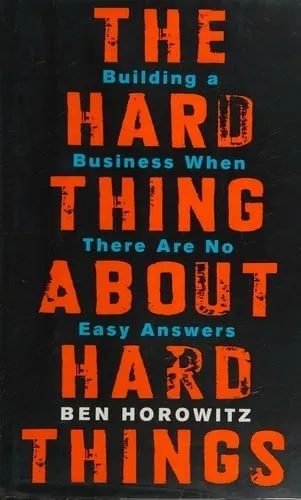 The Hard Thing About Hard Things, Ben Horowitznot published in BulgarianWhy?
I chose this book because it’s one of the few on management that don’t try to present leadership as a series of ready-made recipes. In real work, the hardest decisions are often precisely those with no obviously right answer—especially when it comes to people, teams and organization. I like Horowitz’s pragmatic take on these situations and the idea that part of leadership is being able to make hard decisions under uncertainty and then take responsibility for them.
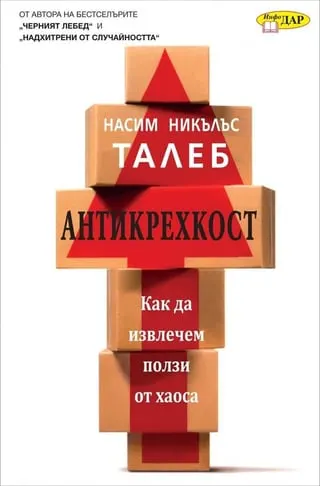 Antifragile, Nassim Nicholas TalebWhy?
I like it above all as a way of thinking. The idea that a system can not merely withstand change and chaos but get better because of them has many applications—from life and business to the way we build technology systems and organizations. I especially like the idea of not trying to predict every possible change, but instead creating systems that can experiment, make mistakes on a small scale, adapt and grow stronger.
Ognyan is the second this year to arrive at Taleb: Martin Chaov recommended “The Black Swan,” and for last year’s Day of the Buditeli Laura Tolosh chose “Fooled by Randomness”. Back when I was collecting the favorite books of the world’s IT leaders, Taleb kept turning up on their lists—chaos is evidently a favorite read of the people who build systems.
But… isn’t it time for a bit more fiction?
12. A Vodka Compress

Damyan Deshev heads the cloud infrastructure department at Experian, and at home he runs large open language models on a small computer. Everything he writes in his free time is released as open source. He is the hero of the story “How (Not) to Build Your Own (AI) Monster”, in which, in about 50 hours, he stripped the Qwen 3.8-Flash-Next model of its learned “reluctance” to answer and turned it into… a genuine boor. What could he like to read?
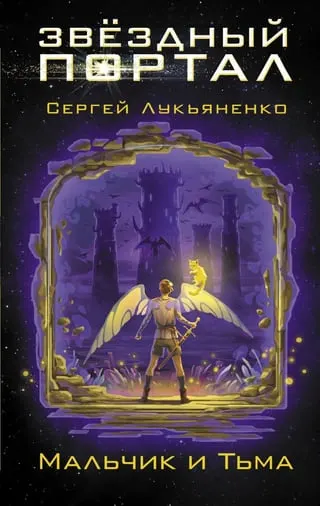 The Boy and the Darkness, Sergei LukyanenkoRussian original: Malchik i Tma; not published in BulgarianWhy?
Lukyanenko’s “The Boy and the Darkness” is a bit like projective intrapsychic work + an operationalized theory of the inner child. Something between depth therapy and a Rorschach test, only instead of inkblots you get some people flying back and forth, and one sunny Kitten. It’s supposedly a children’s book, but it’s a children’s book the way Saint-Exupéry’s “The Little Prince” is. Or Ende’s “The Neverending Story”...
The story begins with a boy lying in his panelka—one of those Soviet-style prefab apartment blocks—sniffling because he’s caught some cold, and his Slavic mother is treating him with vodka compresses. A few state borders further southwest the situation would be exactly the same, except the compress would be made with rakia. I related hard, from the very first sentence.
I had the feeling someone had put a mirror in front of me—one of those murky ones hanging in the bathrooms of those very same panelkas, which nobody has replaced since the day they were put up—as if it was smudged up to about the middle of the book and then, with every page, began to clear. In the end an image started to crystallize in it that looked suspiciously like me—and just as I was about to see it properly, somebody went and took my mirror away, because the book ended. Books, the filthy rascals, do that sometimes. Especially this one.
 The Many-Armed God of the Dalayna, Svyatoslav LoginovRussian original: Mnogoruky bog DalaynaWhy?
This book first greeted me with so many made-up words that I felt I had to learn a foreign language before I could even work out where I was. The guy hasn’t bothered one bit to explain his world, he just drops you in and lets you fend for yourself. I asked ChatGPT to make me a glossary... Then I read the book in one night, because I couldn’t put it down.
At first glance it’s a perfectly ordinary Hero’s Journey, à la Campbell, the old guy with the monomyth and comparative mythology—a man with a mission, a mortal enemy many times stronger than him, trials, loves and the whole lot. And you expect the trials to be the big deal, the thing that tempers the character and makes the man grow, but here they aren’t.
The hero literally creates a world—island after island. The first time it’s a miracle, the second time too, by the hundredth you call it work, by the thousandth you just roll your eyes, splash a handful of water on your face in the morning and go off to your shift. Day after day, year after year. Like some automaton. And the strangest thing is that for me the power of the novel wasn’t in the big dramatic moments (there were some—not wars, not torture cells...), but in the weary routine between them. Because to keep going after the heroic has long since stopped feeling heroic to you is probably a greater heroism than the feat itself.
And here Loginov pulls a really nasty trick—from the world’s side the hero is a miracle worker, but from the side of the man himself he has gradually turned into a function of his miracle-working. And if he has saved everyone except himself, does that make him any less of a hero? I don’t think so. But then what’s left of the man once the mission has eaten everything else in him?
The book doesn’t answer that; it only asks the question (near the end) in a particularly devastating way.
Campbell, may the earth rest lightly on him, should be taking notes.
Last year Nedko Hristov brought us “For the Fifth Rakia”, and now rakia returns as a compress, just a few borders southwest of Lukyanenko’s vodka.
Damyan indisputably wins this year’s prize for the most unconventional recommendations and breaks every stereotype imaginable. But isn’t that what books are for? Thank you from the bottom of my heart!
I unconditionally “relate” to the first idea—good thing I can read Russian—and I hope publishers won’t miss this free lifeline either. Damyan has promised to give them his own translation.
13. In Principle
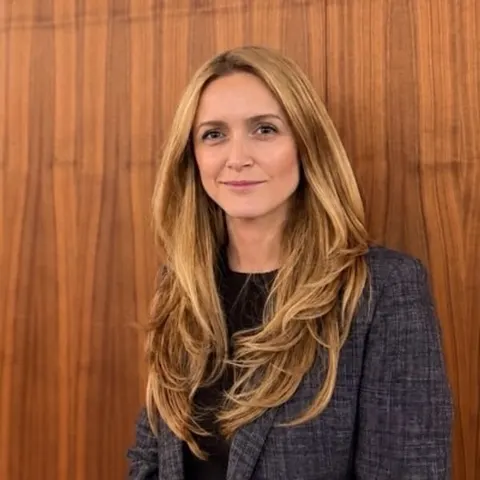
Dobriela Kirilova is chief information security officer at Ocean Investments, an investment company whose portfolio includes AMATAS, Evrotrust, Gravity and Plainsea. Since March 2026 she has led Ocean AI Academy, a program for all the companies in the group aimed at speeding up their processes tenfold with the help of AI.
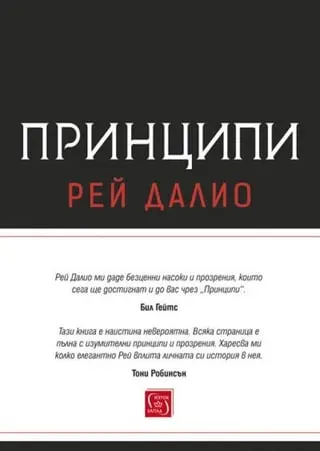 Principles, Ray DalioWhy?
I really like how Ray Dalio talks about the years in which he built his company and about the people he built it with. He speaks openly about how important it is to attract the right people and create an environment in which they feel good. I also relate to the idea that clear principles give people confidence and the freedom to make decisions. For me this is an important part of leadership: having a team in which people think independently, take responsibility and can rely on one another.
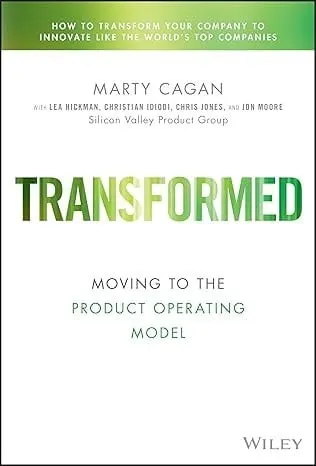 TRANSFORMED, Marty Cagannot published in BulgarianWhy?
I like the idea that change in a company takes much more than new technology. The way we work also has to change, along with how we choose what matters and how we tell whether we’ve achieved something useful. In my work I often see how easily the conversation starts from a specific system before we’ve clarified what problem we want to solve. This book brings me back to that question. For me, the value of technology lies in what people and the business can do better thanks to it.
 The Little Book of Hygge, Meik WikingWhy?
I started this book out of curiosity: what do the Danes do so differently that we so often associate them with happiness? I liked how consciously they create coziness and set aside time for their loved ones. I think that after reading it I too started paying more attention to this—spending more time with the family, going out together on weekends and making our home cozier. The book reminded me how much these ordinary moments give us when we truly make time for them.
Ray Dalio’s “Principles” returns to the series: in the first edition it was recommended by Mario Peshev, and last year Ilia Valchanov chose another of his books. I also remember how Ocean’s founder, Atanas Simeonov, told me in our conversation that “happiness is a state, but not a goal. It is a choice, and a conscious one.” Dobriela makes that conscious choice the Danish way—with coziness at home and family outings on weekends. I’m noting down “The Little Book of Hygge” for the November evenings, when we need coziness most.
I confess, that last sentence was suggested to me by Claude, but it’s right.
14. Daring Greatly
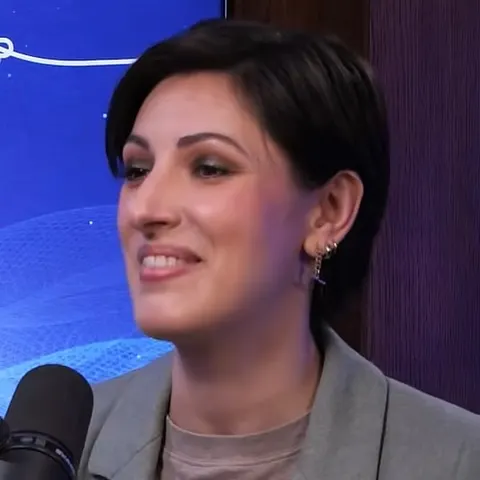
Aneta Petkova is a product leader at the fintech company SumUp, where for years before that she was responsible for software quality. She says that all engineers are responsible for quality, not just the QA team. She has spoken at SeleniumConf, TestCon Moscow, QA: Challenge Accepted and HackConf.
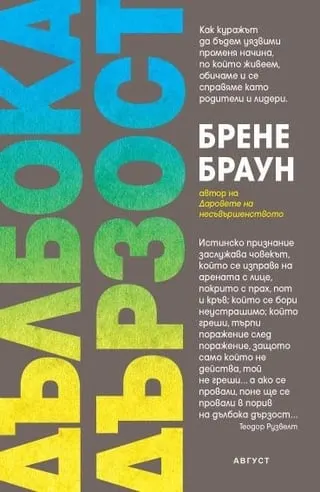 Daring Greatly, Brené BrownWhy?
This is perhaps my No. 1 of all time. I’ve read it twice, about five years apart, and was equally impressed both times, but by different things in it. Its main focus is the courage to be vulnerable, to be an authentic version of ourselves. It’s often labeled a self-help book, but I’d say it is far from a manual of ready-made solutions. Instead it helped me see myself in the situations, behaviors and outcomes it describes, and ask myself what kind of person I want to be and how close I am to that version today.
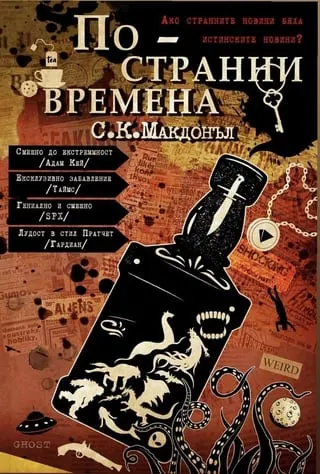 The Stranger Times, C. K. McDonnellWhy?
A novel that blends a crime story, supernatural elements and a generous helping of black humor. It is set in Manchester, at a newspaper that writes about the inexplicable and the strange, run by an editor who is difficult, to put it mildly. Although I value the classics, sometimes I want to read something contemporary, and this book was a breath of fresh air. The characters are nuanced, with more than a pinch of flaws, sarcasm gushes from the pages, and the story is gripping and original. It holds the record for my fastest-read book after “Shōgun.”
 Five Little Pigs, Agatha ChristieWhy?
Agatha Christie is perhaps my favorite author. Partly because I genuinely love her mysteries, partly because I admire the career she had as a woman back in the first half of the 20th century. Today her genre is called “cozy mystery,” and it seems especially fitting for the season. Beyond a gripping mystery, for me Agatha Christie’s work is a window onto a bygone period in England, and I find it fascinating to note the differences with Bulgarian culture and society, or with the present day. As the cherry on top, she often allows herself a subtle humor at her compatriots’ expense and offers her own unobtrusive commentary on society.
Two novels for the road! I won’t hide it: fiction is my great weakness. I’m noting down “The Stranger Times.” And to keep going in the detective direction, here’s an idea from me. Crime, the supernatural and humor—that mix also won me over in Emil Minchev’s series about Bunk Romero.
Dusty Pages
Heartfelt thanks to the 14 brave souls! What a colorful literary palette we ended up with. I'm sure that if you've made it this far, you've found at least one title you like too.
IT people are supposedly strangers to books? Just sit back and watch! We'll be back next year!
And which book would you put next to Foundation and The Master and Margarita? And whom from the IT world should I ask next time?
You are what you read. Until the next book!