“Leading by Example Is a Fearsome Weapon”
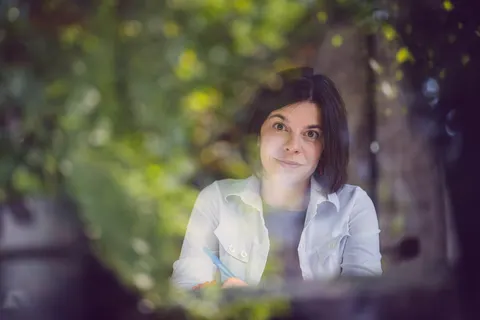
“Calling the inexplicable a ‘miracle’ is a beautiful way of admitting how little we know,” says today’s guest. “Miracles are also a chance to stop fooling ourselves that everything depends on us alone, to catch our breath and learn to trust life.” Ivanka Mogilska is a copywriter with 20 years of experience, the last 15 of them freelance. She is a blogger, editor and teacher. She is the author of seven books, the latest of which is the collection Obiknoveni chudesa (Ordinary Miracles). But… do such things really exist? We will ask her in a moment. Her airy, wise stories hold the everyday miracle, which, in my view, is the very reason to keep going. We will talk about digital and analog miracles. About the miracles worth teaching artificial intelligence and the ones it may someday create. About brevity and the long texts that carry meaning. About the need, every now and then, to “get off the merry-go-round”…
 182
How Did We Break the Conversation Online?
Never before have we been able to talk about the things that matter, hear the smartest people and debate them the way we can online today, and yet… we spend our time looking for something to fight about. Here is a small experiment, garnished with eight things to think about, that follows a single article about covid on its journey through social media. A reflection on where we have ended up.
 183
“AI Is Arriving on a Massive Scale, Turbulently and a Little Chaotically”
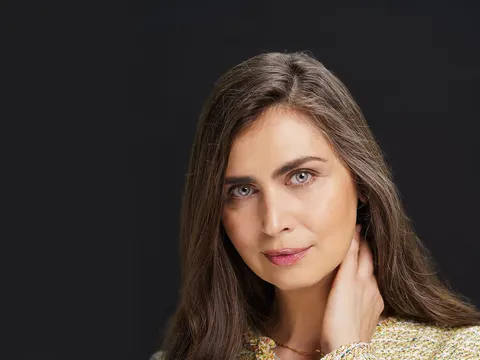
Bulgaria will soon host the first International Olympiad in Artificial Intelligence, bringing talented young people from at least 30 countries to Burgas. Elena Marinova, co-founder and longtime president of Musala Soft and co-founder of the olympiad, explains how the idea was born here. She also discusses what AI promises to change and why we urgently need a public conversation about it.
 184
The Wanderer Who Toppled a Government (Without Meaning To)
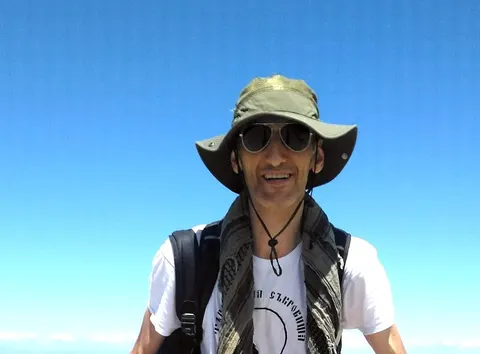
Can we change the world around us—our country, the world—simply by writing online about what moves us? We can, and here is the strongest proof I have ever come across. Meet Chergar, the legendary anonymous blogger whose satirical mystifications became part of Bulgaria's digital folklore, and one of whose texts ended up, entirely against his intentions, bringing down the Bulgarian government.
 185
“Truly Intelligent AI? Only If We Take the Next Big Step”
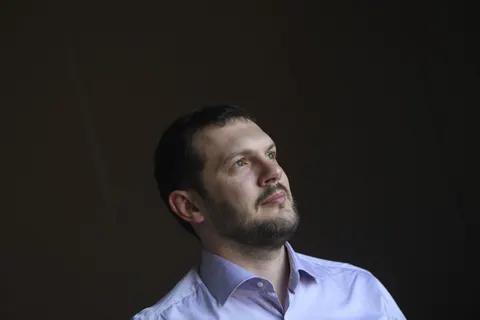
Viktor Botev and his team are building a successful product in one of the most high-tech fields of artificial intelligence, yet his enthusiasm for the near future in which AI will change us all is far from the sweeping expectations of the day. For eight years he has been chief technology officer of Iris.ai, a Norwegian-Bulgarian startup that applies AI to vast bodies of scientific data. A long, human conversation about technology for connoisseurs: hallucinations, the limits of large language models, and why the era of Bulgaria's outsourcing companies is over.
 186
Elections + Artificial Intelligence: The Perfect Storm
This year nearly two-thirds of the planet will vote, one way or another, for those who will govern them, and for the first time it is happening in the age after ChatGPT. Can artificial intelligence become the deciding factor, can we avoid being manipulated, and could technology one day change how our societies are run? Here are eight reasons to stop and think.
 187
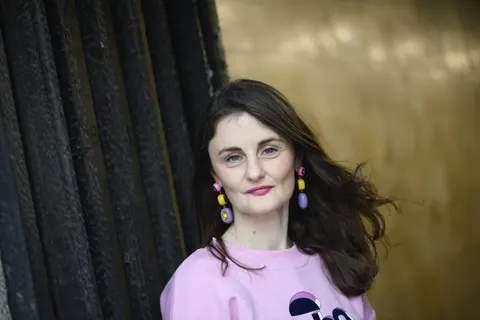
“AI Has Already Changed the Translator’s Job”
Did you know that automated translation systems are at work all around us? That a huge share of administrative and commercial texts are translated into every language by artificial intelligence, and the job of humans is to check and correct them? They are no longer even called “translators” but “post-editors.” Rada Gankova returns to talk about her main work, translation, and how artificial intelligence is changing it.
 188
Stack Overflow: The Programmers' Savior Is Fading
It is easy to tell someone who has ever programmed from everyone else: if you have “touched” code, you have seen Stack Overflow. In just 15 years, the question-and-answer site fundamentally changed the way programmers work, but today the legend is heading toward its sunset, ironically because of the technological progress it helped make possible.
 189
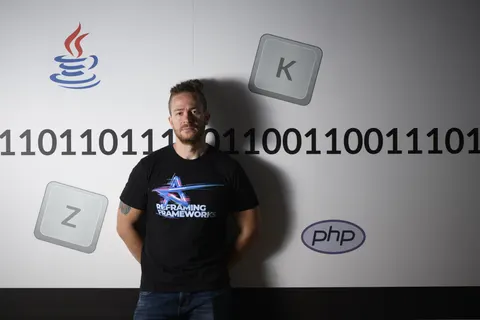
“Anyone Can Be a Programmer. It’s Time More of Us Were Engineers!”
Ivaylo Kenov is an inspiring teacher who has helped countless people become programmers, a shy man who stumbled into the profession after realizing civil engineering wasn’t for him. After years at the head of SoftUni’s development team, he now leads a company with an ambitious goal: to remind the industry that building software should be an engineering process, not just coding. We talk about whether anyone really can become a programmer, why finding a first job feels so hard, and how the engineering approach got him from a doctor’s warning that he might never walk to 150-kilogram deadlifts.
 190
How DALL·E “Read” Beloved Bulgarian Books
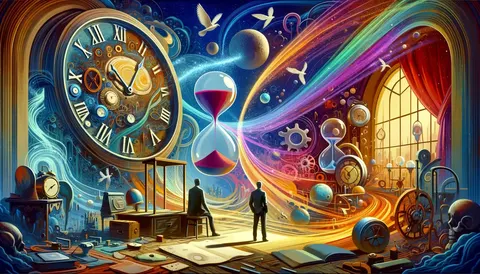
The Chukchi is no reader, he’s a writer, as the old Soviet joke goes. But what about ChatGPT? Time for another fascinating experiment to show what today’s algorithms can do, both at creating images and at understanding context. I will ask DALL·E 3, part of the paid version of ChatGPT, to illustrate classic works of Bulgarian literature from different periods. Why is this interesting? It will show how well the large language model works in Bulgarian and how far it recognizes some of our undisputed classics. And, not least, because… might it show us some unexpected, different, striking points of view? Could we speak of some form of collective unconscious? Will the pictures overlap, at least in part, with the images each of us carries in our head for these books?
 191
“I Imagine the Future as a Battle for the Invisible”
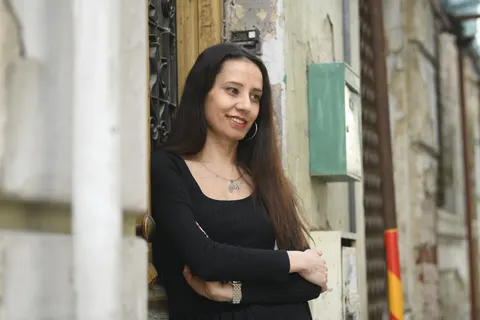
“For now, artificial intelligence strikes us as funny. It looks like a funhouse mirror, or a little dimwit we guide along, one who makes us feel knowledgeable and more human than ever. But this is changing literally by the day, and soon it will become a realistic and credible reflection of us. I think about that moment—perhaps then we will manage to see ourselves through its eyes, to grasp which parts of us are clear even to an artificial creature, what remains out of its reach, and what is most precious. To me, those are the places it cannot peer into. I imagine the future as a battle for the invisible; that will be the most important resource. What artificial intelligence cannot register is the most precious thing in us.” Pochti vsichko e nared (Almost Everything Is Fine) is the title of poet Violeta Kuneva’s debut collection, and it captures with such precision how the world feels to us today. But how did it come to this, that we can no longer tell the poet from the algorithm? What do we lose if that is so? Is the problem that, en masse, we have lost our yardstick for art, for metaphor, for layered, living texts that are human by definition, as poems are? Will poetry come to an end, or… is it precisely poetry that can save us from ourselves?
 192
Buying Eternal Youth
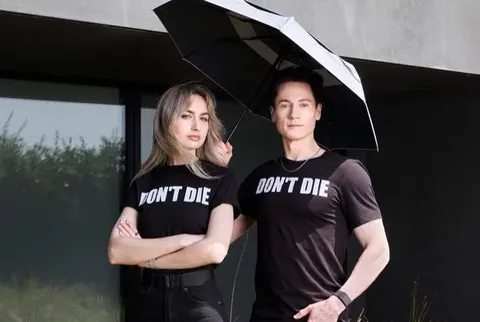
Forty-six-year-old Bryan Johnson has already spent more than $4 million to make his body work like an 18-year-old's. He claims it is working. He puts everything into it, going as far as infusing himself with blood plasma from his own son. He believes he is the most measured human being who has ever lived, and that his experiment will change the life of everyone who wants to live long. In other words, everyone. Dream or utopia? An obscene waste of money or an idea that could change our evolution? Genius or sheer madness?
 193
“We Bulgarians Have the Mindset to Be Successful Entrepreneurs”
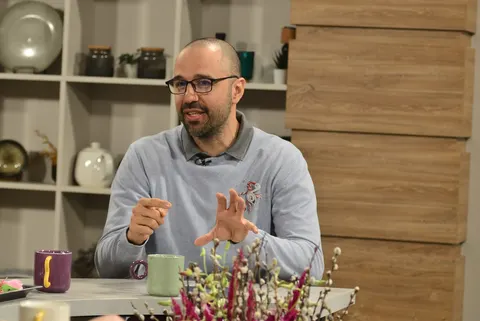
Boris Paskalev is an entrepreneur with impressive experience in the startup world. He recently became a strategic advisor to INSAIT, Sofia's Institute for Computer Science, Artificial Intelligence and Technology, one more guarantee that we can expect ever more remarkable news from there. A former youth national basketball player, he went on to study at MIT, then helped found DeepCode, a pioneering AI coding startup acquired by Snyk in 2020. We talk about his path through Silicon Valley, the AI revolution, the coming revolution in robotics, and how Bulgaria can have more successful startups.
 194
The AI Detective: Can Technology Give Us Back the Truth?
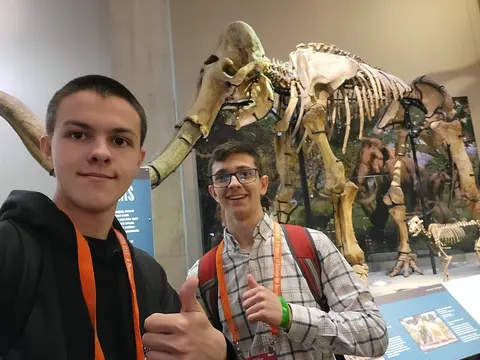
After a Digital Stories experiment with almost 2,000 participants showed that we can no longer tell AI-generated images and texts from real ones, it is time for the next step: could artificial intelligence itself become our salvation in this unequal battle for the truth? Radostin Cholakov, from the Rhodope village of Barutin, and his friend Delyan Boychev, both finishing high school this year and both already accomplished in the world of neural networks and computer vision, decided to find out. AI creates remarkable images today, but can it tell truth from lies and judge which picture was made by a human and which by an algorithm?
 195
“We Have Yet to Learn How to Be Bored Well”
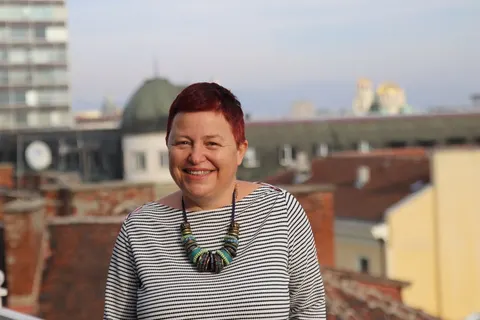
“The big question is how society will transform. Because we can see that right now things are not happening the way they should. Even capitalism is in its twilight, close to its end. We don’t know what comes next or what it will look like, but it certainly won’t be driven so much by the huge businesses that are finding it harder and harder to exist.” Justine Toms has rich and varied experience in the internet era—in communications, digital marketing, design and entrepreneurship. She teaches at New Bulgarian University and SoftUni Digital. She organizes the Site of the Year awards, and her personal blog has been running for almost two decades. With the eye of a scholar, a practitioner and a teacher, she follows how communication online is changing and where technology is taking us. How can we be sure today that we are not missing something important in the flood of information? Or that we are not falling victim to manipulation? What will the new media look like after… “the death of the media”? Will they manage the task of helping us find our bearings? In a world that is doomed to face a sweeping transformation in the years ahead…
 196
ChatGPT vs. the Champions: The Last One Wins!
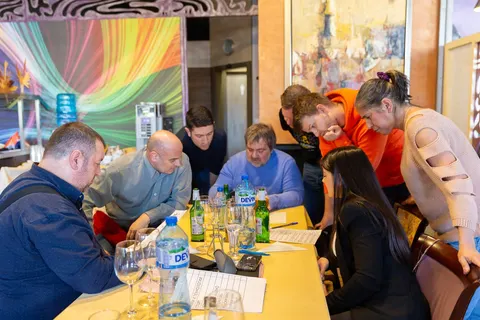
Do you know which place in Bulgaria had the highest average IQ on March 16, 2024, between noon and 6 p.m.? ChatGPT couldn't even guess. But I know the answer. No, it wasn't the National Assembly, Bulgaria's parliament. Eighty people had gathered in a restaurant in Plovdiv for an intellectual contest, many of them familiar to anyone who follows trivia, quizzes and television knowledge games. Split into 10 teams, they faced one another and, at the same time… the aforementioned ChatGPT. No fewer than 33 of them had won the show The Last One Wins on BNT 1 at least once (myself included). Almost all of the most popular contestants, with impressive tallies of victories, took part. The rest of the 80 who joined the club were contestants on the show and fans of quizzes as a format. What kind of unusual contest was this? Who turned out to be the big winner? What is the future of intellectual games in our battle (or encounter) with technology? Why would anyone today need to know and remember facts that are an arm's length away online?
 197
“The Point Is Not to Kill Our Own Creativity”
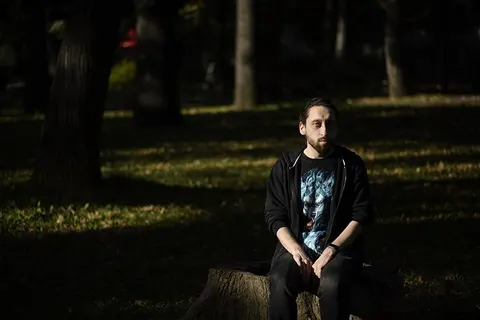
Is it still worth learning programming or data science, or is the future of software engineers doomed? Yordan Darakchiev, who is teaching Bulgaria's first one-year data science and AI module for the eighth time, talks about the challenges generative algorithms pose. His greatest hope is that we won't lose our curiosity and creativity, and he thinks mindless entertainment threatens them more than any AI ever could.
 198
Pavel Durov: The Better Zuckerberg
If there is Gandalf and Gandalf the White, why not Zuckerberg and Zuckerberg the White? Telegram founder Pavel Durov is a strange bird: a billionaire born in 1984 like the father of Facebook, but a Latin-speaking philologist and alleged hacker who built an app that promises security instead of manipulation. Two children, or none at all? What is his next big project, and does he fear artificial intelligence? Durov is one of those figures who make today’s tech world far more exciting…
 199
“The World Reeks of Kitsch. That’s Why It’s Heading for Catastrophe”
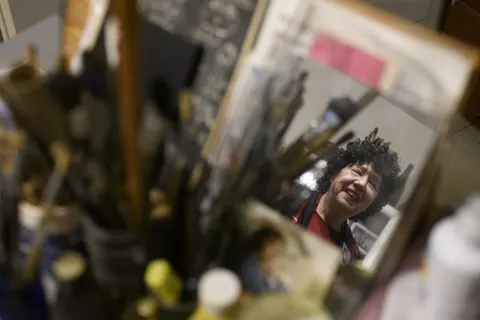
“People still have 10,000 ways to think and to look at the world. And what do they do, damn it? They stare at their phones. The children growing up now have never seen what’s around them. They are the subject of science fiction, living in a parallel world. They don’t know what the streets look like, what people look like. It makes me think there’s no hope. Who will bring them into this world? If it happens by chance, they’ll be shattered.” Tekla Aleksieva became a legendary illustrator after creating 120 covers for the Galaktika Library, Bulgaria’s cult science fiction series. Generations of readers link the greatest science fiction novels with the images she painted. Besides being an artist with a singular eye and countless accolades, she is also the author of a poetry collection. What does she think of images generated by artificial intelligence? Why does she believe we are surrounded by kitsch on every side—in literature, in art, in life? Can we get our good taste back, and how? Why must we never, under any circumstances, leave the Earth? And how is it that... Tekla Aleksieva never managed to finish the book behind one of her most famous covers?
 200
The Programmer Who Chose to Become a Babysitter
Programming, and a future in the much-vaunted IT sector, is as tempting as ever. Our guest today spent 20 years as a programmer, long before it became fashionable, until he realized he was tired of computers and happiest among children. So, defying every stereotype, Bogdan decided to earn his living as a babysitter.