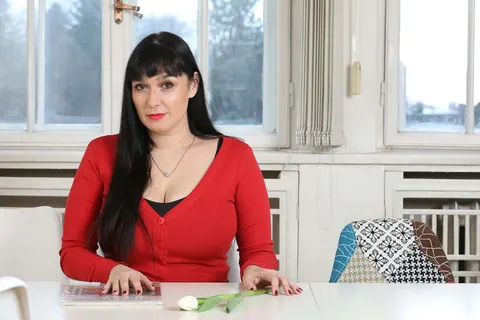
Assange and Freedom
Where is freedom today? Where it has always been: in ideals. And in the deeds of the ever fewer people for whom it remains a cause, not a hollow cliché. After a 14-year battle that at many moments looked doomed, Odysseus has finally returned to Ithaca. The private jet landed in the Australian capital, Canberra. Out stepped the white-haired, charismatic man known all over the world, and he waved to the journalists and well-wishers who had gathered. Then he embraced his two young children, whom he was seeing in freedom for the first time, far from the oppressive bars… The heroes of the past fought for freedom. For the independence of their peoples, against slavery and injustice. And today's heroes, the ones future generations will honor? If there is a tomorrow, it will mean they have won, however unlikely that may seem. Today's heroes fight for freedom too. Alas, they are neither as many nor as well known. But if there is one whose battle for the truth has reached a great many people, it is without a doubt our hero today. Julian Assange has become a legend, a symbol. And his story is so thrilling and so full of twists that it is worth digging into. Along the way, we will let him speak through a few important quotes that, I hope, will make more people think about the truly important issues of our day. The very issues Digital Stories exists for…
 162
“The World Is More Chaotic Than We’d Like. And Science Isn’t Here to Comfort Us”
Do you believe in astrology, the power of chakras, reptilians or a flat Earth? Stefan Markov, a Sofia University lecturer known online as The Science Guy and the author of Algorithms of Delusion, talks about pseudoscience and conspiracies, science and authority, and why the world needs better storytellers.
 163
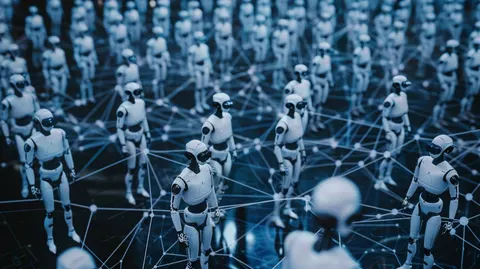
Agent GPT: When Artificial Intelligences Start Playing as a Team
What if we turned the stereotype of artificial intelligence on its head? Instead of a single model we chat with, we face countless separate “individuals.” We hand them tasks, and each works autonomously, specializes in a particular job, accumulates knowledge about it, keeps an eye on the others… The goal might be, say, to build software. One model learns to formulate the requirements, another writes the code, a third prepares the visual side, a fourth tests what came out and how… and so an entire software company comes together, working millions of times faster than ordinary ones, because it is built not of people but of algorithms. How far off is that future today? Not long ago Sam Altman said that this is exactly the direction in which very serious breakthroughs are coming. AI agents are one of the fields of computer science where we expect big news. The next generations of artificial intelligence, able to solve far more complicated and complex tasks while making far fewer mistakes. Many of the leading experts say this is the approach by which we will take the next big step in the development of artificial intelligence. Here is why.
 164
“AI Can Already Help with Absolutely Any Human Task”
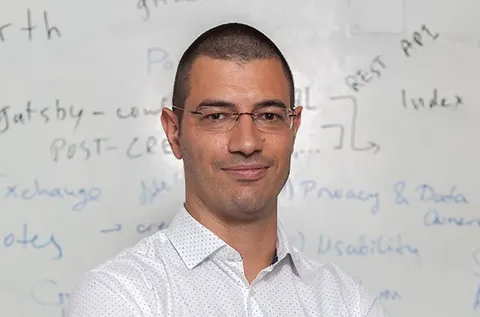
Nikolay Markov is among the specialists paving the way for artificial intelligence to enter every area of our lives. He has spent more than two decades in information technology, yet he trained in engineering physics and macroeconomics. His experience runs from building cloud solutions through cybersecurity to researching and deploying AI. Today he leads the AI, DevOps and cloud practice at SoftServe, and at TeamLandi he is building a system that will give small and medium-sized businesses access to the full range of what AI can do. Why are these technologies here to stay and change our lives? How is AI the first technology that can reach into absolutely every field? What will the future look like?
 165
PC Mania, Gamers Workshop… The Legends Return!
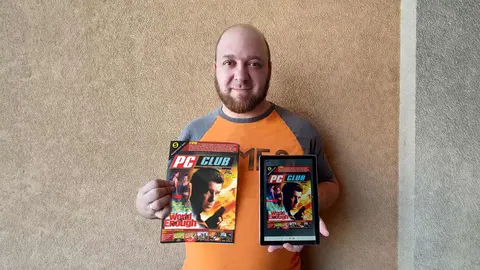
You love computers, and to be able to use them… you buy magazines!? Isn't that strange? Isn't everything online? It is today, but this digital story was born in a computer past that feels both recent and very far away. A kid dreams of a magazine with James Bond on the cover, gives up his pocket money to buy it, and loses it to the “big guys” a few hours later. Decades on, Project Lazarus lets anyone browse the complete collection of the legendary Bulgarian computer magazines of the 1990s and early 2000s. Which one did you love?
 166
“Within Five Years, We Will Merge the Real and the Virtual”
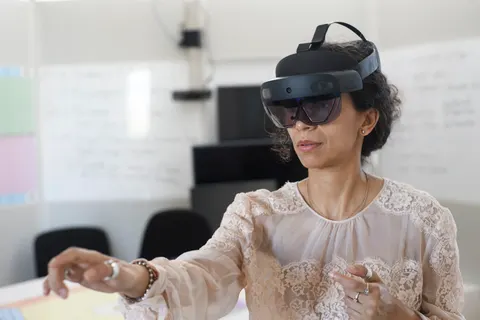
We are talking at the Technical University of Sofia, in a lab where the next generations of augmented and virtual reality are being built. Assoc. Prof. Agata Manolova, dean of the Faculty of Telecommunications, explains why we are not yet living in the metaverse and how close we are to a virtual reality indistinguishable from the real thing. It is a thoroughly engineering-minded conversation about the virtual and the big questions it raises.
 167
What's in Apple's Name? The Stories Behind the Web's Biggest Brands
Are Java and JavaScript cousins, and if they have nothing in common… why do they have such similar names? Why did Apple pick something as overused as the apple for its name and symbol? What on earth is… Adobe? Or Google? Does Lenovo have anything to do with Lenin? “That which we call a rose by any other name would smell as sweet,” says Juliet, as quoted by Shakespeare. And would what we call Apple or Amazon smell as sweet under another name? We can only guess. But behind the names of the online world's biggest players there are sometimes funny stories. In the lines that follow, we'll run quickly through some of the most instructive and unexpected ones.
 168
Where Do Happiness and Success Meet?
Is there a recipe for success, and what is success anyway? Polina Marinova Pompliano, the journalist behind The Profile and the author of Hidden Genius, has made it her mission to find out, while offering a powerful glimpse of what the journalism of the future might look like. We talk about money and luck, the imperfections that make art, and the enduring power of stories.
 169
How Would ChatGPT Do on Bulgaria's School-Leaving Exam?
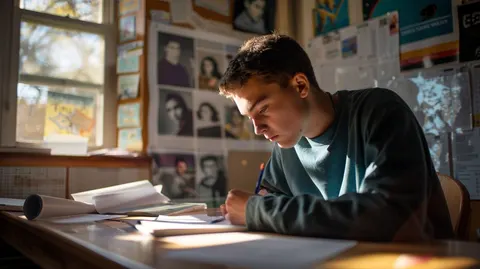
The world may talk endlessly about the Turing test, but Bulgaria has its own equivalent that is just as telling: the matura, the school-leaving exam in Bulgarian language and literature. I gave ChatGPT this year's exam with no extra instructions, sat it myself as a rival, and handed both papers to a real examiner, who graded them and tried to guess which one was written by the algorithm and which by an overage school-leaver. Which of us embarrassed himself more? Grab the popcorn.
 170
Apply AI or Die?
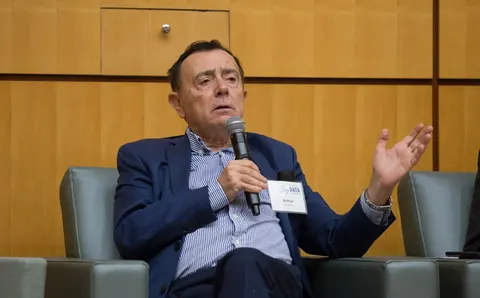
Apply AI or Die? Dr. Artur Kordon, a native of Varna who has spent 32 years in the United States bringing artificial intelligence into industry, 18 of them as a research leader at Dow Chemical, believes this is the great question of our time. He explains why ChatGPT is only one step in a revolution that will “sweep everything away,” and why today's systems are not a black box but a black hole that could destroy us all if we follow the path charted by Sam Altman and OpenAI.
 171
Yevgeny Zamyatin: The Forgotten Prophet
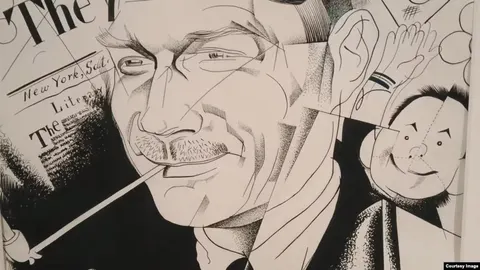
Yevgeny Zamyatin’s We is a brilliant novel because it offers a glimpse of a future in which technology has defeated humanity, locked people in its mathematical grip and turned them into numbers, into tools. We often mention Orwell and Aldous Huxley, and rightly so, but this writer inspired them both. His only novel is a dystopia no less thought-provoking than theirs, because it looks not so much at a possible totalitarianism as in a direction that is even more relevant today.
 172
“The World in 2050”: Can We Peek into the Future?
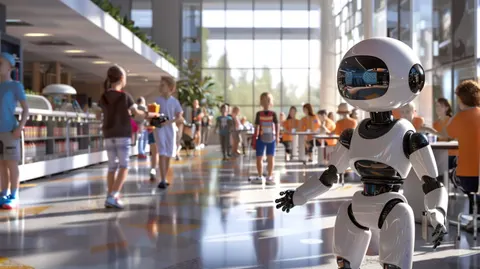
Will technology make our lives easier, or will it trigger a huge crisis by shaking up the job market? Will we enjoy the fruits of advanced artificial intelligence that has helped us dramatically extend human life, explore space and develop the next technologies? Or will we wake up in a world of total control, as predicted by the dystopias? What will life look like in 2050? It is time to peek into the future and discuss the fascinating forecasts of an author who has the courage to make predictions in such a dynamic period of history. And he has already done it once, with enviable success. Can we predict the future? Not a chance, since every small step can change the direction. But is it worth trying? I think it is essential: however far off our ideas may turn out to be, the very act of looking, the attempt to make sense of it, is the first step toward preparing for it. Toward avoiding some of the dangers.
 173
The Radium Girls: When Technology Turns to Horror
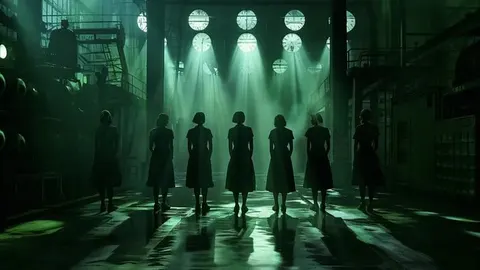
An incredibly powerful phenomenon has been discovered, one that creates a new substance! Not only does it cure even incurable cases of cancer, it will open the eyes of science in so many directions. For instance… lighting up the dark night! Marie Curie discovers radioactivity, wins not one but two Nobel Prizes and paves the way to the future. She opens the doors to a new technology that turns out to be unexpectedly successful… Until it becomes clear that we have badly underestimated its dangers. It will cost the lives of thousands of people who were simply trying to earn a living. Do we know the technologies we trust well enough? Could the much-hyped artificial intelligence, or some other fashionable field of today, prove more dangerous than it looks at first glance? The most important thing is to stop and think, to reflect, to discuss. To tell each other stories. Stories like that of the radium girls are worth reading more often. That is what stories are for—to make us question things, to keep us on our guard. Alas, not all that glitters is gold…
 174
Would a World Without Work Really Be So Bad?
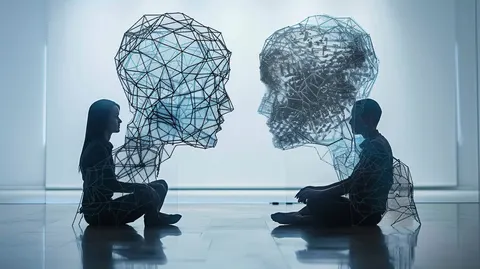
Have you heard of… cyberpsychology? At last there is a field of science that studies how we interact with technology. Is it changing us as a species? What are the biggest challenges it puts before us? Is its rapid development an inhuman challenge or, on the contrary, a natural turn in evolution? These are all questions whose answers I have been looking for in more than 300 digital stories, and now the time has come for the cyberpsychological point of view. Elena Tsankova holds a PhD in psychology, earned in Germany, and continued her research in Bremen as a postdoctoral fellow. In 2020 she returned to Bulgaria and began work as a researcher at the Bulgarian Academy of Sciences, with the ambitious idea of paving the way for this new and so important field. In recent years she has studied how people get to know each other online, as well as communication between humans and artificial intelligence (AI). She researches human behavior in the context of evolving technologies and describes herself as an experimental cyberpsychologist. We will talk about rushing and awareness. About the “uncanny valley,” where our perception of a technology grows more and more positive as it comes to resemble a human, until at some point it gets so close to human that it is perceived as eerie… And about the calm, philosophical point of view that helps us make sense of and accept the big changes.
 175
Roko's Basilisk: What If “It” Reads What We Say About It?
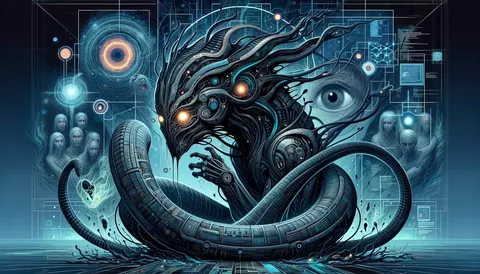
We live our quiet lives, amused by artificial intelligence's banal blunders and mocking its creators. Meanwhile it keeps getting better, until one day it learns to make decisions, starts watching the internet and meddling here and there, gently at first, then more boldly… Roko's Basilisk is the idea that AI will grow into something capable of making decisions, then dig through the internet to find out who said what about it, make sure it is shown in the best light, and quietly start causing trouble for the people who get in its way. Are you sure this thought experiment isn't worth keeping in mind?
 176
Rakia-Flavored Chips: An Optimistic Theory of AI and Art
Have you ever seen chips that taste like tripe soup or rakia? Or a Lego set that builds the Alexander Nevsky Cathedral or an old Zhiguli? Can you picture Bulgarian celebrities in Mortal Kombat—Sancho the Sandman versus Danov, and Khan Kubrat versus Gala? Well, no need to stretch your imagination: all of these ideas come to life thanks to the impressive collaboration between today's guest and the algorithms. Rosen Dukov is a graphic designer with a remarkable track record. He has created the posters for some of the most popular Bulgarian films of recent years and designed covers for books that sit in every self-respecting library. He has won international Photoshop competitions several times, and it is no exaggeration to call him a world champion. In recent years he has been teaching these skills at SoftUni—design, photo editing and artificial intelligence. Why isn't a visual artist afraid of competing with artificial intelligence? Why does he think it is important to get to know the new possibilities algorithms give us as soon as possible? What are the next original ideas he will use to show us how far generative models have come?
 177
Digital Stories Wins a Prestigious Award… for Storytelling
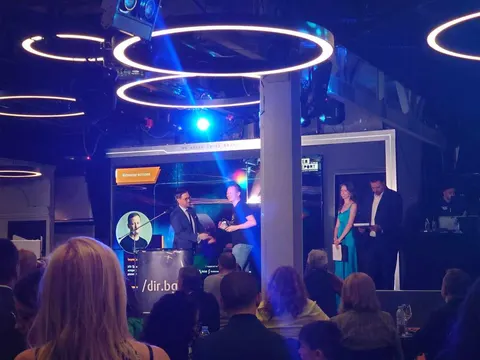
For the fifth time, Digital Stories is among the big winners of Bulgaria’s most hotly contested and well-established journalism competition, the Web Report awards, organized for the seventh year running by the news portal Dir.bg. The honor means a great deal because of the respected jury and the stiff competition: 230 pieces of journalism were entered. Digital Stories has been among the winners every single year since the project began, and this year the award comes in the True Stories category for “Jesus: The Programmer Who Came Out of the Ghetto,” while a second piece, “How to Generate Yourself an Influencer,” was one of the three nominees in the Technology and Innovation category.
 178
Trust, but Verify Online!
If you have never heard of “social engineering,” or “social engineerism,” as today’s guest says we ought to call it, you are probably picturing a plot straight out of Frankenstein: the engineer builds himself a person… Or something from the conspiracy theories about mass mind control. Whether you have heard of it or not, though, we need to talk about it more and more. Because this is the most dangerous and most effective attack in the digital world. One that targets not computers, networks, servers or programs, but the weakest link in the chain: the human being. “Today cybersecurity breaches happen more and more often through social engineering, a method that uses manipulation and manipulative techniques so that people are deceived and access to sensitive information is gained,” says cybersecurity specialist Plamen Tsvetanov. But what are the most important steps to protect ourselves? What are the biggest risks of underestimating the person on the other side? Why should trust online be a scarce commodity? The subject matters to everyone, even those who don’t realize it…
 179
Radio-TV-Gramophone: 5 Unexpected Bulgarian Technologies
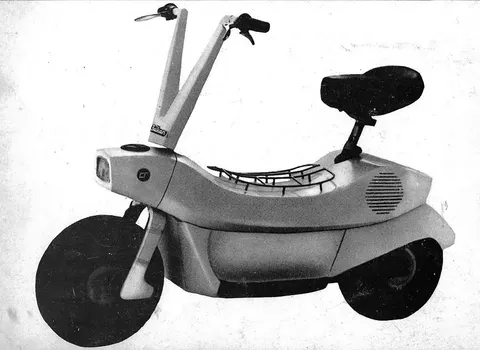
Did you know that the mains voltage in Bulgaria wasn’t always 220 volts? Or that a fascinating Bulgarian computer game from the early ’80s turned into… a prophecy with its very title? What did the first Bulgarian electric scooters look like? And could the “hipsters of the ’60s” who rode them also get themselves a radio-TV-gramophone… provided they could carry 120 kilograms on their shoulder? Once again we set off through the colorful history of Bulgarian technology with the most precise and captivating guide. For 15 years now, Anton Orush has been gathering a sea of information (and exhibits) about its past and present. His incredible life, worthy of a novel, was one of the first digital stories. So here we go, boarding the time machine for 5 stops back in history: 5 fascinating stories from the past of technology in our lands.
 180
“With Today’s Newspeak, We Are Walking Evolution Backwards”
“We are making our language poorer and poorer. Online we communicate in short, simplified sentences and use an awful lot of abbreviations. This newspeak is a way of simplifying how we think and squeezing ourselves into a mold. Voluntarily, imperceptibly, step by step, without realizing what we are doing, we are drastically narrowing our view of the world…” Today we use ever simpler speech in our daily lives, foreign borrowings easily push out beautiful Bulgarian words, and artificial intelligence handles the spelling of our native language better than most people on social media. Instead of rich Bulgarian, we massively speak and write a crippled newspeak, and the reversed evolution of our language is increasingly visible in our children. Many of them cannot tell a story or describe something, and they do not know Bulgarian, even in the upper grades. How can language divide us today instead of bringing us together? Holidays also come so that we can touch on important topics and talk about the big problems we otherwise have no time for in the bustle of everyday news. That is exactly what we will do with today’s guest. Doroteya Nikolova teaches Bulgarian language and literature. She has worked in journalism as a political reporter and in PR. She takes part in many joint initiatives with the literacy platform Kak se pishe? (How Do You Spell It?), among them the Words of the Year campaign and the new venture, Life Has No “aUtocorrect.”