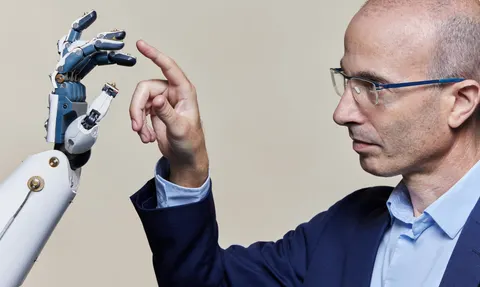
Yuval Noah Harari: Prophet of a New Age
Yuval Noah Harari's name comes up again and again in conversations about the future: the historian and futurist who untangles the threads of humanity's past and poses the big questions of tomorrow. How did a history professor become the favorite author of Bill Gates, Barack Obama, Mark Zuckerberg and Bill Clinton while staying popular, translated, read and debated? A colorful figure beyond the stereotypes, and, to my mind, a valuable and powerful voice warning us about the immediate dangers we face as a species.
 02
Where Is AI Taking Us? Five Key Points of View
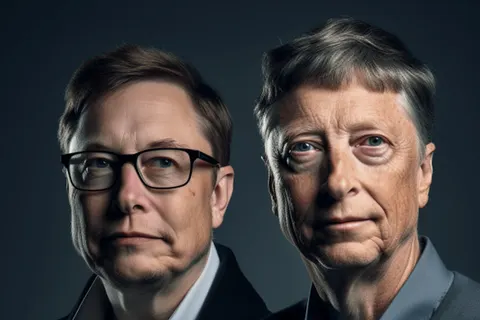
Is AI the beginning of the end for humanity—or are we simply witnessing a giant marketing trick? Whose jobs will it take, and will it destroy us or grant us immortality? Here is what Elon Musk and Bill Gates, Sam Altman and Jaron Lanier, Noam Chomsky and Yuval Noah Harari have to say.
 03
Go: The Great Game
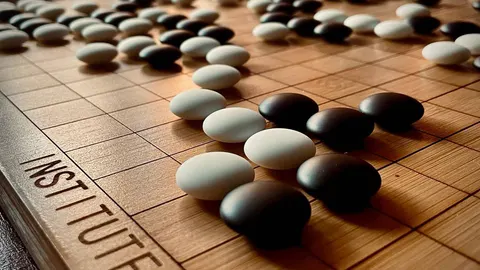
Two people stare stubbornly at rows of neatly arranged, round, flat stones. Just a game, you might say, but it is not that simple—not at all. This is not only one of the oldest games we know but also the most complex, and for a long time we considered it humanity’s last bastion, the place where technology could never overtake us. When it finally did, a remarkable new digital story was born.
 04
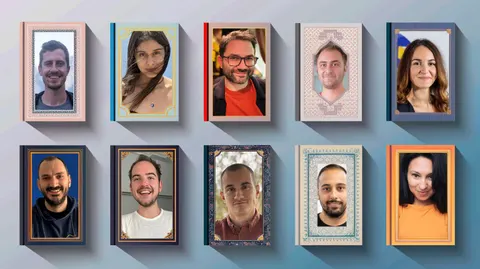
From Dostoevsky to Harry Potter: What Bulgaria's IT Leaders Read
I sent a short invitation to 30 IT figures I find remarkable: recommend three of your favorite books to the readers of Digital Stories. I tried to make the lineup of guests as varied as possible, from people in leadership roles to well-known speakers, from those working across the ocean to foreigners the industry has brought to Bulgaria, representing the widest range of technologies and different generations. Get ready for some stereotypes to blow up! I received no fewer than 20 replies, and I have the pleasure of presenting them to you! Once again they amazed me with their variety, their range and their depth, and they gave me plenty of ideas for future reads to add to my Goodreads list. Today I present the recommendations of the first ten guests; the rest will follow in a week. They aren't grouped by any particular logic—they simply turned out too varied and unexpected for that—so I offer them in the order I received them. Happy reading!
 05
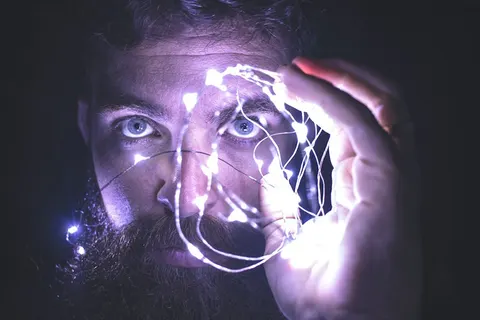
Technology Can Already Read Minds. Is This the End of Freedom?
Technology can already “translate” brain signals into readable data, and the first breakthroughs are here. Swept up in the progress of artificial intelligence and the notorious GPT, we may miss a huge leap when it comes to the natural kind. Prof. Nita Farahany, a scientist and legal scholar with vast experience, is drawing attention to it. “Today there are already companies capable of decoding brainwaves,” she told the world forum in Davos at the start of the year. Are we ready for the moment when someone reads our thoughts? Will it lead to total control, or make our lives more comfortable and meaningful?
 06
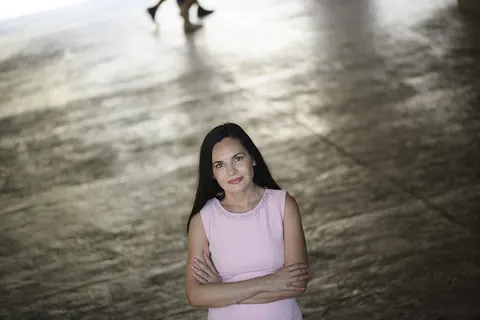
“Within Five Years, AI Will Change Every Area of Our Lives”
Will AI-driven technologies really reach every area of human life within just five years, and are we already too late with ethical rules for them? Assoc. Prof. Mariana Todorova, a futurologist at the Institute of Philosophy and Sociology of the Bulgarian Academy of Sciences, makes predictions bolder than most science fiction. “Within just five years, technologies based on artificial intelligence will enter every field. They will be around us from our birth to our death.”
 07
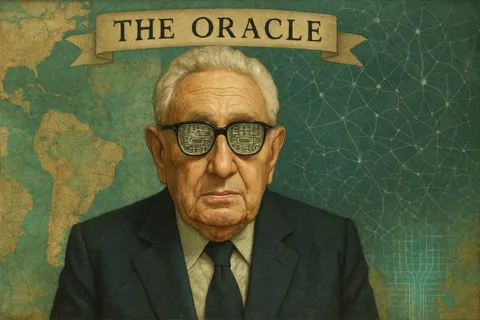
How Henry Kissinger Foresaw the Future
“There are two ways to make sense of the present situation. The first is by projecting from the familiar. Until now, the most transformative technologies created by humanity have served to refine or amplify our bodily capabilities. (…) Is AI simply one more extension of human capabilities? The second way of making sense of it assumes that this time the situation is different—that AI possesses unique qualities that cannot be reduced to an upgrade of human abilities. Within a few decades, through engineering, an analogue will be created of what evolution has been building over millennia—namely the human brain: the last organ left to be reproduced or reimagined inorganically.” We are not simply living in dynamic times in which we humans fail to keep up with technological progress. We have reached a moment when technology itself is making us start over. We have to redefine many of the concepts and systems that make up our lives—from democracy and capitalism to art and creativity. That's not me telling you this, but good old Henry Kissinger, who, on top of everything, is sending his messages about the future and artificial intelligence… from the beyond. The final work of one of the defining figures of the 20th century has recently come out in Bulgarian—the work of the man to whom we largely owe the fact that the Cold War stayed cold instead of turning into World War III. Genesis: Artificial Intelligence, Hope, and the Human Spirit gathers Kissinger's crucial views on the future we are already living in. Here are 14 of its highlights; may they finally spark the overdue public conversation about the future of humanity in the age of advanced technology and artificial intelligence.
 08
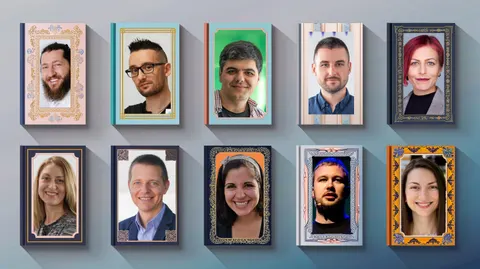
Will There Be a Bulgarian Author? Book Picks from IT Leaders, Part III
Would you have guessed that Bulgarian IT leaders read Harry Potter, or even Dostoevsky? I wouldn't have, at least until a week ago, when I asked them and it turned out they do. On the eve of the Day of the Buditeli, I invited 30 remarkable people to recommend three favorite books to the readers of Digital Stories, and today I present the second half of their answers.
 09
Stay Curious!
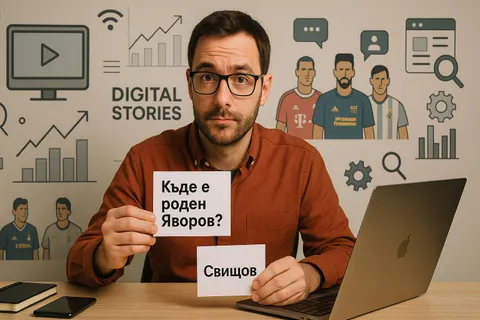
What is Yavorov's hometown? Svishtov. Artificial intelligence hallucinated that, and rather clumsily, you might guess. Except it wasn't the machine. It was me, taking part in a prime-time show on Bulgaria's oldest television channel. I would have thought I was more likely to get my own name wrong than the birthplace of a man whose story has fascinated me my whole life. Yet I got it wrong, and I won't be showing my face in Chirpan anytime soon. Knowledge is not a given. Curiosity doesn't come on its own; it takes effort. But is there any point in remembering where Yavorov was born in an age when we can check it in a fraction of a second? Would he have written different poems if he had been from Svishtov? Will the next generations know where he was born, how he wrote? What stirred him, where and how he met love? If you like, ask ChatGPT. Or the Constitutional Court. My own answer is this: today, more than ever, it matters that we stay curious!
 10
What Do the World's Tech Titans Read?
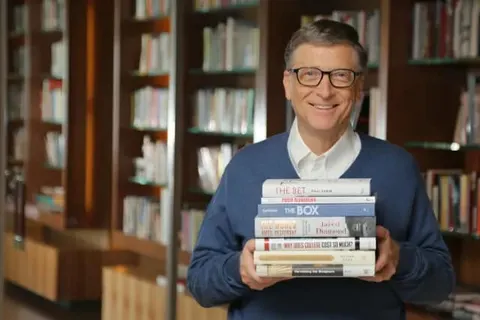
Do the world's tech leaders read books? What are the favorite reads recommended by Elon Musk, Sam Altman and Mark Zuckerberg? Will you find some overlap with your own literary taste, or is there no such topic at all? In Bulgaria it isn't fashionable to talk in the media about what we read. Journalist and translator Daniel Penev got me thinking about this during his visit. Yes, you'll probably remember the notorious Winnetou as someone's favorite book and… that's it. It isn't like that everywhere. In both West and East, the people who end up in the spotlight love to talk about books, about their favorite authors, about the literature that helps us keep going. Well, it's time we started doing it here too!
 11
“We Bulgarians Have the Mindset to Be Successful Entrepreneurs”
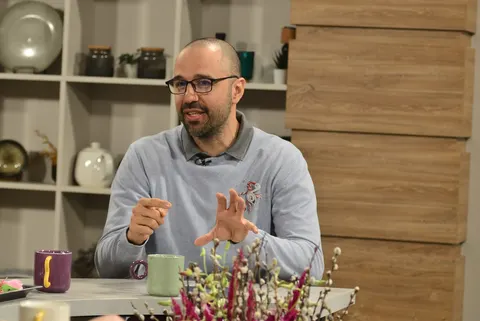
Boris Paskalev is an entrepreneur with impressive experience in the startup world. He recently became a strategic advisor to INSAIT, Sofia's Institute for Computer Science, Artificial Intelligence and Technology, one more guarantee that we can expect ever more remarkable news from there. A former youth national basketball player, he went on to study at MIT, then helped found DeepCode, a pioneering AI coding startup acquired by Snyk in 2020. We talk about his path through Silicon Valley, the AI revolution, the coming revolution in robotics, and how Bulgaria can have more successful startups.
 12
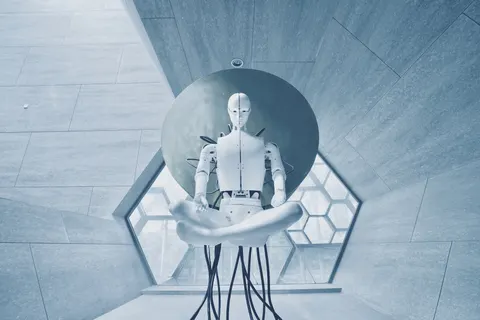
Artificial Art: Are Computers Learning to Create?
Is it mostly a marketing trick, or will artificial intelligence soon paint like a master? Can we teach a computer program to create music, or literature? For a long time we were certain that this is one of the things that set people apart from machines—the lack of imagination, of artistry, of the ability to express oneself through art. But is that really so?
 13
Out of Work?!
The question of the jobs AI is already taking over is only now reaching the agenda. How exactly will the technology change the professions? Whom will it replace, what new careers will it create, will there be any work left for people at all, and isn't it time we thought about introducing an unconditional basic income?
 14
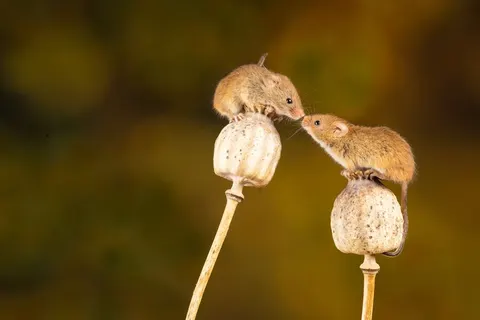
Universe 25: Of Mice and Men
Four pairs of mice are released to live as they please. With an abundance of food and water, far from danger and disease. Ready to conquer a vast territory… A mouse paradise! They start breeding like rabbits. Their numbers soar, doubling every 55 days. By all appearances they are living their best lives and savoring every moment. A year later, 620 mice live in “paradise”! Until suddenly something inexplicable happens: many of the rodents turn aggressive and start wounding each other for no reason. Then the males grow lazy and indifferent, and the population of the mouse kingdom imperceptibly begins to shrink… until it all ends in total collapse. Could this be a sign of where the natural course of our own life here on Earth is heading? Researcher John Calhoun’s Universe 25 experiment, carried out half a century ago, has become a huge source of reflection from the 1970s right up to the age of Facebook.