“Is There Any Part of Our Lives AI Won’t Change?”
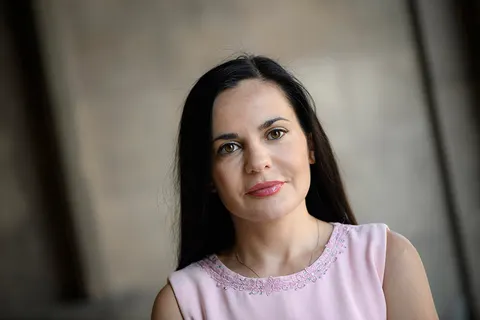
Why are we so unprepared for the great changes technology is bringing us? Can we catch up? What are the most important pieces of news to expect in the new year, 2024? Why is the revolution in every area of our lives irreversible and even closer than expected, with the full force of scientific argument behind it? Why is it important to shake off the petty concerns of the day as soon as possible and, faced with enormous challenges, come together? Assoc. Prof. Mariana Todorova is a futurologist at the Institute of Philosophy and Sociology of the Bulgarian Academy of Sciences. “Within just 5 years, technologies based on artificial intelligence will enter every field. They will be around us from birth to death,” she said in our conversation in 2022. And in the first days of 2024 she is even more categorical: “Now it is 100 percent certain. I think there are 2-3 years left, and that depends on how prepared we are, not on what the technologies themselves can do. If you can think of a field that won’t be heavily affected by artificial intelligence, challenge me, so I can prove you wrong…” How do we prepare for that future?
 222
“The Computer Will Be Like Bread!” How Bulgarian Sci-Fi Writers Saw the 21st Century
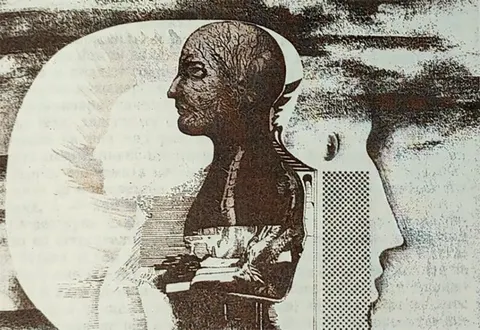
What will the future look like? What would life in the 21st century be, seen through the telescope of Bulgarian journalists and science fiction writers of the 1980s? Ahead lie five brilliant insights, five dashed hopes and five… particularly interesting and important reasons to stop and think.
 223
The Little Bottle Cap and the Avalanche of Good Deeds
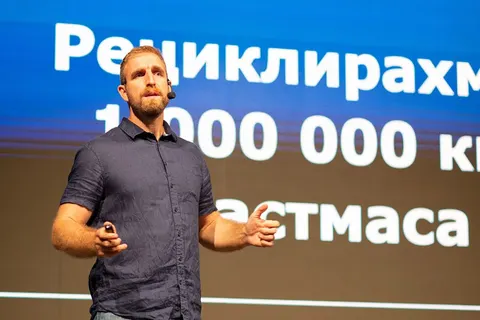
Twenty-two modern incubators and five ambulances, specially equipped to help premature babies. That is how big today's guest is. Thanks to him, premature babies in many regions of the country have a far better chance of surviving and avoiding complications.
 224
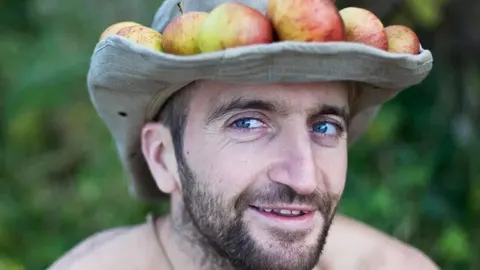
Fifteen Years Without Money: Is Mark Boyle Happy?
Just imagine living a whole week without money. None at all—no cards, no banknotes! Now picture a month, a year. Today's hero has managed it for 15 whole summers, and seven years ago he gave up modern technology too; he says he has never been happier. Could you imagine tomorrow without money and without technology? What else does Mark Boyle have to tell us?
 225
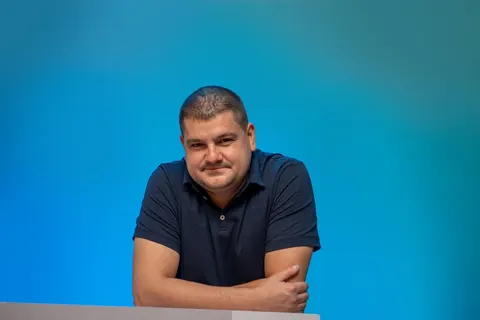
“We Have No Idea What We Are About to Create!”
“We need to dial down the arrogance. We technocrats, the tech community, have to step into the role of responsible leaders of what is happening, not people profiting from their amber towers. Otherwise this will not end well.” Dobroslav Dimitrov is a co-founder of Imperia Online and chairman of BASSCOM, the Bulgarian Association of Software Companies. When progress in artificial intelligence caught everyone's eye, he stood out for his positions: that nothing would be the same after the arrival of ChatGPT and its kin; that no area of our lives would be left unshaken to its foundations; that this is also our chance, as a country and as a tech sector, to make enormous progress. A year later his view remains the same, now backed by experience. We talk about the coming social changes and the role of the tech sector, in Bulgaria and abroad, and about the demand for programmers. About the gradual and irreversible advance of artificial intelligence. About the technological divides that confront us with an existential risk, and the other big questions of the day.
 226
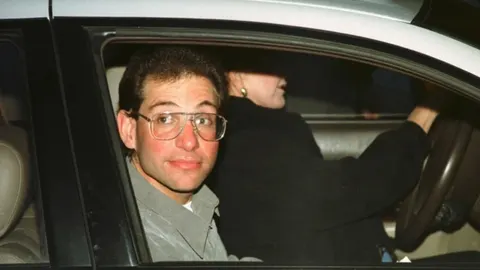
Mitnick, the Mythical Hacker
As a boy, Kevin Mitnick was curious, but puzzles and chess left him cold; he preferred a rather different kind of problem… Before he even came of age, he was convicted of hacking, a crime that at the time didn't even exist in the law books. Soon he would become the most wanted hacker, “Public Enemy No. 1” (according to the New York Times) and the FBI's greatest challenge. Only to land in prison again, and to walk out as the savior of companies from online criminals. A life like a movie, you'll say. And films have indeed been made about his life, but… only about part of it. In July 2023, Kevin Mitnick passed away, seemingly having finally found happiness, though he narrowly missed living to see his first child. The man who coined the term “social engineering,” the teacher of today's hackers and of today's cybersecurity specialists alike, lived his life like a movie worth watching from beginning to end. The way he himself would have told it—the most wanted and most talked-about hacker in history…
 227
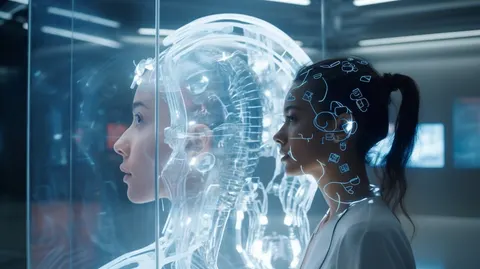
Is Dr. Artificial Intelligence About to See You?
Which fields of medicine will artificial intelligence enter soon, and which AI-based technologies are already part of everyday practice? Programmer, lecturer and PhD student Stefani Paunova has spent months immersed in the latest research on the subject. With her, we take a peek into the fascinating near future where medicine meets the possibilities of AI.
 228
The Living Computers
Information technology has always tried to imitate nature's most perfect model: the human brain. Now it is on its way to doing so more successfully than ever—by building a computer that runs on living human brain cells! What happens if we bring together the best of both worlds: the biological, with its evolutionary efficiency and its instinctive, creative imperfection, and the technological, with its ability to derive patterns and build on them? Biocomputers look like the logical future, and it is no accident that many of the people sketching tomorrow have turned their eyes in this direction. Serious scientific breakthroughs and successful startups in recent years suggest that the next big technological leap may well be coming from here. These are the arguments.
 229
“People Everywhere Are Gripped by a Sense of Disintegration”
Alek Popov needs no introduction for anyone even remotely interested in literature. Mission London, Sestri Palaveevi… (The Palaveev Sisters…) and, at least for me, his finest novel, The Black Box. I would also recommend the collection Novi i izbrani razkazi (New and Selected Stories). But we have no time for literature right now; we are going to talk about life. And about technology. About the hygiene we need when consuming and sharing content. About the fault lines of today and our chances of talking normally about the important things again. About sex with robots. About deconstructed clichés and the sense of disintegration that is also driving us away from literature. “We live in a civilization that encourages banality in all its forms. Social media, PR and advertising generate clichés nonstop. Political language is woven mostly from clichés, and so is bureaucratic jargon. It isn’t just a matter of daily life—fast or slow—but rather of a particular ‘mental laziness’ that makes us mindlessly repeat ready-made formulas for success, for happiness, for love. Looking happy seems to have become more important than being happy. Few are those who catch themselves and say: hang on a minute, what is all this nonsense!?”
 230
Paul Allen: The Other Face of Microsoft
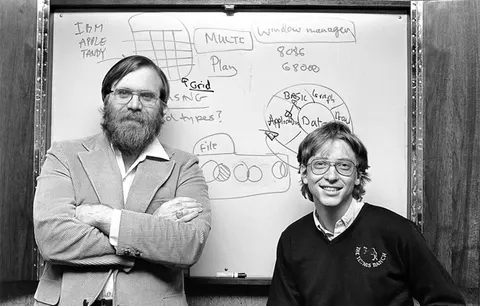
Two kids become friends over their shared fascination with computers. Then they start their first company together. Less than a decade later, that same company is the first giant of the modern computer age. And while we know a great deal about one of those kids, who for a long time was the richest man on the planet, the story of the other is far less familiar. None other than the computer specialist Paul Allen, the “godfather” of Microsoft, turned out to be the owner of the most expensive private art collection ever sold. And this happened in November 2022, four years after he left this world. A connoisseur of art, a man smitten with sports, a huge donor to scientific research. He is also the rich man who awakened the modern interest in spaceflight. At just 29 he learned that he had a deadly illness, and he decided to live the rest of his life the way he had always dreamed. There is a lot we can learn from the story and the worldview of this unconventional figure. And, even more, we can ask ourselves what today’s tech world would look like if its other leaders shared his outlook.
 231
“You Do Science? You’ll End Up Stupid and Poor!”
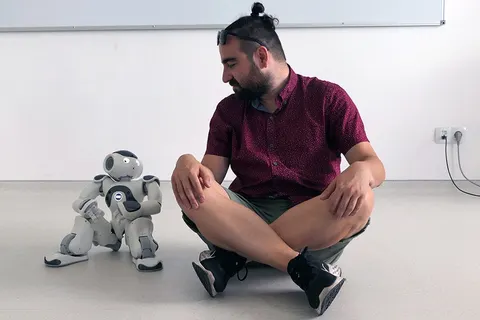
No, you won’t! Technology and science are the way forward—for every young person who wants to achieve something, and for all of us as a nation, even as a civilization. Last year, posts from the site Bulgarian Science were viewed 29 million times on social media. For 17 years, Petar Teodosiev has poured his soul into the cause, still convinced we can turn the stereotype around and light the spark of curiosity in the next generation. But how?
 232
The “New” Mother of ChatGPT
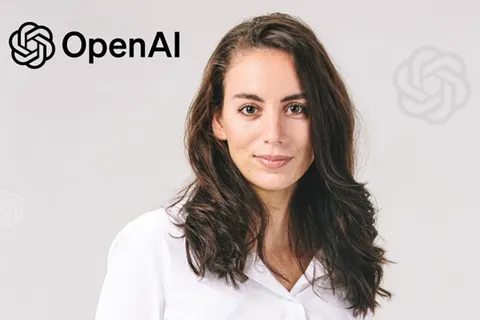
The upheaval at OpenAI outdid Game of Thrones for plot twists: Sam Altman was fired, chief technology officer Mira Murati took his place, and within days everything was back where it started. Amid the telenovela-style debates about who pulls the strings, one figure stayed in the shadows—the woman who briefly ended up at the helm. It is time to learn more about Mira Murati, because the future of the world may well depend on her decisions.
 233
Free Will, or a Barcode in the Digital Concentration Camp?
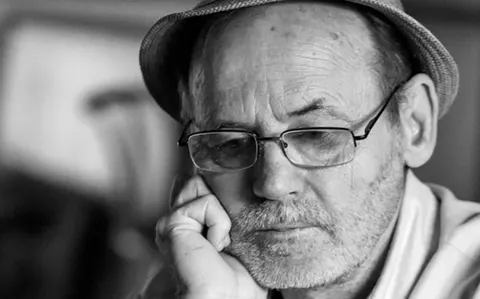
Nedyalko Slavov's new novel, Habitat, is a book of enormous weight and force, steeped in the big questions of our day: surveillance, data and the freedom we give up without a fight. We talk about social networks as spy agencies, obedient literature and why it is the fingers gripping the tools of labor, not the keyboard, that made us human. “It all comes down to what you want to be tomorrow. Free will. Or a barcode in the digital concentration camp of a meaningless world.”
 234
The Boy Who Saved the Internet—and Went to Prison
May 12, 2017, the day that could have put an end to the internet. The computers of Britain's National Health Service begin to collapse one after another. They stop working, and an unambiguous message appears on the screen: “Ooops, your files have been encrypted! Send between $300 and $600 in bitcoin to the following address to unlock the machine…” The WannaCry virus, which entered Bulgarian meme folklore under the absurd translation Искаплаче (Iskaplache, “wants-to-cry”), becomes the most powerful cyberattack in human history. In a single afternoon it causes between $4 billion and $8 billion in damage. What's more, because of how and how fast it spreads, it threatens to infect every device connected to the internet within a day. It is stopped, in a most unexpected way, by a likable curly-haired Briton of Jamaican descent. At just 22, he becomes a celebrity in the cyberworld. Until, a few months later, he ends up in an American prison facing charges that could bring him decades behind bars. The story of Marcus Hutchins is something between The Count of Monte Cristo and Crime and Punishment for the digital age. About the rise and fall of the boy who saved the internet (and thousands of lives) before he came face to face with the mistakes of his past…
 235
“I Want to Read Something Written by People!”
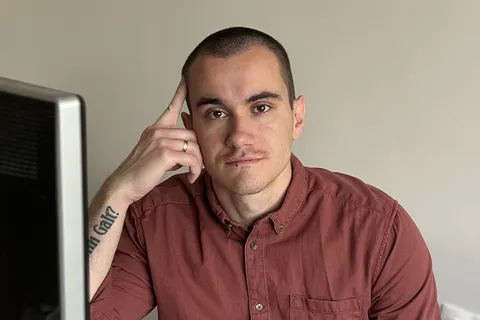
Alexander Kondov joins us to talk about books and front-end programming, and about writing, in words and in computer code, with detours through philosophy and artificial intelligence. “Programming is an art, not engineering!” goes our guest's creed. Why does he think so? The three of us, him, me and ChatGPT, are sitting in a digital tavern over a cup of digital tea, chatting about those big questions that stir us all…
 236
The Programmer Who Deleted 11 Lines and “Broke” the Internet
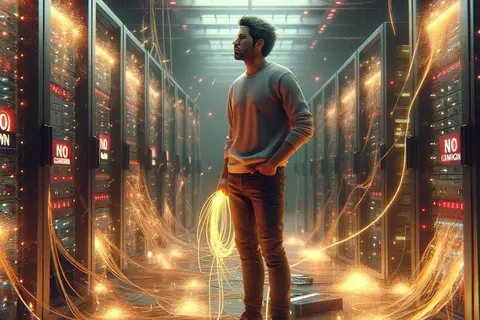
March 23, 2016, could have been an apocalyptic day in the history of the digital world, one unlikely ever to be repeated. Netflix, Facebook and Spotify were just a few of the countless sites that suddenly turned out to be… impossible to maintain and update. Why? Twenty-eight-year-old programmer Azer Koçulu had simply deleted 11 fateful lines of computer code. But how can an unknown programmer block the sites of global giants? Why, in today's strange online world, do enormous multibillion-dollar projects unexpectedly turn out to rest on the shoulders of volunteer enthusiasts? And what made Azer so angry that he unleashed the butterfly effect in its most terrifying form? Sometimes the smallest, seemingly harmless lines of code change the whole program…
 237
Tsvetomil and the Algorithm: Poems Come to Life
Can poems be painted? Are humans and algorithms rivals in this task, or is it time they joined forces to create the next forms of art? Open your senses to an emotional experience in which human and computer, side by side, challenge both your senses and your feelings…
 238
Gone in 60 Seconds: The Person and the Profile
How important is your profile on your favorite social network? And what would happen if everything it holds vanished in a second, with no chance of getting it back? Here is an especially important first-person story about how easy it is to lose… yourself online.
 239
The Man Who Became a Domain, and the Trouble with Files
Kim Dotcom is not a website, nor the next heir to the North Korean dynasty or to the Kardashian clan—though yes, that is also the name of his website, and his life is a roller coaster: hacker, mega-successful entrepreneur, multimillionaire, and then a criminal doing everything in his power to escape American justice, with a stint as a champion of online freedom somewhere in between. It is time for one of today's most colorful and least-known digital stories, as unexpected, instructive, vivid and dynamic as its protagonist. And for an important lesson about where and how we store our data.
 240
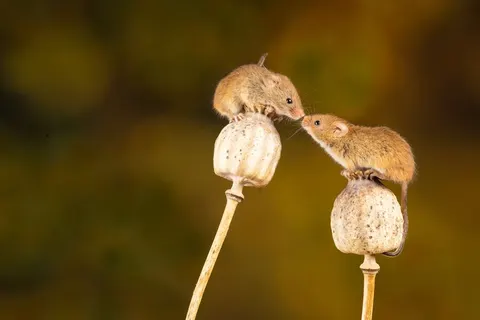
Universe 25: Of Mice and Men
Four pairs of mice are released to live as they please. With an abundance of food and water, far from danger and disease. Ready to conquer a vast territory… A mouse paradise! They start breeding like rabbits. Their numbers soar, doubling every 55 days. By all appearances they are living their best lives and savoring every moment. A year later, 620 mice live in “paradise”! Until suddenly something inexplicable happens: many of the rodents turn aggressive and start wounding each other for no reason. Then the males grow lazy and indifferent, and the population of the mouse kingdom imperceptibly begins to shrink… until it all ends in total collapse. Could this be a sign of where the natural course of our own life here on Earth is heading? Researcher John Calhoun’s Universe 25 experiment, carried out half a century ago, has become a huge source of reflection from the 1970s right up to the age of Facebook.