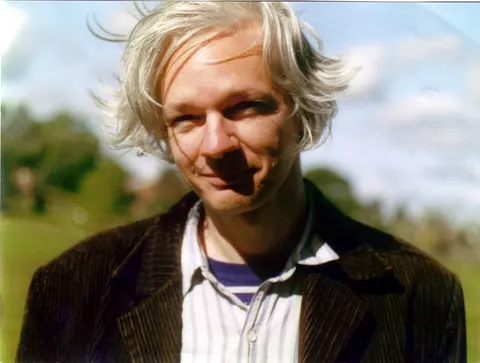
“You Think You Know. Until Something Else Decides What to Show You”
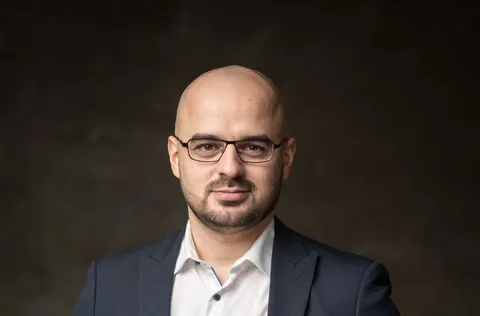
“A minimalist style, repetitions, deceptive simplicity, the sound of a world that is changing, industrializing; the quiet tones can be read both as the last moans of a humanity surrendering to the machines and as the first timid songs of newborn machines.” Vladimir Poleganov published his novel Drugiyat san (The Other Dream) almost a decade ago, and some of its strokes now ring prophetic: how we delegate more and more to machines—our memories, our knowledge, ourselves. Today's guest is a writer, translator, screenwriter and teacher, and a conversation partner worth talking to about books and the future, about words and machines, and about whether literature will arrive too late to remind us what it means to be human and what we must never delegate to machines…
 142
What Do Bulgarians Think About Artificial Intelligence? The Results
After a long stretch of collecting answers to the big Digital Stories survey, it's time to sum up the results! What do Bulgarians think about artificial intelligence? Are they impressed by its progress, do they use it every day, do they greet the next big steps with fear or enthusiasm, do they believe general AI is possible, and do they expect sweeping change in the years ahead? Time to find out through the impartial lens of the data!
 143
(In)Human Resources: A Referee Calls the Match Between AI and People
Can an algorithm land a job? A fake candidate dreamed up by ChatGPT made it to two job interviews, so I asked Petar Dzhuganski, a former assistant referee with more than 250 professional football matches behind him and now head of recruitment at a large software company, to analyze the match between AI and humans. Is the software industry still letting newcomers in, are professions disappearing because of AI, and should workers from distant countries frighten us?
 144
Bai Ganyo vs. ChatGPT: Will You Vote?
In a matter of days, Bulgaria holds its seventh parliamentary election in just three years, with turnout likely to sink below the records we keep breaking and even more parties likely to enter parliament. Where are the leaders, the ideas, the vision? Rather than ask the pundits, I hand the floor to two undisputed authorities: Bai Ganyo, the archetypal Bulgarian boor from Aleko Konstantinov's 1895 satire, and the newest version of ChatGPT.
 145
Agile: Simple, Clear—and So Beautiful
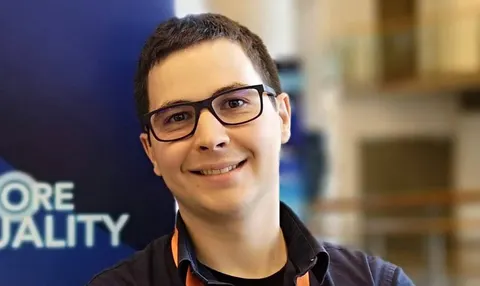
Agile. Let's run a quick check. If you don't work in information technology, you have most likely never heard the term. And the reverse: if you do, you say it so often that it has lost all meaning. Did I guess right? Time to step into an unusual, underrated and exciting world where human creativity, talking problems through and searching for solutions turn from magic into everyday routine and a recipe for success. In 2001, a group of IT specialists wrote the Agile Manifesto, which gradually became a guiding direction for the way we build software. Today it promises to help any venture move forward, solve complex problems and thrive. Nikola Bogdanov went through a colorful range of roles in the IT world (he will tell us all about them in a moment) before finding his true calling: explaining Agile, making the concept practical, showing companies why and how to adopt this way of thinking. And above all, building high-performing teams. Today's guest is the organizer of the first large-scale event of its kind in Bulgaria, where international and Bulgarian speakers from a range of industries will talk about adaptive management and about Agile beyond the clichés. On September 26, at the University of National and World Economy (UNWE), there will also be a Digital Stories booth, where I'll be happy to chat in person.
 146
Did ChatGPT Land a Job as a Programmer?
Can ChatGPT manage to… land a job? Or at least make it to an interview, perhaps the hardest step when it comes to your first job? Instead of idle speculation, I'll test it in practice: the algorithm will write the résumé of a young programmer, and I'll send it to 10 entry-level job ads. Will recruiters invite him to an interview, grow suspicious, or simply ignore him?
 147
Become a Teacher!
The first day of school is approaching, and it is a good occasion to look for answers to the big questions in education. How do we bring more young, well-prepared teachers into Bulgarian schools, how do we teach technology when its fast-moving world produces big news every week, and how can artificial intelligence become a friend and helper to both teacher and student? Angel Georgiev, creator of the Znam.be platform and co-founder of the Sindeo academy for teachers, believes that “teaching at a school today is more accessible than ever.”
 148
What Do You Think About Artificial Intelligence? Your Opinion Matters!
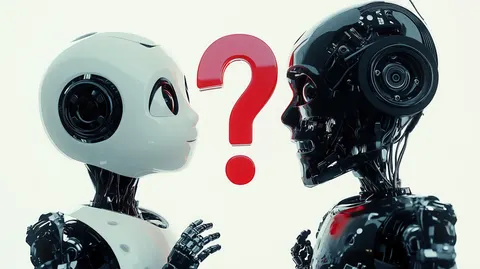
Your opinion matters! In recent years we have split into extremes and stereotypes in how we see technology, and artificial intelligence is becoming the leading topic that everyone has something to say about. What do you think—is artificial intelligence unjustified media hype, or the big factor that will change our future as a species? Will it open up incredible opportunities for people, or turn the world into a digital concentration camp? Now is the time to say what you think! I believe it is important to find out how as many people as possible feel about AI. I will be grateful if you answer 20 quick questions; it takes only 5 minutes. Heartfelt thanks for every response and every share!
 149
“We Don’t Appreciate That We Live in the Best Moment in History”
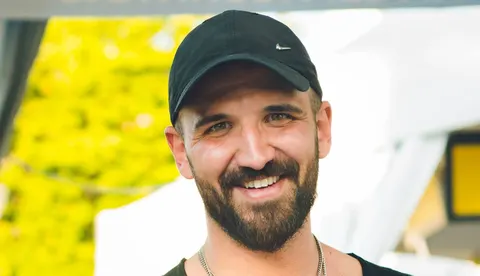
“People don’t appreciate that we live in the best moment in human history. We have advanced medicine, transport, communications… everything, everything you can think of. To have the chance to travel the whole world without restrictions and not take it is a crime against evolution. Because it won’t last forever. Covid, wars, regimes, diseases… Right now we are in a perfect situation, where the biggest problem is that Windows computers freeze for 8 hours and your flight gets pushed to the next day.” We’ll talk about the joy of writing and the need for hardship in life. We’ll travel around the world, through literature, through the big issues of the day. With a man who truly loves to travel like nothing else—he has lived on 4 continents and visited more than 40 countries. Abo. He chose a name that sounds like an AI’s. He trained in criminology, teaching and psychology, and today he is a writer—the author of two books, an editor, a translator and a journalist. But how come, and why, is he called Abo? And why does a subject of King Charles III, after so much travel, choose to come back to Bulgaria, which he considers a balanced, happy, cozy place?
 150
TrumpScript, or Coding in Song: 10 Wacky Programming Languages
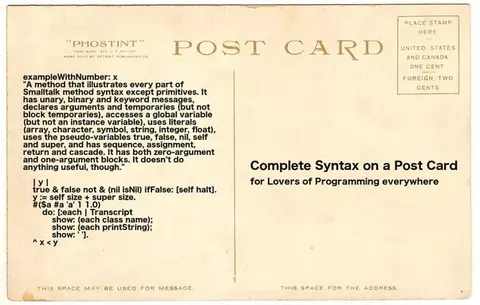
Computer code that reads like a cooking recipe? Programs built out of colors or sounds? Here are 10 of the strangest programming languages, inspired by Shakespeare, Terry Pratchett and even Donald Trump.
 151
Bozhidar Stefanov: Chemistry Against the Layers of Dust
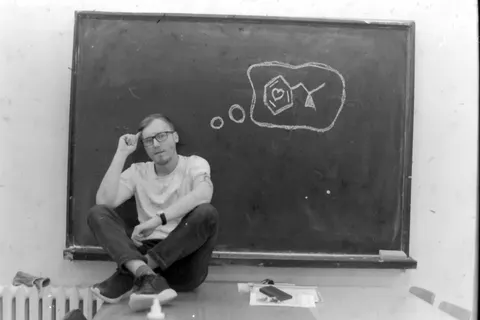
Bozhidar Stefanov was invited to work at Oxford, but he chose to build a chemistry lab at the Technical University of Sofia, in a room that still has no air conditioning. Before he moved in, he tells me, his colleagues called it “the isotope room,” because in the 1970s it was used for experiments with radioactive isotopes. “I’m not going in without a Geiger counter,” I say with a smile, and he pulls out the very instrument and shows me that the readings are normal. Never joke with a chemist. Then he tells me about clearing out the lab, about the layers of dust (and East German porn magazines) he shoveled out before he finally had a place of his own to do research. During the pandemic he learned to embroider. And before that, for many years, he caught the cameras’ attention as someone who could present science in an accessible, accurate and attractive way at FameLab events. Lately, though, his focus has been elsewhere: on producing scientific results. I believe him that the environment is healthy; I have no choice, he knows the subject. But I also believe that we can have both clean air and great prospects for science in this country, if there are more people like him. I may even forgive him his skepticism that artificial intelligence will solve the big questions of chemistry… because he is a chemist, a recognized scientist with rich experience. And because it is time we listened more and more to the people who burn for science and have chosen it as their calling. People who understand what they are talking about and may not offer the most colorful, animated view. But they offer the one that really paints the future…
 152
Where To Now, ChatGPT?
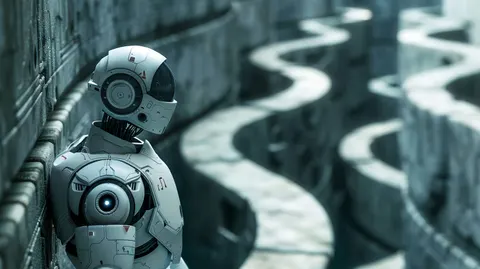
To be or not to be? Left or right? Life is a string of decisions, and on them hangs everything, from whether we reach the peaks we dream of to the eternal riddle of what to have for lunch. So we bring Hamlet and ChatGPT together to find the labyrinths, literal and figurative, that the electronic Virgil is ready to lead us through: five cases where artificial intelligence is already here to guide us, and five where we will have to wait (or never live to see it).
 153
“I Want to Live in a World Rich in Meaningful Conversations, Inspiring Stories and Responsible Journalism”
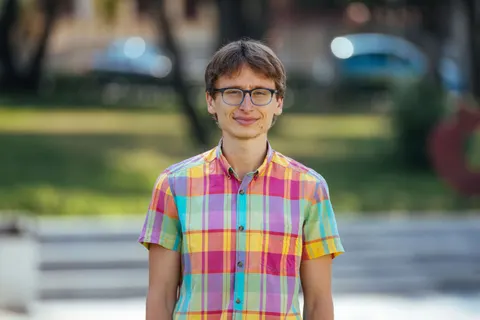
“We forget because we cannot keep up with processing all the information that reaches us and making connections between events, and this makes us very easy to manipulate.” Daniel Penev, a journalist, translator of nonfiction and author of books about the people changing Bulgaria, talks about the stories worth telling today. And about why, in a world of daily divisions, it matters more than ever that we keep talking to each other.
 154
Dartmouth: Pouring the Foundations of AI
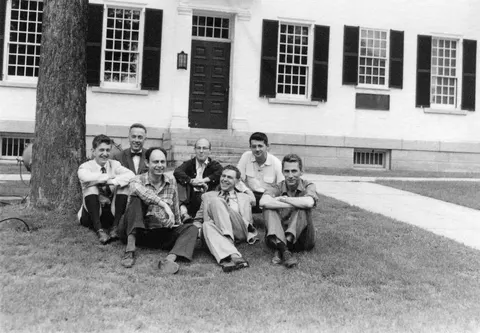
“By 1978 at the latest, we will have a machine with general artificial intelligence comparable to average human intelligence,” says Marvin Minsky, one of the scientists who organized the Dartmouth meeting. It gave birth to fundamental ideas and raised questions that seem more important today than ever… ChatGPT was unveiled in November 2022. But when was artificial intelligence… “born”? The idea that computers can resemble humans and solve a wide range of problems. How many candles will it have to blow out on its next birthday—5, 10, 20? A full 68! Although by 1956 the forerunners of the field, Alan Turing and John von Neumann, had long since made their fundamental discoveries, it is ’56 that is now considered the starting year in the history of the field. For 8 weeks, the greatest scientists in this future field came and went at an American college. The people who would later lay the foundations of the field gathered to talk about the main challenges they faced…
 155
Should Robots Be Our Slaves?
Robonomics is coming at full force, and those who adapt in time will gain the most from it. Prof. Stanislav Ivanov, a tourism scholar turned researcher of the economics of automation, talks about the exciting future, the big questions it raises, how Bulgarians already hand robots the same rights and duties we associate with slavery, and why an unconditional basic income is inevitable. Let us take a peek into the future together!
 156
Boxing for a Peaceful World
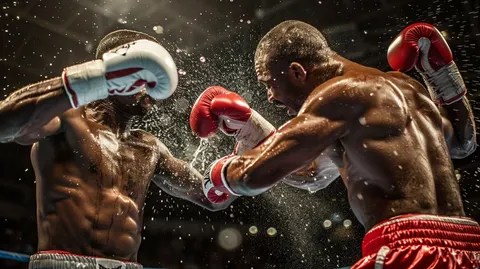
Wrestling is mercilessly brutal. Boxing is no gentler, and worldwide it is a far more sought-after, contested and glorified sport. Two people stand in opposite corners of the ring with the open intention of landing as many hard punches as they can… while taking as few as possible themselves. Chivalry or barbarism? Poetry in gloves, or life without mask or makeup, laying bare the most unchanging human qualities?
 157
Going “Out of Range”
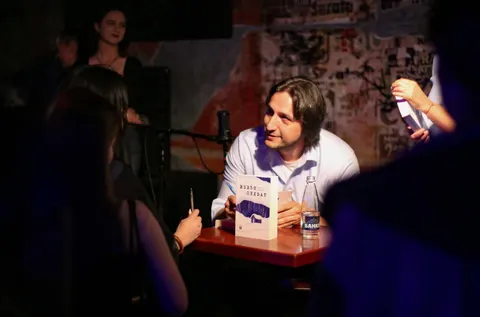
When did you last spend an entire day away from social media? Switch off your phones—we’re going “Out of Range.” Out of range not only of mobile internet but of technology as a whole, which has taken over so much of our lives. To look for where the human being has been hiding behind it all. That is the title of Evgeni Cherepov’s new novel, which makes us think precisely about the need for digital hygiene. About slow conversation, about deep stories and themes that cannot be told in TikTok format. Today’s guest has worked as a security guard and studied civil engineering before finding his calling as a teacher of Bulgarian language and literature. After long wanderings, he has returned to teach in his hometown of Stara Zagora. When does technology become too much for us, and why is it important to think about it? How do we learn to tear ourselves away from the feed and find a balance? “People have always needed pauses… Just like that, to stop for a moment, to take a step off the highway of their supposedly purposeful lives.”
 158
Poetry Comes Alive: What Videos Did AI Make from Classic Bulgarian Verse?
How close are we to models that generate video indistinguishable from human work? Let's find out together with one important experiment. Generative models are evolving at astonishing speed. Two years ago I ran the same test with images: I fed Midjourney classic Bulgarian poems to see how well it would cope. Would it catch the message? Would it create worthy images? Gradually the algorithms grew better and better at the task, so much so that today we can no longer tell the created images from the generated ones. But what about video? What kind of clips might artificial intelligence create from a selection of classic poems? I chose two platforms that take quite different approaches to generation. And the results, to me at least, are definitely impressive…
 159
Does Life Have an Algorithm?
Can algorithms be useful in everyday life, and is there a way to bring the world of technology together with the human, emotional one? Petar Sabev, a software testing specialist with vast experience and a broad, unconventional outlook, will open this year's DEV.BG All in One with a talk on the algorithm of life in 10 and 1/2 personal stories. Two IT people sit down to talk about programs and people, and the conversation ends in… poetry.
 160
Assange and Freedom
Where is freedom today? Where it has always been: in ideals. And in the deeds of the ever fewer people for whom it remains a cause, not a hollow cliché. After a 14-year battle that at many moments looked doomed, Odysseus has finally returned to Ithaca. The private jet landed in the Australian capital, Canberra. Out stepped the white-haired, charismatic man known all over the world, and he waved to the journalists and well-wishers who had gathered. Then he embraced his two young children, whom he was seeing in freedom for the first time, far from the oppressive bars… The heroes of the past fought for freedom. For the independence of their peoples, against slavery and injustice. And today's heroes, the ones future generations will honor? If there is a tomorrow, it will mean they have won, however unlikely that may seem. Today's heroes fight for freedom too. Alas, they are neither as many nor as well known. But if there is one whose battle for the truth has reached a great many people, it is without a doubt our hero today. Julian Assange has become a legend, a symbol. And his story is so thrilling and so full of twists that it is worth digging into. Along the way, we will let him speak through a few important quotes that, I hope, will make more people think about the truly important issues of our day. The very issues Digital Stories exists for…